


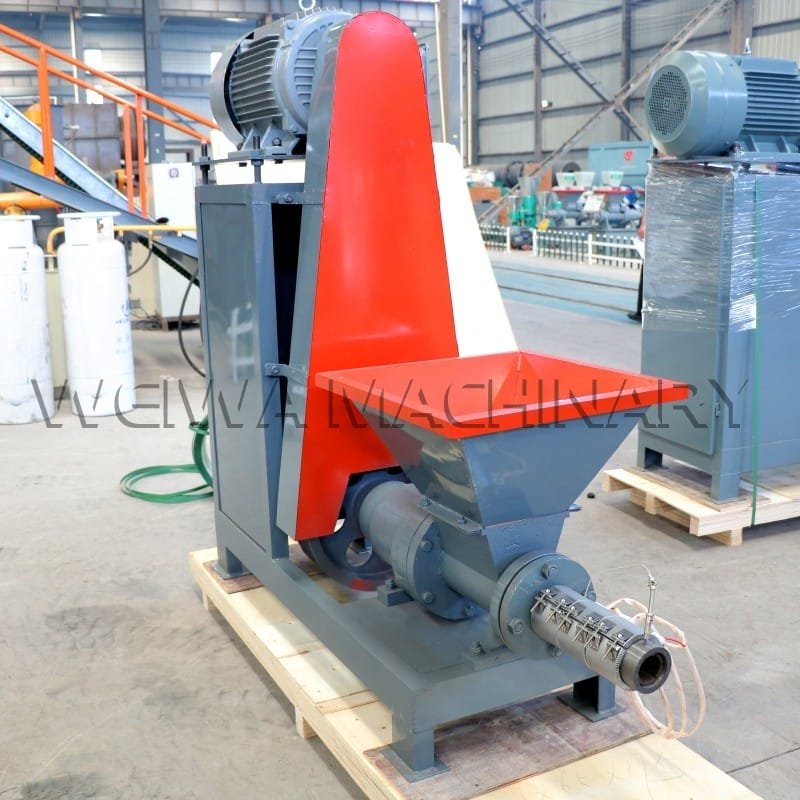
В последние годы, the global pursuit of sustainable energy solutions has accelerated, with biomass charcoal emerging as a clean, renewable alternative to traditional fossil fuels. For nations like Uganda, where agriculture thrives and wood resources face pressure from deforestation, transforming agricultural waste into valuable charcoal represents both an environmental imperative and an economic opportunity. В машине Weiwa, we have long been committed to empowering communities worldwide with efficient, affordable machinery that turns waste into wealth. Недавно, our team proudly shipped a batch of Машина для изготовления древесного угляи sawdust extruder machine to Uganda, marking a significant step in expanding our footprint across East Africa.
Understanding Charcoal Making Machine and Sawdust Extruder Machine in Uganda’s Context
To appreciate the impact of our machinery in Uganda, it is essential to first understand how Машина для изготовления древесного угляи sawdust extruder machine function and why they matter for a country where over 80% of the population relies on biomass for cooking and heating.
What Is a Charcoal Making Machine and How Does It Work?
А Машина для изготовления древесного угля is a specialized device designed to convert organic materials—such as sawdust, рисовая шелуха, Кокосовые ракушки, or agricultural residues—into high-quality charcoal through a process called carbonization. Unlike traditional charcoal production, which involves burning wood in open pits (leading to excessive smoke and low efficiency), modern charcoal making machines use controlled pyrolysis. In this oxygen-limited environment, raw materials are heated to temperatures between 300°C and 600°C, driving off volatile gases and leaving behind dense, carbon-rich charcoal. The result is a product that burns cleaner, produces less ash, and retains more heat than conventional charcoal, making it ideal for household and small-scale industrial use.
Для Уганды, where deforestation rates remain alarmingly high (the country loses approximately 100,000 hectares of forest annually), adopting Машина для изготовления древесного угля technology can reduce reliance on tree cutting while creating a circular economy around agricultural waste. Farmers and small businesses no longer need to clear forests for fuel; вместо, they can process byproducts like sugarcane bagasse or maize cobs into charcoal, turning liabilities into income streams.
The Role of Sawdust Extruder Machine in Enhancing Charcoal Production
While Машина для изготовления древесного угля handles the final carbonization stage, sawdust extruder machine plays a critical preparatory role. Опилки, a byproduct of timber processing and furniture manufacturing, is abundant in Uganda but often discarded or burned, contributing to air pollution. А sawdust extruder machine compresses loose sawdust into dense briquettes or logs using mechanical pressure, often with minimal additives (such as starch or clay) to bind the particles. These compacted forms are easier to handle, магазин, and transport than loose sawdust, and they also improve combustion efficiency when fed into a Машина для изготовления древесного угля.
Наш sawdust extruder machine for sale at Weiwa Machinery is engineered for durability and ease of use, featuring adjustable pressure settings to accommodate different sawdust moisture levels—a crucial consideration in Uganda’s humid climate. By extruding sawdust into uniform briquettes, users minimize material waste and ensure consistent input for the Машина для изготовления древесного угля, ultimately boosting overall productivity.
The Rising Demand in Uganda for Charcoal Making Machine and Sawdust Extruder Machine
Uganda’s unique socioeconomic and environmental landscape makes it an ideal market for Машина для изготовления древесного угляи sawdust extruder machine. Several factors converge to drive demand for these technologies.
Первый, energy access remains a challenge. Despite progress in grid expansion, nearly 70% of Ugandans still depend on firewood and charcoal for cooking, according to the World Bank. As urban populations grow (Kampala’s population is projected to reach 10 million by 2030), the strain on natural forests intensifies. Governments and NGOs are increasingly promoting alternative fuels, creating a policy environment conducive to adopting Машина для изготовления древесного угляРешения.
Второй, Uganda’s robust agricultural sector generates vast amounts of waste. The country is a leading producer of coffee, tea, sugarcane, and maize, with each harvest leaving behind tons of stalks, husks, and shells. Кроме того, the timber industry supplies ample sawdust, большая часть из которых используется недостаточно. This abundance of feedstock makes sawdust extruder machine in Uganda a practical investment for smallholder farmers, cooperatives, and entrepreneurs seeking to monetize waste.
Третий, the cost of traditional charcoal is rising. Deforestation has reduced supply, pushing prices up and straining low-income households. Locally produced charcoal from Машина для изготовления древесного угля offers a cheaper alternative, as it leverages free or low-cost raw materials. Для бизнеса, selling eco-friendly charcoal can also tap into growing consumer preference for sustainable products, both domestically and in export markets like Kenya and South Sudan.
When considering sawdust extruder price, affordability is key for Ugandan buyers. В машине Weiwa, we prioritize designing machines that balance performance with cost-effectiveness, ensuring even small-scale operators can access this transformative technology. Our pricing strategy reflects local economic realities, with flexible payment options and after-sales support tailored to Uganda’s business ecosystem.
Demonstrating the Power of Экструдер для опилок and Charcoal Making Machine
Upon arrival in Uganda, our team collaborated with local partners to conduct extensive trials of the sawdust extruder machineи Машина для изготовления древесного угля. These tests were not just about verifying technical specifications; they aimed to showcase real-world applicability in Uganda’s conditions, from varying humidity levels to diverse feedstock types.
Setting Up for Success: Local Partnerships and Site Selection
We worked closely with a Ugandan agricultural cooperative based in Jinja, a region known for its sugar and timber industries. The cooperative, which represents over 200 smallholder farmers and 15 small timber mills, provided access to raw materials and a testing site. This partnership was instrumental in ensuring the trials reflected the needs of actual users—farmers who collect sawdust, mill owners seeking to repurpose waste, and entrepreneurs planning to launch charcoal businesses.
Testing the Sawdust Extruder Machine
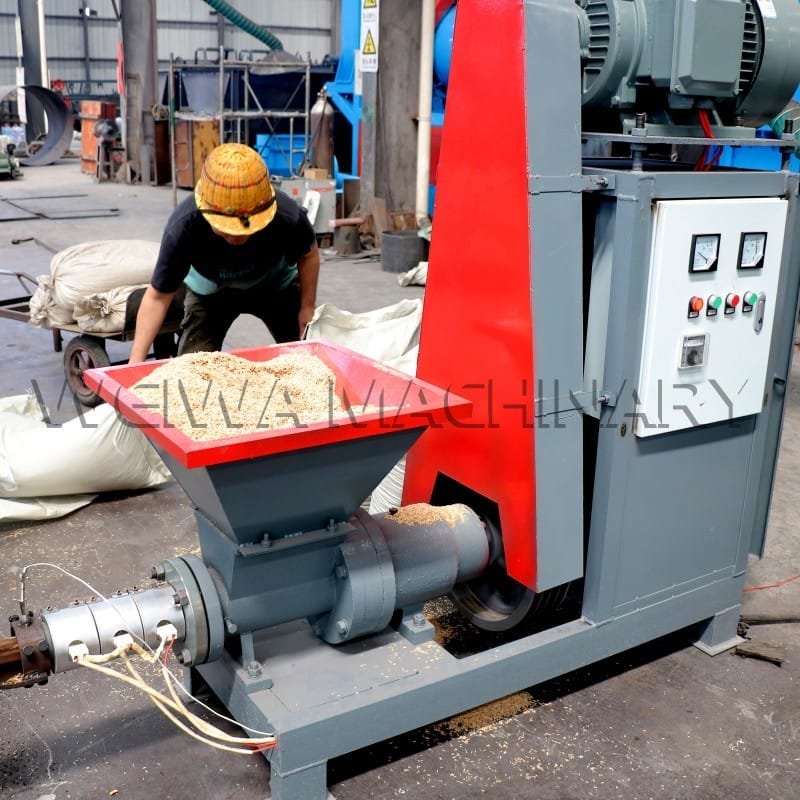
The first phase focused on the sawdust extruder machine. We tested it with sawdust from pine and eucalyptus timber mills, as well as mixed hardwood sawdust—common in Uganda’s furniture sector. A key concern was moisture content, as fresh sawdust can contain up to 50% water, which hampers extrusion. Our machine’s built-in heating elements gently dried the sawdust during processing, reducing moisture to an optimal 10–15% without external dryers.
Operators, many of whom had no prior experience with extrusion equipment, quickly learned to adjust the machine’s pressure settings. Within hours, they were producing uniform briquettes measuring 30mm in diameter and 100mm in length. The sawdust extruder machine handled the feedstock smoothly, with minimal clogging—a testament to its robust design. Local users noted that the briquettes were denser and easier to stack than loose sawdust, solving storage challenges they previously faced.
From Briquettes to Charcoal: The Charcoal Making Machine in Action
Следующий, the extruded sawdust briquettes were fed into our Машина для изготовления древесного угля. We used a continuous carbonization model, which processes material without frequent stops, ideal for small-scale production. The machine’s temperature control system maintained a steady 500°C, ensuring complete carbonization while minimizing harmful emissions.
The results were striking. After 45 minutes of processing, the briquettes emerged as shiny, black charcoal with a high fixed carbon content (над 75%, compared to 50–60% for traditional charcoal). When burned, the charcoal produced a steady flame with little smoke, a stark contrast to the acrid fumes of wood charcoal. Local testers, including women’s groups who rely on charcoal for cooking, praised its efficiency: “It heats our pots faster and leaves less soot on our walls,” one user remarked.
Quantifying Impact: Productivity and Cost Savings
During the trials, we tracked key metrics to highlight the machines’ value. The sawdust extruder machine processed 200 kg of sawdust per hour, producing 150 kg of briquettes—equivalent to a 25% reduction in volume, making transportation cheaper. The Машина для изготовления древесного угля converted 100 kg of briquettes into 35 kg of high-quality charcoal, with a conversion rate of 35%.
Экономически, the numbers were compelling. Using locally sourced sawdust (priced at $20 per ton) and accounting for electricity costs ($0.15 per kWh), the cost to produce 1 kg of charcoal was approximately $0.12. Traditional charcoal, sold locally at $0.50–$0.70 per kg, pales in comparison. For a small business producing 100 kg of charcoal daily, this translates to monthly savings of over $1,000, with potential profits of $1,200–$2,800 after subtracting raw material and operational costs.
Overcoming Challenges and Building Capacity in Uganda
While the trials were successful, we recognize that widespread adoption of Машина для изготовления древесного угляи sawdust extruder machine requires addressing practical challenges.
One common hurdle is access to maintenance expertise. To counter this, our team conducted hands-on training sessions for local technicians, covering routine checks, part replacement, and troubleshooting. We also established a spare parts hub in Kampala, stocking critical components like extrusion screws and heating elements to minimize downtime.
Another consideration is awareness. Many smallholders are unaware of how to monetize agricultural waste. Through partnerships with NGOs and government extension services, we are organizing workshops to educate communities about the benefits of sawdust extruder machine in Uganda and provide business planning support. For those interested in sawdust extruder machine for sale, we offer financing guidance to ease initial investment barriers.
The Future of Sustainable Energy in Uganda with Weiwa Machinery
The positive feedback from our Uganda trials reinforces our belief in the power of Машина для изготовления древесного угляи sawdust extruder machine to transform lives. As more Ugandans adopt these technologies, we anticipate a ripple effect: reduced deforestation, increased farmer incomes, and cleaner air in homes and communities.
В машине Weiwa, we are committed to supporting this transition. Beyond supplying machines, we aim to build long-term partnerships, offering ongoing technical support, обучение, and innovation tailored to Uganda’s evolving needs. Whether you are a smallholder farmer curious about sawdust extruder price or an entrepreneur exploring sawdust extruder machine for sale, we are here to help you turn waste into opportunity.
О Weiwa Machinery
Weiwa Machinery is a leading manufacturer of biomass energy equipment, специализирующийся на Машина для изготовления древесного угля, sawdust extruder machine, and related solutions. Founded on the principle of “green technology for all,” we design durable, user-friendly machines that empower communities to harness renewable energy from waste. With a global presence spanning Asia, Африка, and Latin America, our team combines engineering expertise with local market insights to deliver equipment that meets real-world demands. В машине Weiwa, we don’t just sell machines—we enable sustainable futures.
Join us in shaping a world where waste becomes wealth, and clean energy is within everyone’s reach. Contact us today to learn more about our Машина для изготовления древесного угля, sawdust extruder machine for sale, and how we can support your journey in Uganda or beyond.
- Моб:+8613838093177
- WhatsApp:+8613838093177
- Электронная почта:info@cjlmachinegroup.com


 WeChat

 +8615937143060
