


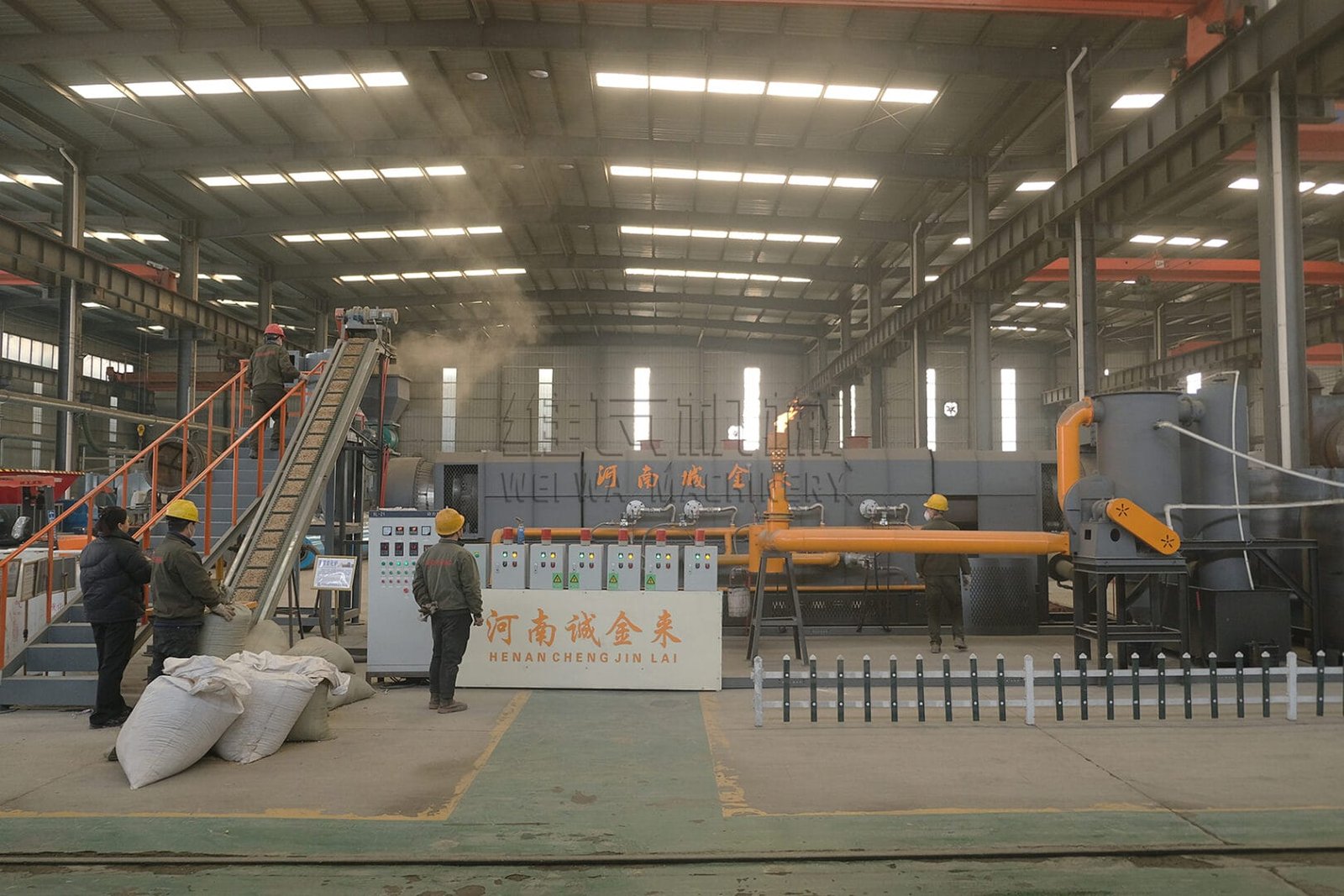
Shipment Scene of فرن الكربنة المستمر to India
The exported continuous carbonization furnace uses a double cylinder rotary design. The inner drum handles drying while the outer drum performs carbonization. Before container loading, our QC team verified weld integrity, refractory lining thickness, gas recycling pipes, screw feeder sealing, water cooled discharger rotation, and PLC control logic. Each module including the main furnace body, purification tower, electric cabinet, and spare parts kit was shrink wrapped, padded with anti vibration material, and fixed on steel frames to survive the voyage to Nhava Sheva or Chennai.
This continuous carbonization furnace for India was configured for a feedstock blend of southern coconut shell and hardwood sawdust. We adjusted hopper size, dryer length, and dust removal grade to match Indian raw material moisture and state pollution control board expectations. The Indian client joined the final inspection by video call, reviewed the 72 hour trial log, and confirmed foundation drawings before booking sea freight.
What a Continuous Carbonization Furnace Actually Does?
A continuous carbonization furnace is a pyrolysis system that converts biomass into charcoal without stopping the feeding or discharging process. Unlike traditional earth kilns or batch retorts, the machine keeps material moving through drying, الكربنة, and cooling zones around the clock. Typical feedstock includes coconut shell, قشر الأرز, نشارة الخشب, الخيزران, قَشَّة, and wood chips.
Double Cylinder Rotary Drying and Carbonization Zones
Biomass with moisture pre dried below fifteen percent enters a sealed screw feeder. The sealed inlet prevents air ingress so the carbonization zone stays oxygen limited. Inside the rotating outer drum, material spirals forward and is heated indirectly to five hundred to six hundred degrees Celsius. Volatile matter decomposes into syngas, tar vapor, and wood vinegar.
The double layer heating jacket keeps temperature uniform along the furnace length, which stabilizes fixed carbon content and reduces ash fluctuation. Carbonized material leaves the hot zone through a water cooled screw discharger. The charcoal temperature drops below forty degrees Celsius before it exits the sealed system. This avoids spontaneous reignition and allows immediate bagging or further processing into hookah charcoal, الشواء الفحم, or activated carbon precursor.
Combustible Gas Recovery and Self Sustaining Heat Cycle
During pyrolysis, gases such as carbon monoxide, الميثان, and hydrogen are drawn into a condensation and dedusting system, then redirected to the furnace burners as secondary fuel. After the startup phase, recovered syngas largely sustains thermal demand. External LPG or diesel consumption drops sharply. This gas recycling loop is the main reason the continuous carbonization furnace price can be justified by lower operating cost, even when the initial investment is higher than a simple batch kiln.
Factory Trial Run Before Container Loading
Before crating, our engineers ran a 72 hour non stop trial using a mixture of fifty percent dried coconut shell and fifty percent hardwood sawdust. The blend simulated material commonly available in Kerala, Tamil Nadu, Karnataka, and Andhra Pradesh. The furnace reached working temperature in about forty minutes. Once stabilized, the inner drum held drying outlet moisture below twelve percent while the outer drum stayed near five hundred fifty degrees Celsius with less than plus or minus ten degrees fluctuation.
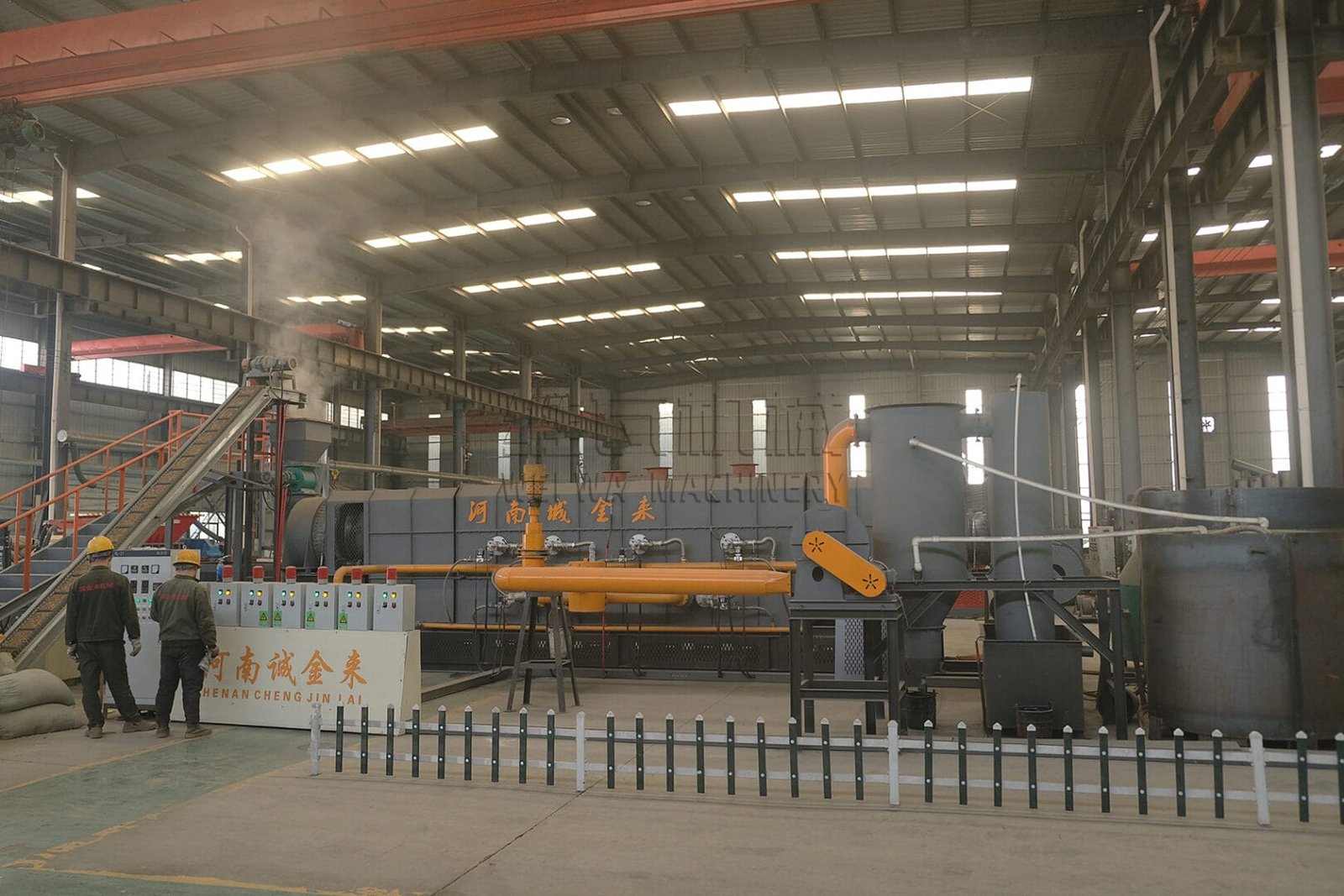
Feedstock Simulation for Coconut Shell and Sawdust in India
Coconut shell pieces were screened to below ten centimeters. Sawdust was conditioned to thirteen percent moisture. The screw feeder maintained steady throughput. The gas recovery system ignited automatically, and the auxiliary burner switched to recirculated gas after three minutes. No abnormal pressure build up or leakage was recorded. The multi stage purification unit kept visible smoke within international reference limits.
Temperature Stability Charcoal Yield and Emissions
Charcoal yield fell between fourteen and eighteen percent by weight depending on bulk density. Lab sampling showed fixed carbon above seventy eight percent and ash under four percent. Discharged charcoal had deep black color, low powder rate, and uniform particle size. One operator monitored the PLC touch screen while a second managed feeding and bagging, which is far less labor than pit kilns require.
For the Indian buyer, these numbers mattered more than brochure claims. Their team asked for continuous run data, not a ten minute demo. ال 72 hour log gave them foundation sizing, chimney height, power capacity, and water cooling loop requirements before the machine arrived.
Continuous Carbonization Furnace in India Market Outlook
India is not a small testing ground for biomass charcoal equipment. The country produces large volumes of coconut shell in the south, rice husk in the east, and sawdust from plywood clusters in Gujarat, Uttar Pradesh, and Punjab. Traditional charcoal making still relies on mound kilns and brick retorts, but state pollution boards are tightening norms on open smoke. That regulatory shift is one reason the continuous carbonization furnace in India is gaining attention from formal factories.
Feedstock Availability Across Indian States
Kerala and Tamil Nadu supply year round coconut shell. Karnataka and Maharashtra add areca nut shell and cotton stalk. West Bengal and Bihar contribute rice husk and jute stick. Punjab and Haryana bring agro residue and sawdust from woodworking units. A continuous carbonization furnace for India must accept this mix without frequent screen changes or feeder jams. Weiwa configures hopper width, drum slope, and flight angle based on the buyer’s dominant local material.
Environmental Pressure and Shift From Pit Kilns
Pit kiln charcoal has high yield loss and uncontrolled tar release. Several Indian states now ask for closed carbonization with secondary combustion or tar condensation. A continuous carbonization furnace meets this direction because the pyrolysis gas is not vented directly. It is burned inside the furnace jacket or in a dedicated burner, which cuts visible smoke and improves heat use. For buyers applying for biomass waste utilization subsidies or MSME green loans, documented emission data from factory trials strengthens the file.
Continuous Carbonization Furnace Price Versus Operating Cost
Continuous carbonization furnace price varies with capacity, drum diameter, purification stage, PLC grade, and shipping terms. A small 300 kg per hour line costs less than a 1.5 ton per hour automated plant with twin purification towers. But the commercial question in India is not only the invoice number. It is rupee cost per kilogram of charcoal produced.
Because recovered gas covers most thermal demand after startup, LPG or diesel burners run only during warm up. Labor drops from a pit kiln crew to two operators per shift. Charcoal fixed carbon stays above seventy five percent, which lifts selling price in hookah and export grades. Over a 24 month run, many Indian buyers recover the price gap between a batch kiln and a continuous line through fuel savings and yield improvement alone.
Charcoal Making Machine in India Buying Considerations
When Indian buyers search for a charcoal making machine in India, they often compare three options: local fabricated batch kiln, imported rotary kiln, and Chinese continuous carbonization furnace with engineering support. The local kiln is cheap but labor heavy and low grade. The imported rotary kiln is robust but priced with high freight and sparse after sales. The Chinese continuous line, when supplied by an experienced manufacturer like Weiwa, lands in a middle band with better automation than local fabricators and better cost structure than European brands.
Key points Indian buyers should verify before paying deposit:
أولاً, request a trial report with feedstock moisture, outlet charcoal moisture, fixed carbon, رماد, and tar condensate volume. ثانية, confirm the gas burner can run on recovered syngas, not only LPG. ثالث, check drum thickness and refractory certificate, because Indian summer ambient temperatures and 24 hour cycles stress the shell. الرابع, ask for foundation drawing, electrical single line diagram, and PLC logic screenshot. Fifth, clarify spare parts list and which seals and bearings are standard SKU in India.
Weiwa prepares all five documents before container booking. The continuous carbonization furnace for India shipped this quarter left with a Hindi labeled control note, a Malayalam feedstock guide for the operator, and a WhatsApp support group invitation.
Why Buyers Choose Weiwa Machinery?
Weiwa Machinery is based in Zhengzhou, خنان, and has built biomass carbonization lines for clients in South Asia, جنوب شرق آسيا, أفريقيا, وأمريكا اللاتينية. Our workshop handles welding, drum rolling, refractory casting, and PLC cabinet assembly in house. We do not resell trading company stock. Each continuous carbonization furnace is built against the buyer’s feedstock sheet.
For the Indian market, we adapted three things. We widened the screw feeder for coconut shell chunks. We added a longer pre dryer for sawdust above fifteen percent moisture. We offered a dual language PLC with English and Chinese labels plus a separate parameter sheet in Hindi. These are not massive redesigns, but they remove daily friction for the operator.
After sales follows a simple rule. Video call within 24 hours of any fault report. Spare parts dispatched from Zhengzhou warehouse within 72 ساعات. Major components carry a 12 month warranty with photos of the welder and inspector on file. The client in India who received this furnace already booked a second smaller unit for a branch plant in Coimbatore.
اتصال آلات ويوا
If you are evaluating a continuous carbonization furnace in India, comparing continuous carbonization furnace price across suppliers, or planning to replace pit kilns with a charcoal making machine in India, our engineering team can share the 72 hour trial log, رسومات الأساس, and FOBC Qingdao quotation.
الغوغاء: +8613838093177
Whatsapp: +8613838093177
بريد إلكتروني: info@cjlmachinegroup.com
Weiwa Machinery manufactures biomass carbonization furnaces, آلات الفحم, sawdust briquetting presses, and hookah charcoal production lines. We export complete plants and single machines, supply installation guidance by video, and provide wear parts kits for long term operation. The continuous carbonization furnace remains our core export product because it solves the exact problem Indian buyers face: steady charcoal grade, lower fuel bill, and inspectable emission data.
The furnace loaded this month is now on the sea. When it starts in India, the same 550 degree carbonization zone, the same recovered gas flame, and the same PLC alarm tree will run in a different climate with different raw shell. That is the test continuous equipment must pass. Not a showroom demo, but a 72 hour run, a container voyage, a foundation pour, and a shift operator who has never seen Zhengzhou but can read the touch screen.
Continuous carbonization furnace technology is not new. Its fit for India is new, because feedstock logistics, pollution boards, and charcoal export margins finally line up. Weiwa Machinery intends to keep shipping these lines, keep sharing trial data instead of slogans, and keep the continuous carbonization furnace price tied to real operating savings rather than catalog fantasy.
For buyers still running batch kilns, the math is simple. Count labor hours, LPG cylinders, charcoal rejection rate, and tar complaint letters from neighbors. Then read a 72 hour trial log from a continuous line. The gap between the two numbers is the reason this furnace was loaded, strapped, and shipped.
Weiwa Machinery thanks the Indian client for the video inspection and the trust in our double cylinder rotary design. The next unit is already in steel cutting. The one after that will likely carry a Tamil instruction sticker and a Kerala coconut shell sample box attached to the control cabinet door.
A continuous carbonization furnace is only as good as its worst seal, its longest downtime, and its clearest operating screen. We optimize all three. That is the whole blog, the whole shipment, and the whole reason the keyword continuous carbonization furnace for India keeps appearing in our export calendar.


 WeChat

 +8615937143060
