


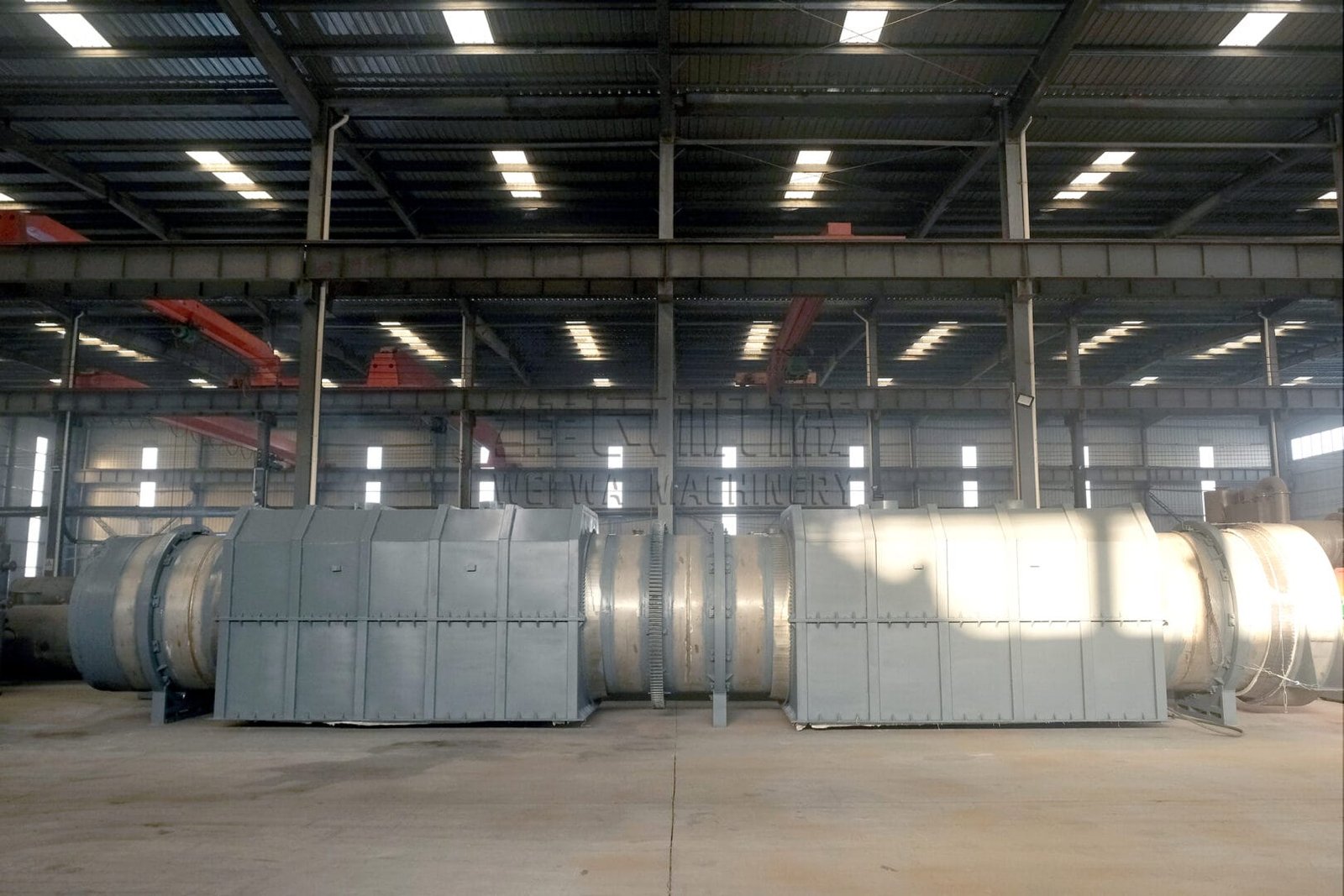
In the autumn of 2025, Weiwa Machinery shipped a continuous carbonization furnace to a customer in the United Kingdom. The machine was destined for a biochar production facility that had been sourcing palm kernel shell feedstock from Southeast Asia and needed a reliable, high-throughput carbonization solution capable of running around the clock. What followed was a rigorous on-site trial that tested not only the equipment’s thermal stability and output consistency but also its ability to produce biochar that meets the increasingly strict quality benchmarks demanded by European carbon removal buyers.
ทำความเข้าใจกับ เตาเผาคาร์บอนอย่างต่อเนื่อง
Before examining the trial results, it is worth grounding the discussion in what a continuous carbonization furnace actually does and how it differs from the batch-type carbonization equipment that many producers still operate. The distinction matters because it explains why the UK customer chose to upgrade to a continuous system in the first place.
A conventional horizontal carbonization furnace processes feedstock in discrete batches. Operators load raw material into the furnace chamber, seal it, run a carbonization cycle that typically lasts between six and eight hours, then cool the chamber, discharge the charcoal, and reload. The rhythm is stop-start, and while batch furnaces remain an excellent choice for smaller-scale operations or facilities that process diverse feedstocks on a flexible schedule, they introduce unavoidable downtime between cycles. For a producer who needs to ship consistent volumes of biochar to offtake partners or carbon credit registries every week, that downtime directly constrains revenue.
How the Double-Cylinder Rotary Design Works?
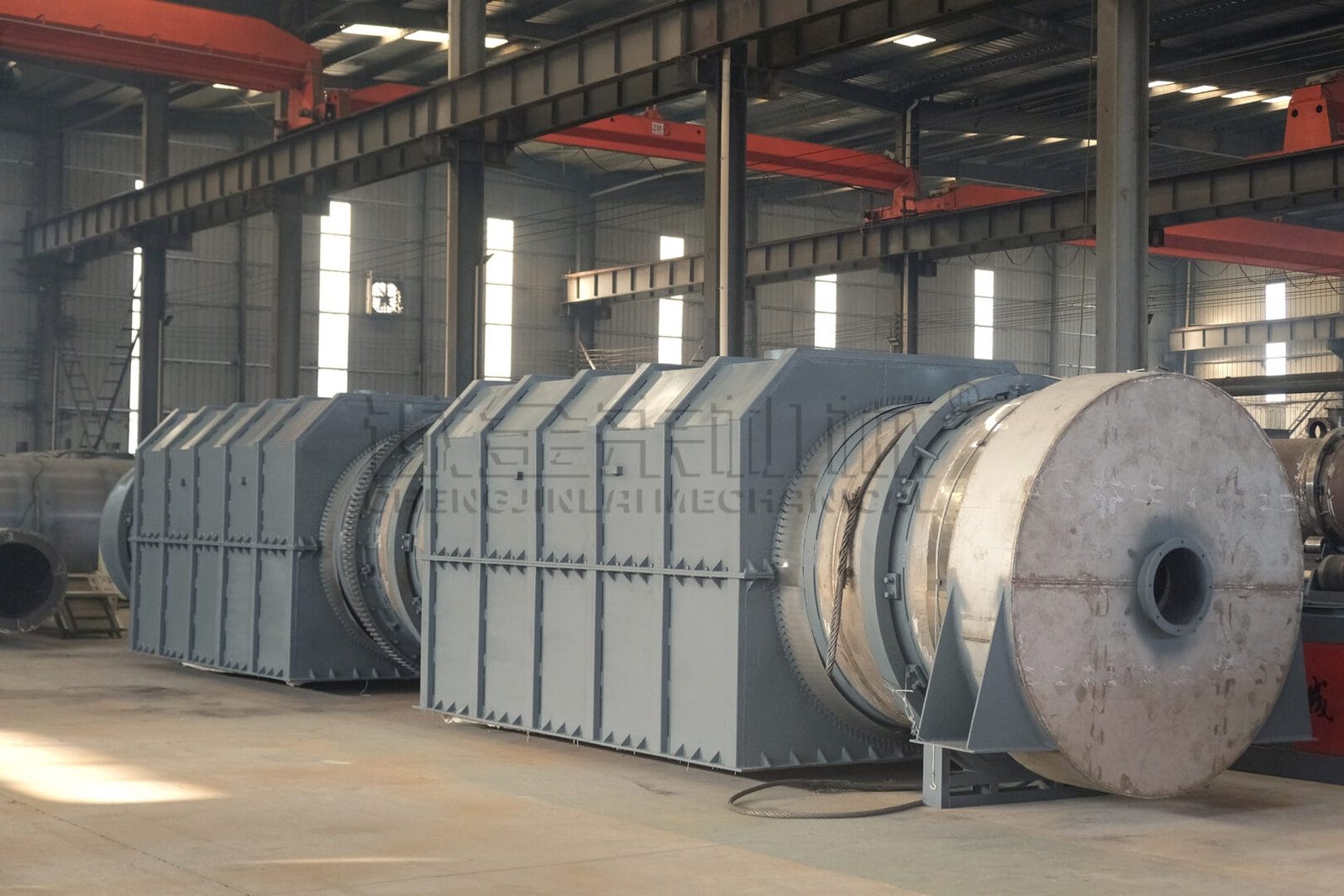
A continuous carbonization furnace eliminates the stop-start cycle by design. The Weiwa model employs a double-cylinder rotary architecture: an inner drum handles pre-drying while an outer drum performs the primary carbonization reaction. Feedstock enters at one end through a screw conveyor, spirals through both cylinders under controlled rotation, and emerges as finished biochar at the discharge end — all without the operator ever needing to halt the feed or interrupt the discharge.
This uninterrupted material flow is the defining operational advantage. The inner drum uses residual heat radiated from the outer carbonization drum to drive moisture out of the incoming biomass before it ever reaches the carbonization zone. By the time the material transitions into the outer drum, it is dry enough to carbonize efficiently. The outer drum then heats the material to a target range of 500 ถึง 600 degrees Celsius in a low-oxygen environment, driving off volatile compounds and leaving behind a carbon-rich solid.
What makes the Weiwa continuous carbonization furnace particularly energy-efficient is its combustible gas recovery circuit. As biomass thermally decomposes, it releases a mixture of carbon monoxide, มีเทน, and hydrogen — gases that carry significant calorific value. Rather than venting these gases to atmosphere, the system captures them through a dedicated pipeline, cleans them through a cyclone dust separator and spray scrubber, and re-injects them into the furnace combustion chamber. Once the furnace reaches its operating temperature, this recovered syngas supplies the bulk of the thermal energy needed to sustain the carbonization reaction. External fuel input — whether diesel, natural gas, or biomass — becomes marginal, typically covering only the initial cold-start phase. For a facility running the furnace 20 hours per day or more, the fuel savings compound into a meaningful reduction in operating cost per tonne of biochar produced.
Key Technical Parameters That Drive Performance
While the double-cylinder principle is shared across many rotary carbonization systems, the specific parameters that Weiwa engineers into each continuous carbonization furnace determine how well it performs with a given feedstock. Feedstock residence time inside the furnace is adjustable by varying the drum rotation speed and the angle of inclination, giving operators direct control over the degree of carbonization. A slower rotation keeps the material in the hot zone longer, producing a higher fixed-carbon biochar. A faster rotation pushes material through more quickly for applications where throughput volume takes priority over maximum carbon content.
Temperature uniformity across the drum length is maintained by a multi-zone external heating jacket and precisely positioned air inlets that control oxygen ingress. Oxygen is the variable that turns carbonization into combustion, so the system must admit just enough air to sustain the partial oxidation that generates heat without allowing full combustion of the biochar product. The Weiwa design achieves this balance through a feedback loop: thermocouples positioned at multiple points along the drum relay real-time temperature data to the control cabinet, which adjusts damper positions and blower speed to hold the target temperature band. This automated regulation is one reason the UK trial produced biochar with remarkably consistent carbon content from the first hour of production to the last.
Output capacity varies by feedstock density and moisture content. When running palm kernel shell at approximately 12 percent moisture, the Weiwa continuous carbonization furnace consistently delivered between 300 และ 500 kilograms of finished biochar per hour during the UK trial. Dense feedstocks like coconut shell sit at the higher end of that range; lighter materials like sawdust or rice husk process faster by volume but yield less charcoal per cubic metre of input. The carbonization ratio — the weight of biochar output relative to dry feedstock input — held steady at 3.5 ถึง 4 ถึง 1 across the trial period, meaning roughly one tonne of biochar for every 3.5 ถึง 4 tonnes of PKS fed in.
The UK Trial: Testing a Continuous Carbonization Furnace with PKS
The customer site was a converted agricultural facility in eastern England, positioned within trucking distance of several major ports that receive bulk shipments of palm kernel shell from Malaysia and Indonesia. The operator’s business model was straightforward: import PKS as a waste-derived biomass, convert it into biochar using a continuous carbonization furnace, and sell both the biochar and the associated carbon removal certificates into the voluntary carbon market — with an eye on the regulated UK Emissions Trading Scheme integration expected after 2028.
Feedstock Selection and Preparation
Why palm kernel shell? The answer lies in a convergence of logistics, chemistry, and regulation. The UK generates substantial volumes of domestic biomass residues — forestry thinnings, หลอด, sawmill by-products — but the supply chains for these materials are fragmented, seasonal, and often contested by multiple end-users including biomass power stations and animal bedding producers. พีเคเอส, by contrast, arrives in concentrated bulk shipments from palm oil mills that view the shells as a waste disposal problem. The UK importer can secure large, consistent volumes at a predictable price point, which is essential for an industrial biochar operation that needs to run its continuous carbonization furnace at steady throughput month after month.
Chemically, PKS is an attractive carbonization feedstock. Its naturally low ash content — typically under 3 percent — means the resulting biochar carries fewer mineral impurities that could complicate soil application or industrial use. Its high lignin content yields a dense, structurally robust biochar with good resistance to physical degradation during handling and transport. And its particle size, averaging between 5 และ 15 millimetres in the longest dimension, falls into a sweet spot that allows the material to flow smoothly through the screw feeder and spiral evenly through the rotary drums without creating bridging or blockages.
During the UK trial, the PKS was delivered at approximately 18 percent moisture content and passed through a rotary drum dryer — also supplied by Weiwa — to bring moisture down to the 10 ถึง 12 percent target before entering the continuous carbonization furnace. The dryer shared the same gas recovery circuit as the carbonization furnace, using waste heat from the carbonization exhaust to drive the drying process and further squeezing efficiency out of the system’s overall energy balance.
Trial Setup and Operational Data
The trial ran over seven consecutive days, with the continuous carbonization furnace operating for approximately 18 hours each day and undergoing routine inspection and cleaning during a six-hour nightly window. The objective was not a brief demonstration run but a sustained production test that would reveal how the equipment performed under conditions resembling real commercial operation.
The furnace was cold-started on the morning of day one using a diesel burner integrated into the combustion chamber. The warm-up phase took roughly 45 minutes to bring the outer drum to 300 องศาเซลเซียส, at which point PKS feeding began at a reduced rate. Over the next 90 minutes, the furnace temperature climbed steadily to the 520-degree operating target, and the combustible gas recovery circuit began contributing meaningfully to the thermal load. By hour three, the external diesel burner had throttled back to a pilot flame, and the furnace was running primarily on recovered syngas — the self-sustaining mode that defines the economic case for continuous carbonization technology.
Throughput during the first day was deliberately conservative at approximately 800 kilograms of PKS per hour, yielding roughly 220 kilograms of biochar. By day three, the operators had dialed in the rotation speed, air inlet settings, and feed rate for optimal performance, and the furnace settled into a steady rhythm: 1,200 ถึง 1,400 kilograms of PKS in per hour, 330 ถึง 400 kilograms of biochar out. The discharge temperature of the finished biochar was consistently below 60 degrees Celsius thanks to a water-jacketed screw cooler positioned at the furnace exit, which meant the product could be bagged or bulk-loaded immediately without the fire risk associated with hot charcoal discharge.
Temperature logs from the thermocouple array told a story of exceptional stability. Over the full seven-day run, the outer drum carbonization zone held between 510 และ 545 องศาเซลเซียส. The largest single-hour deviation from the 520-degree setpoint was 22 degrees, and that occurred during a brief feedstock surge when a front-end loader delivered a particularly wet batch of PKS to the infeed hopper. The control system compensated within 20 minutes by increasing combustion air and briefly re-engaging the diesel burner, after which the temperature returned to target without operator intervention.
Emissions monitoring was conducted at the stack using a portable gas analyzer. Carbon monoxide in the flue gas was consistently below 800 parts per million after the secondary combustion chamber, well within the limits specified by the UK Environment Agency’s guidance for biomass combustion plants. Particulate emissions measured after the cyclone separator and spray tower were negligible — visually, the stack exhaust was a barely visible water vapour plume, which surprised the customer’s environmental compliance officer who had expected more visible emissions from a carbonization process.
Biochar Output Quality and Consistency
The customer’s primary quality benchmark was fixed carbon content, which was measured using a muffle furnace ash test on hourly composite samples. Across the seven-day trial, the fixed carbon of the PKS-derived biochar averaged 78.4 เปอร์เซ็นต์, with a range of 76.1 ถึง 80.2 เปอร์เซ็นต์. Volatile matter content averaged 12.8 เปอร์เซ็นต์, and ash content averaged 2.9 percent — all figures that met or exceeded the European Biochar Certificate (EBC) feedstock and production standards for the basic grade, and in many cases approached the premium grade thresholds.
More telling than the absolute numbers was the consistency. Hour-to-hour variation in fixed carbon content was less than 2.5 percentage points across the entire trial, a level of uniformity that batch furnaces struggle to match because each batch cycle introduces slight differences in heating rate, peak temperature, and hold time. For a biochar producer selling into carbon removal markets where the carbon credit issuance depends on verified, auditable product consistency, this steadiness is not merely a nice-to-have — it is a commercial necessity.
The customer also sent samples to an independent UK laboratory for analysis of polycyclic aromatic hydrocarbon (PAH) เนื้อหา, heavy metals, and pH. The PAH results came back below the EBC threshold of 6 milligrams per kilogram for the premium grade, and heavy metal concentrations were all within the limits prescribed for unrestricted agricultural use. The pH of the biochar averaged 8.9, placing it in the mildly alkaline range that makes it suitable as a liming substitute in acidic UK soils — a secondary value proposition that the customer had not initially factored into their business case but quickly recognised as a marketing advantage when approaching UK farming cooperatives.
Particle size distribution after carbonization and cooling was concentrated in the 3 ถึง 10 millimetre range, with less than 5 percent of the output passing through a 1-millimetre screen. This granular consistency is important because UK soil application equipment — spreaders, injection rigs, and compost turners — is typically calibrated for granular products rather than fine powders, and a dusty biochar creates both application headaches and worker exposure concerns.
Why UK Buyers Are Turning to Continuous Carbonization Furnaces?
The UK biochar market is not growing in a vacuum. It is being pulled forward by regulatory architecture, corporate net-zero commitments, and a growing recognition among British farmers that soil carbon sequestration offers both agronomic and financial returns. A continuous carbonization furnace sits at the intersection of all three trends.
The Biochar Carbon Removal Opportunity
Biochar carbon removal has emerged as the dominant methodology within the engineered carbon removal sector. According to data aggregated by Puro.earth, biochar accounted for over 90 percent of delivered durable carbon dioxide removal certificates in early 2025, with delivered volumes exceeding 680,000 tonnes of CO2 equivalent. The global biochar market was valued at approximately USD 2.46 พันล้านใน 2025 and is projected to grow at a compound annual rate above 10 percent through to 2034, driven by corporate procurement from companies including Microsoft — which signed a ten-year agreement covering one million tonnes of biochar-based carbon removal — and by the integration of carbon removals into compliance markets.
The United Kingdom is at the forefront of that compliance integration. In July 2025, the UK government announced plans to incorporate engineered carbon removals, including biochar, into the UK Emissions Trading Scheme by 2029. Once that integration takes effect, UK-based biochar producers will be able to sell carbon removal units into a regulated market where the prevailing UK Allowance price — approximately USD 48 per tonne in mid-2025 — sets a floor, and where the engineered removal premium could push effective pricing significantly higher. A continuous carbonization furnace operating in the UK today is not just producing biochar for today’s voluntary market. It is positioning its operator to capture value in a future compliance market that will almost certainly be deeper and more liquid than the voluntary market alone.
Regulatory Tailwinds and Carbon Credit Markets
Beyond the ETS integration, the UK has built a layered support structure for biochar deployment. The Environment Agency has clarified that biochar produced from clean biomass feedstocks under controlled pyrolysis conditions qualifies as a product rather than a waste, removing a major regulatory barrier that had previously discouraged investment. The Sustainable Farming Incentive, introduced as part of the post-Brexit agricultural transition, includes payments for soil organic matter improvement practices that biochar application directly supports. And UK-based carbon registries, including the Woodland Carbon Code’s evolving biochar protocol, are building verification pathways that make UK-produced biochar credits more attractive to domestic corporate buyers who prefer locally verified carbon removal over internationally-sourced offsets.
For a UK operator deciding which continuous carbonization furnace to invest in, the regulatory environment rewards equipment that delivers auditable consistency. Carbon credit issuance under both Puro.earth’s Biochar Methodology and the European Biochar Certificate framework requires detailed production records: feedstock source and moisture, carbonization temperature profiles, hourly throughput data, and independent laboratory analysis of output quality. A continuous carbonization furnace with digital instrumentation and data logging — as the Weiwa system provides — generates this audit trail automatically, reducing the administrative burden of credit issuance and strengthening the operator’s position during verification audits.
PKS as a Strategic Feedstock for the UK
The feedstock equation deserves attention because it is not obvious why a British biochar producer would import palm kernel shell from 10,000 kilometres away rather than use locally sourced biomass. The answer circles back to reliability and quality. UK-sourced wood chip varies seasonally in moisture content, species composition, and availability. A producer running a continuous carbonization furnace at commercial scale needs feedstock that arrives at a known specification on a predictable schedule. PKS from established Southeast Asian suppliers meets that requirement: the palm oil industry generates PKS as a processing residue in quantities that far exceed local demand, and UK importers have built reliable maritime logistics chains that deliver containerised or bulk PKS to British ports at a landed cost that, when combined with the premium achievable for high-quality biochar and associated carbon credits, supports a viable business model.
There is also a quality argument. UK wood chip often carries higher bark content, which translates to higher ash in the resulting biochar. Agricultural residues like straw have even higher ash and often contain chlorides that can corrode furnace components and complicate soil application. พีเคเอส, with its low ash and near-absence of chlorides, produces a cleaner biochar that commands a higher price per tonne and encounters fewer regulatory questions about soil contaminant loading. For a continuous carbonization furnace operator targeting the premium biochar segment — soil amendments for organic horticulture, filtration media, or high-value carbon removal credits — feedstock quality directly determines product quality, and PKS delivers on that front.
Continuous Carbonization Furnace Price and ROI Considerations
No discussion of industrial equipment adoption is complete without addressing cost, and continuous carbonization furnace price is understandably one of the first questions UK buyers ask. The honest answer is that pricing depends on configuration: throughput capacity, the inclusion of upstream drying and downstream cooling equipment, the level of automation and data logging, and the specific engineering modifications required for the target feedstock and installation site.
A medium-capacity continuous carbonization furnace from Weiwa Machinery — capable of processing 1,000 ถึง 1,500 kilograms of PKS per hour and producing 300 ถึง 400 kilograms of biochar — typically represents a capital outlay that UK operators can recover within 18 ถึง 30 months when biochar is sold at current UK market prices of GBP 250 ถึง 400 per tonne for bulk agricultural-grade material, with premiums pushing well above GBP 500 per tonne for certified premium-grade biochar suitable for horticulture or specialised filtration applications. These figures do not include carbon credit revenue, which at voluntary market prices of USD 125 ถึง 145 per CORC adds a further revenue stream that can materially shorten the payback period.
Operating costs centre on three line items: feedstock, ไฟฟ้า, and labour. Electricity consumption for the Weiwa continuous carbonization furnace at the UK trial averaged 22 kilowatts per hour across all motors, blowers, and control systems — modest for an industrial processing line and broadly in line with the power draw of a small agricultural grain dryer. Labour requirements are equally modest. Once the furnace reaches its self-sustaining thermal state, a single operator can manage feedstock loading, monitor the control panel, and handle biochar bagging or bulk-out. The UK trial was staffed by two operators during the daytime shift and one overnight, with the overnight operator primarily performing inspection rounds and responding to alarms rather than actively managing the process.
What moves the ROI needle most dramatically is uptime. A batch furnace that spends two hours of every eight-hour cycle on loading, ความร้อน, ระบายความร้อน, and discharging is only carbonizing material 75 percent of the time. A continuous carbonization furnace, once started, carbonizes material for as long as feedstock is available and the operator chooses to let it run. The UK trial ran at 75 percent of clock hours — 18 hours per day — and could have run 24 hours with additional staffing. At 24-hour operation, the same furnace would produce roughly 30 percent more biochar per week than it did during the trial, with the only additional cost being the electricity and labour for the extra six hours.
What Makes Weiwa’s Continuous Carbonization Furnace Stand Out?
The market for continuous carbonization furnace equipment includes manufacturers from China, อินเดีย, and Europe, so buyers have choices. Several features distinguish the Weiwa design in ways that mattered during the UK trial.
The refractory lining inside both drums is cast from a high-alumina material rated for sustained exposure to 1,200 degrees Celsius — well above the 600-degree operating ceiling — which extends drum service life and reduces the frequency of maintenance shutdowns. The screw conveyor that feeds PKS into the furnace uses a variable-frequency drive that allows the operator to adjust feed rate in fine increments without stopping the motor, a practical advantage when transitioning between feedstocks or responding to changes in incoming material moisture.
The gas cleaning train — cyclone separator, spray scrubber, and mist eliminator — is oversized relative to the furnace’s nominal gas output, which means it handles transient surges in volatile release without letting particulates or tars bypass the system. During the UK trial, the scrubber water was recirculated through a settling tank and required replacement only once every three days, a manageable water consumption profile even for sites without a direct mains water connection.
Perhaps most valued by the UK customer was the control system. The touchscreen interface displays real-time data from every thermocouple, pressure sensor, and motor drive on a single dashboard, with historical trend charts accessible at the tap of a button. All data is logged to internal storage and can be exported as CSV files for carbon credit auditing or process optimisation analysis. The system also supports remote monitoring via an industrial VPN connection, which allowed Weiwa’s engineering team in Gongyi to observe the trial in real time and make parameter suggestions within minutes of a temperature deviation appearing on the trend chart. For a UK operator who may not have deep in-house carbonization engineering expertise, that remote support capability significantly de-risks the first months of operation.
The Future of Continuous Carbonization Furnaces in the UK Market
Looking ahead, the UK market for continuous carbonization furnace technology appears poised for structural growth that extends well beyond the early adopters who have already placed orders. Three converging forces suggest that the current wave of installations — still numbering in the dozens rather than hundreds — represents the beginning of a much larger deployment cycle.
First, the UK’s carbon removal integration into the ETS will create a compliance-driven demand signal that does not currently exist. When UK emitters are required to surrender carbon removal units alongside emission allowances, the price of UK-originated biochar credits will almost certainly rise, improving the investment case for every continuous carbonization furnace deployed on British soil.
Second, the biomass feedstock supply chain is diversifying. While PKS currently dominates the UK biochar feedstock mix, domestic sources are developing. The UK Forestry Commission has identified substantial volumes of low-grade hardwood thinnings that currently have no high-value market; several waste-to-energy plants have begun separating clean wood chip from construction and demolition waste streams; and agricultural cooperatives are exploring dedicated biomass crops like miscanthus and short-rotation coppice willow that could supply biochar producers with locally grown, purpose-selected feedstock. A continuous carbonization furnace that can switch between PKS and domestic wood chip with minimal reconfiguration — as the Weiwa design can — gives its operator feedstock flexibility that hedges against price volatility in any single material stream.
Third, the biochar application market itself is broadening. Soil application remains the anchor use case, and UK farmers managing heavy clay soils in the Midlands or acidic upland pastures in Scotland and Wales stand to gain measurably from biochar’s water retention and pH-buffering properties. But new applications are emerging: biochar as a feed additive for ruminant livestock, where preliminary research suggests methane emission reductions and gut health improvements; biochar as a component in low-carbon building materials, where its thermal insulation and moisture-regulating properties are attracting attention from sustainable construction firms; and biochar as a filtration medium for wastewater treatment and industrial effluent polishing. Each new application expands the addressable market for UK biochar producers and, by extension, for the continuous carbonization furnace technology that produces it.
The UK customer who hosted the Weiwa trial has already placed an order for a second continuous carbonization furnace, citing the consistency of the trial results and the straightforward scalability of adding parallel production lines. That pattern — start with one furnace to validate the business model, then expand capacity as offtake contracts grow — is likely to repeat across the UK biochar sector over the next five years.
เกี่ยวกับ เครื่องจักร Weiwa
Henan Weiwa Machinery Manufacturing Co., จำกัด. brings more than three decades of engineering experience to the biomass carbonization and briquetting equipment industry. Headquartered in Gongyi City, มณฑลเหอหนาน, จีน, the company operates a 112,000-square-metre manufacturing facility equipped with over 200 machine tools and staffed by more than 100 research and development personnel. Weiwa Machinery integrates equipment design, การผลิต, sales, and after-sales technical support under one roof, giving customers a single point of accountability from initial consultation through to commissioning and long-term operation.
The company’s product portfolio spans the full charcoal and biochar production chain: เตาเผาคาร์บอนอย่างต่อเนื่อง, เตาถ่านแนวนอน, charcoal briquette presses, charcoal extruders, sawdust briquette machines, hammer mills, rotary dryers, and complete turnkey production lines. Each machine is built around the principle of creating value for the customer — which in practice means engineering for reliability, designing for energy efficiency, and supporting every installation with the training, spare parts, and technical service needed to keep production running.
Weiwa Machinery exports to more than 100 countries and maintains five overseas branch offices. The company has completed carbonization and briquetting projects across Southeast Asia, แอฟริกา, South America, the Middle East, Europe, and now the United Kingdom. Whether a customer needs a single continuous carbonization furnace for a pilot biochar operation or a full-scale production line capable of processing tens of thousands of tonnes of biomass per year, Weiwa’s engineering team provides customised configuration, 3D plant layout design, and on-site commissioning support.
To discuss how a Weiwa continuous carbonization furnace could fit into your UK or European biochar project — including detailed pricing, throughput calculations based on your specific feedstock, and references from existing biochar customers — contact Weiwa Machinery directly.
ม็อบ / WhatsApp: +8613838093177 อีเมล: info@cjlmachineGroup.com


 Wechat

 +8615937143060
