


Why Zambia Is a Growing Market for Making Charcoal Balls?
Zambia is not a small pilot market for solid fuel. Urban households in Lusaka, Ndola, Kitwe, and Chipata still rely heavily on charcoal for daily cooking. Rural-to-urban migration continues, electricity tariffs move upward, and imported LPG remains expensive for low-income families. In that environment, a uniform charcoal ball with stable size, higher density, and lower ash mess is not a luxury product. It is a better version of what people already buy.
Urban Cooking Fuel Demand in Lusaka and Copperbelt
Lusaka and the Copperbelt corridor consume large volumes of lump charcoal every week. The problem for local traders is inconsistency: lump size varies, moisture is unpredictable, and transport breaks fragile pieces. A ball charcoal briquettes machine solves the standardization problem. Once the client in Zambia starts making charcoal balls in Zambia with a roller press, every bag contains the same shape, similar weight, and repeatable burn time. That consistency lets the producer move from spot sales to supply contracts with restaurants and boarding schools.
Turning Charcoal Dust Into Saleable Charcoal Balls
Charcoal dust is treated as waste at many depots. It collects on the floor, gets swept into corners, and is either discarded or sold at a fraction of lump price. A charcoal ball press machine turns that dust into a premium product. The dust is crushed finer, mixed with water and binder, pressed into oval or pillow balls, and dried. The output is cleaner to handle, stacks better in sacks, and survives pothole roads between districts. For a Zambian entrepreneur, the raw material is already sitting next to the kiln yard at low cost.
What a Mesin Briket Arang Bola Actually Does?
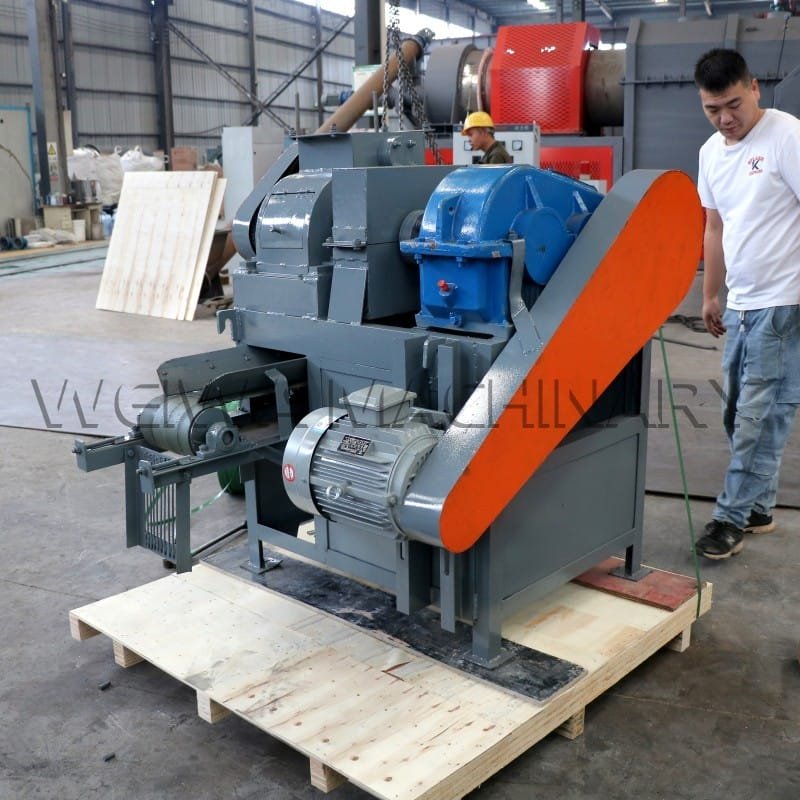
A ball charcoal briquettes machine is a roller-type press. Two alloy rollers rotate in opposite directions. Each roller carries half-cavities shaped like a ball, egg, pillow, or oval. Charcoal powder fed uniformly into the gap is squeezed at high pressure. The cavity closes, forms the briquette, and the rotating roller ejects it on the down side. No glue gun, no hydraulic ram per piece, no manual molding.
Roller Press Principle Behind the Charcoal Ball Press Machine
The core advantage of the charcoal ball press machine is pressure control. Weiwa uses a pair of chromium-alloy rollers with a hardness range suited for abrasive carbon powder. A constant-speed gearbox drives the rollers. A screw feeder maintains steady fill. When the cavity passes the center line, pressure peaks, compacts the powder, and the briquette leaves the machine with a dense skin. That skin is why charcoal balls do not crumble in a sack and why they fall from waist height without shattering.
Pressure is not the only variable. Feed moisture, powder fineness under 3 mm, and binder ratio decide whether balls hold shape after drying. Our engineers tune the roller gap and feeder speed before container loading so the African buyer receives a machine already matched to charcoal powder, not coal fines.
Common Briquette Shapes for African BBQ and Household Use
Zambian buyers usually ask for three shapes first. Pillow shape is the default for household braziers. Oval ball is popular with roadside grilled maize and meat vendors because it rolls less in the tray. Round ball shape is common for shisha-grade export trials. The same charcoal briquette machine can switch shapes by changing roller sets. Weiwa ships spare rollers or interchangeable roller sleeves so the client can test market response before committing to one shape permanently.
The Full Charcoal Briquette Machine Production Line We Exported
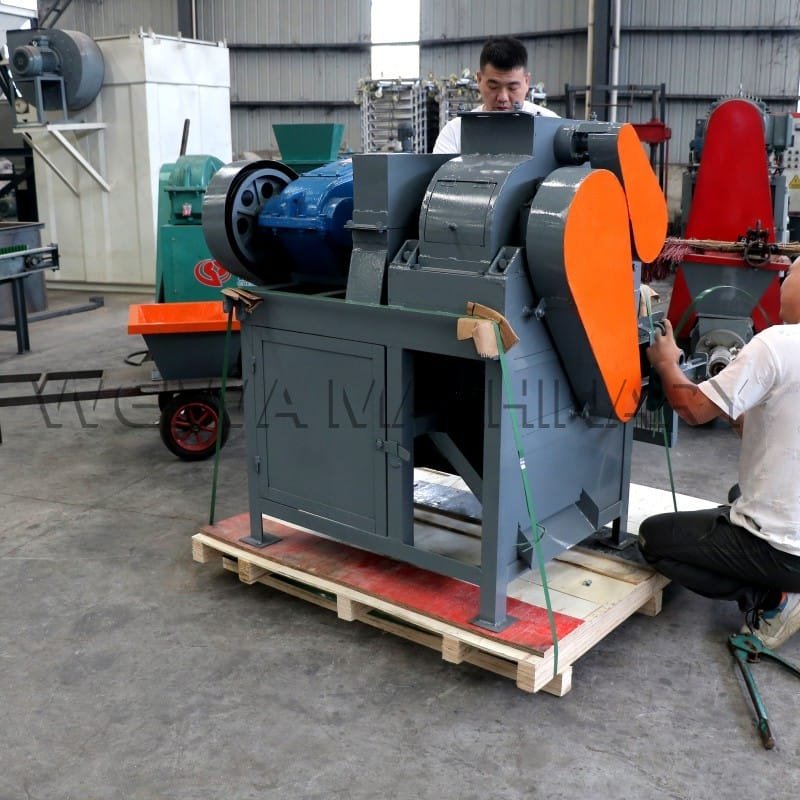
The Zambia order was configured as a 1 ke 1.5 ton per hour line. That capacity fits a mid-size yard with three to four operators per shift. The full flow was crushing, mixing, buffering, pressing, pengeringan, and manual weighing. Below is how each stage worked in the shipped configuration.
Crusher and Twin Shaft Mixer Stage
Raw charcoal chunks and depot dust entered a hammer crusher with a 22 kW motor. Output size was regulated by screen mesh to keep most particles under 2 mm. From the crusher, a bucket elevator moved powder to a twin shaft mixer. The twin shaft mixer added water and starch-based binder while paddles homogenized the mass. Mixing time was set at 6 ke 8 minutes per batch. Proper mixing is the difference between balls that crack in the dryer and balls that ring like ceramic when tapped.
After mixing, the material dropped into a buffer silo. The silo removed feeder pulsation. A variable-speed screw then dosed material into the ball charcoal briquettes machine at a steady rate. Steady dosing protects the rollers and keeps briquette weight within plus or minus 5 grams.
Ball Press Machine and Mesh Belt Dryer Stage
The charcoal ball press machine in this line used 290 mm rollers with a 7.5 kW main drive. Cavities were pillow shaped, 50 by 40 mm. Pressed balls fell onto a mesh belt dryer 8 meters long with three layers. Hot air was generated by a biomass burner using off-spec charcoal fines, so the client did not pay full industrial electricity for drying. Drying reduced moisture from around 18 percent to under 6 percent in roughly 3 hours depending on ambient humidity.
Dried balls were cooled on a static rack, then bagged in 10 kg and 25 kg polypropylene sacks. The line did not include automatic packing in the first phase. The Zambian buyer chose manual bagging to keep electrical load low and to employ local labour. Weiwa left space in the layout drawing to add a weighing and sewing machine later.
Making Charcoal Balls in Zambia: Raw Materials and Binder Logic
One reason making charcoal balls in Zambia works is feedstock diversity. You are not limited to pure hardwood charcoal. The same charcoal briquette machine processes carbonized coconut shell, sawdust briquette offcuts, coal fines from informal miners, and even metallurgical coke dust if the binder is adjusted.
Charcoal Powder, Coal Fines, and Biomass Residue Feedstock
For cooking balls, we recommend 70 ke 90 percent charcoal powder blended with 10 ke 30 percent coal fines to extend burn time. For pure BBQ export, clients use 100 percent hardwood charcoal powder with cassava starch binder. For low-cost household balls, adding 15 percent ground bone-dry maize cob charcoal reduces cost and keeps ignition easy. The ball charcoal briquettes machine does not care about the recipe as long as the powder is dry enough and fine enough.
Water, Starch, and Molasses Binder Ratios
Water content before pressing should sit near 14 ke 16 percent. Too dry and the ball flakes. Too wet and the dryer becomes the bottleneck. Binder ratio depends on powder quality. Starch slurry at 3 ke 5 percent of dry weight is standard. Molasses at 4 ke 6 percent improves smell and ignition but attracts moisture if drying is incomplete. The Zambia client started with 4 percent cassava starch and adjusted after the first 5 tonnes based on drop-test results.
Site Layout, Kuasa, and Labour Plan for a Zambian Buyer
Weiwa supplied a 2D site plan showing machine centers, belt routes, dryer exhaust direction, and a separate binder kitchen. The recommended shed was 18 meters long by 9 meters wide with a 4 meter eave height. Crushing and pressing were placed upwind of the drying zone to keep carbon dust away from the burner intake.
Power connection was calculated at 45 kW peak with soft starters on the crusher and dryer fan. In practice, the client runs a 60 kVA generator during daytime and grid power at night for mixing and bagging. Labour plan was four people per shift: one feeder, one mixer assistant, one press observer, one dryer and bagging handler. Pada 1 ton per hour and single shift, monthly output reaches 240 tonnes, enough to supply ten retail depots in Lusaka and surrounding towns.
Why Entrepreneurs Choose Weiwa for a Charcoal Ball Press Machine Line?
Weiwa Machinery has more than thirty years of workshop experience in Zhengzhou, Henan. We are not a trading company that rebrands someone else’s press. We machine rollers, assemble gearboxes, wire panels, and run a full dry test with charcoal powder before shipment. For the Zambia client, we recorded a 30-minute video of the ball charcoal briquettes machine running on simulated African feedstock and sent it with the bill of lading.
Our after-sales team responds on WhatsApp within one working day. Spare rollers, seals, and coupling bushes are packed inside the container, not shipped separately. We provide custom roller shapes, custom site drawings, and custom conveyor heights so the line fits the buyer’s existing yard instead of forcing the buyer to rebuild the yard.
When a Zambian buyer asks about making charcoal balls in Zambia at scale, we do not send a generic PDF. We ask for raw material samples, target bag weight, local electricity tariff, and available shed size. Then we model the line. That is why our charcoal briquette machine projects in Africa tend to start producing saleable balls within three weeks of arrival instead of three months.
Talk to Jentera Weiwa About Your Charcoal Briquette Machine Project
If you are researching a ball charcoal briquettes machine, a charcoal ball press machine, or a complete charcoal briquette machine line for Zambia, Tanzania, Uganda, Mozambique, or South Africa, Weiwa Machinery can quote based on your real numbers. We welcome factory visits in Zhengzhou and we ship to any port from Tianjin, Qingdao, or Shanghai.
Contact us for a tailored quotation, roller shape options, and a free site layout drawing:
Mobile / WhatsApp: +8613838093177
E -mel: info@cjlmachinegroup.com
Weiwa Machinery is a Zhengzhou-based manufacturer with over thirty years of experience in briquetting and pressing equipment. We serve more than 130 negara, offer customized production line design, supply spare parts from stock, and support commissioning by email, video, or on-site engineer dispatch. Whether you want to start making charcoal balls in Zambia or upgrade an existing charcoal ball press machine, our team will plan the rollers, pengikat, dryer length, and site flow with you before you pay the deposit.


 WeChat

 +8615937143060
