


Pengenalan
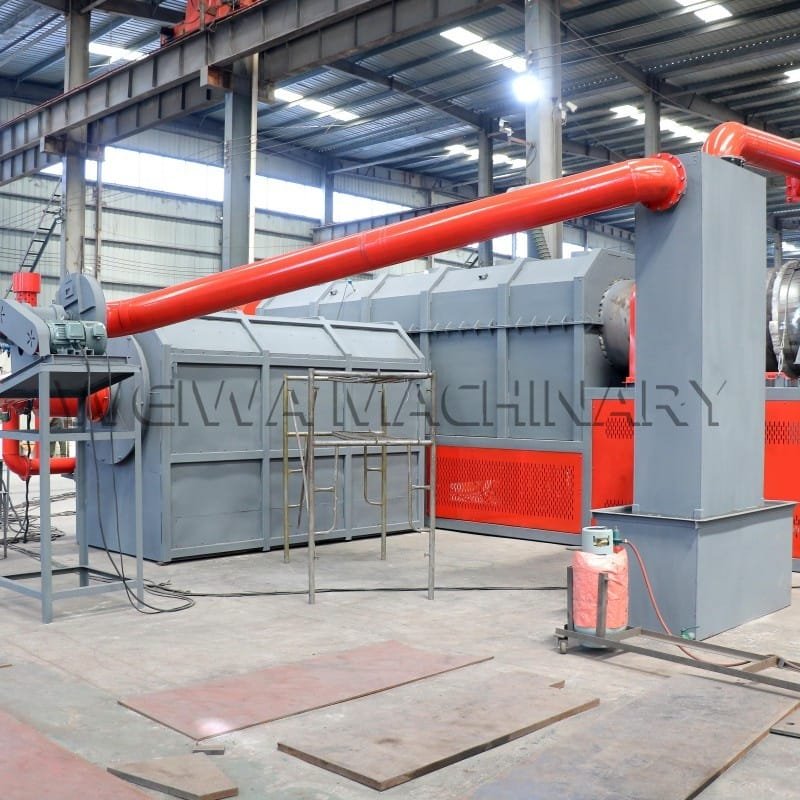
Di Weiwa Machinery, we believe that innovation in biomass processing equipment can drive both environmental sustainability and economic growth. Recently, our team had the privilege of conducting an on-site trial of our relau karbonisasi berterusan at a client’s facility in Indonesia. This trial focused on producing high-quality biochar from palm kernel shell (PKS), one of Indonesia’s abundant agricultural residues. The results not only validated the performance of our continuous carbonization furnace for PKS, but also highlighted its vast potential within the Indonesian market for charcoal making machines.
Understanding Relau karbonisasi berterusan Technology
What Is a Continuous Carbonization Furnace?
A relau karbonisasi berterusan is an advanced thermal processing system designed to convert biomass materials into charcoal or biochar without interruption. Unlike batch kilns that require loading, pemanasan, cooling, and unloading cycles, a continuous system allows raw material to move steadily through different temperature zones, ensuring consistent output and higher efficiency.
The core principle involves pyrolysis — the decomposition of organic matter under limited oxygen conditions. Heat causes volatile gases to release, leaving behind solid carbon-rich char. In a continuous setup, feeding and discharging happen simultaneously, enabling 24/7 operation and scalable production.
Why Choose a Continuous Carbonization Furnace for PKS?
Palm kernel shell (PKS) is a dense, high-calorie biomass waste generated in large volumes by Indonesia’s palm oil industry. Its uniform size and composition make it ideal for continuous carbonization processes. Using a continuous carbonization furnace for PKS ensures optimal heat transfer, minimal emissions, and maximum retention of carbon content in the final product.
Key benefits include:
- Steady production flow: No downtime between batches increases overall yield.
- Kecekapan tenaga: Off-gas recycling reduces external fuel needs.
- Consistent quality: Uniform temperature control improves biochar characteristics such as porosity and surface area.
- Kebolehskalaan: Suitable for small enterprises and industrial-scale plants alike.
Given these strengths, yang continuous carbonization furnace price becomes a worthwhile investment when considering long-term operational savings and product value.
On-Site Trial in Indonesia
Context and Objectives
Indonesia is rich in biomass resources, yet much of it remains underutilized due to limited access to efficient conversion technologies. Our client, a local entrepreneur focusing on sustainable agriculture inputs, sought a reliable charcoal making machine in Indonesia capable of turning PKS into biochar for soil amendment and industrial uses.
Weiwa Machinery’s objective was to demonstrate the reliability, kecekapan, and adaptability of our continuous carbonization furnace in Indonesia under real-world conditions. We aimed to assess throughput, energy consumption, emission levels, and biochar quality during extended operation.
Preparation and Installation
Our engineering team arrived on site weeks ahead of the trial to ensure seamless installation. The furnace was customized slightly to accommodate local PKS specifications and climate conditions. Special attention was given to integrating flue gas cleaning systems to meet Indonesia’s environmental regulations.
Local technicians were trained to operate and monitor the equipment, emphasizing safety protocols and maintenance routines. This collaboration ensured the trial would reflect true usability for Indonesian operators.
Trial Highlights: Performance and Results
Seamless Operation and High Throughput
During the trial period, yang relau karbonisasi berterusan ran uninterrupted for multiple days. Raw PKS was fed at a controlled rate, moving through drying, pyrolysis, and cooling stages inside the furnace. The system maintained stable internal temperatures across zones, crucial for preserving biochar properties.
Throughput exceeded initial projections, demonstrating that our design effectively harnesses the energy content of PKS. This means producers can achieve significant output volumes without expanding physical footprint — a major advantage in land-constrained regions.
Energy Efficiency and Environmental Benefits
One of the most impressive aspects was the furnace’s ability to recycle combustible off-gases as supplemental fuel. This self-sustaining feature lowers external energy demands and cuts operating costs. For businesses evaluating the continuous carbonization furnace price, this translates into faster return on investment.
Emissions were well within acceptable limits, thanks to integrated afterburners and filtration units. In a country like Indonesia, where air quality concerns are growing, offering a cleaner charcoal making machine in Indonesia aligns with national sustainability goals.
Biochar Quality Achieved
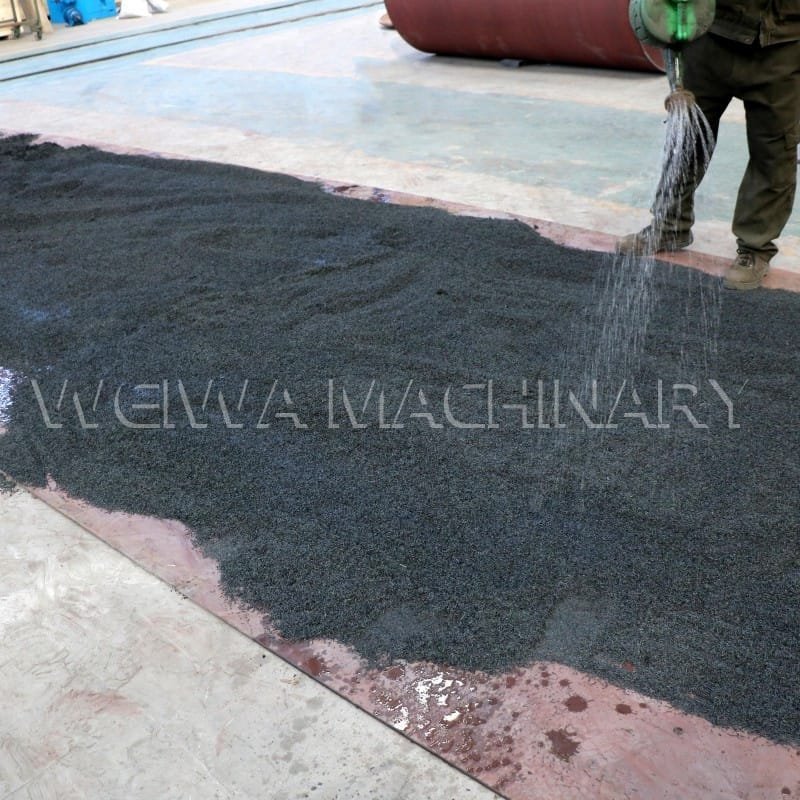
Samples collected throughout the trial revealed biochar with high fixed carbon content, excellent pore structure, and low ash levels. These qualities make the product valuable for:
- Enhancing soil fertility and water retention in agriculture.
- Acting as a carbon sequestration medium to combat climate change.
- Supplying raw material for activated carbon industries.
Clients noted that the consistent quality could open premium markets, both locally and for export.
The Science Behind Continuous Carbonization for Biochar
Pyrolysis Dynamics in Continuous Systems
Unlike traditional kilns, a relau karbonisasi berterusan maintains distinct thermal bands that allow precise control over reaction rates. In the drying zone, moisture evaporates; in the pyrolysis zone, complex organics break down into volatiles and char; in the cooling zone, the char stabilizes before discharge.
This staged approach minimizes unwanted reactions, such as over-carbonization or excessive ash formation. It also enables fine-tuning of parameters to suit specific feedstocks like PKS, optimizing the final biochar for targeted applications.
Importance of Feedstock Characteristics
PKS possesses favorable attributes — high lignin content, low moisture, and uniform shape — which facilitate smooth feeding and even heating in a continuous system. Namun begitu, the furnace’s modular design means it can handle other biomasses too, broadening its applicability across Indonesia’s diverse agricultural landscape.
Understanding these dynamics helps demystify why a continuous carbonization furnace for PKS outperforms older technologies in both efficiency and product consistency.
Advantages Over Traditional Charcoal Making Methods
Traditional charcoal production in Indonesia often relies on earth mounds or brick kilns, which are labor-intensive, tidak cekap, and environmentally harmful. Transitioning to a relau karbonisasi berterusan offers tangible improvements:
- Labor reduction: Automation decreases manual handling.
- Hasil yang lebih tinggi: More charcoal per unit of raw material.
- Cleaner process: Reduced smoke and particulate emissions.
- Safety: Enclosed system lowers fire and health risks.
These factors contribute to a compelling case for modernizing Indonesia’s charcoal sector with continuous carbonization furnaces in Indonesia.
Market Potential in Indonesia
Biomass Availability and Policy Support
Indonesia generates millions of tons of PKS annually, alongside rice husks, Kerang kelapa, and forestry residues. Government initiatives promoting renewable energy and circular economy practices create fertile ground for adopting advanced carbonization technologies.
Lebih-lebih lagi, rising demand for biochar in agriculture and environmental sectors positions our charcoal making machine in Indonesia as a strategic asset. Businesses investing early can gain competitive edges as markets mature.
Economic Viability
While the upfront continuous carbonization furnace price may seem significant, the long-term gains in productivity, energy savings, and product value outweigh initial costs. Local manufacturing partnerships and accessible spare parts further reduce total cost of ownership.
We anticipate strong uptake among smallholders, cooperatives, and larger agro-industrial players seeking sustainable revenue streams.
Future Outlook and Expansion Plans
Building on the success of this trial, Weiwa Machinery plans to deepen its presence in Indonesia. We aim to establish regional service centers, provide localized training programs, and adapt furnace designs to accommodate Indonesia’s climatic and logistical realities.
Our vision is to make the relau karbonisasi berterusan a cornerstone of Indonesia’s green transformation — empowering communities, reducing waste, and creating high-value biochar products for domestic and international markets.
Kesimpulan
The successful field trial of our relau karbonisasi berterusan in Indonesia underscores the technology’s readiness to revolutionize biochar production from PKS. With proven performance in throughput, kecekapan tenaga, and environmental compliance, our furnace stands as a flagship charcoal making machine in Indonesia.
As Indonesia continues to pursue sustainable development, the adoption of continuous carbonization furnaces in Indonesia will play a vital role in converting abundant biomass waste into economic and ecological benefits. Weiwa Machinery remains committed to supporting this journey with cutting-edge solutions and unmatched customer support.
Mengenai Jentera Weiwa
Weiwa Machinery is a global leader in designing and manufacturing advanced biomass processing equipment, specializing in relau karbonisasi berterusan, mesin membuat arang, and related systems. With a focus on innovation, sustainability, and customer success, we deliver tailored solutions for diverse feedstocks and markets worldwide. Our experienced engineers and responsive service teams ensure every project achieves peak performance and lasting value. Whether you seek a continuous carbonization furnace for PKS or a complete charcoal production line, Weiwa Machinery is your trusted partner in building a greener future.


 WeChat

 +8615937143060
