


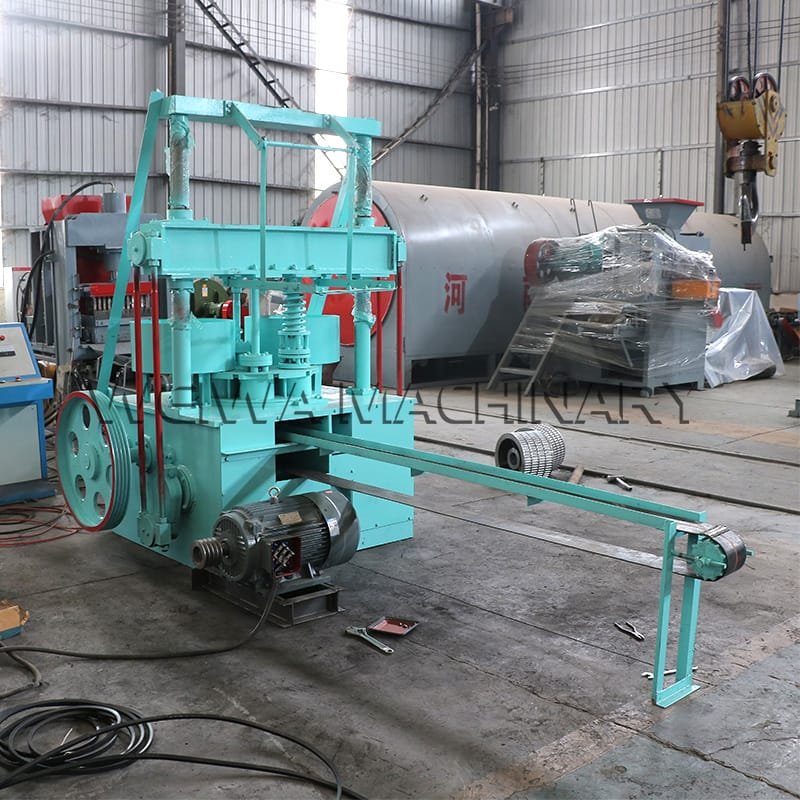
Di Weiwa Machinery, we believe that seeing is believing, especially when it comes to heavy-duty industrial equipment destined for overseas markets such as Kenya. Recently, our technical team organized a comprehensive live trial of the Honeycomb Briquette Charcoal Machine for a prospective Kenya-based entrepreneur who plans to establish a mid-scale clean fuel production plant in Nairobi. This trial was not only a functional test of our Honeycomb Charcoal Coal Briquette Forming Machine but also a deep dive into the science of briquette formation, raw material behavior, and final product quality assessment.
Understanding the Honeycomb Briquette Charcoal Machine in Industrial Fuel Production
The Honeycomb Briquette Charcoal Machine is a mechanical punching-type briquetting press designed to compress loose coal dust, serbuk arang, coke fines, and certain biomass residues into uniform cylindrical or polygonal blocks with perforated holes—commonly known as honeycomb briquettes. Unlike traditional manual molding, this Honeycomb Charcoal Coal Briquette Forming Machine uses a rotating mold table and a high-pressure punch head to achieve consistent density, which directly influences combustion efficiency, transportation durability, and market value. In Kenya, where both household cooking and small-scale industrial heating rely heavily on charcoal and coal-based fuels, the ability to convert low-cost powder waste into high-density honeycomb briquettes represents a significant economic and environmental opportunity.
Our Kenya client arrived at the Weiwa Machinery factory with a clear objective: to verify whether the Coal Briquettes Making Machine could handle locally available raw materials such as coconut shell charcoal fines, hardwood charcoal dust, and blended coal powder with variable moisture content. Before the trial began, our engineers introduced the structural composition of the Honeycomb Punching Machine, emphasizing the heavy-duty steel frame, the hardened gear reducer, the eccentric shaft driving system, and the quick-change mold clamping mechanism that allows operators to switch briquette diameters within 15 ke 20 minutes. These features are critical for Kenya operators who may need to produce multiple sizes—such as 100 mm, 120 mm, dan 140 mm diameter briquettes—to serve different market segments ranging from domestic kitchens to bakery ovens.
Core Working Principle of the Honeycomb Punching Machine Explained
To appreciate the trial results, it is essential to understand how the Honeycomb Briquette Charcoal Machine transforms disordered powder into structured fuel. The process begins with raw material preparation: charcoal or coal powder is screened to below 3 mm and optionally mixed with a small percentage of natural binder such as cassava starch or molasses to improve green strength. The mixture is then fed into the hopper of the Honeycomb Charcoal Coal Briquette Forming Machine, where it drops into the rotating mold barrels mounted on a turntable. As the table indexes, a measured amount of material enters each mold cavity. When the filled mold aligns under the punch head, a powerful downward stroke—driven by the eccentric shaft and hydraulic-assisted pressure—compresses the material into a dense honeycomb shape with preset holes numbering from 9 ke 17 depending on the mold design.
This punching action is what differentiates the Honeycomb Punching Machine from screw extruders. The instantaneous high pressure eliminates most internal air gaps, resulting in briquettes with high compressive strength and low friability. For the Kenya trial, we set the main motor to 7.5 kW with a rated punch frequency of approximately 40 ke 50 strokes per minute, translating to a production capacity between 2400 dan 3000 briquettes per hour depending on diameter. The machine ran continuously for more than two hours to simulate real-world operation in Kenyan workshops where power supply may fluctuate between 220 V and 415 V three-phase configurations. No jamming, overheating, or abnormal vibration was observed, reinforcing the adaptability of our Coal Briquettes Making Machine to African electrical environments.
Raw Material Simulation Based on Kenya Market Conditions
One of the most valuable aspects of this trial was the conscious effort to mimic Kenya-specific raw materials. Our client brought along two samples: finely ground acacia wood charcoal dust with about 18 percent inherent moisture, and a blended mix of anthracite coal powder with 10 percent charcoal fines. Weiwa Machinery technicians adjusted the binder ratio accordingly, using 5 percent cassava starch solution for the pure charcoal batch and 3 percent mixed binder for the coal-charcoal composite. The Honeycomb Briquette Charcoal Machine handled both feeds smoothly, although the coal-rich blend required slightly higher punch pressure to achieve equivalent density. This observation led to a live demonstration of pressure adjustment via the eccentric sleeve, a feature that allows operators to fine-tune compression without stopping the Honeycomb Charcoal Coal Briquette Forming Machine.
During the feeding process, we also explained to the Kenya client how particle size distribution affects ejection behavior. Excessively fine powder below 0.1 mm can cause die adhesion, while oversized particles above 3 mm may create weak spots in the briquette. The Honeycomb Punching Machine performed optimally when the powder was pre-mixed to a relatively uniform gradation, highlighting the importance of a simple sieve or low-speed crusher upstream in a Kenya production line. We also showcased how the automatic grease lubrication system periodically injects lubricant to the punch guide rails and mold bases, a design that reduces wear when processing abrasive coal gangue or silica-rich charcoal dust common in certain Kenyan regions.
First Batch Sample Extraction and Initial Visual Assessment
After thirty minutes of stabilized running, we extracted the first formal batch of honeycomb briquettes produced by the Coal Briquettes Making Machine for on-site evaluation. The samples included round honeycomb briquettes of 120 mm diameter, 80 mm height, with 16 evenly distributed holes of 18 mm diameter. Visually, the surfaces were smooth without visible cracks, and the edges remained intact after automatic ejection onto the discharge conveyor. The Kenya client noted that the shape consistency was far superior to locally hand-pressed blocks seen in Nairobi markets. We explained that this uniformity stems from the precision-machined alloy tool steel mold used in the Honeycomb Briquette Charcoal Machine, which undergoes heat treatment to endure 300,000 ke 500,000 strokes before resurfacing becomes necessary.
We then conducted a simple drop test from 1.2 meters onto a concrete floor, simulating rough handling during packaging and transport. Only minor edge chipping occurred on two out of fifty samples, a testament to the high green density achieved by the Honeycomb Charcoal Coal Briquette Forming Machine. The client was particularly interested in the hole definition—whether the perforations would remain open after drying. Under close inspection, the holes retained sharp cylindrical walls without collapse, ensuring that airflow during combustion would not be restricted. This is a crucial selling point in Kenya, where users often complain that low-quality briquettes develop closed pores, leading to incomplete burning and excessive smoke.
Combustion Characteristics of Trial Samples Under Controlled Observation
Beyond mechanical integrity, the ultimate value of any Honeycomb Punching Machine lies in the burning behavior of its output. We selected three representative briquettes from the Kenya trial batch and ignited them in a small ventilated stove using dry kindling as starter. Thanks to the honeycomb hole structure, ignition occurred within four to five minutes as air circulated through the vertical channels. The flame front propagated evenly from the outer surface inward, and after seven minutes, the briquettes entered a stable glowing phase with minimal visible smoke. We compared this with a loosely compacted charcoal lump of similar weight; the honeycomb briquette sustained detectable heat for approximately 48 minutes longer, confirming the correlation between high density and extended burn time.
Our Kenya client recorded surface temperature readings using a handheld infrared thermometer, noting that the Honeycomb Briquette Charcoal Machine samples reached peak radiant temperatures around 620 degrees Celsius during the glowing phase, compared to 540 degrees for the reference lump charcoal. Lebih penting lagi, the ash residue from the machine-made briquettes was compact and gray-white, indicating thorough combustion with reduced particulate emission. For Kenyan households and small eateries concerned about indoor air quality and fuel cost per hour, these observations strongly supported the adoption of a Coal Briquettes Making Machine over traditional open-fire wood or irregular charcoal pieces. We further explained that the low smoke output is partly attributable to the uniform compaction which limits volatile burst release—a phenomenon common in poorly pressed blocks.
Customization Options Discussed During the Kenya Trial
Following the combustion demo, the discussion shifted to market customization. The Kenya client expressed interest in producing square honeycomb briquettes with embossed logos for branding purposes, a request we accommodated by showing spare molds designed for the Honeycomb Charcoal Coal Briquette Forming Machine. Our engineering team demonstrated how the mold insert can be engraved with simple patterns or letters, allowing Kenya entrepreneurs to differentiate their fuel products in competitive urban markets. Di samping itu, we reviewed the possibility of adjusting hole count and diameter to match local stove designs; some rural Kenyan stoves perform better with fewer but wider holes, whereas urban metal stoves often prefer 12 ke 14 narrower holes for slower, controlled burning.
We also addressed power configuration. Since parts of Kenya experience voltage fluctuations or rely on diesel generators, the Honeycomb Punching Machine can be equipped with a variable frequency drive for soft start and motor protection, or alternatively coupled with a diesel engine power pack for off-grid operations. The trial unit was wired with overload protection and an emergency stop button labeled in English, though Weiwa Machinery can provide control panels with Swahili or French annotations upon request. These seemingly small adaptations often determine the long-term success of a Coal Briquettes Making Machine deployment in East Africa, and our Kenya client appreciated the proactive guidance provided during the trial.
Sample Physical Property Testing and Data Recording
To add objectivity to the showcase, we performed basic physical property measurements on ten randomly selected briquettes from the trial run. Average dry bulk density reached 0.92 g/cm³ after oven drying at 105 degrees Celsius for 24 jam, well within the desirable range for export-quality honeycomb charcoal. The compressive strength tested on a simple manual press showed that samples could withstand 280 ke 320 kg of vertical load before cracking—more than sufficient to survive stacking up to 1.5 meters in storage yards. The Honeycomb Briquette Charcoal Machine consistently delivered these metrics across consecutive batches, reassuring the Kenya client that product quality would not degrade over long production shifts.
We also measured moisture re-absorption over 48 hours in a 65 percent humidity environment, simulating coastal Kenya conditions such as Mombasa. The briquettes absorbed approximately 4.2 percent moisture by weight, which did not compromise structural integrity but slightly delayed ignition time in subsequent burn tests. This led to a recommendation that Kenya operators consider a simple roofed drying area or a low-temperature mesh belt dryer downstream of the Honeycomb Charcoal Coal Briquette Forming Machine, especially during rainy seasons. Such practical insights, derived directly from the trial, are part of Weiwa Machinery’s commitment to not only supply machines but also transfer process knowledge that ensures sustainable operation of every Coal Briquettes Making Machine we export.

Operational Training and Safety Demonstration for Kenya Personnel
A live trial is incomplete without operator familiarity. Two staff members accompanying the Kenya client were invited to operate the Honeycomb Punching Machine under supervision. Starting from hopper feeding rate control to mold alignment checks and emergency stop activation, the session covered essential daily routines. We emphasized the importance of checking gearbox oil level before each shift and cleaning residual powder from mold cavities to prevent cross-batch contamination—especially when switching from charcoal to coal-based recipes. The intuitive layout of the Honeycomb Briquette Charcoal Machine control panel allowed the trainees to grasp start-stop sequencing within 30 minutes, reinforcing that the machine does not require highly specialized technical backgrounds to run safely.
Safety was also discussed in detail. The punching zone is guarded by a steel mesh cover interlocked with the main motor, preventing access during operation. We demonstrated how the Honeycomb Charcoal Coal Briquette Forming Machine immediately halts if the guard is opened, a critical feature for Kenya workshops where multiple workers may be present. Di samping itu, we advised on personal protective equipment including gloves, dust masks, and ear protection, given that prolonged exposure to fine charcoal dust and mechanical noise can affect health over time. By integrating safety training into the trial, Weiwa Machinery aims to reduce downtime and accident risks for every Coal Briquettes Making Machine user in Kenya and beyond.
Packaging and Logistics Considerations for Kenya Shipment
After the trial concluded, we walked the Kenya client through our standard export packaging for the Honeycomb Punching Machine. The main frame is coated with anti-rust oil, wrapped in stretch film, and secured on a steel pallet inside a 20-foot container. Detachable molds, motors, V-belts, ejector pins, and grease pumps are packed in reinforced plywood cases with moisture-proof liners to withstand ocean transit from Qingdao or Shanghai to Mombasa port, followed by trucking to Nairobi. Typical transit time ranges from 28 ke 35 days depending on carrier schedules. We prepared a mock document set including commercial invoice, packing list, and certificate of origin to familiarize the client with Kenyan import clearance requirements, an often-overlooked aspect when purchasing a Honeycomb Briquette Charcoal Machine from overseas.
Spare parts availability was another focal point. Weiwa Machinery ships a standard spare kit with each Honeycomb Charcoal Coal Briquette Forming Machine, containing extra punch heads, springs, seals, and electrical fuses. For Kenya clients, we recommend stocking two additional mold sets aligned with their planned product sizes, as local machining of alloy tool steel is limited. Our after-sales team remains reachable via WhatsApp and email for remote troubleshooting, and we can dispatch engineers if large-scale installation or staff training on-site is required. This holistic support framework ensures that the Coal Briquettes Making Machine remains productive rather than becoming a stranded asset due to minor mechanical issues.
Why Kenya Is a Strategic Market for Honeycomb Briquette Technology?
The success of this trial reflects broader trends in Kenya energy consumption. With rising awareness of deforestation and indoor air pollution, there is growing policy and consumer interest in cleaner, more efficient solid fuels. Honeycomb briquettes produced by a Honeycomb Punching Machine offer longer burn time, reduced smoke, and better space utilization during storage and transport compared to loose charcoal or firewood. Lebih-lebih lagi, Kenya generates substantial agricultural residues and charcoal fines annually, much of which is underutilized. Converting these wastes into marketable briquettes via a Honeycomb Briquette Charcoal Machine creates local value chains, employment, and import substitution opportunities. Several Weiwa Machinery units are already operational in Uganda, Tanzania, and Ethiopia, validating the regional suitability of our Honeycomb Charcoal Coal Briquette Forming Machine design.
From a business perspective, the Kenya client calculated that with locally sourced charcoal dust at low cost and a conservative daily output of 20,000 briquettes from one Coal Briquettes Making Machine, payback on equipment investment could be achieved within 10 ke 14 months assuming stable urban retail pricing. The trial samples were taken back to Nairobi for pilot sales and customer feedback collection, a step we encourage for all new entrants to fine-tune briquette size, hole pattern, and packaging before scaling up. Weiwa Machinery remains available to adjust machine parameters remotely based on those field reports, ensuring the Honeycomb Briquette Charcoal Machine evolves alongside real market needs.
Technical Summary of the Trial Unit Specifications
For transparency and technical reference, the Honeycomb Punching Machine used in the Kenya trial featured a main motor power of 7.5 kW, a gear reducer with hardened tooth surface, a punch frequency adjustable between 35 ke 50 strokes per minute, and mold diameters configurable from 90 mm to 140 mm. The machine weight is approximately 1400 kg with overall dimensions of 1320 x 1260 x 1850 mm, suitable for container loading. The Honeycomb Charcoal Coal Briquette Forming Machine operates on 380 V three-phase power but can be customized to 220 V or 415 V upon order. Briquette height is adjustable between 60 mm and 100 mm via stroke setting. These specifications represent a mid-range model ideal for Kenya SMEs; larger models up to 11 kW and 220 mm diameter are available for higher-volume industrial applications.
Throughout the trial, the Coal Briquettes Making Machine maintained stable amperage draw, low noise below 75 dB at one meter, and manageable vibration thanks to the stress-relieved welded frame. The Kenya client specifically appreciated the transparent observation panels near the mold table, which allow visual monitoring of filling and ejection without opening guards. Such ergonomic details, combined with robust core mechanics, distinguish the Weiwa Honeycomb Briquette Charcoal Machine in a crowded global market where many low-cost presses sacrifice durability for price. Our philosophy is to build equipment that survives continuous African workshop conditions, not just short-term demonstration runs.
Final Impressions from the Kenya Client and Next Steps
At the conclusion of the two-day trial, the Kenya delegation expressed confidence in both the equipment performance and the sample quality. They highlighted three decisive factors: consistent briquette density without frequent adjustments, clear combustion advantage over local alternatives, and responsive technical communication from Weiwa Machinery. A provisional order discussion followed, focusing on delivery timeline, mold customization for square honeycomb shapes, and inclusion of a simple crushing and mixing unit to form a mini production line. We also agreed to share operational manuals, foundation drawings, and wiring diagrams digitally ahead of shipment to accelerate site preparation in Kenya. The Honeycomb Punching Machine trial thus transitioned smoothly from demonstration to commercial planning.
For Weiwa Machinery, hosting Kenya clients is part of our ongoing engagement across more than 130 negara. Each trial refines our understanding of regional raw materials, energy infrastructure, and market preferences. The Honeycomb Briquette Charcoal Machine continues to prove its versatility—from coal-rich regions in Asia to biomass-abundant areas in East Africa. The Kenya case reinforces that when science-based machine design meets transparent sample validation, the Coal Briquettes Making Machine ceases to be a mere purchase and becomes a foundation for sustainable local enterprise. We look forward to seeing the trial samples burn in Nairobi kitchens and to supporting our client’s journey from factory testing to full-scale production with the Honeycomb Charcoal Coal Briquette Forming Machine.
Brief Introduction to Weiwa Machinery
Weiwa Machinery is a professional manufacturer specializing in briquette machinery, carbonization equipment, dan barisan pengeluaran yang lengkap. With years of experience exporting to over 130 countries including Kenya, Tanzania, Uganda, Indonesia, India, Vietnam, Turki, dan Filipina, we understand the practical challenges faced by international buyers. Our product range covers the Honeycomb Briquette Charcoal Machine, Honeycomb Charcoal Coal Briquette Forming Machine, Coal Briquettes Making Machine, Honeycomb Punching Machine, ball press machines, charcoal extruders, and related auxiliary equipment. We provide factory design consultation, installation guidance, latihan pengendali, and long-term after-sales support to ensure every machine delivers lasting value. Di Weiwa Machinery, we do not simply sell equipment; we build partnerships that transform raw material waste into profitable clean fuel solutions. Whether you are a startup in Kenya exploring honeycomb briquette production or an established industrial player upgrading capacity, our technical team is ready to assist with tailored recommendations and live trials at our factory. You are welcome to contact us at any time to discuss your project requirements and witness the performance of our machines firsthand.
Contact Jentera Weiwa:
Mob: +8613838093177
WhatsApp: +8613838093177
E-mel: info@cjlmachinegroup.com
Website: https://cjljx.com/product/honeycomb-charcoal-briquettes-machine


 WeChat

 +8615937143060
