


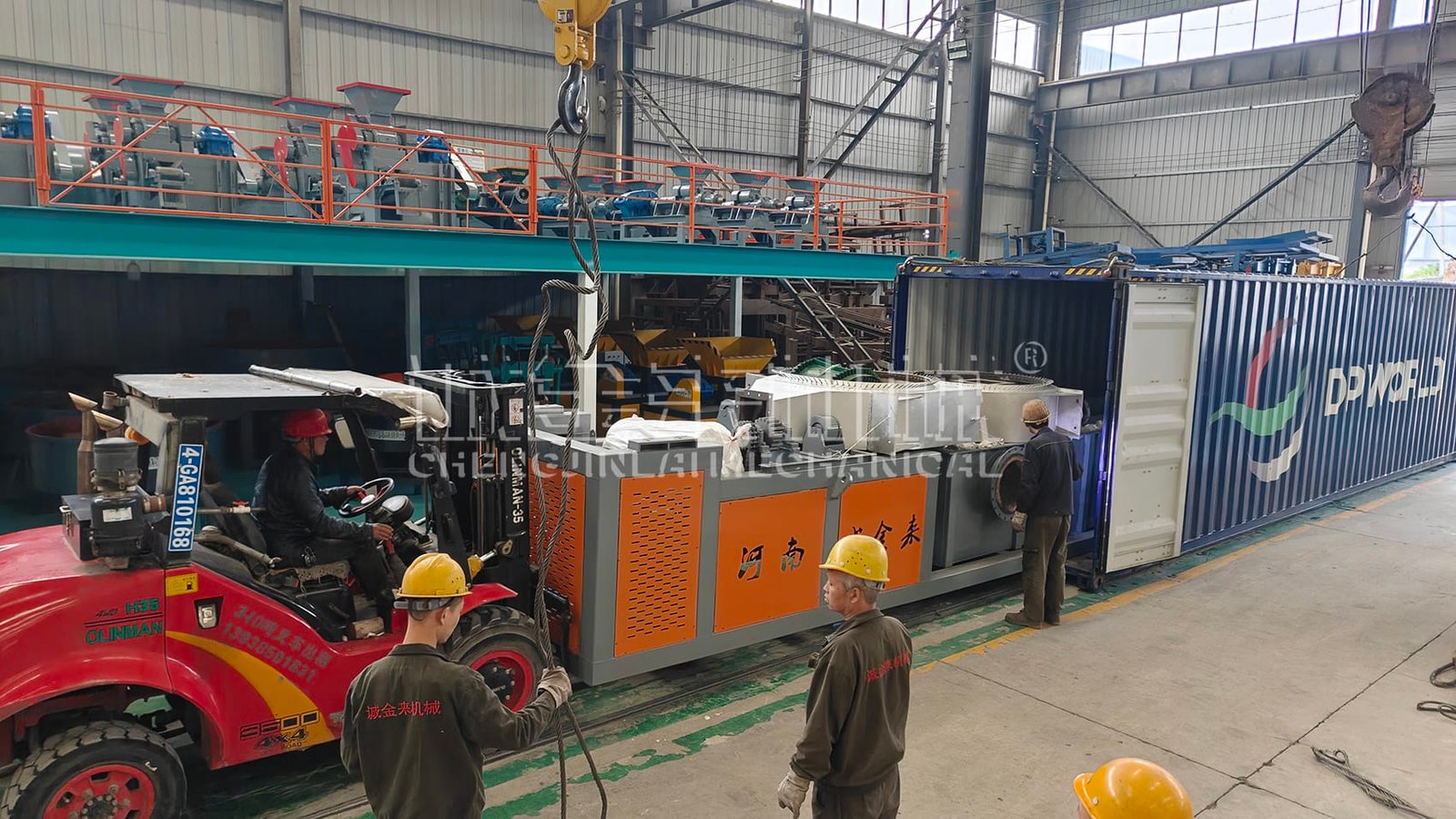
The continuous carbonization furnace has become one of the core products in our biomass processing line. Unlike traditional batch kilns, this system supports uninterrupted feeding, carbonization, discharging, and syngas recycling. During the on-site trial run before shipment, the furnace maintained stable temperatures between 450°C and 650°C, with uniform charcoal output and low smoke emission. Indian clients who attended the test were particularly impressed by the automatic feeding system and the real-time monitoring dashboard.
Understanding the Relau karbonisasi berterusan
A continuous carbonization furnace is designed to convert biomass materials—such as coconut shells, habuk papan, sekam padi, Buluh, and agricultural residues—into high-quality charcoal through a controlled pyrolysis process. The defining feature of this equipment is continuity. Raw material enters from one end, passes through drying, carbonization, and cooling zones, and exits as finished charcoal without stopping the entire system.
Inside the furnace, the temperature is carefully regulated to ensure complete decomposition of volatile components while preserving fixed carbon content. A key advantage of the continuous carbonization furnace is its ability to recycle combustible gases generated during carbonization. These gases are purified and reused as fuel, which significantly reduces energy consumption. For buyers evaluating continuous carbonization furnace price, this energy-saving mechanism often translates into lower operating costs over time.
Core Components of the System
The system supplied to India includes a belt conveyor, a multi-stage drying unit, the main carbonization host, a gas purification tower, a cooling discharger, and an intelligent control cabinet. Each component is engineered to work in synchronization. The drying unit reduces moisture content to below 15%, which is critical for efficient carbonization. The main furnace uses a rotating drum structure to ensure even heat distribution. The gas purification system removes tar and impurities, allowing clean gas to re-enter the combustion chamber.
During the pre-shipment trial, we processed coconut shells sourced from Kerala and sawdust from local wood workshops. The resulting charcoal had a fixed carbon content above 75%, with minimal ash and uniform particle size. Smoke emissions remained within environmental compliance limits, which is essential for markets with strict pollution controls such as India.
Shipment Site: From Factory Floor to Container Loading
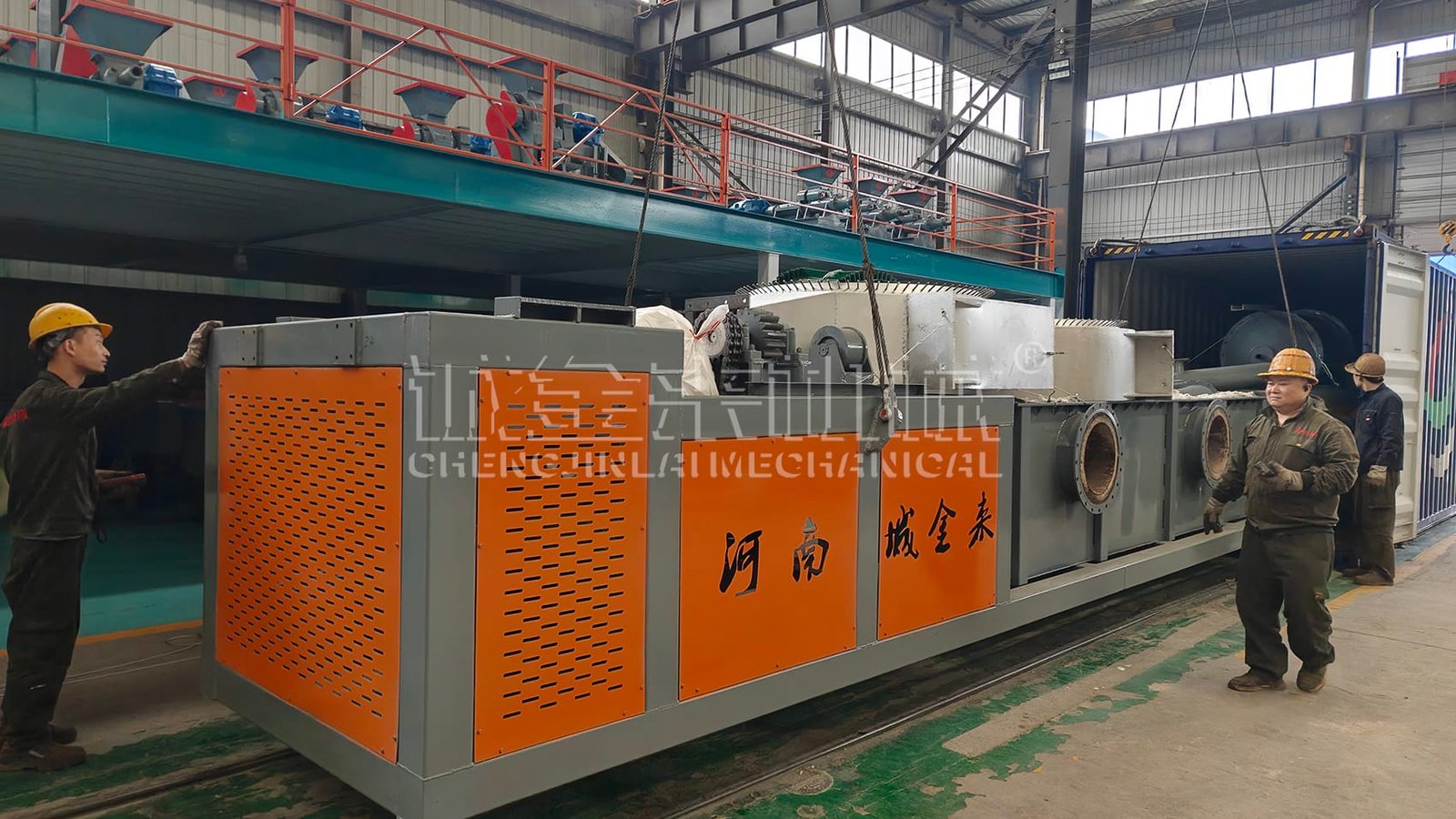
The loading process took place at our heavy machinery workshop in early morning hours to avoid peak logistics traffic. Our technical staff conducted a final inspection of welding seams, electrical connections, and hydraulic systems. Once cleared, the continuous carbonization furnace was carefully lifted by crane and positioned inside a 40-foot high-cube container.
To protect the equipment during ocean transport, we applied anti-rust oil to exposed metal surfaces, wrapped electronic parts in moisture-proof film, and secured all movable sections with steel brackets. Accessories such as spare heating elements, sealing gaskets, and operation manuals were packed separately and clearly labeled. Throughout the process, our Indian client joined via video call, observing each step to ensure transparency.
This particular order highlights a broader trend: the continuous carbonization furnace in India is shifting from small-scale experimental adoption to industrial-scale deployment. Many Indian manufacturers are moving away from earth kilns due to environmental restrictions and inconsistent product quality. Instead, they are investing in modern charcoal making machines that deliver predictable output and comply with local regulations.
Trial Run Results and Operational Advantages
Before leaving our facility, the continuous carbonization furnace underwent a 12-hour continuous trial under simulated working conditions. Several performance indicators stood out. Pertama, the thermal efficiency reached approximately 82%, meaning most of the energy generated during carbonization was effectively utilized rather than lost. Second, the automatic feeding system maintained a steady material flow, eliminating the need for manual intervention every few hours.
Another notable result was the stability of the discharge temperature. Charcoal exited the cooling zone at around 45°C, safe for direct bagging without additional cooling time. This feature is especially valuable in tropical climates like India, where high ambient temperatures can slow down post-processing. Di samping itu, the PLC control system allowed operators to adjust rotation speed, airflow volume, and target temperature with minimal training.
For companies comparing continuous carbonization furnace price across suppliers, it is important to consider not just the upfront investment but also long-term factors such as fuel savings, maintenance frequency, and labor requirements. In our experience, a well-designed continuous system typically pays back the initial cost within 10 ke 14 months when operated at full capacity.
Why the Continuous Carbonization Furnace Fits the Indian Market?
India generates massive volumes of agricultural waste every year. Rice husks, Bagasse tebu, tangkai kapas, and coconut shells are often burned openly, contributing to air pollution. Converting these residues into charcoal offers both environmental and economic benefits. Charcoal produced by a continuous carbonization furnace can be used for barbecue fuel, metallurgical reduction, Pengeluaran karbon yang diaktifkan, and soil amendment.
The Indian government has introduced several policies encouraging biomass utilization and restricting open burning. Pada masa yang sama, domestic demand for high-quality charcoal is rising in sectors such as hospitality, metalurgi, and water treatment. A continuous carbonization furnace for India must therefore meet specific requirements: compact footprint for limited land availability, robust dust collection systems, and compatibility with locally available feedstocks.
Our furnace design addresses these needs. The modular structure allows flexible layout planning, which is crucial for factories located in industrial parks with space constraints. The integrated dust removal system captures fine particles before they escape into the atmosphere. Lebih-lebih lagi, the equipment can handle mixed feedstock, enabling operators to switch between coconut shells and sawdust depending on seasonal availability.
Economic Outlook for Charcoal Making Machines in India
Market data indicates steady growth in India’s charcoal industry. Urbanization and rising disposable income are driving demand for premium barbecue charcoal. Meanwhile, industries such as steel and foundry are seeking reliable sources of biochar to replace traditional fossil fuels. As a result, the market for charcoal making machines in India is expanding beyond small family-run businesses to include medium and large enterprises.
One competitive advantage for Weiwa Machinery is our ability to provide turnkey solutions. From initial site assessment and customized furnace sizing to installation guidance and operator training, we support clients throughout the project lifecycle. This approach reduces the risk for first-time buyers and accelerates the time from equipment arrival to commercial production.
Another factor influencing purchasing decisions is after-sales service. Indian customers increasingly expect responsive technical support and easy access to spare parts. To address this, we maintain a digital library of operation videos, troubleshooting guides, and maintenance checklists. Critical components such as bearings, motors, and sensors are selected from globally recognized brands to ensure reliability and simplify future replacements.
Comparing Continuous and Batch Carbonization Technologies
While batch kilns remain common in rural areas, their limitations become apparent at larger scales. Batch systems require cooling periods between cycles, leading to downtime and lower overall productivity. They also tend to produce uneven charcoal quality due to temperature fluctuations. Sebaliknya, a continuous carbonization furnace maintains consistent internal conditions, resulting in uniform charcoal with predictable characteristics.
From an environmental perspective, continuous systems offer superior emission control. The ability to recycle syngas not only cuts fuel costs but also minimizes smoke release. In India, where air quality regulations are tightening in states such as Maharashtra, Gujarat, and Tamil Nadu, this capability can be decisive for obtaining operating permits.
Energy efficiency further strengthens the case for continuous technology. By recovering heat from exhaust gases and reusing it within the system, operators can achieve higher throughput with less external energy input. Over a year of operation, these savings compound, improving profitability and reducing carbon footprint.
Key Considerations Before Purchasing a Continuous Carbonization Furnace
Prospective buyers should evaluate several factors before finalizing a purchase. Feedstock type and moisture content directly affect carbonization performance. Materials with high moisture levels require longer drying times, which impacts overall capacity. Site conditions such as available floor space, power supply stability, and proximity to raw material sources also influence equipment selection.
Budget planning should extend beyond the continuous carbonization furnace price. Installation costs, foundation preparation, electrical wiring, and initial operator training all contribute to the total investment. Financing options and potential government subsidies for biomass projects in India can help offset these expenses.
It is also advisable to request a trial run using representative samples. Observing the equipment in action provides insights into real-world performance, including ease of operation, noise levels, and maintenance accessibility. For international buyers, remote factory acceptance tests via live video have become a practical alternative when travel is restricted.
After-Sales Support and Long-Term Partnership
Di Weiwa Machinery, we view each shipment as the beginning of a long-term partnership. After the continuous carbonization furnace arrives in India, our engineers provide remote commissioning assistance and step-by-step guidance for installation. We also offer periodic follow-ups to review operational data, suggest optimizations, and recommend preventive maintenance schedules.
Spare parts availability is another priority. We keep commonly replaced items in stock and can dispatch them quickly to minimize downtime. For complex issues, our technical team conducts root-cause analysis and shares detailed reports with recommended corrective actions. This proactive approach helps clients maintain high equipment availability and consistent product quality.
Training is tailored to the skill level of on-site personnel. Topics range from basic start-up and shutdown procedures to advanced process tuning for different feedstocks. By empowering operators with knowledge, we reduce dependency on external service providers and improve overall plant efficiency.
Future Trends in Continuous Carbonization Technology
The next generation of continuous carbonization furnaces is expected to incorporate more automation and data analytics. Sensors will monitor not only temperature and pressure but also gas composition and charcoal properties in real time. Machine learning algorithms could optimize process parameters automatically, reducing human error and maximizing yield.
Integration with renewable energy sources is another emerging trend. Solar-assisted pre-drying or hybrid heating systems may further reduce reliance on external fuels. In India, where solar power adoption is accelerating, such innovations align well with national sustainability goals.
There is also growing interest in value-added products derived from carbonization. Beyond standard charcoal, operators are exploring activated carbon, biochar for soil enhancement, and carbon black alternatives. A versatile continuous carbonization furnace can serve as the foundation for diversified product lines, increasing resilience against market fluctuations.
Kesimpulan: Strengthening Presence in the Indian Market
The recent shipment of a continuous carbonization furnace to India underscores Weiwa Machinery’s commitment to delivering reliable, cekap, and environmentally responsible solutions. Through rigorous testing, careful packaging, and comprehensive support, we ensure that every machine performs consistently from day one.
As demand for charcoal making machines in India continues to grow, we remain focused on innovation, quality, and customer satisfaction. Whether you are a startup exploring biomass opportunities or an established enterprise scaling up production, our continuous carbonization furnace offers a proven pathway to higher efficiency, lower emissions, and stronger profitability.
For inquiries about continuous carbonization furnace price, customization options, or project consultation, feel free to contact our team. We look forward to supporting your success in the dynamic Indian market.
Mengenai Jentera Weiwa
Weiwa Machinery is a professional manufacturer of biomass carbonization equipment, barisan pengeluaran arang, and related machinery. With years of experience in research, design, and international export, we provide tailored solutions for clients worldwide. Our product range covers continuous carbonization furnaces, rotary kilns, Mesin Briket, and auxiliary equipment. Committed to quality and innovation, Weiwa Machinery serves customers across Asia, Afrika, Europe, and the Americas.
Hubungi kami
Mob / WhatsApp: +86 13838093177
E-mel: info@cjlmachinegroup.com


 WeChat

 +8615937143060
