


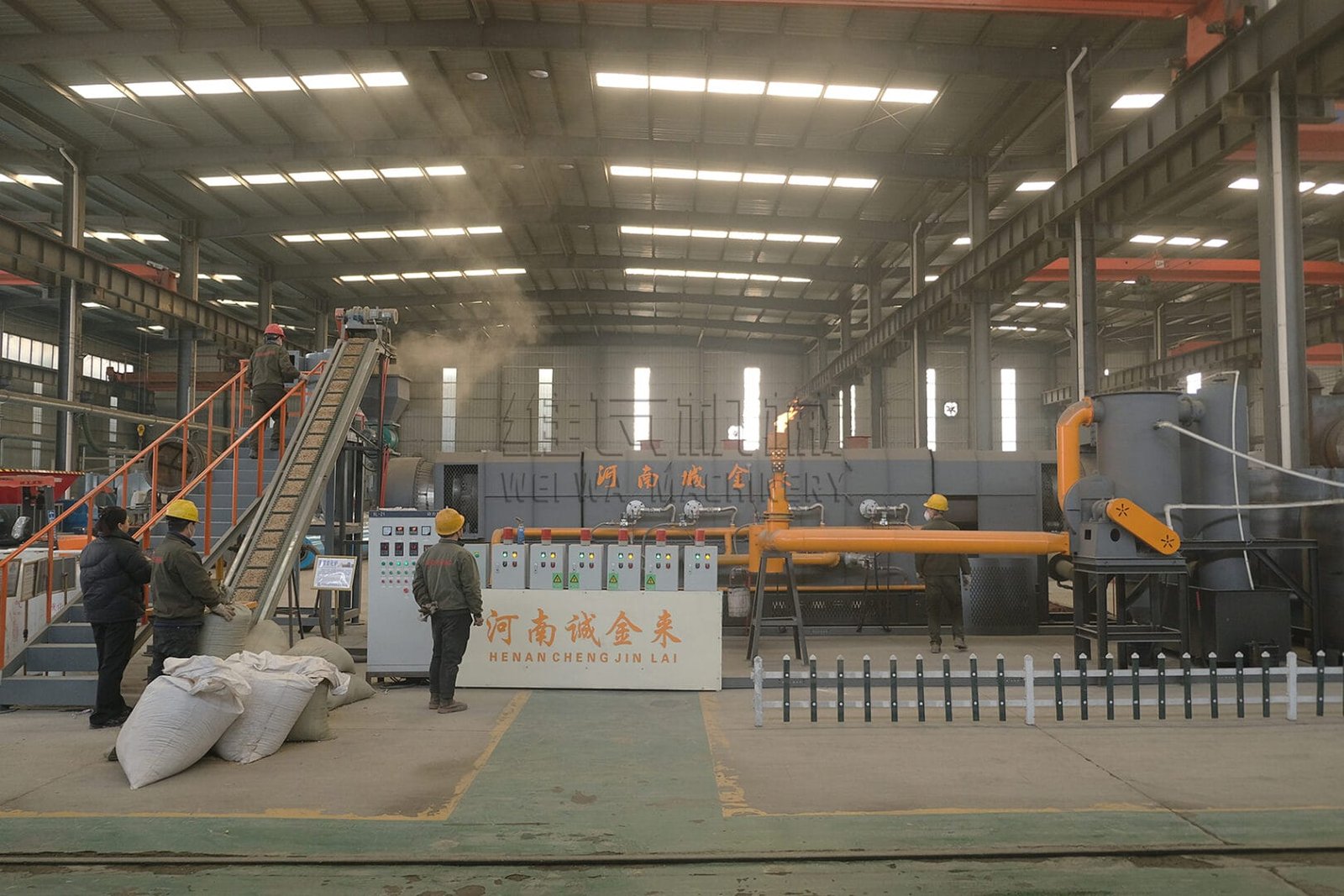
Understanding the Continuous Carbonization Furnace Technology
To appreciate the success of the Laos trial, seseorang mesti terlebih dahulu memahami apa yang menetapkan a relau karbonisasi berterusan apart from traditional batch systems. Unlike older methods that require constant stopping and starting, the continuous system is designed for uninterrupted operation. Our specific model utilizes a sophisticated double-cylinder rotary design. The inner drum is responsible for pre-drying the biomass, while the outer drum handles the high-temperature carbonization process. This configuration allows materials like coconut shells, cip kayu, and rice husk to move spirally through the furnace. The entire process is seamless, meaning there is no need to halt the feed or discharge mechanisms.
A key innovation in our relau karbonisasi berterusan is the gas recovery system. Semasa pengkarbonan, gas meruap seperti karbon monoksida (CO), metana (CH₄), and hydrogen (H₂) are released. Instead of releasing these into the atmosphere, our system captures and re-burns them. This creates a self-sustaining heat cycle that drastically minimizes external fuel requirements. For our Laos client, this meant lower operational costs and significantly reduced emissions, aligning perfectly with global environmental standards. The temperature within the furnace is maintained uniformly between 500–600 °C, ensuring that the final product—biochar—is of consistent high quality regardless of the raw material variations.
On-Site Trial for Laos: A Step-by-Step Breakdown
When our technical team arrived in Laos, the primary goal was to test the relau karbonisasi berterusan using locally sourced PKS (Palm Kernel Shells) and coconut shells. The client was initially concerned about adapting the machine to the high moisture content often found in tropical biomass. We began the trial by feeding the raw material into the pre-drying section of the furnace. Within minutes, the moisture levels dropped to the optimal range, allowing the material to enter the carbonization chamber efficiently.
Throughout the 24-hour continuous run, the machine maintained stable temperatures. We observed that the relau karbonisasi berterusan processed over 3 tons of biomass per shift without any mechanical issues. The discharge port produced a steady stream of high-quality biochar with a fixed carbon content that exceeded the client’s expectations. One of the most impressive aspects noted by the Laos client was the smokeless exhaust. Because the combustible gases were being recycled back into the combustion chamber, there was virtually no visible smoke, addressing a common concern for factories located near residential areas.
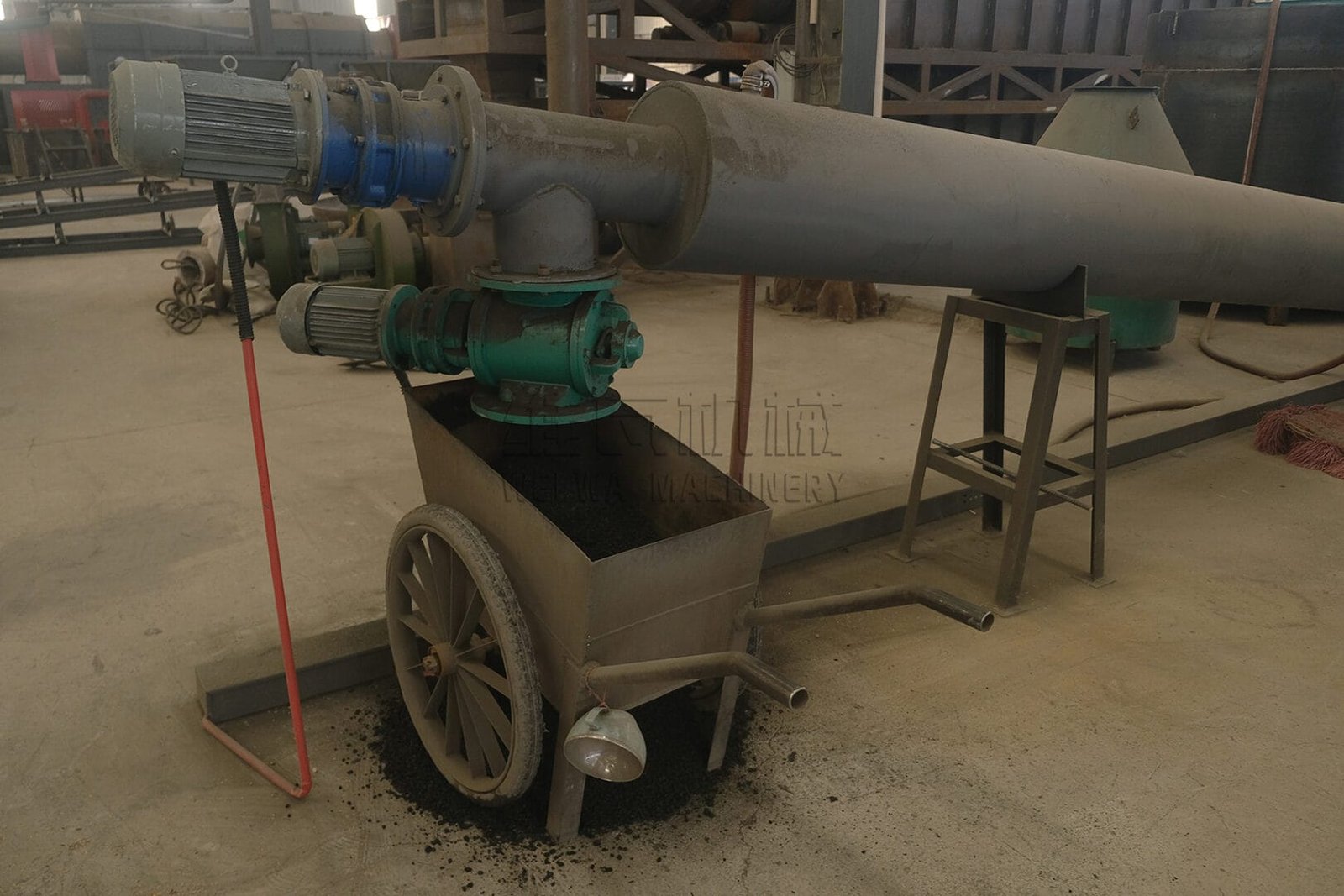
The trial concluded with a demonstration of the cooling system. Unlike traditional methods where hot charcoal is simply dumped onto the ground, our system cools the biochar internally before discharge. This preserves the structural integrity of the charcoal, preventing it from cracking or turning to dust. The client expressed high satisfaction with the automation level, noting that the relau karbonisasi berterusan allowed their operators to manage the entire production line with minimal manual intervention.
Market Potential for Relau karbonisasi berterusan in Laos
Laos possesses abundant agricultural resources, including vast quantities of rice husks, habuk papan, and coconut waste. Namun begitu, much of this biomass is currently underutilized or burned openly, contributing to air pollution. The introduction of the relau karbonisasi berterusan presents a transformative opportunity for local businesses. By converting waste biomass into valuable biochar, Lao manufacturers can tap into both domestic and international markets. Biochar is not only used as a fuel source but also as a soil amendment to improve agricultural yields, a dual-purpose product that adds significant value.
The economic landscape in Laos favors the adoption of relau karbonisasi berterusan technology. With the government encouraging cleaner production methods, factories equipped with our machinery gain a competitive edge. The ability to operate 24/7 with consistent output makes the relau karbonisasi berterusan ideal for large-scale industrial operations. Tambahan pula, the low fuel consumption of the furnace directly translates to higher profit margins for factory owners. Our analysis suggests that the return on investment for a continuous carbonization furnace in Laos is typically realized within 12 ke 18 months, depending on the scale of operation and raw material costs.
Another factor driving market growth is the increasing demand for PKS as a biofuel alternative. Many clients searching for a continuous carbonization furnace for PKS are looking for reliability and efficiency. Our trial proved that the machine handles PKS exceptionally well, producing dense, high-energy charcoal briquettes. As more businesses in Laos look to diversify their product offerings, the versatility of the relau karbonisasi berterusan positions it as an essential asset for modern charcoal making facilities.
Comparing Batch vs Continuous Systems for Biochar Production
Many traditional factories in Laos still rely on brick kilns or small-scale batch carbonizers. While these methods have low initial costs, they suffer from inefficiencies that become apparent at scale. A standard batch system requires loading, pemanasan, cooling, and unloading—each step taking several hours and requiring the process to stop completely. Sebaliknya, yang relau karbonisasi berterusan eliminates downtime. The spiral feeding mechanism ensures that as one batch enters the carbonization zone, another is exiting the cooling zone.
From a safety perspective, the enclosed design of the relau karbonisasi berterusan offers superior protection against fire hazards. The automated temperature controls prevent overheating, a common issue in manually managed kilns. For the Laos client, switching to a continuous system means they can finally achieve the production volumes required to supply large contracts, something that was previously impossible with their old equipment. The consistency of the biochar produced also allows them to command higher prices in the market, as buyers prefer charcoal with uniform size and calorific value.
Technical Specifications and Raw Material Flexibility
One of the standout features of our relau karbonisasi berterusan is its adaptability. During the Laos trial, we tested multiple feedstocks beyond just PKS. Straw, cip kayu, and even bamboo were processed with minor adjustments to the feed rate. The double-drum structure ensures that even low-density materials like straw are thoroughly carbonized without being blown out of the furnace by the airflow. This flexibility is crucial for clients in Laos who may need to switch raw materials based on seasonal availability.
The furnace operates at a stable 500–600 °C, which is the optimal range for producing biochar rich in carbon content. Lower temperatures result in char that is too brittle, while higher temperatures reduce yield. Our system’s precise thermocouple sensors maintain this balance automatically. Di samping itu, the heat recovery system means that after the initial startup, the furnace largely sustains itself using the gases generated from the biomass. This makes the relau karbonisasi berterusan an environmentally friendly solution, reducing reliance on coal or diesel burners.
Post-Trial Feedback and Client Satisfaction
Following the successful test run, we sat down with the Laos client to gather feedback. Their primary concern had been the complexity of operating such an advanced machine. Namun begitu, they reported that the intuitive control panel and clear operational guidelines made training their staff straightforward. The relau karbonisasi berterusan was praised for its robust construction; the heavy-duty steel plates showed no signs of warping despite the high temperatures. They also appreciated the dust collection system integrated into the feeding hopper, which minimized dust leakage in the workshop.
The client confirmed that the biochar produced met all their quality benchmarks for both domestic sale and export. They have since placed an order for a second unit, citing the need to expand their production capacity to meet growing demand. This testimonial underscores the reliability of the continuous carbonization furnace for Laos market conditions. It proves that with the right technology, local entrepreneurs can transform agricultural waste into a profitable enterprise.
Future Outlook for Charcoal Making Machine in Laos
Memandang ke hadapan, the future for the charcoal making machine in Laos sector appears bright. As environmental regulations tighten globally, technologies that offer clean and efficient production will dominate the market. The relau karbonisasi berterusan stands at the forefront of this shift. Its ability to produce biochar continuously without harming the environment aligns with Laos’ developmental goals. We anticipate a surge in demand for these machines as more investors recognize the profitability of biochar production.
Lebih-lebih lagi, innovations in furnace design continue to improve efficiency. Future models of the relau karbonisasi berterusan may include AI-driven temperature optimization and remote monitoring capabilities, allowing factory managers in Laos to oversee operations via smartphone. Di Weiwa Machinery, we are committed to staying ahead of these trends, ensuring our clients always have access to the best technology available.
The synergy between Laos’ abundant biomass and our advanced machinery creates a win-win scenario. Dengan melabur dalam a relau karbonisasi berterusan, businesses are not just buying a machine; they are investing in a sustainable future. The positive trial results have set a benchmark, and we expect to see many more successful installations across the country in the coming years.
Mengenai Jentera Weiwa
Weiwa Machinery is a leading manufacturer specializing in biomass pyrolysis and charcoal production equipment. With over two decades of experience, we have established ourselves as a trusted partner for clients worldwide. Our product portfolio includes continuous carbonization furnaces, rotary dryers, briquette presses, and complete biochar production lines. We pride ourselves on delivering durable machinery that combines innovative technology with practical functionality. Having served over 2 million customers across various countries and regions, we understand the unique challenges faced by different markets. Whether you are looking for a continuous carbonization furnace in Laos or a complete turnkey solution, our team provides comprehensive support from installation to after-sales service.
If you are interested in exploring how a relau karbonisasi berterusan can benefit your business, please feel free to contact us. We offer tailored solutions to meet your specific production needs and budget.
Hubungi Kami Hari Ini:
Mob: +8613838093177
WhatsApp: +8613838093177
E-mel: info@cjlmachinegroup.com


 WeChat

 +8615937143060
