


Pengenalan
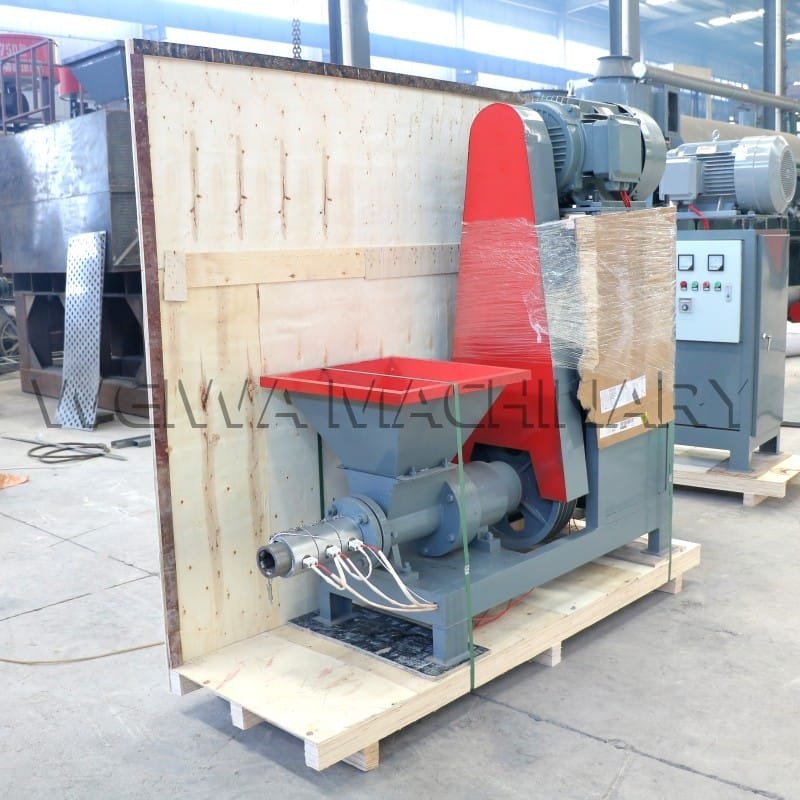
In recent years, the demand for sustainable energy solutions has been growing rapidly across the globe, especially in regions seeking to reduce reliance on fossil fuels and traditional firewood. One such region embracing this shift is the Kingdom of Bhutan. Known for its commitment to environmental conservation and Gross National Happiness, Bhutan presents a unique market for advanced biomass technologies. Recently, Jentera Weiwa successfully organized the shipment of a complete Mesin Briket Biomass production line to a client in Bhutan.
Understanding the Science Behind Sawdust Briquetting
Before diving into the details of the shipment, it is essential to understand what a Mesin Briket Biomass is and why it is particularly suitable for a country like Bhutan. Unlike traditional charcoal making, which involves cutting down trees and burning wood in kilns—a process that releases significant amounts of smoke and carbon dioxide—modern briquetting technology utilizes waste materials efficiently.
A Penyemperit habuk papan works by applying high pressure and temperature to biomass raw materials such as sawdust, sekam padi, sekam kopi, and bamboo dust. Under these conditions, the natural lignin in the biomass melts and acts as a natural binder. This process binds the particles together without the need for any chemical additives. The result is a dense, solid fuel stick known as a wood charcoal briquette. These briquettes have a calorific value over 20% higher than that of normal wood, burn with little smoke, and are ideal for both domestic cooking and industrial heating applications.
Why Bhutan Needs Penyemperit Biojisim Technology?
Bhutan’s geography, characterized by mountainous terrain and abundant forest resources, makes it an ideal candidate for biomass-based fuel production. Namun begitu, transporting loose biomass like sawdust or agricultural residue is inefficient due to its low density. By utilizing a Mesin Briket Habuk Papan, local industries in Bhutan can compress this waste into high-density rods with diameters ranging from 45mm to 80mm. The available shapes include hexagonal, Dataran, and hollow cylindrical forms, which are not only easy to handle but also optimize combustion efficiency.
Tambahan pula, the Bhutanese government has been promoting clean energy initiatives. Introducing a Mesin Briket Biomass aligns perfectly with national goals to reduce indoor air pollution caused by traditional open-fire cooking and to create value-added products from forestry by-products. For a country that imports a significant amount of fossil fuels, producing charcoal locally using a Penyemperit Biojisim represents a step toward energy independence.
Shipping a Sawdust Extruder to Bhutan
Delivering heavy industrial machinery like a Penyemperit habuk papan to a landlocked country such as Bhutan involves meticulous planning. The recent shipment organized by Jentera Weiwa included a full set of equipment necessary for establishing a charcoal production line. This comprised a grinder to crush raw materials to a diameter of approximately 3-5mm, a dryer to reduce moisture content to below 12%, the main Mesin Briket Habuk Papan, and finally, carbonization furnaces.
Each machine was packed securely in wooden boxes. Given international shipping standards and phytosanitary requirements, especially for European transit routes, the wooden packaging underwent fumigation treatment. For the final leg of the journey into Bhutan, where road conditions can be challenging, extra protective measures such as PE film wrapping were applied to prevent damage from dust and moisture. Our logistics team coordinated closely with local partners to ensure that the equipment cleared customs smoothly and reached the client’s site without delay.
Operational Workflow of the Charcoal Production Line
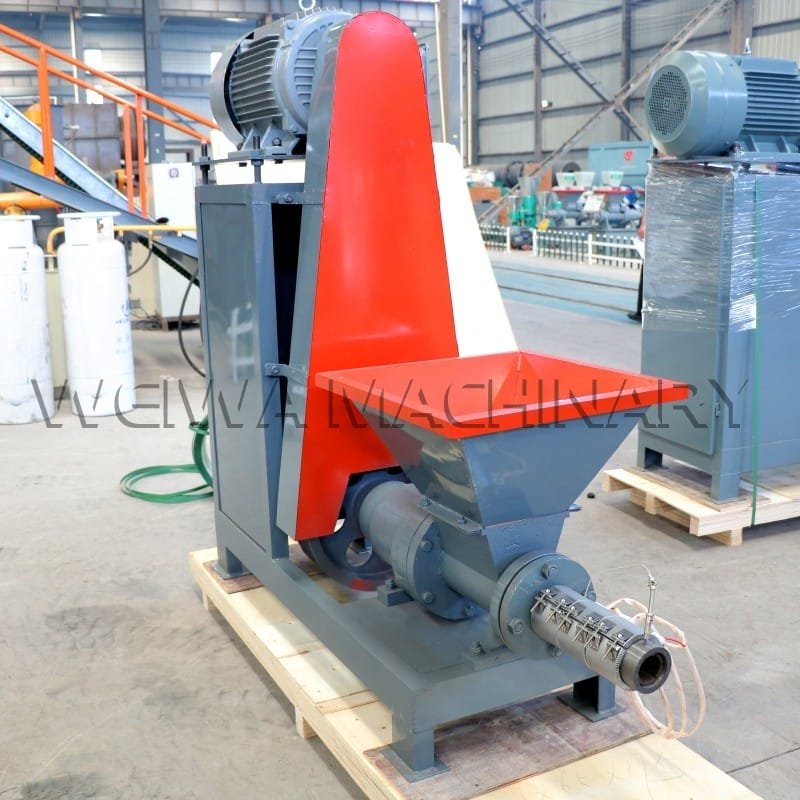
Once installed, the production line follows a systematic five-step process. Pertama, raw materials are crushed using the grinder. Second, the material passes through the dryer; maintaining moisture below 12% is critical for the briquetting process. Third, the dried material enters the Mesin Briket Biomass. Inside the machine, a large screw compresses the biomass under high pressure while heating rings raise the temperature sufficiently to soften the lignin.
Fourth, the extruded sticks, often featuring a hollow core for better heat transfer during carbonization, are collected. Akhirnya, these green sticks undergo carbonization in a kiln, transforming them into high-quality charcoal briquettes ready for the market. This entire process ensures maximum utilization of forest and agricultural residues, turning what would be waste into a valuable energy resource.
Advantages of Using Sawdust Briquetting Machines
The Mesin Briket Habuk Papan offers numerous advantages for the Bhutanese market. Firstly, it solves the problem of waste disposal for timber mills and agricultural farms. Secondly, the fuel produced is easy to ignite and burns longer than traditional wood charcoal. Thirdly, the high density of the briquettes makes them cost-effective to transport, which is particularly important in a mountainous country where logistics costs are high. Lastly, since no binders are added, the final charcoal is 100% natural, ensuring it meets international standards for cleanliness and safety.
Mengenai Jentera Weiwa
With a history of serving customers in over 130 negara, Jentera Weiwa has established itself as a leader in the field of biomass energy equipment. We specialize in designing customized production plans tailored to specific raw materials and capacity requirements. Whether you are processing sawdust, sekam padi, or bamboo, our engineers can provide solutions ranging from small-scale manual lines to fully automated industrial plants. Our commitment to quality is reflected in our robust packaging standards and comprehensive after-sales support. We believe in building long-term partnerships and helping our clients succeed in their renewable energy ventures.
For more information about our Mesin Briket Biomass, Penyemperit habuk papan, or other charcoal making equipment, please feel free to contact us. We offer free design consultations to help you select the most suitable machinery for your needs.
Hubungi Kami Hari Ini:
Mobile: +86 138 3809 3177
WhatsApp: +86 138 3809 3177
E -mel: info@cjlmachinegroup.com


 WeChat

 +8615937143060
