


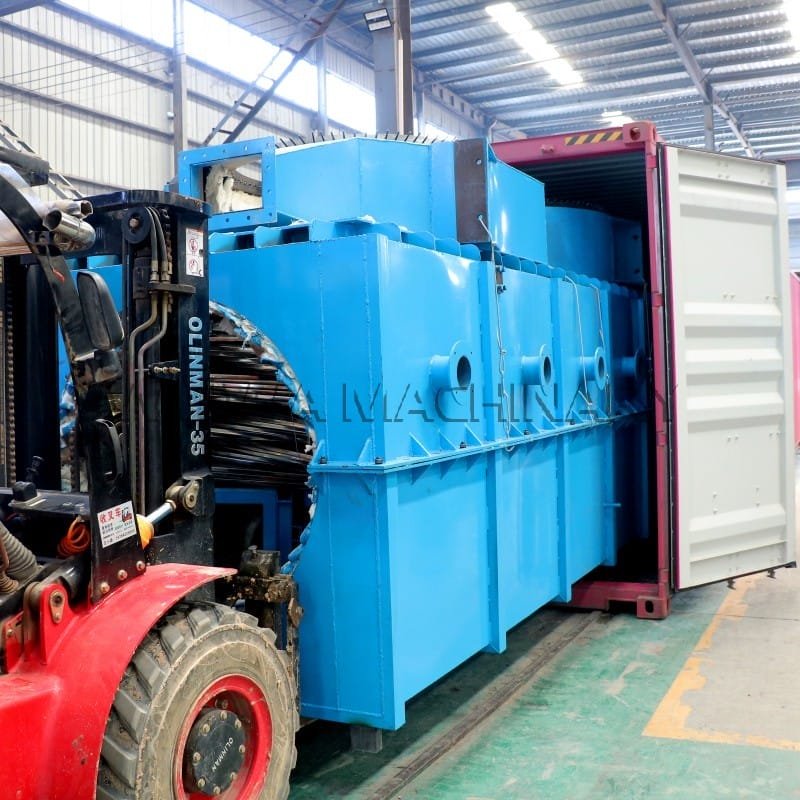
À Weiwa Machinery, we believe that innovation in carbonization technology can empower industries worldwide while preserving environmental sustainability. Récemment, we proudly loaded and dispatched one of our flagship products — a high-efficiency four à carbonisation continue — bound for Brazil. This shipment marks not only a business expansion but also a meaningful step toward supporting Brazil’s growing demand for eco-friendly charcoal production solutions.
L'importance de Four à carbonisation continue Technologie
Qu'est-ce qu'un four de carbonisation continue?
Unfour à carbonisation continue is an advanced industrial system designed to convert biomass materials such as wood, coquilles de noix de coco, bambou, or agricultural residues into high-quality charcoal through a constant, uninterrupted thermal decomposition process. Contrairement aux fours discontinus, which require loading, chauffage, cooling, and unloading cycles, a continuous carbonization furnace allows raw material input and charcoal output to occur simultaneously. This results in higher productivity, consistent product quality, et réduit les coûts de main-d'œuvre.
The core principle involves pyrolysis — the chemical decomposition of organic material under limited oxygen supply and elevated temperatures (typically between 400°C and 700°C). Pendant ce processus, volatile gases are often captured and reused as fuel to maintain furnace temperature, enhancing energy efficiency and lowering emissions.
For clients searching for a continuous carbonization furnace in Brazil, the key appeal lies in its ability to meet large-scale production needs while aligning with Brazil’s environmental regulations and sustainable development goals.
Why Choose Continuous Carbonization Furnace Over Traditional Methods?
Traditional charcoal making methods in Brazil have relied heavily on earth mounds or brick kilns, which suffer from low thermal efficiency, qualité du produit incohérente, and significant air pollution. En revanche, a modern four à carbonisation continueoffres:
- Higher Yield: Up to 30–40% more charcoal from the same raw material volume.
- Efficacité énergétique: Reuse of pyrolysis gas cuts external fuel consumption by up to 60%.
- Automation: Reduced manual intervention ensures safer working conditions.
- Conformité environnementale: Lower particulate and greenhouse gas emissions.
- Évolutivité: Modular designs adapt to various production capacities.
These advantages explain why interest in a continuous carbonization furnace for Brazil has grown steadily among biomass processors, coopératives agricoles, and eco-enterprises.
Behind the Scenes — Shipping Our Continuous Carbonization Furnace to Brazil
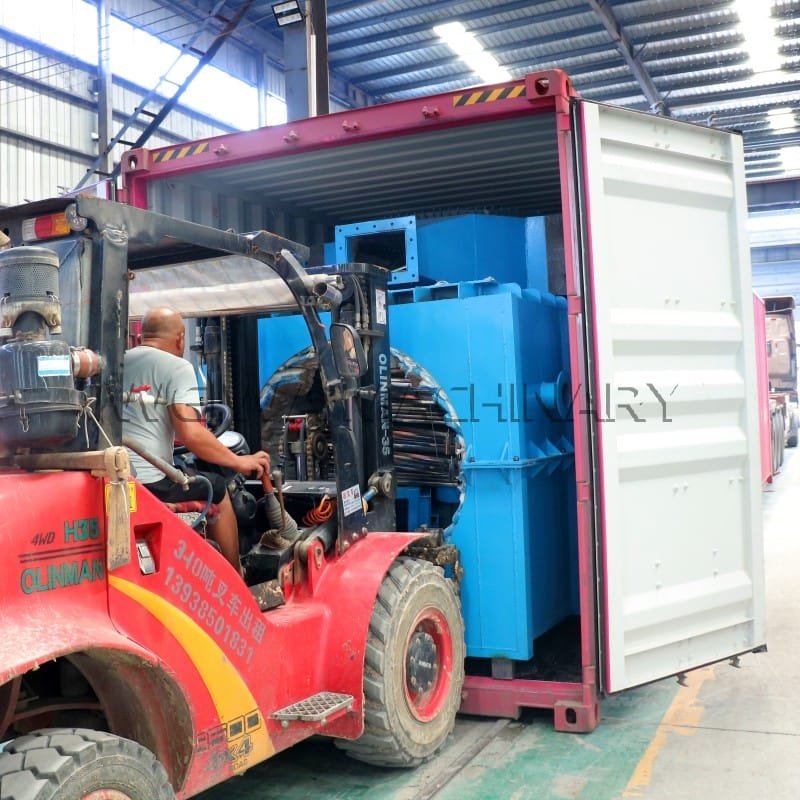
Preparing for the Journey
The preparation phase began weeks before the actual shipment. Our engineering team conducted thorough inspections to ensure every component of the furnace met international export standards. Special attention was given to corrosion-resistant materials and heat insulation layers, given Brazil’s tropical climate and humidity levels. Packaging involved reinforced crates, moisture barriers, and shock-absorbing materials to protect against transit rigors.
Given the keyword focus on continuous carbonization furnace price, we ensured transparent documentation covering not just the equipment cost but also installation guidance, entraînement, and after-sales support — factors often overlooked but critical for long-term value.
The Shipment Scene
On a bright morning at our manufacturing base, the entire Weiwa Machinery team gathered to witness the departure of the container carrying the four à carbonisation continue. The massive steel structure, carefully loaded by crane operators, gleamed under the sunlight — a symbol of countless hours of design refinement and precision manufacturing.
Our logistics partner coordinated closely with customs officials to streamline export procedures, ensuring all certifications and compliance documents were in order. As the container sealed and trucks rolled out, we felt a deep sense of accomplishment: this was more than machinery; it was a catalyst for cleaner industry practices in Brazil.
Science in Action — How the Continuous Carbonization Furnace Works
Understanding the inner workings helps clients appreciate why this technology is transformative.
The Pyrolysis Process Step-by-Step
- Feeding Stage: Biomass enters via a sealed feeding hopper, preventing oxygen ingress that could cause combustion rather than carbonization.
- Heating Zone: À l'intérieur du four, the material moves slowly through temperature-controlled zones. Primary heat may come from burning part of the pyrolysis gas or external burners.
- Decomposition: At target temperatures, cellulose, hémicellulose, and lignin break down, releasing volatiles (goudron, méthane, hydrogène) and leaving behind carbon-rich char.
- Gas Recovery: Volatile gases pass through a cleaning system and are either flared safely or redirected to fire the furnace, creating a self-sustaining cycle.
- Refroidissement & Discharge: The semi-finished charcoal enters a cooling unit, reducing temperature before exiting the system continuously.
This seamless loop means operations run 24/7 with minimal downtime — a game-changer for commercial charcoal makers.
Trial Operation — First Impressions from Brazil
À l'arrivée, our Brazilian client wasted no time initiating trial runs. With our remote technical support team guiding local engineers, lecharcoal making machine in Brazil performed impressively:
- Steady Throughput: The furnace processed 500 kg of coconut shells per hour without interruption.
- Quality Output: Charcoal achieved over 85% teneur en carbone fixe, exceeding typical market grades.
- Temperature Control: Automated sensors maintained optimal ranges even with varying feedstock moisture.
- Energy Autonomy: Captured gas supplied 70% of the furnace’s heat demand, slashing fuel expenses.
These results validate the continuous carbonization furnace price as a worthy investment, delivering rapid returns through efficiency gains and premium product sales. Local staff praised the intuitive control panel and minimal smoke emissions, addressing both operational ease and environmental concerns.
Market Outlook — Continuous Carbonization Furnace in Brazil
Brazil’s Biomass Potential
Brazil boasts vast agricultural lands producing sugarcane bagasse, coccarbures de riz, coffee pulp, and abundant coconut shells — ideal feedstocks for carbonization. The country’s charcoal sector supports metallurgy, barbecue culture, et les marchés d'exportation. Cependant, outdated methods hinder growth and attract regulatory scrutiny due to deforestation links.
Ici, lefour à carbonisation continue emerges as a sustainable alternative, enabling producers to tap into global green commodity trends. Government incentives for renewable energy projects further sweeten adoption prospects.
Economic and Environmental Benefits
Investing in a continuous carbonization furnace in Brazil aligns with multiple economic drivers:
- Opportunités d'exportation: High-grade charcoal fetches premium prices in Europe and North America.
- Job Creation: Modern plants require skilled technicians and maintenance crews.
- Carbon Credits: Cleaner processes qualify for environmental offset programs.
- Waste Valorization: Agricultural residues gain economic value instead of being burned openly.
We anticipate strong uptake across regions like Pará, Bahia, and São Paulo, where biomass availability and industrial activity converge.
Overcoming Adoption Barriers
While enthusiasm is high, challenges remain — initial continuous carbonization furnace price perception, need for training, and infrastructure readiness. Weiwa Machinery addresses these by offering flexible financing, localized training programs, and modular units scalable to client capacity. Our experience in similar climates ensures durability and ease of maintenance, critical for remote Brazilian sites.
Why Partner with Weiwa Machinery?
Choosing the right supplier makes all the difference. À Weiwa Machinery, we combine cutting-edge R&D with a customer-first approach. Nosfour à carbonisation continue designs incorporate feedback from diverse markets, ensuring reliability and adaptability. Nous fournissons:
- Solutions personnalisées: Tailored capacities and configurations.
- Assistance mondiale: From shipment to commissioning and beyond.
- Transparent Pricing: Detailed quotations covering total cost of ownership.
- Performance éprouvée: Thousands of successful installations worldwide.
Our recent Brazil shipment exemplifies this commitment — not merely selling equipment, but fostering long-term partnerships for sustainable progress.
Conclusion — Lighting the Path to Greener Charcoal in Brazil
The journey of our four à carbonisation continue to Brazil is more than a transaction; it is a shared mission toward cleaner industry and smarter resource use. From the bustling shipment scene to the promising trial outcomes, every step reinforces the potential of this technology to revolutionize charcoal production in Brazil.
As demand grows for sustainable charcoal making machines in Brazil, Weiwa Machinery stands ready to deliver innovation, qualité, and partnership. We invite businesses and entrepreneurs across Brazil to explore how our continuous carbonization furnace for Brazil can elevate their operations while contributing to a greener planet.
À propos Machinerie Weiwa
Weiwa Machinery is a leading manufacturer of carbonization and biomass processing equipment, headquartered in China with a global presence. Depuis notre création, we have dedicated ourselves to advancing pyrolysis technologies that turn waste into wealth. Our product range includes continuous carbonization furnaces, Machines de fabrication de charbon de bois, biomass dryers, and auxiliary systems, serving clients in agriculture, sylviculture, and renewable energy sectors across Asia, Afrique, Latin America, et au-delà. Driven by innovation and sustainability, Weiwa Machinery is your trusted partner in building efficient, eco-friendly production lines.


 Wechat

 +8615937143060
