


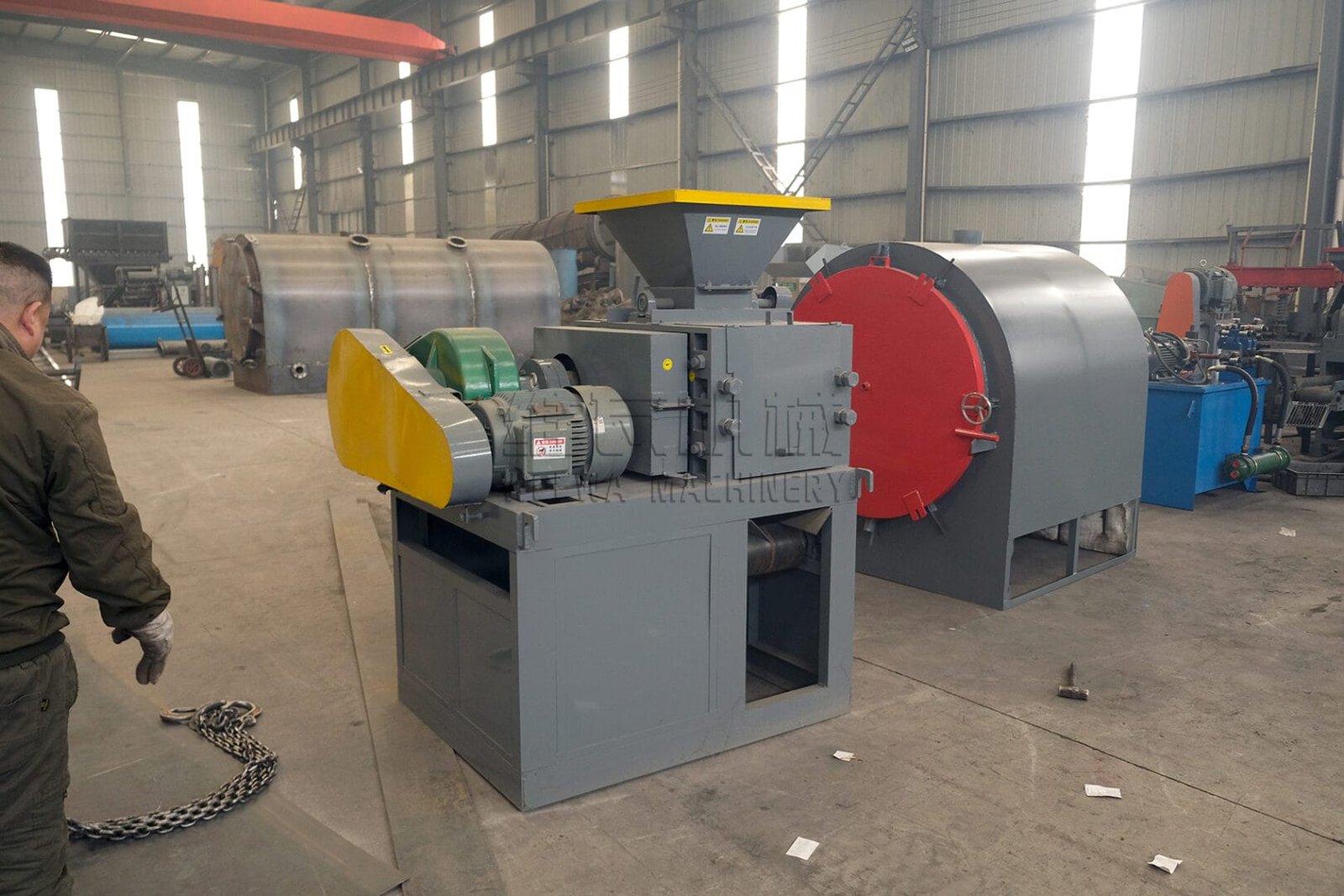
In the ever-evolving landscape of renewable energy solutions, one piece of equipment stands out for its efficiency, simplicity, and adaptability—the charcoal ball press machine. Récemment, Weiwa Machinery proudly dispatched a high-performance charcoal ball press machine to Honduras, marking another milestone in our mission to support sustainable fuel production across Central America.
The Growing Demand for Charcoal Ball Press Machines in Honduras
Honduras, like many countries in Central America, faces increasing pressure on its natural resources. Traditional wood-based charcoal remains a primary cooking fuel in rural areas, conduisant à la déforestation et à la dégradation de l’environnement. In response, there has been a surge in demand for efficient machines that can convert agricultural waste into clean-burning charcoal briquettes. The charcoal ball press machine has emerged as a game-changer in this context.
The concept of making charcoal balls for Honduras is not just about replacing traditional fuels; it’s about creating economic opportunities and reducing reliance on unsustainable logging practices. Avec le bon équipement, farmers and small businesses can turn coconut shells, sciure, coccarbures de riz, and other biomass materials into uniform, high-density charcoal briquettes. These briquettes burn longer, produire moins de fumée, and are easier to store and transport than loose charcoal dust or irregular chunks.
Why Choose a Ball Briquette Machine for Honduras?
When considering machinery for biomass densification, the ball briquette machine offers several advantages over alternative technologies. Its compact design makes it suitable for both small-scale workshops and larger industrial setups. The machine operates at moderate pressures, ensuring durability while maintaining consistent output quality. For the Honduran market, where electricity supply can be intermittent, the mechanical simplicity of the charcoal press machine is particularly appealing.
Another key factor is the versatility of the machine. It can handle various raw materials without requiring extensive preprocessing. This is crucial in regions where access to advanced grinding or drying equipment may be limited. By enabling users to make charcoal balls using locally available biomass, the machine supports decentralized production models that empower rural communities.
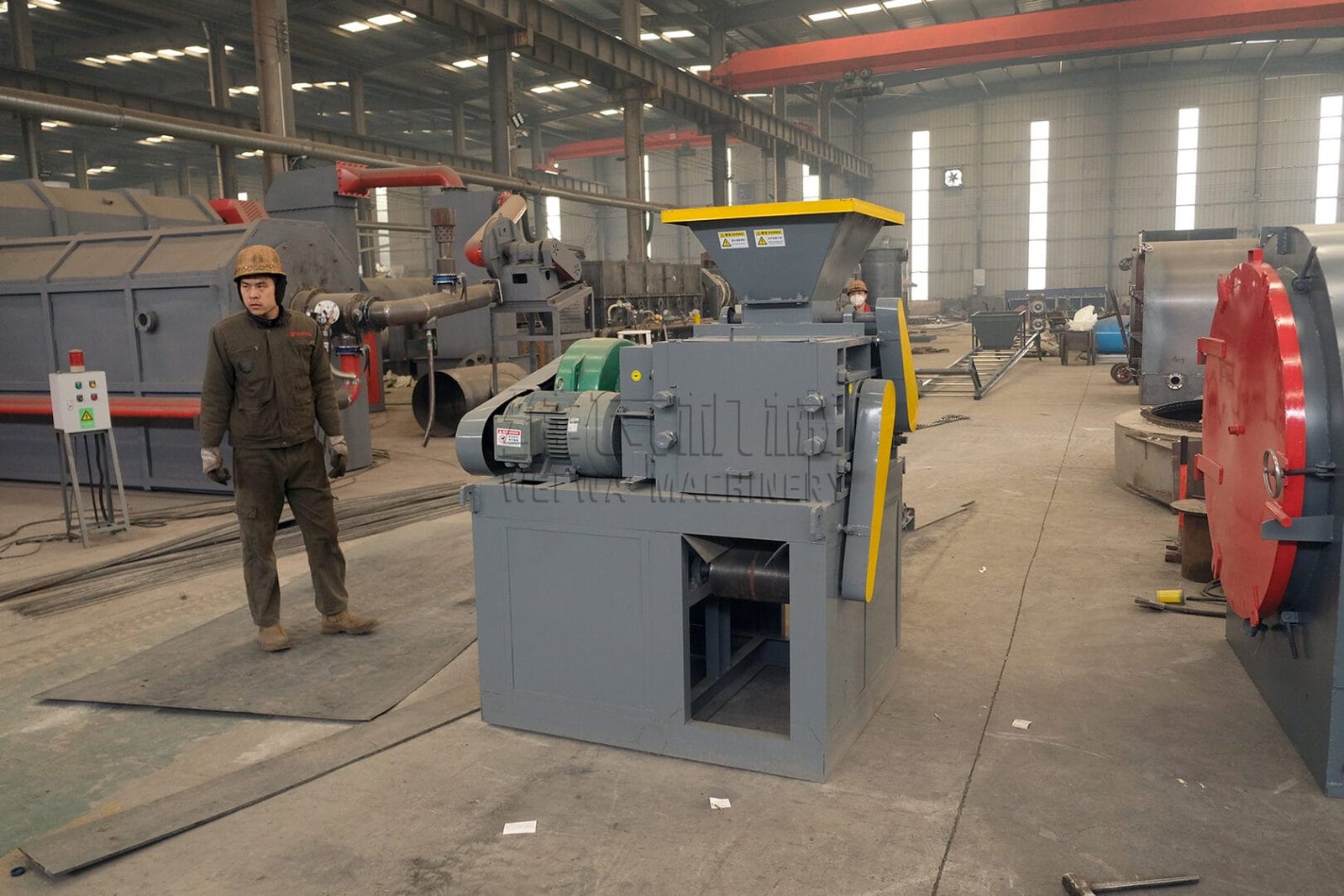
Preparing the Shipment to Honduras
À Weiwa Machinery, every international shipment begins with meticulous planning. Our team conducted a thorough assessment of the client’s requirements, including production capacity needs, available space, and local voltage specifications. Based on these parameters, we customized the charcoal ball press machine with appropriate motor ratings and safety features.
The packaging process was equally rigorous. Given the long transit time and potential handling challenges during shipping, we used reinforced wooden crates and moisture-resistant wrapping to protect critical components. Each part was labeled clearly to facilitate smooth assembly upon arrival. En plus, we included a comprehensive user manual translated into Spanish, recognizing the importance of clear communication in ensuring successful installation and operation.
Arrival and Installation in Honduras
Upon reaching the port in Honduras, the charcoal press machine underwent customs clearance with minimal delays, thanks to our proactive documentation preparation. Local technicians appointed by the client coordinated closely with our after-sales support team via video calls to guide the unloading and initial inspection.
The installation site was prepared according to our recommendations, with adequate ventilation and a stable foundation to minimize vibration during operation. Within three days, the machine was fully assembled, and preliminary checks were completed. This swift setup demonstrated the practicality of our design, which prioritizes ease of maintenance and user-friendly operation.
On-Site Testing of the Charcoal Ball Press Machine
The moment of truth came during the trial run, which was attended by representatives from multiple local cooperatives interested in adopting the technology. We loaded the machine with a mixture of coconut shell powder and sawdust, a common combination in the region. The material was pre-mixed and slightly moistened to optimize binding.
As the main motor engaged, the rollers began compressing the powdered biomass into dense, spherical briquettes. The process was smooth and remarkably quiet, dispelling concerns about noise pollution in residential or semi-urban settings. Within minutes, the first batch of charcoal balls emerged—uniform in size, firm in texture, and free from cracks or deformities.
To assess performance under real-world conditions, the team conducted a burn test. Les résultats ont été impressionnants: the charcoal balls ignited quickly, produced a steady flame, and emitted significantly less smoke compared to traditional charcoal. Their density allowed them to burn longer, making them ideal for household cooking and small-scale industrial applications alike.
Feedback from Local Users
The enthusiasm among attendees was palpable. One cooperative leader noted that the ability to produce standardized charcoal balls would enable them to negotiate better prices in regional markets. Another participant highlighted the reduction in waste, as previously discarded coconut shells could now be monetized. The feedback underscored the broader impact of introducing the machine for making charcoal—not only as a technical solution but as an economic catalyst.
We also addressed questions regarding maintenance and spare parts availability. Our commitment to providing long-term support includes stocking essential components in regional distribution centers and offering remote troubleshooting services. This assurance helped build confidence among potential buyers who might have been hesitant about investing in new technology.
The Role of the Charcoal Ball Press Machine in Sustainable Development
Beyond immediate commercial benefits, the deployment of this technology aligns with global goals for sustainable development. By reducing dependence on firewood, the machine helps combat deforestation and preserves biodiversity. En outre, the use of agricultural residues promotes circular economy principles, turning waste into valuable energy products.
In Honduras, where climate change poses significant risks to agriculture and livelihoods, such innovations are vital. The charcoal ball press machine represents a tangible step toward energy independence and environmental stewardship. It empowers individuals and communities to take control of their energy needs while contributing to national efforts to reduce carbon emissions.
Training and Capacity Building
A single machine can only do so much without skilled operators. As part of the project, Weiwa Machinery organized a two-day training session covering machine operation, protocoles de sécurité, and basic troubleshooting. Participants ranged from young entrepreneurs to experienced technicians, reflecting the cross-generational interest in this technology.
The hands-on approach ensured that everyone gained practical experience in adjusting pressure settings, changing dies, and monitoring output quality. We also emphasized the importance of selecting the right raw materials and maintaining proper storage conditions to maximize briquette durability. This knowledge transfer is essential for building a self-sustaining ecosystem around the charcoal press machine.
Long-Term Support and After-Sales Service
Our relationship with clients does not end with delivery. Weiwa Machinery maintains a dedicated support line for all international customers, staffed by engineers fluent in multiple languages. We also provide regular software updates for digital control systems and conduct annual performance reviews to identify optimization opportunities.
For the Honduran market, we are exploring partnerships with local distributors to ensure faster access to replacement parts and consumables. This strategy not only enhances customer satisfaction but also strengthens the local supply chain, fostering greater resilience in the face of logistical challenges.
The Future of Biomass Briquetting in Honduras
The successful deployment of the charcoal ball press machine in Honduras signals a promising future for biomass densification technologies in the country. As awareness grows, we anticipate increased adoption among smallholder farmers, women-led cooperatives, and urban waste management initiatives.
We are already in discussions about expanding the product line to include larger-capacity models and integrated systems that combine crushing, mélange, and pressing functions. These developments will further streamline the process of making charcoal balls, making it even more accessible to resource-limited settings.
De plus, the positive reception of our machine highlights the importance of culturally sensitive engineering. By designing equipment that respects local infrastructure constraints and leverages readily available materials, we can unlock transformative potential in emerging markets.
Pourquoi Machinerie Weiwa Is Your Trusted Partner?
With over a decade of experience in manufacturing and exporting industrial machinery, Weiwa Machinery has established itself as a leader in the field of biomass processing equipment. Our product portfolio includes a wide range of charcoal ball press machines, machines à briquettes à billes, and related accessories, all built to withstand demanding operating conditions.
We pride ourselves on our customer-centric approach, combining technical expertise with responsive service. From initial consultation to post-installation support, we work closely with clients to ensure that each project meets their specific needs. Our global network of partners enables us to deliver reliable solutions wherever they are needed.
In addition to our core products, we offer customized engineering services, helping clients adapt standard designs to unique operational contexts. Whether you are looking for a machine for making charcoal on a small farm or planning a large-scale briquetting plant, Weiwa Machinery has the knowledge and resources to bring your vision to life.
Conclusion
The shipment and successful testing of our charcoal ball press machine in Honduras represent more than just a business transaction—they embody our commitment to sustainable innovation and inclusive growth. By providing accessible, reliable technology for making charcoal balls, we are helping communities transition toward cleaner energy sources while creating new avenues for income generation.
Alors que nous regardons vers l'avenir, we remain dedicated to advancing the frontiers of biomass utilization. With every machine we send out, we carry the hopes of countless individuals striving for a better future. And in Honduras, those hopes are already taking shape in the form of neatly pressed charcoal balls, ready to light the way toward a greener tomorrow.
Need Help With Your Own Charcoal Briquetting Project?
Whether you’re in Honduras or anywhere else in the world, Weiwa Machinery is here to help you find the right charcoal ball press machine or ball briquette machine for your needs. Contact us today to learn more about how we can support your journey in making charcoal sustainably.
- Foule:+8613838093177
- Whatsapp:+8613838093177
- E-mail:info@cjlmachinegroup.com


 Wechat

 +8615937143060
