


Introduction
À Weiwa Machinery, we take pride in delivering cutting-edge charcoal-making solutions that empower communities worldwide. Récemment, we witnessed an exciting milestone — the shipment of our Four à carbonisation horizontale to Colombia. This event not only marks another step in expanding our global reach but also highlights the growing demand for efficient, eco-friendly charcoal production technology in Latin America.
Preparing the Horizontal Carbonization Furnace for Export
Final Inspection Before Shipping
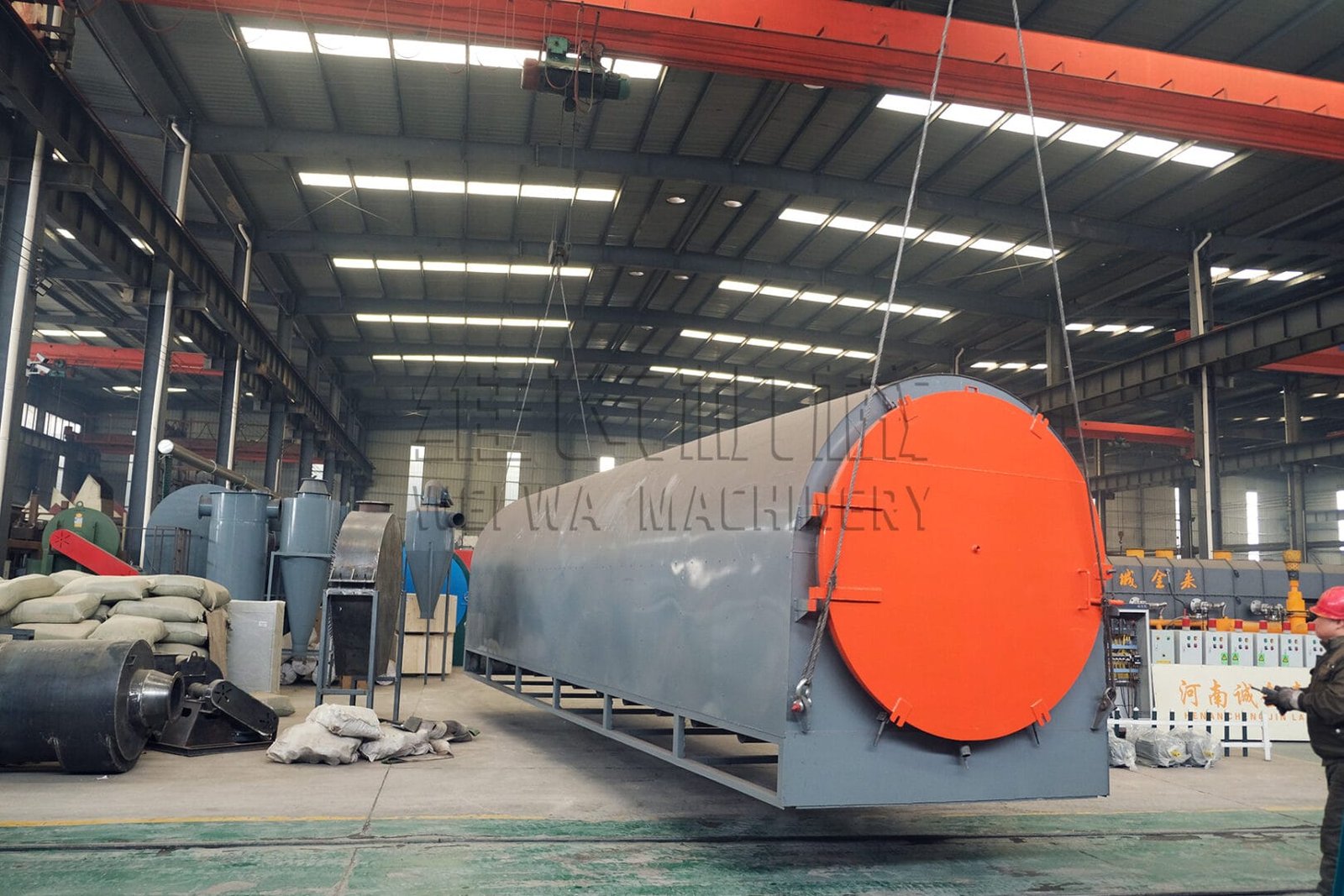
Before any machine leaves our factory, it undergoes rigorous quality control checks. For this particular four à carbonisation horizontale, our engineers examined every component — from the combustion chamber to the flue gas purification system. The goal was simple: ensure the equipment would operate smoothly upon arrival in Colombia, regardless of local climate conditions.
The inspection included verifying material thickness, checking sealing performance, and testing the automated temperature control system. These steps guarantee that the furnace can maintain stable heat distribution during long carbonization cycles, producing high-quality charcoal with minimal waste.
Packaging for Safe Transportation
Transporting heavy industrial machinery across continents requires careful planning. Our team wrapped the furnace body in anti-rust materials and reinforced key connection points to prevent damage during transit. Special attention was given to protecting the control panel and sensors, as these are critical for precise operation.
We chose sea freight for its cost-effectiveness over such distances, ensuring both safety and efficiency. The container was loaded under strict supervision, with each part securely fastened to avoid shifting. By the time the truck departed our facility, le four à carbonisation horizontale was ready to begin its journey to South America.
Journey Across Oceans: From China to Colombia
Logistics Coordination
Shipping a large piece of equipment internationally involves multiple parties — freight forwarders, customs agents, port operators, et plus. À Weiwa Machinery, we have built strong partnerships with reliable logistics providers who understand the nuances of machinery transport.
For this shipment, coordination began weeks in advance. We prepared all necessary documentation, including certificates of origin, commercial invoices, and packing lists. Clear communication ensured that customs clearance procedures in both China and Colombia proceeded without delays.
Tracking Progress
Tout au long du voyage, we monitored the shipment’s progress closely. Modern tracking systems allowed us to provide real-time updates to our Colombian client, building trust and transparency. This level of service reflects our commitment to customer satisfaction beyond just selling equipment.
Welcoming the Four à carbonisation horizontale
Port Unloading
Upon arrival at the Colombian port, the container was unloaded using specialized cranes capable of handling heavy loads safely. Our local partner team was present to oversee the process, ensuring no damage occurred during unloading.
Once removed from the container, le four à carbonisation horizontale was carefully transported to the client’s site. The route was planned to minimize vibration and impact, preserving the integrity of the machinery.
On-Site Installation Preparation
Before installation could begin, the site required preparation — leveling the ground, setting up foundations, and ensuring access to utilities like electricity and water. Our engineers worked closely with the client’s staff to align timelines and address any logistical challenges.
This collaborative approach not only speeds up deployment but also fosters knowledge transfer, helping local teams become familiar with operating and maintaining the equipment.
Comprendre le four de carbonisation horizontal?
Qu'est-ce qu'un four de carbonisation horizontal?
UN four à carbonisation horizontale is a type of kiln designed for continuous or batch processing of biomass materials into charcoal. Contrairement aux fours verticaux traditionnels, which often suffer from uneven heating, the horizontal design allows for better airflow control and uniform carbonization.
The furnace consists of a sealed chamber where raw materials such as coconut shells, bois dur, or agricultural residues are heated in a low-oxygen environment. This process drives off volatile compounds, leaving behind dense, carbon-rich charcoal.
Key Features of Our Design
Notre four à carbonisation horizontale stands out due to several innovative features:
- Efficient Heat Distribution: Multiple burners and adjustable dampers ensure consistent temperatures throughout the chamber.
- Flue Gas Treatment: Integrated filtration systems capture harmful emissions, reducing environmental impact.
- Contrôle automatisé: Digital interfaces allow operators to monitor and adjust parameters easily.
- Construction durable: Built with high-grade steel and refractory materials for longevity.
These qualities make our furnaces suitable for diverse applications, from small-scale artisanal charcoal production to larger industrial operations.
Why Colombia Needs Advanced Charcoal-Making Technology?
Current State of Charcoal Production in Colombia
Colombia has a rich tradition of charcoal production, largely driven by domestic demand for cooking fuel. Cependant, many existing methods rely on outdated kilns that are inefficient and environmentally damaging. Traditional earth mounds or simple pits release significant amounts of smoke and greenhouse gases, contributing to air pollution and deforestation.
De plus, inconsistent quality and low yields mean producers often struggle to compete in markets demanding cleaner, standardized products. There is a clear need for modern solutions that balance productivity with sustainability.
Benefits of Introducing Horizontal Carbonization Furnaces
By adopting horizontal carbonization furnaces, Colombian producers can achieve multiple advantages:
- Rendement en charbon de bois plus élevé: Improved heat management maximizes conversion rates from raw biomass to finished charcoal.
- Better Quality Control: Uniform carbonization results in charcoal with consistent burning properties.
- Reduced Emissions: Advanced flue gas treatment minimizes harmful pollutants released into the atmosphere.
- Efficacité énergétique: Lower fuel consumption translates to cost savings over time.
- Évolutivité: Suitable for both small farms and larger cooperatives, supporting economic growth.
These benefits align well with Colombia’s goals of promoting sustainable development and reducing reliance on fossil fuels.
How the Horizontal Carbonization Furnace Works?
Processus étape par étape
Understanding the operation of a four à carbonisation horizontale helps appreciate its efficiency. Voici comment ça marche:
- Loading Raw Materials: Biomass is fed into the furnace through an inlet door. Proper sizing ensures optimal airflow.
- Heating Phase: Burners ignite combustible gases released from the biomass, gradually raising the internal temperature to around 400–600°C.
- Carbonization Phase: As volatiles escape, the remaining solid material transforms into charcoal. Temperature and oxygen levels are tightly controlled to prevent combustion.
- Cooling and Discharge: Après la carbonisation, the chamber cools before workers remove the finished charcoal through an outlet.
- Gas Recovery (Facultatif): Some models capture flammable gases for reuse as fuel, further improving efficiency.
This cyclical process can be repeated continuously or in batches depending on production needs.
Role of Automation
Modern horizontal carbonization furnaces incorporate automation to enhance precision and reduce labor requirements. Sensors track temperature, pression, and gas composition, feeding data to a central control unit. Operators can set parameters in advance, allowing the system to run unattended for extended periods.
Such automation not only boosts productivity but also improves safety by minimizing human exposure to high-temperature environments.
Environmental Impact and Sustainability
Reducing Deforestation
One major advantage of advanced charcoal-making technology is its potential to curb illegal logging. When producers can obtain higher yields from smaller quantities of wood, there’s less incentive to clear forests indiscriminately.
In Colombia, where biodiversity conservation is crucial, replacing inefficient kilns with horizontal carbonization furnaces supports reforestation efforts and protects ecosystems.
Lower Carbon Footprint
Traditional charcoal production emits large volumes of CO₂ and particulate matter. By capturing and utilizing waste gases, our furnaces significantly cut emissions compared to conventional methods.
En plus, because the process requires less fuel input overall, the net carbon footprint is reduced — an important consideration in today’s climate-conscious world.
Economic Opportunities for Local Communities
Job Creation
Introducing new technology often brings employment opportunities. From skilled technicians needed for installation and maintenance to workers involved in feedstock collection and charcoal packaging, the ripple effects benefit entire communities.
Training programs offered alongside equipment sales help locals acquire valuable skills, fostering long-term economic resilience.
Market Expansion
High-quality charcoal produced using horizontal carbonization furnaces meets international standards, opening doors to export markets. This diversification reduces dependency on volatile domestic demand and stabilizes incomes for producers.
Challenges and Solutions in Adoption
Initial Investment Costs
While the long-term benefits are substantial, the upfront cost of purchasing a four à carbonisation horizontale can be a barrier for some producers. To address this, Weiwa Machinery offers flexible financing options and collaborates with local banks to facilitate loans.
We also emphasize the return on investment through increased yields and reduced operational expenses, helping clients see the value proposition clearly.
Technical Training Requirements
Operating sophisticated machinery requires knowledge and experience. Reconnaître cela, we provide comprehensive training sessions covering everything from basic operation to troubleshooting common issues.
Our support doesn’t end at installation; ongoing technical assistance ensures smooth running throughout the equipment’s lifespan.
Future Prospects in Colombia
Demande croissante d’énergie propre
As awareness of environmental issues grows, so does the demand for cleaner alternatives to traditional fuels. Charcoal remains a vital resource in many households, especially in rural areas lacking access to electricity or gas.
Advanced charcoal makers like our horizontal carbonization furnaces position Colombia as a leader in sustainable biomass utilization, attracting investment and fostering innovation.
Potential for Innovation
Regarder vers l'avenir, there’s room for integrating renewable energy sources into the carbonization process. Solar-powered preheating or biogas supplementation could further enhance efficiency and reduce reliance on fossil fuels.
Collaboration between manufacturers, researchers, and policymakers will be key to unlocking these possibilities.
A Milestone for Sustainable Development
L'expédition de notre four à carbonisation horizontale to Colombia represents more than just a business transaction — it symbolizes progress toward cleaner, production de charbon de bois plus efficace. Through innovation and partnership, we aim to empower communities while protecting the planet.
À Weiwa Machinery, we remain committed to delivering reliable, eco-friendly solutions tailored to local needs. Whether you’re in Colombia or elsewhere, we’re here to help you transform biomass into opportunity.
À propos Machinerie Weiwa
Weiwa Machinery is a leading manufacturer of charcoal-making machines and related equipment based in China. With years of experience in designing and producing high-performance horizontal carbonization furnaces, charcoal makers, and other biomass processing technologies, nous servons des clients dans toute l'Asie, Afrique, Europe, et les Amériques.
Our mission is to promote sustainable development by providing accessible, efficace, and environmentally responsible solutions for energy and resource utilization. Visit our website hereto learn more about our products and services.


 Wechat

 +8615937143060
