


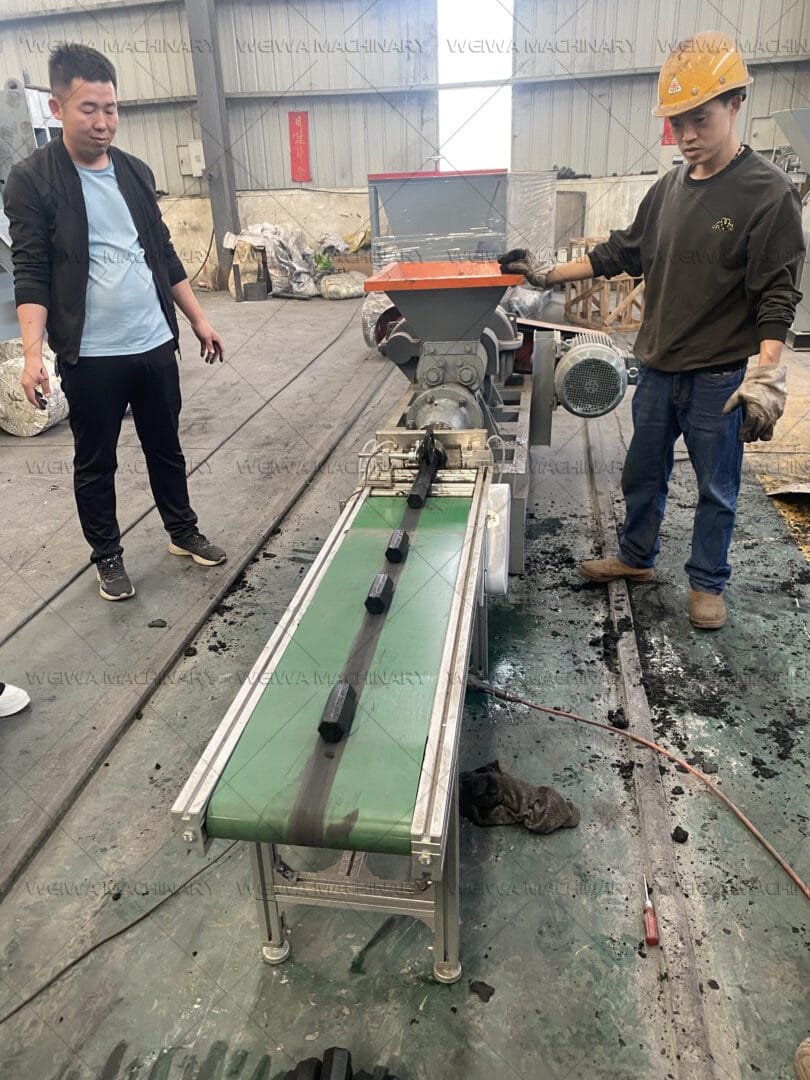
Au cours des dernières années, the global shift toward sustainable and renewable energy solutions has sparked a growing demand for efficient biomass processing equipment. Among these technologies, charcoal extruder machines have emerged as vital tools in transforming raw biomass into usable fuel sources. As a leading manufacturer with over 30 années d'expérience, Weiwa Machinery is proud to contribute to this transformation. Récemment, we had the privilege of conducting a successful trial run of our coal rod machine in Brazil, demonstrating not only the high performance of our charcoal making machine but also its vast potential within the Brazilian market.
Understanding the Role of Charcoal Extruder Machines in Sustainable Fuel Production
The modern charcoal extruder machine plays a pivotal role in converting powdered carbonaceous materials such as sawdust, cosse de riz, coquilles de noix de coco, and coal dust into solid fuel rods or briquettes. These densified products are easier to transport, magasin, and combust efficiently, providing a cleaner alternative to traditional firewood and loose coal. The process contributes significantly to reducing deforestation and minimizing greenhouse gas emissions.
À Weiwa Machinery, our charcoal extruder machines utilize advanced screw pressing technology that ensures uniform density, rendement élevé, et déchets minimaux. The resulting charcoal rods exhibit excellent combustion characteristics and are ideal for household cooking, chauffage industriel, and metallurgical applications.
What Makes a Quality Charcoal Making Machine?
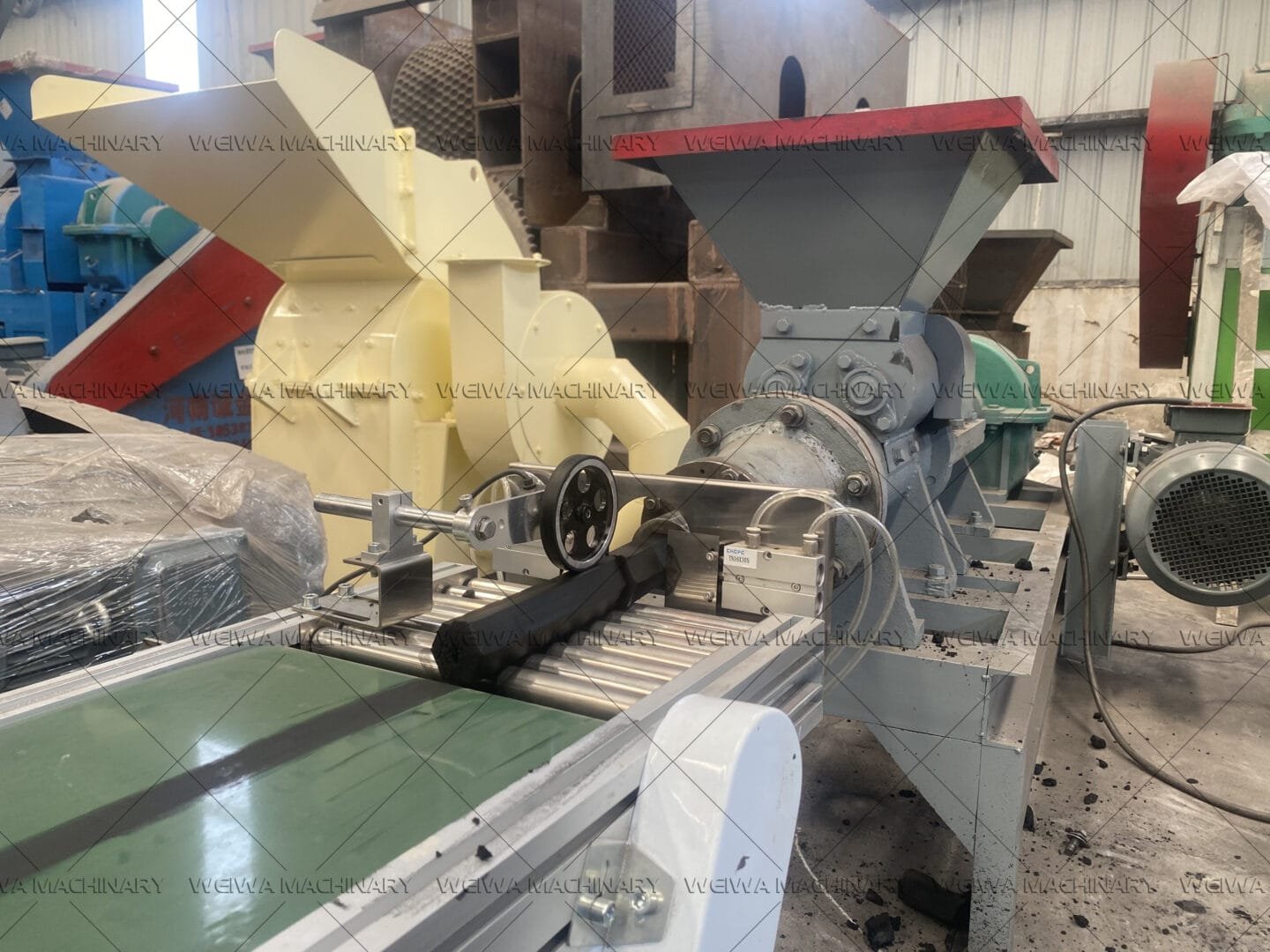
A quality charcoal making machine encompasses several critical components working in harmony. The feeding system must ensure consistent material input without clogging. The compression chamber applies hydraulic or mechanical pressure to shape the material into rods or briquettes. Enfin, the discharge unit ejects uniformly formed products ready for drying or packaging.
Our charcoal briquette machine integrates automated control systems that monitor temperature and pressure in real time. This precise regulation enhances product consistency while reducing labor requirements and energy consumption. En outre, the adaptability of our design allows customization based on specific feedstock properties and production targets.
Field Test in Brazil Demonstrates Exceptional Performance
Brazil presents a unique landscape for biomass utilization. With abundant agricultural residues and increasing interest in alternative energy, the country holds immense promise for charcoal extrusion technologies. Our recent field test of the coal rod machine in Brazil aimed to validate performance under local conditions using regionally sourced raw materials.
Conducted in partnership with a Brazilian client operating in the renewable energy sector, the trial involved processing coconut shell powder mixed with sawdust a common residue in Brazils coastal regions. The raw material was fed into the charcoal extruder machine, which operated continuously for eight hours. Throughout the process, our engineers monitored key metrics including throughput, energy usage, and product integrity.
The results were highly encouraging. The machine produced charcoal rods at a rate exceeding 1,200 kilograms per hour with low moisture content and strong structural cohesion. The briquettes displayed a smooth surface finish and consistent diameter, répondant aux normes internationales d’exportation. Notably, the machine maintained stable operation despite fluctuations in feedstock humidity, underscoring its robustness and reliability.
Feedback from the Brazilian client highlighted the ease of operation and minimal maintenance downtime. They expressed particular satisfaction with the machines ability to handle high-moisture inputs without compromising output quality. This adaptability is crucial in tropical climates like Brazils, where ambient humidity can affect raw material properties.
Market Potential of Charcoal Extruder Machines in Brazil
Brazil’s commitment to reducing reliance on fossil fuels and promoting green energy creates fertile ground for charcoal extruder adoption. The country ranks among the top producers of biofuels globally, driven by its extensive sugarcane industry and progressive policies supporting renewable resources. Cependant, many remote areas still depend heavily on wood-based fuels, contributing to deforestation and air pollution.
Introducing efficient charcoal making machines offers a viable pathway to mitigate these challenges. By enabling local communities to convert agricultural waste into clean-burning fuel, businesses can create economic opportunities while advancing environmental goals. De plus, government incentives for renewable energy projects further enhance investment attractiveness.
The versatility of rod charcoal making machines makes them suitable for various scales of operation, from small rural enterprises to large industrial plants. Par exemple, cooperatives can use compact models to produce briquettes for regional distribution, whereas agribusinesses might invest in high-capacity lines integrated with drying and packaging units.
Weiwa Machinery recognizes the importance of aligning equipment specifications with local needs. Our team conducted detailed consultations prior to the trial to understand feedstock availability, power supply constraints, and logistical considerations. Such tailored approaches ensure optimal return on investment and long-term operational success.
En outre, Brazils expanding urban population and rising awareness of indoor air quality issues amplify demand for smokeless fuel alternatives. Charcoal briquettes produced via extrusion burn cleaner than traditional logs, producing less particulate matter and carbon monoxide. This advantage positions them as preferred choices for households seeking healthier cooking options.
Technological Advantages of Weiwas Charcoal Briquette Machine
Innovation lies at the heart of Weiwa Machinerys product development philosophy. Our charcoal briquette machine incorporates several patented features that distinguish it from conventional models. One notable innovation is the variable pitch screw design, which adjusts compression ratios dynamically based on material flow. This prevents blockages and optimizes density across different batches.
Another key feature is the dual-stage cooling mechanism. Après extrusion, the freshly formed rods pass through a cooling tunnel that stabilizes their structure before packaging. This step minimizes cracking and deformation during storage, preserving product value.
Energy efficiency remains a cornerstone of our engineering strategy. By employing precision-cut gears and high-performance motors, we reduce power consumption by up to 20% compared to older designs. En plus, optional heat recovery systems capture excess thermal energy for auxiliary processes, lowering overall operational costs.
Safety is paramount in our design ethos. Emergency stop buttons, overload protection, and non-contact sensors prevent accidents and equipment damage. These measures not only protect operators but also extend the lifespan of the machinery.
Supporting Customers Beyond Installation
À Weiwa Machinery, we believe that delivering exceptional machinery is only part of our mission. Providing comprehensive support throughout the equipment lifecycle defines our reputation. Our professional after-sales team comprises multilingual technicians trained in installation, mise en service, dépannage, et entretien courant.
For clients in Brazil, we offer localized service centers staffed by personnel familiar with regional regulations and infrastructure. Spare parts availability is ensured through strategic inventory placement, minimizing lead times for replacements. Remote diagnostics capabilities allow us to identify issues swiftly and guide customers through resolutions without requiring physical presence.
Customization is another pillar of our customer-centric approach. Whether modifying machine dimensions to fit constrained spaces or adapting control interfaces to local languages, we strive to meet unique project demands. Site planning assistance includes detailed design drawings covering foundation layouts, connexions aux services publics, and workflow optimization. Entrepreneurs embarking on new ventures can rely on our expertise to navigate regulatory approvals and scale operations effectively.
The Science Behind Charcoal Rod Formation
To appreciate the capabilities of a coal rod machine in Brazil, understanding the science of briquette formation is essential. Biomass materials contain lignin, a natural polymer that acts as a binder when heated and compressed. During extrusion, mechanical pressure raises the temperature of the mixture, softening lignin and allowing it to fuse particles together.
The die at the machines outlet determines the final shape and size of the rods. Tapered dies facilitate smooth ejection while maintaining structural strength. Pressure applied during extrusion dictates the density; higher pressures yield harder briquettes with longer burn times. Cependant, excessive force may cause equipment wear or material degradation, necessitating careful calibration.
Moisture control is equally critical. Excess water inhibits proper bonding and increases drying energy requirements. Conversely, overly dry feedstock lacks plasticity, leading to brittle outputs. Preconditioning steps such as partial drying or humidification help achieve the ideal moisture range, typically between 8% et 12%.
Additives like starch or clay may be introduced to enhance binding, though many modern machines, including ours, achieve satisfactory results using raw biomass alone. This reduces chemical dependency and aligns with eco-friendly manufacturing principles.
Environmental and Economic Impacts in Brazil
Adopting charcoal extruder machines in Brazil offers multifaceted benefits. Environmentally, it curtails open burning of crop residues, which releases harmful pollutants and contributes to soil nutrient depletion. Instead, converting these wastes into briquettes sequesters carbon and promotes circular economy practices.
Économiquement, decentralized production hubs empower smallholder farmers and women-led enterprises by creating income streams from otherwise discarded materials. Job creation spans manufacturing, logistique, sales, and maintenance sectors, stimulating rural development.
Export potential also exists. Brazilian-made charcoal briquettes meet stringent quality criteria sought by international markets, particularly in Europe and Asia, where demand for sustainably sourced fuels is surging. Establishing certified production facilities could unlock premium pricing and diversify revenue channels.
Government programs aimed at reducing illegal logging provide additional impetus. Policies favoring renewable energy adoption often include tax breaks, grants, and technical assistance for qualifying projects. Aligning with such initiatives enhances project viability and fosters public-private partnerships.
The Future of Rod Charcoal Making Machines in Brazil
The trajectory of Brazils energy transition suggests robust growth for charcoal extrusion technologies. As climate commitments intensify and consumers prioritize sustainability, the appeal of clean-burning solid fuels will rise. Continuous advancements in machine intelligence, connectivity, and automation will further elevate productivity and user convenience.
Weiwa Machinery remains committed to pioneering innovations that address emerging challenges. Upcoming developments include AI-driven predictive maintenance, solar-powered auxiliary systems, and modular designs adaptable to mobile units. These enhancements will broaden accessibility, especially in off-grid locations.
Collaboration with Brazilian stakeholders is key to tailoring solutions that resonate with cultural and economic contexts. Training programs for operators, joint research initiatives, and pilot projects will deepen local expertise and foster trust. Our vision is to catalyze a thriving ecosystem where charcoal extruder machines drive inclusive prosperity and ecological restoration.
Pourquoi choisir Machinerie Weiwa for Your Charcoal Making Needs
With over three decades of industry leadership, Weiwa Machinery has earned recognition for engineering excellence and unwavering customer dedication. Our portfolio spans a comprehensive range of equipment designed to meet diverse production requirements. From laboratory-scale prototypes to turnkey production lines, we deliver reliability backed by rigorous testing and quality assurance protocols.
Our professional after-sales team stands ready to assist clients worldwide, offering prompt responses and effective solutions. Customized service packages include operator training, preventive maintenance schedules, and priority access to upgrades. We take pride in crafting bespoke designs and layout plans that streamline workflows and maximize space utilization.
Entrepreneurs seeking to explore opportunities in Brazils dynamic market are invited to contact us for inquiries and quotations. Visit our product page to learn more about the charcoal extrude machine and discover how we can support your journey toward sustainable success.
Let Weiwa Machinery be your trusted partner in shaping a greener future. Reach out today and take the first step toward transforming biomass into brilliance.


 Wechat

 +8615937143060
