


Comprendre le Four à carbonisation continue
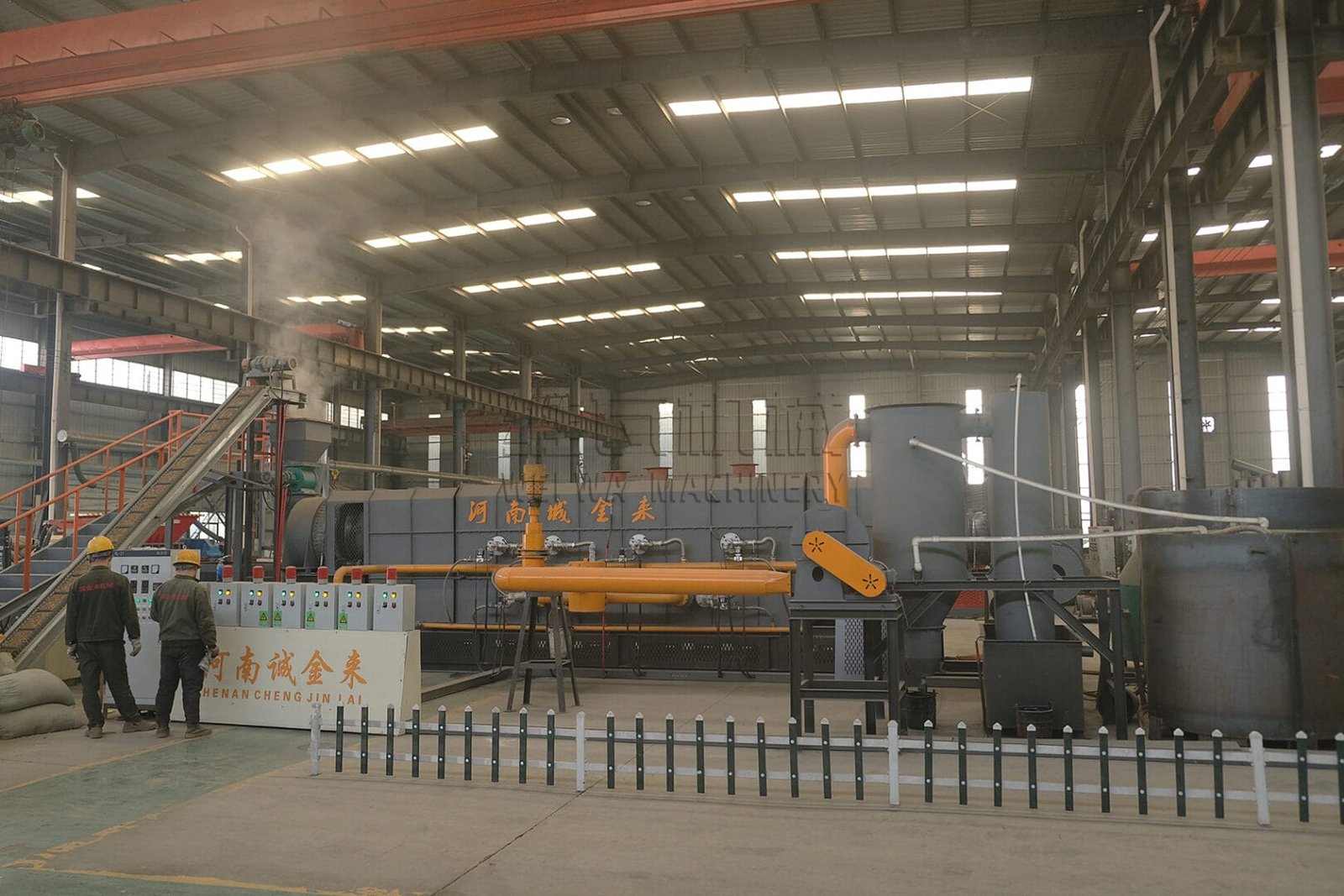
A continuous carbonization furnace is an industrial thermal system engineered for uninterrupted charcoal production. Contrairement aux fours discontinus, qui nécessitent des cycles de refroidissement et de rechargement, un système continu alimente régulièrement la biomasse dans un système étanche, chambre à oxygène contrôlé. À l'intérieur, la pyrolyse se produit à des températures comprises entre 450 et 700 degrés Celsius. Volatile gases are either recycled as fuel or treated through secondary combustion systems.
In tropical regions such as Indonesia, moisture content in agricultural waste like palm kernel shells can fluctuate significantly. Our continuous carbonization furnace integrates a pre-drying zone that reduces moisture before carbonization. This design minimizes energy loss and improves the calorific value of the final biochar. For operators, the benefit is clear: stable throughput without frequent shutdowns.
Why PKS Is an Ideal Feedstock?
Palm kernel shells are a dense, lignin-rich biomass with naturally low ash content. When processed through a continuous carbonization furnace for PKS, the resulting biochar achieves fixed carbon levels above 75 pour cent. This makes it suitable not only for fuel applications but also for soil amendment and activated carbon production. During our Indonesia trial, PKS was sourced directly from nearby palm oil mills, minimizing transportation costs and ensuring fresh supply.
The uniformity of PKS particle size also contributes to even heat distribution inside the furnace. Operators reported fewer temperature fluctuations compared to mixed biomass feedstocks. En outre, PKS generates less tar during pyrolysis, reducing maintenance requirements for condensers and gas cleaning systems.
Field Test Results in Indonesia
The Weiwa team installed a standard model continuous carbonization furnace in a client facility located near a palm plantation. Ambient humidity averaged 82 percent throughout the test period. Despite these challenging conditions, the machine maintained internal temperature stability within a plus or minus ten-degree range.
Daily output reached approximately eight tons of biochar, with an average residence time of forty minutes per batch zone. Smoke emissions remained within Indonesian environmental standards due to our integrated gas purification system. Importantly, the continuous carbonization furnace price proved competitive when calculated against the long-term fuel savings achieved by recycling syngas back into the heating system.
Biochar Quality and Market Potential
Laboratory analysis of the produced biochar showed a porous microstructure with high surface area, indicating strong potential for value-added applications. Moisture content stabilized below five percent after cooling, meeting export specifications for both domestic and international markets. The client expressed interest in expanding capacity to serve fertilizer blenders and metallurgical plants across Java and Kalimantan.
Indonesia’s growing demand for sustainable energy solutions positions the continuous carbonization furnace in Indonesia as a strategic investment. Government incentives for renewable energy projects further enhance project feasibility. With palm oil production generating millions of tons of residual biomass annually, the market for charcoal making machines in Indonesia remains underserved.
Operational Advantages Observed On-Site
Pendant le procès, several operational advantages became evident. D'abord, automated feeding reduced manual labor intensity. Deuxième, the modular design allowed quick replacement of worn refractory linings without dismantling the entire unit. Troisième, remote monitoring via PLC panels enabled supervisors to track temperature curves and gas composition in real time.
Safety features such as automatic shutdown valves and pressure relief systems performed reliably. Local technicians required minimal training to operate the interface, which supports both English and Indonesian language settings. These factors collectively reduce downtime and improve return on investment for plantation owners and biomass processors.
Economic Considerations and Pricing Outlook
Many buyers evaluating a continuous carbonization furnace price focus solely on upfront capital expenditure. Cependant, total cost of ownership must include fuel consumption, maintenance intervals, and expected service life. Our Indonesia case study indicated that energy recovery from process gases offsets nearly thirty percent of heating requirements. En plus, stainless-steel components in key zones extend equipment lifespan beyond ten years under normal operating conditions.
Logistics also influence final pricing. By shipping fully assembled modules rather than loose components, Weiwa Machinery reduces on-site installation time and customs clearance complexity. Clients benefit from predictable budgeting and faster commissioning schedules.
Future Prospects for Continuous Carbonization Technology
As global markets shift toward circular economy models, biomass carbonization will play a larger role in waste valorization. In Indonesia, regulatory support for biochar use in agriculture aligns with national climate commitments. We anticipate increased adoption of continuous systems over traditional earth mound kilns due to higher efficiency and lower environmental impact.
Weiwa Machinery plans to establish a regional service center in Surabaya to provide spare parts, formation des opérateurs, and technical consultations. This initiative aims to strengthen after-sales support for every continuous carbonization furnace in Indonesia and ensure long-term customer satisfaction.
À propos Machinerie Weiwa
Weiwa Machinery specializes in biomass processing equipment, including charcoal making machines, séchoirs rotatifs, and biomass briquette systems. With manufacturing facilities in China and export experience across Southeast Asia, Afrique, et Amérique du Sud, we deliver reliable solutions tailored to local feedstocks and energy needs. Our engineering team provides customized plant layouts, turnkey installation, and ongoing technical support.
For inquiries about our continuous carbonization furnace for PKS or to request a detailed quotation, contact us directly:
Foule: +8613838093177
WhatsApp: +8613838093177
E-mail: info@cjlmachinegroup.com


 Wechat

 +8615937143060
