


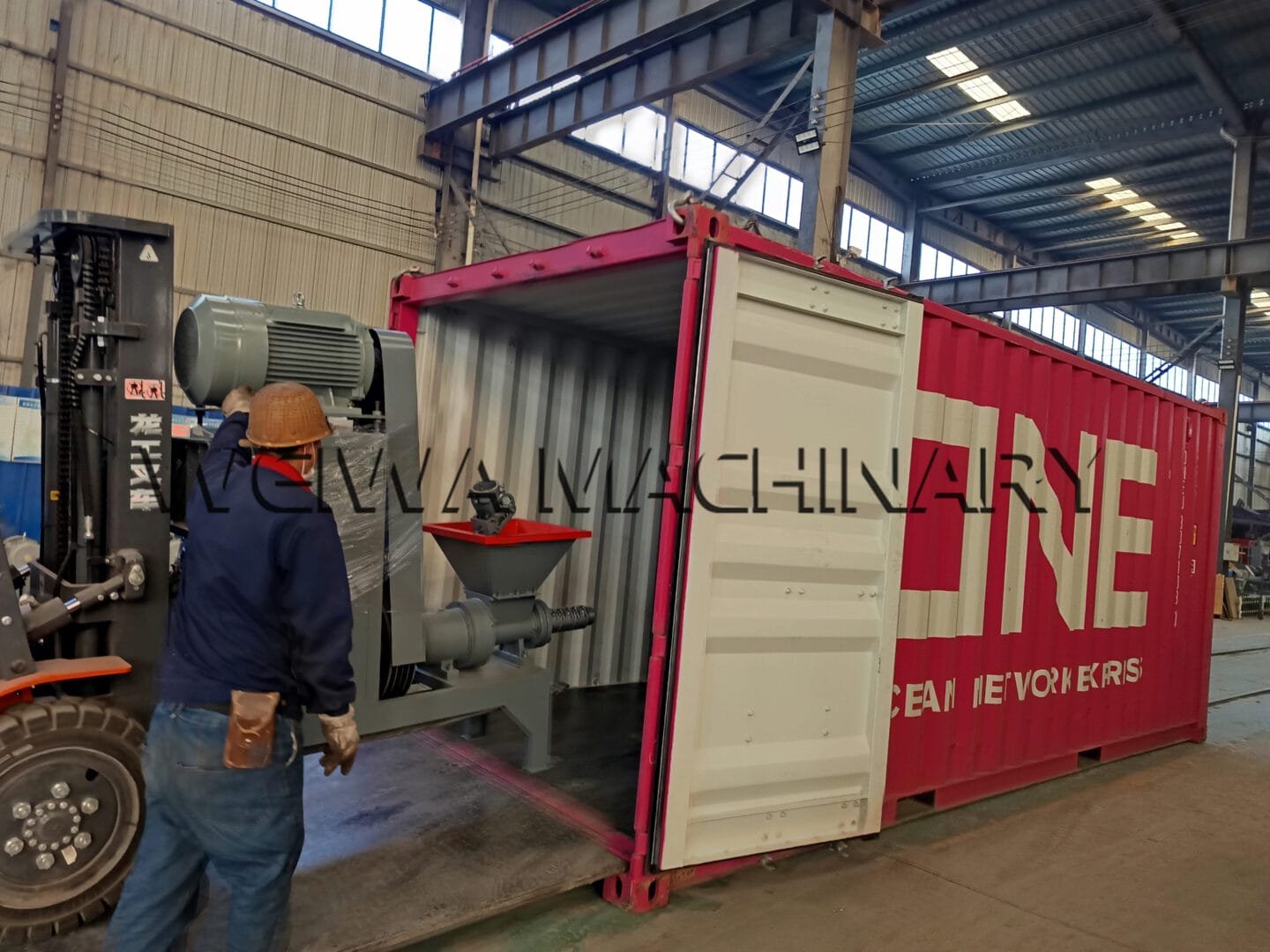
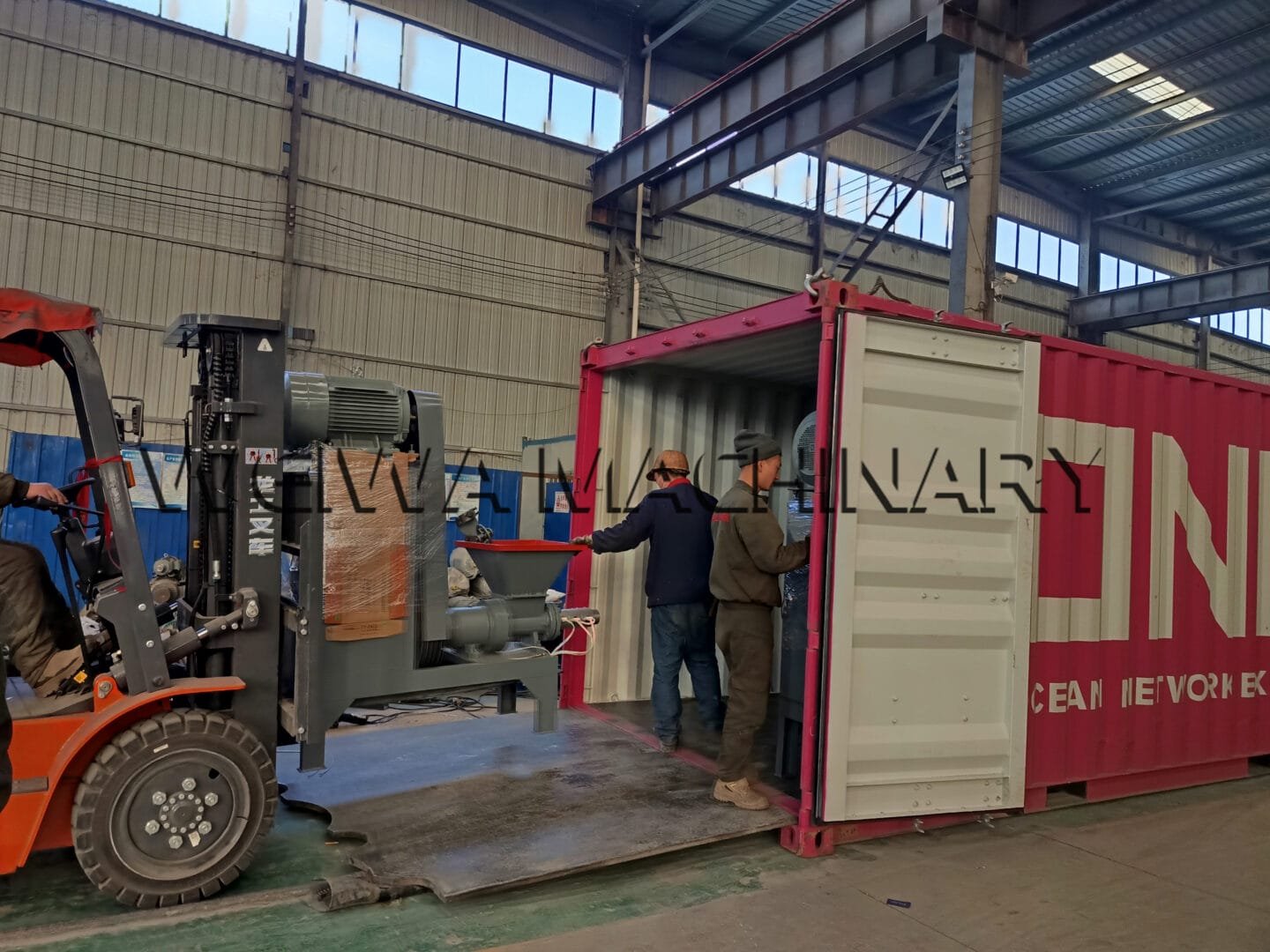
The sun rose over the bustling port of Mumbai as containers marked with Weiwa Machinery’s logo were carefully unloaded, each holding a state-of-the-art sawdust extrude machine destined to transform agricultural waste into clean energy in India. This shipment was not just a delivery of equipment; it was a bridge connecting decades of manufacturing expertise with India’s urgent need for sustainable fuel solutions. As a company with over thirty years of experience in biomass processing machinery, Weiwa Machinery understands that the success of such ventures hinges on aligning technology with local needs, and India’s market holds extraordinary promise for sawdust extruders and biomass briquette machines.
Comprendre le Machine d'extrusion de sciure and Its Role in Biomass Conversion
At the heart of this transformation lies the sawdust extrude machine, a specialized piece of equipment designed to compress loose sawdust—often a byproduct of woodworking, furniture manufacturing, or agricultural residue—into dense, briquettes à haut pouvoir calorifique. Contrairement au bois de chauffage traditionnel, these briquettes burn cleaner, produire moins de fumée, and offer a consistent energy output, making them ideal for cooking, chauffage, and even small-scale industrial applications. Le processus commence par la préparation des matières premières: sawdust is dried to reduce moisture content (généralement ci-dessous 15%) to ensure optimal binding during extrusion. The machine then uses mechanical pressure, often combined with natural binders like lignin (present in wood fibers), to shape the material into uniform briquettes without the need for chemical additives.
The sawdust extruder operates on a simple yet effective principle: by forcing the prepared material through a die with specific dimensions, the machine increases density and structural integrity. Modern variants, like those produced by Weiwa Machinery, incorporate advanced features such as variable speed control, automatic temperature regulation, and wear-resistant components to enhance efficiency and longevity. For users in India, where power supply can be inconsistent in rural areas, many models are also designed to operate with minimal electricity, relying on diesel engines or manual adjustments for flexibility. This adaptability makes the sawdust extruder a practical choice for small and medium-sized enterprises (PME) as well as individual entrepreneurs looking to enter the biomass energy sector.
Why India Holds Immense Potential for Biomass Briquette Machines?
India’s energy landscape presents a compelling case for the adoption of biomass briquette machines. Avec plus 600 million people relying on traditional biomass fuels like firewood and crop residues for cooking, indoor air pollution remains a critical health issue, contributing to respiratory diseases and premature deaths. Simultanément, the country generates vast amounts of agricultural and forestry waste annually—estimates suggest over 500 million tons of crop residue and 15 million cubic meters of sawdust from timber processing alone. Much of this waste is either burned openly, releasing harmful emissions, or left to decompose, wasting a valuable resource.
The Indian government has recognized the dual challenge of waste management and energy access, launching initiatives like the National Bioenergy Programme and the Pradhan Mantri Ujjwala Yojana (which aims to provide clean cooking fuel to households). These policies create a supportive ecosystem for biomass technologies, including subsidies for machinery purchase and tax incentives for green businesses. De plus, rising awareness of climate change and the need for carbon-neutral alternatives has driven demand for sustainable fuels among urban households, restaurants, and small industries seeking to reduce their environmental footprint.
For biomass briquette machines, this translates into a growing market. Small-scale producers can set up decentralized units near agricultural hubs or sawmills, converting local waste into sellable briquettes. Large-scale operations, supported by corporate sustainability goals, are also investing in automated production lines to meet bulk orders from hospitality sectors, brick kilns, and textile mills. The versatility of biomass briquette machines—capable of processing not just sawdust but also rice husk, Bagasse de canne à sucre, and groundnut shells—further expands their applicability across India’s diverse agro-climatic zones.
The Sawdust Extruder in India Addressing Local Challenges with Tailored Solutions
While the potential is vast, entering the Indian market requires addressing unique local challenges. Transportation infrastructure in rural areas can be underdeveloped, making it essential for sawdust extruders to be compact and easy to transport. Weiwa Machinery’s design team prioritizes modular construction, allowing key components to be disassembled for road or rail transport and reassembled quickly at the site. En plus, labor costs in India are relatively low, so machines that balance automation with user-friendly operation—requiring minimal technical training—are more likely to gain traction.
Another critical factor is after-sales support. Many first-time buyers in India may lack experience with maintenance, so reliable service networks are non-negotiable. Weiwa Machinery’s commitment to a professional after-sales team ensures that clients receive timely assistance, from troubleshooting to spare parts replacement. Par exemple, our engineers recently conducted on-site training sessions for a client in Punjab, teaching operators how to adjust die settings for different raw materials and perform routine lubrication to prevent downtime. Such hands-on support builds trust and empowers local entrepreneurs to scale their operations confidently.
Customization is also key. India’s diverse raw material availability means that a one-size-fits-all approach rarely works. Some regions have high-moisture sawdust, requiring pre-drying systems integrated into the extruder design, while others may need higher output capacities to match large-scale waste generation. Weiwa Machinery offers tailored solutions, including custom die sizes, adjustable compression ratios, and hybrid power options (electric-diesel) to suit specific operational needs. We also provide free design drawings and site planning services, helping clients optimize factory layouts for efficient material flow and space utilization.
The Science Behind Biomass Briquetting Enhancing Efficiency and Sustainability
To fully appreciate the value of sawdust extrude machines, it helps to understand the science of biomass briquetting. When sawdust is compressed, the natural lignin in wood fibers softens under heat and pressure, acting as a binder to hold the particles together. This process not only increases density—from around 100-200 kg/m³ for loose sawdust to 800-1200 kg/m³ for briquettes—but also improves combustion characteristics. Briquettes have a lower ignition temperature than firewood, brûler plus longtemps, and release fewer particulates, making them both energy-efficient and environmentally friendly.
Modern sawdust extruders leverage this science with precision engineering. Advanced models feature thermostatic controls to maintain optimal operating temperatures, preventing overheating that could degrade lignin and weaken briquette strength. Variable screw speeds allow operators to adjust compression based on material type—hardwoods like teak require higher pressure than softer woods like pine, for example. En plus, some machines integrate moisture sensors to alert users when raw material needs further drying, garantir une qualité de produit constante.
For India, where energy access is uneven, the ability to produce high-quality briquettes locally reduces reliance on imported fuels and minimizes transportation costs. A study by the Ministry of New and Renewable Energy found that biomass briquettes can replace up to 40% of coal used in small industries, cutting CO₂ emissions by 60% per unit of energy. This aligns with India’s commitment to achieving net-zero emissions by 2070, positioning biomass briquette machines as a cornerstone of the country’s green transition.
A Journey of Sawdust Extrude Machine from Weiwa Machinery to India Unlocking Biomass Briquette Potential
The sun rose over the bustling port of Mumbai as containers marked with Weiwa Machinery’s logo were carefully unloaded, each holding a state-of-the-art sawdust extrude machine destined to transform agricultural waste into clean energy in India. This shipment was not just a delivery of equipment; it was a bridge connecting decades of manufacturing expertise with India’s urgent need for sustainable fuel solutions. As a company with over thirty years of experience in biomass processing machinery, Weiwa Machinery understands that the success of such ventures hinges on aligning technology with local needs, and India’s market holds extraordinary promise for sawdust extruders and biomass briquette machines.
Real-World Impact Stories from India’s Biomass Sector
The impact of sawdust extrude machines is already visible across India. In Uttar Pradesh, a group of women entrepreneurs established a community-based briquette unit using a Weiwa Machinery extruder, converting mango seed shells and sawdust from local furniture workshops into fuel for 200 ménages. The project not only generated income but also reduced indoor air pollution in the village, earning recognition from local authorities. In Tamil Nadu, a textile mill replaced coal with biomass briquettes from a nearby extruder plant, lowering its annual carbon footprint by 1,200 tons and qualifying for green certification that boosted its export prospects.
These stories highlight the socio-economic benefits of the technology. By creating jobs in waste collection, processing, and sales, biomass briquette machines empower marginalized communities. They also contribute to circular economy principles, turning waste into wealth and reducing pressure on forests for firewood. For small farmers, selling crop residues to briquette units provides an additional revenue stream, incentivizing sustainable farming practices.
Overcoming Barriers to Adoption Fostering Growth in India’s Biomass Market
Despite the progress, barriers remain. Initial investment costs can deter small players, though government subsidies and financing schemes are gradually easing this burden. Misconceptions about the complexity of operation also persist, which is why Weiwa Machinery emphasizes user education through demo units, online tutorials, and partnerships with agricultural universities. We believe that demystifying the technology is crucial to accelerating adoption.
Another challenge is scaling production to meet growing demand. While small units serve local markets, larger operations require robust supply chains for raw materials and distribution networks for finished briquettes. Collaborations between machinery manufacturers, waste collectors, and end-users are essential to build resilient ecosystems. Weiwa Machinery actively engages in such partnerships, facilitating connections between clients and local stakeholders to streamline operations.
The Future of Sawdust Extruders and Biomass Briquettes in India
Regarder vers l'avenir, the future of sawdust extrude machines in India is bright. With ongoing advancements in automation and IoT integration, next-generation extruders will offer real-time monitoring of production metrics, predictive maintenance alerts, and remote troubleshooting—features that will appeal to tech-savvy entrepreneurs and large-scale operators alike. The rise of electric vehicles and decentralized power grids also opens new avenues for biomass briquettes as a backup energy source.
De plus, as global focus on ESG (Environnement, Sociale, et gouvernance) criteria intensifies, Indian businesses are under increasing pressure to adopt sustainable practices. Biomass briquette machines position them as leaders in green innovation, enhancing brand reputation and attracting eco-conscious consumers. Pour les machines Weiwa, this trend reinforces our mission to deliver machinery that not only meets technical specifications but also drives positive social and environmental change.
Pourquoi choisir Machinerie Weiwa for Your Biomass Briquette Needs in India?
With over thirty years of experience in designing and manufacturing biomass processing equipment, Weiwa Machinery brings unmatched expertise to the Indian market. Our sawdust extrude machines are built to withstand harsh operating conditions, with durable components and rigorous quality testing ensuring reliability. Beyond the product, we pride ourselves on offering professional after-sales support, y compris les instructions d'installation, formation des opérateurs, et 24/7 assistance technique.
We understand that every client’s needs are unique, which is why we provide customized services and free design drawings for site planning. Whether you are a startup looking to launch a small briquette unit or an established enterprise expanding your capacity, our team will work closely with you to develop a solution that maximizes efficiency and profitability.
If you are interested in exploring the potential of sawdust extrude machines or biomass briquette machines for your business in India, nous vous invitons à nous contacter pour toute demande de renseignements. Let us help you turn agricultural waste into a sustainable energy source and unlock new opportunities in the green economy.
Contactez-nous
Foule/Whatsapp: +8613838093177
E-mail: info@cjlmachinegroup.com
Site web:
Ensemble, let’s shape a cleaner, greener future for India—one briquette at a time.


 Wechat

 +8615937143060
