


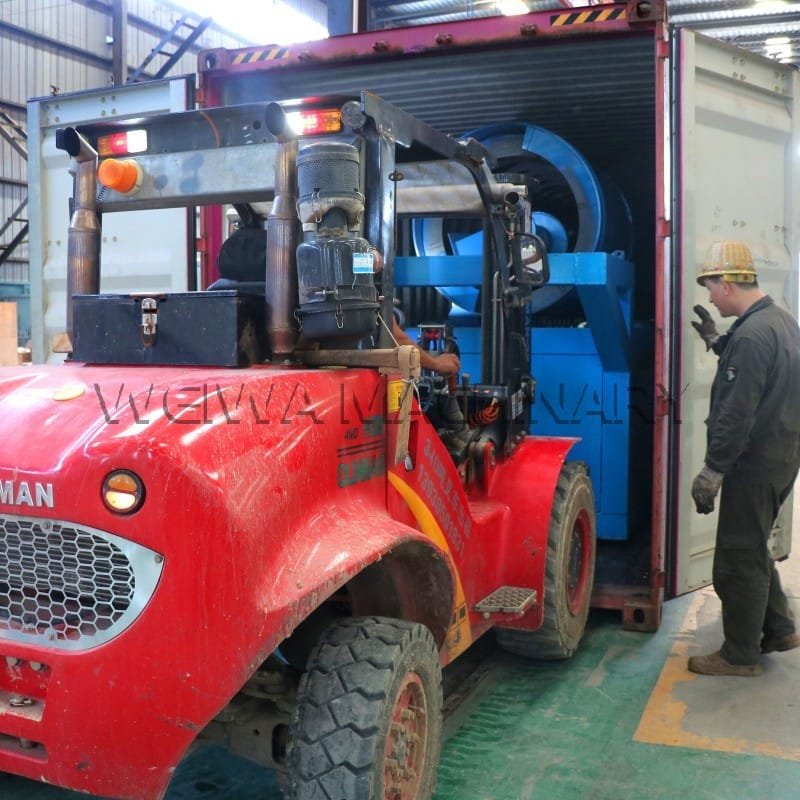
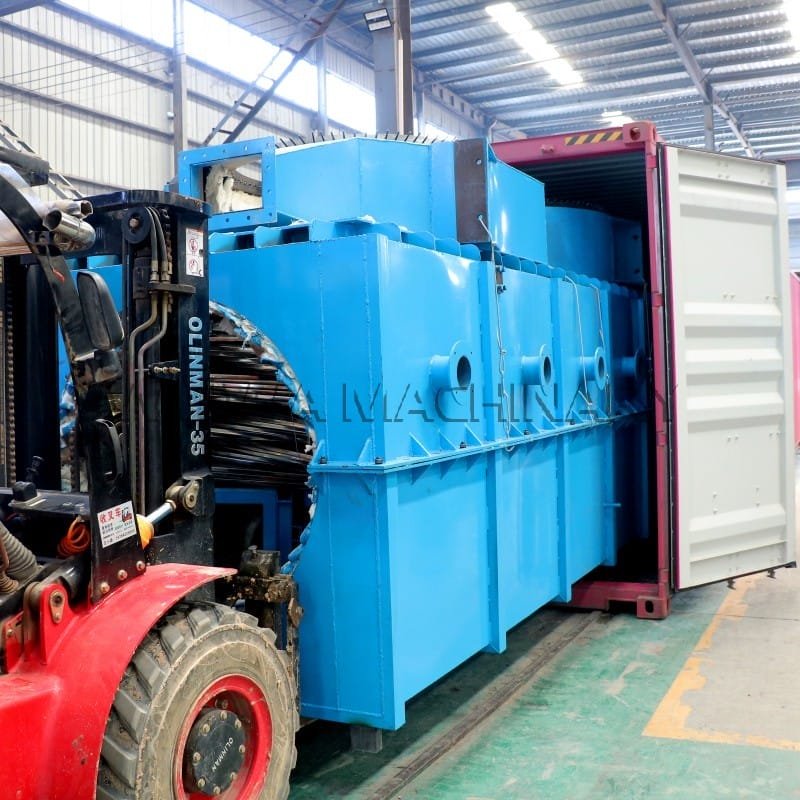
Shipment of Continuous Carbonization Furnace to India
The exported continuous carbonization furnace uses a double cylinder rotary design. The inner drum handles drying while the outer drum performs carbonization. Before container loading, our QC team verified weld integrity, refractory lining thickness, gas recycling pipes, screw feeder sealing, cooling discharger rotation, and PLC control logic. Each module including the main furnace body, purification tower, electric cabinet, and spare parts kit was shrink wrapped, padded with anti vibration material, and fixed on steel frames to survive the voyage to Nhava Sheva or Chennai.
This continuous carbonization furnace for India was configured for a feedstock blend of southern coconut shell and hardwood sawdust. We adjusted hopper size, dryer length, and dust removal grade to match Indian raw material moisture and state pollution control board expectations. The Indian client joined the final inspection by video call, reviewed the 72 hour trial log, and confirmed foundation drawings before booking sea freight.
What Is a فرن الكربنة المستمر?
A continuous carbonization furnace is a pyrolysis system that converts biomass into charcoal without stopping the feeding or discharging process. Unlike traditional earth kilns or batch retorts, the machine keeps material moving through drying, الكربنة, and cooling zones around the clock. Typical feedstock includes coconut shell, قشر الأرز, نشارة الخشب, الخيزران, قَشَّة, and wood chips.
Double Cylinder Rotary Structure and Process Flow
Biomass with moisture pre dried below fifteen percent enters a sealed screw feeder. The sealed inlet prevents air ingress so the carbonization zone stays oxygen limited. Inside the rotating outer drum, material spirals forward and is heated indirectly to five hundred to six hundred degrees Celsius. Volatile matter decomposes into syngas, tar vapor, and wood vinegar. The double layer heating jacket keeps temperature uniform along the furnace length, which stabilizes fixed carbon content and reduces ash fluctuation.
Carbonized material leaves the hot zone through a water cooled screw discharger. The charcoal temperature drops below forty degrees Celsius before it exits the sealed system. This avoids spontaneous reignition and allows immediate bagging or further processing into hookah charcoal, الشواء الفحم, or activated carbon precursor.
Combustible Gas Recovery and Self Sustaining Heat Cycle
During pyrolysis, gases such as carbon monoxide, الميثان, and hydrogen are drawn into a condensation and dedusting system, then redirected to the furnace burners as secondary fuel. After the startup phase, recovered syngas largely sustains thermal demand. External LPG or diesel consumption drops sharply. This gas recycling loop is the main reason the continuous carbonization furnace price can be justified by lower operating cost, even when the initial investment is higher than a simple batch kiln.
Pre Shipment Trial Run of the Continuous Carbonization Furnace
Before crating, our engineers ran a 72 hour non stop trial using a mixture of fifty percent dried coconut shell and fifty percent hardwood sawdust. The blend simulated material commonly available in Kerala, Tamil Nadu, Karnataka, and Andhra Pradesh. The furnace reached working temperature in about forty minutes. Once stabilized, the inner drum held drying outlet moisture below twelve percent while the outer drum stayed near five hundred fifty degrees Celsius with less than plus or minus ten degrees fluctuation.
Feedstock Simulation for Indian Coconut Shell and Sawdust
Coconut shell pieces were screened to below ten centimeters. Sawdust was conditioned to thirteen percent moisture. The screw feeder maintained steady throughput. The gas recovery system ignited automatically, and the auxiliary burner switched to recirculated gas after three minutes. No abnormal pressure build up or leakage was recorded. The multi stage purification unit kept visible smoke within international reference limits.
Temperature Stability, Charcoal Yield, and Emission Control
Charcoal yield fell between fourteen and eighteen percent by weight depending on bulk density. Lab sampling showed fixed carbon above seventy eight percent and ash under four percent. Discharged charcoal had deep black color, low powder rate, and uniform particle size. One operator monitored the PLC touch screen while a second managed feeding and bagging, which is far less labor than pit kilns require. The Indian buyer confirmed the output met both local sales grade and export grade coconut shell charcoal specifications.
Why the Continuous Carbonization Furnace Price Delivers ROI in India?
Many buyers ask about the continuous carbonization furnace price before comparing it with brick kilns. The right comparison is total lifecycle cost. A batch kiln looks cheap but loses time in cooling, reloading, and manual unloading. It also produces uneven charcoal and high smoke. A continuous carbonization furnace runs twenty four hours with short maintenance intervals, recycles its own fuel, and delivers predictable calorific value.
For a medium capacity unit processing eight to ten tons of mixed biomass per day, the gas self use function can cut external fuel cost by more than sixty percent after startup. Labor drops from six to eight workers on a batch site to two workers per shift on a continuous line. Uniform charcoal quality also opens higher margin channels such as branded hookah charcoal and activated carbon plants, which tolerate less ash variability.
When Indian entrepreneurs evaluate a charcoal making machine in India, the calculation should include feedstock cost, drying electricity, fuel saving, labor saving, emission compliance penalty avoidance, and charcoal selling price by grade. In most coastal and agro intensive states, payback on a Weiwa continuous line falls within twelve to eighteen months at stable utilization.
Charcoal Making Machine in India: Market Prospect and Feedstock Map
India generates hundreds of millions of tons of agricultural residue every year. قشر الأرز, ساق القطن, groundnut shell, قصب السكر, and coconut shell are available in large volume. Open field burning still wastes this carbon resource and worsens urban smog. The continuous carbonization furnace in India converts that waste into charcoal, الفحم الحيوي, and recoverable heat.
قذيفة جوز الهند, قشر الأرز, and Agro Waste along Coastal States
Kerala, Tamil Nadu, Karnataka, and Andhra Pradesh supply steady coconut shell streams from copra processing clusters. Punjab and Haryana add rice husk and wheat straw. Maharashtra and Gujarat combine cotton stalk, wood waste, and port side coconut shell imports. A continuous carbonization furnace for India placed near these belts reduces transport cost and secures feedstock moisture control through on site pre drying.
Policy, Pollution Norms, and Shift from Batch Kilns
State pollution control boards increasingly restrict open kiln smoke. Several state schemes provide capital subsidy or easier financing for biomass processing equipment. Activated carbon manufacturers, water treatment plants, and soil amendment producers are sourcing biochar as a functional input. These trends shift the buyer conversation from continuous carbonization furnace price alone toward lifecycle value, multi stream revenue, and compliance safety. The charcoal making machine in India market is therefore upgrading from experimental units to industrial lines with PLC control and gas purification.
Weiwa Machinery Company Profile and Overseas Support
Weiwa Machinery was founded in 1990. With more than thirty years of experience in biomass carbonization and charcoal machinery, we have become an industry leading manufacturer serving more than two million customers across Asia, أفريقيا, وأمريكا الجنوبية. Our technical team handles model selection, customized dryer and dust removal design, factory commissioning, and overseas on site installation guidance.
For the India bound continuous carbonization furnace, we supplied multilingual operation manuals, رسومات الأساس, spare gasket kits, and remote video commissioning. When the container arrives, our engineers can travel to the client site for mechanical alignment, gas pipe pressure test, PLC parameter setting, and operator training. This overseas support model reduces startup risk for first time charcoal plant investors.
Contact Weiwa Machinery for Continuous Carbonization Furnace
If you are comparing a continuous carbonization furnace, evaluating the continuous carbonization furnace price, or planning a charcoal making machine in India project, our sales team can share the trial run report, layout drawing, and reference cases.
الغوغاء: +8613838093177
Whatsapp: +8613838093177
بريد إلكتروني: info@cjlmachinegroup.com


 WeChat

 +8615937143060
