


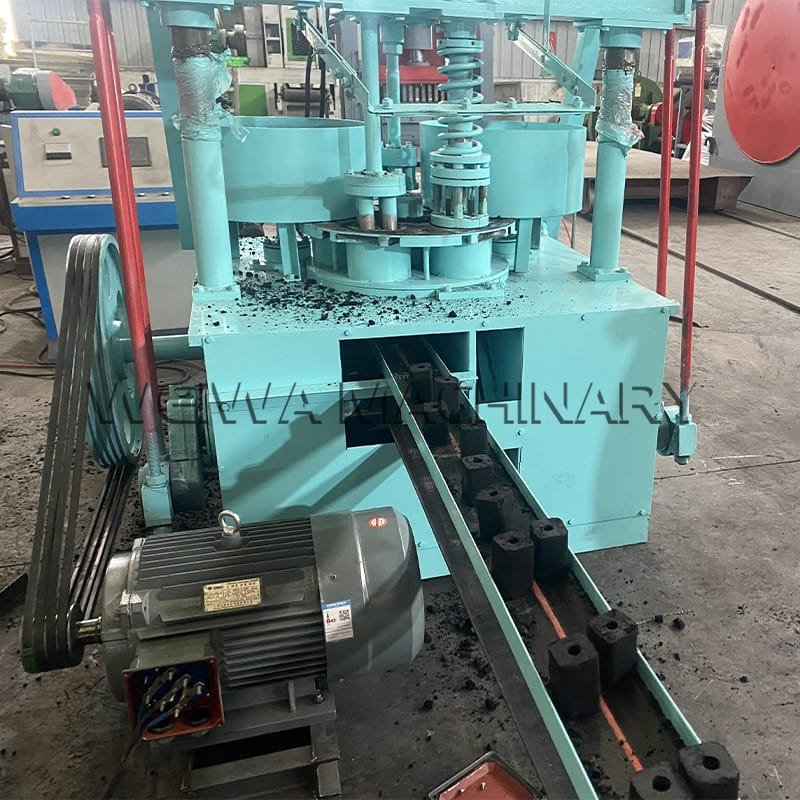
In the heart of East Africa, where sustainable energy solutions are becoming vital to both economic growth and environmental stewardship, Uganda stands as a nation rich in biomass potential yet challenged by inconsistent fuel access. في الآلات Weiwa, we believe that transforming raw materials into clean, efficient fuel should be simple, scalable, and locally achievable. That is why our recent trip to Uganda to verify a client specified Honeycomb Briquette Charcoal Machine was more than a routine quality check—it was a mission to empower local industry with technology that bridges tradition and innovation.
This blog takes you through our on site experience, unpacks the science behind honeycomb briquette charcoal machines, showcases the sample outputs from the trial, and highlights how this Coal Briquettes Making Machine can reshape Uganda’s small scale manufacturing landscape.
فهم آلة تصنيع الفحم الحجري على شكل قرص العسل
The Honeycomb Briquette Charcoal Machine is a specialized piece of equipment designed to compress powdered carbonaceous materials—such as charcoal dust, غرامات الفحم, نشارة الخشب, or agricultural residues—into solid, perforated briquettes with a distinctive honeycomb cross section. This shape is not merely aesthetic; it maximizes surface area for efficient combustion while maintaining structural integrity during handling and storage.
Unlike loose charcoal powder that burns unevenly and generates excessive smoke, briquettes produced by a Honeycomb Charcoal Coal Briquette Forming Machine offer consistent heat output, وقت حرق أطول, وخفض الانبعاثات. For communities relying on wood or inefficient fuels, this transition means cleaner air, less deforestation, and better indoor health outcomes.
At its core, the machine operates on mechanical compression principles. Raw material is fed into a hopper, passes through a screw feeder that regulates density, and enters a cylindrical die where a reciprocating punch forms the briquette. The die’s hexagonal or circular array of holes creates the honeycomb pattern, which also allows oxygen to penetrate evenly during burning.
For Uganda, where agro waste like rice husks, coffee pulp, and groundnut shells abound, the Honeycomb Punching Machine unlocks value from what was once discarded. It aligns perfectly with national goals of promoting renewable energy and cottage industries.
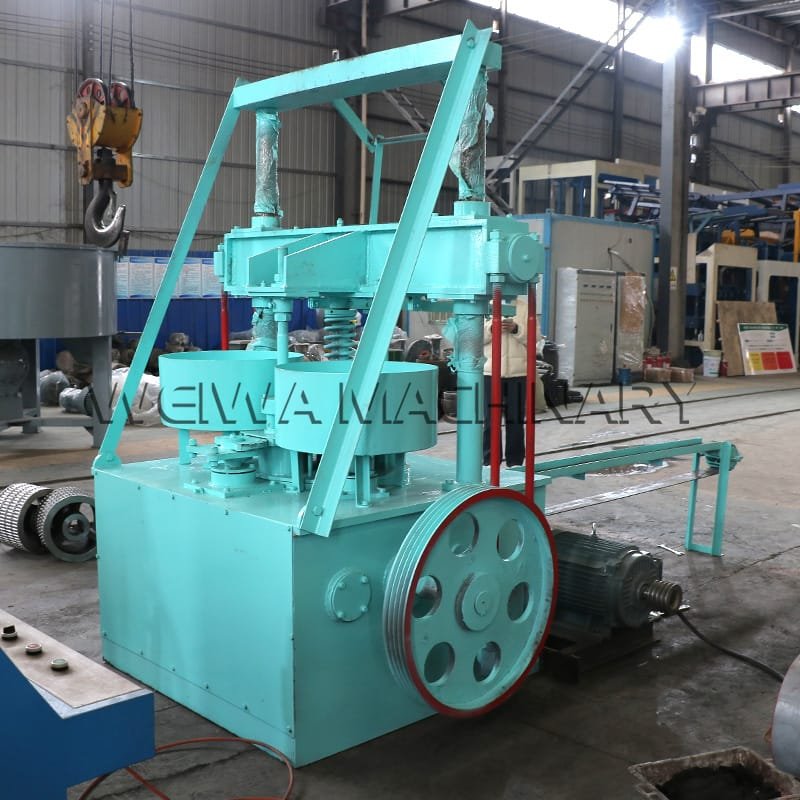
Why Uganda Needs the Honeycomb Briquette Charcoal Machine?
Uganda’s energy sector faces dual pressures: rising demand from urbanization and the environmental toll of charcoal production from unsustainable logging. Small scale producers often rely on rudimentary methods that yield low quality charcoal and high wastage. Introducing a Coal Briquettes Making Machine tailored to local feedstock changes this narrative.
Our client in Uganda, an entrepreneur aiming to launch a community based fuel enterprise, selected the Honeycomb Briquette Charcoal Machine after assessing various options. Their priority was a model capable of processing locally available charcoal dust mixed with agricultural byproducts, producing briquettes that could compete with traditional charcoal in price and performance.
Weiwa Machinery’s approach focuses on adaptability. Our machines allow adjustments in die diameter, briquette length, and compression force, ensuring optimal output regardless of input material variations. This flexibility is crucial in Uganda, where feedstock sources may shift seasonally.
The Verification Process in Uganda
Verification is a critical step before any Weiwa Machinery unit ships internationally. It ensures the Honeycomb Briquette Charcoal Machine meets the client’s specifications and performs reliably under expected operating conditions. In Uganda, our engineering team conducted a full suite of tests on the client specified model, focusing on mechanical stability, throughput, and briquette quality.
Preparing for the Trial
عند الوصول, we collaborated with the client to set up the machine at their workshop in Kampala. Power supply compatibility was verified—our machine supports both single phase and three phase electricity, a key consideration given Uganda’s mixed infrastructure. Safety guards and emergency stops were inspected to meet local labor regulations.
Feedstock preparation began with a blend of charcoal dust sourced from nearby markets and dried coffee husk powder provided by a local cooperative. The mix was sieved to remove oversized particles, then moistened slightly to improve binding during compression.
Running the Honeycomb Punching Machine
The test commenced with the machine idling to warm up bearings and ensure lubrication circulation. Once stabilized, we initiated continuous feeding. The screw feeder maintained a steady flow, and the hydraulic punch engaged rhythmically, extruding briquettes at a rate of approximately 1,200 pieces per hour depending on moisture content and material density.
Operators monitored pressure gauges and adjusted the hydraulic valve to fine tune density. One notable observation was the machine’s ability to handle minor fluctuations in feedstock without jamming—a testament to the robust design of our Honeycomb Charcoal Coal Briquette Forming Machine.
During the run, we measured key parameters: power consumption averaged 7.5 كيلوواط, well within the client’s expectations for affordability. Noise levels remained below 75 decibels, ensuring a comfortable working environment.
Sample Showcase and Quality Assessment
After two hours of operation, we collected briquette samples for evaluation. The Honeycomb Briquette Charcoal Machine produced uniform cylinders, each about 100 mm long with a 40 mm diameter and clearly defined hexagonal perforations.
Visual and Physical Inspection
Samples exhibited a smooth outer surface with no cracks, indicating proper compression and moisture balance. The honeycomb structure was intact, with uniform hole size enhancing combustion consistency. Weighing each briquette showed a deviation of less than 3% from the target mass, confirming repeatable output.
أداء الاحتراق
A small stove test simulated real world cooking conditions. Ignition was rapid, reaching cooking temperature in under five minutes. The briquettes burned steadily for over 90 minutes with minimal ash residue—less than 8% by weight—compared to traditional lump charcoal’s typical 15–20% ash. Smoke emission was notably lower, addressing health concerns in enclosed kitchens.
These results underscore why the Coal Briquettes Making Machine is a game changer for Uganda’s urban and peri urban households seeking affordable, clean fuel.
The Science Behind Efficient Briquette Formation
To appreciate the Honeycomb Briquette Charcoal Machine’s impact, it helps to understand briquette formation science. Compression raises the material’s bulk density, expelling air pockets that would otherwise cause uneven burning. The honeycomb geometry introduces channels that act as built in flues, drawing air into the core and promoting complete combustion.
Binders are sometimes used, but in Uganda’s case, natural lignin from agricultural waste acts as a self binding agent when heated during compression. This eliminates chemical additive costs and aligns with organic product preferences.
Our machine’s precision dies are crafted from hardened alloy steel, resisting wear even with abrasive local materials. The hydraulic system delivers consistent force, preventing density variations that lead to weak spots and breakage.
By integrating these engineering principles, Weiwa Machinery ensures that every Honeycomb Punching Machine performs reliably across diverse environments, from Uganda’s highlands to coastal regions elsewhere in Africa.
Economic and Environmental Implications for Uganda
Deploying the Honeycomb Briquette Charcoal Machine in Uganda offers tangible benefits. Economically, small enterprises can reduce raw material costs by utilizing waste streams, while producing a higher value product that commands better market prices. Job creation occurs not only in briquette production but also in feedstock collection and distribution.
Environmentally, replacing inefficient charcoal burning with standardized briquettes cuts particulate emissions and slows deforestation. If scaled, this shift supports Uganda’s commitments under climate agreements and fosters a circular economy around biomass resources.
Our client envisions training local youth to operate the Coal Briquettes Making Machine, creating micro enterprises that uplift entire neighborhoods. This aligns with Weiwa Machinery’s philosophy of technology as an enabler of inclusive growth.
Training and After Sales Support
Verification concluded with hands on training for the client’s operators and maintenance staff. We covered startup procedures, routine lubrication points, die cleaning techniques, and troubleshooting common issues like feedstock bridging.
Weiwa Machinery provides detailed manuals and video tutorials accessible online, plus a spare parts inventory strategy to minimize downtime. Our regional service network in East Africa ensures prompt technical assistance, so the Honeycomb Briquette Charcoal Machine remains a dependable asset rather than a capital burden.
Why Choose Weiwa Machinery for Your Honeycomb Briquette Needs?
With decades of focus on biomass densification technology, لقد اكتسبت شركة Weiwa Machinery الثقة في جميع أنحاء آسيا, أفريقيا, وأمريكا اللاتينية. Our Honeycomb Charcoal Coal Briquette Forming Machines are engineered for durability, ease of use, and adaptability to varied feedstocks. We prioritize customer collaboration, as seen in our Uganda project, where we tailored verification protocols to local realities.
Our commitment extends beyond machinery supply. We engage in capacity building, helping clients develop sustainable business models around the Coal Briquettes Making Machine. By choosing Weiwa Machinery, you invest in a partnership that values performance, environmental responsibility, and community empowerment.
خاتمة
The journey of verifying the Honeycomb Briquette Charcoal Machine in Uganda reinforced our belief in technology’s power to transform lives. From the rhythmic hum of the Honeycomb Punching Machine to the glow of well formed briquettes in a cooking stove, each step demonstrated how innovation can turn waste into wealth and smoky hardship into clean opportunity.
For entrepreneurs and policymakers in Uganda, this machine is more than equipment—it is a catalyst for healthier homes, greener landscapes, and resilient economies. Weiwa Machinery remains dedicated to delivering solutions that meet your vision, backed by rigorous testing, localized support, and a passion for progress.
معاً, let’s build a future where energy is abundant, ينظف, and made by the hands of those who need it most.
عن آلات ويوا
Weiwa Machinery is a global manufacturer specializing in biomass processing equipment, including Honeycomb Briquette Charcoal Machines, Coal Briquettes Making Machines, and custom forming solutions. Founded on principles of reliability, ابتكار, and customer success, we serve clients in over 30 بلدان, providing machinery that turns local resources into global opportunities. Our experienced engineers, responsive service teams, and commitment to sustainable development make us a trusted partner in advancing energy access worldwide.


 WeChat

 +8615937143060
