


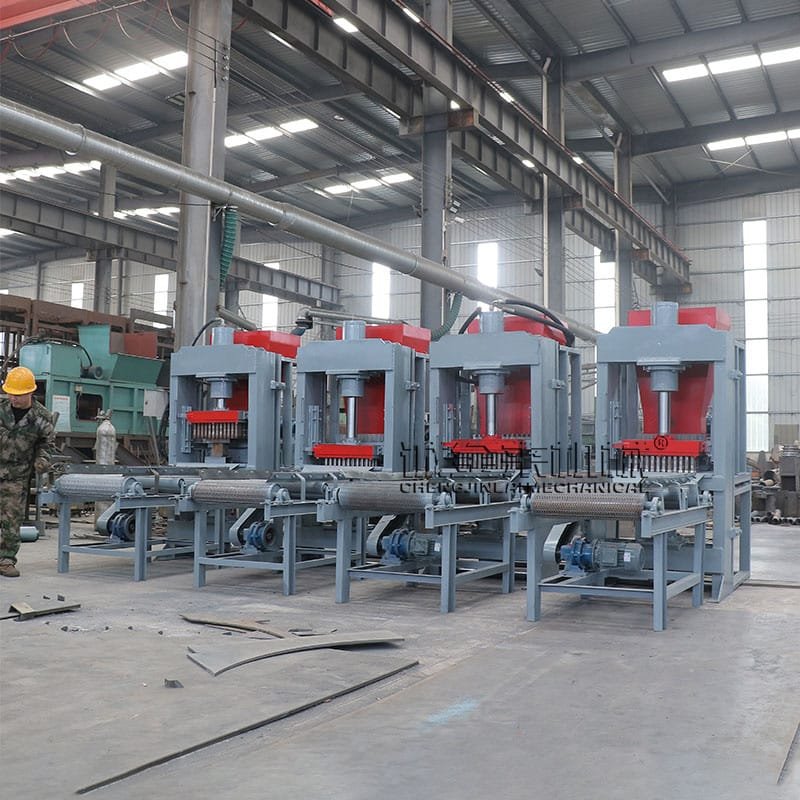
في السنوات الأخيرة, the demand for sustainable fuel solutions has accelerated across Southeast Asia, and Vietnam has emerged as one of the most promising markets for biomass densification equipment. في الآلات Weiwa, with more than thirty years of experience in industrial machinery manufacturing, we recently completed an on-site trial run of our hydraulic press briquetting machine for a long-term cooperative client in Vietnam. This trial was not only a technical validation of our hydraulic briquette press but also a strategic observation of how hydraulic briquette machines can support Asia’s transition toward cleaner energy and waste-to-resource models.
Background of the Vietnam Client and Project Objectives
The client is located in southern Vietnam and primarily processes agricultural residues including rice husks, نشارة الخشب, and coconut shell charcoal. Their original production line relied on semi-mechanical presses with limited pressure control, resulting in inconsistent briquette density and relatively high breakage rates during packaging and transport. After evaluating several equipment suppliers, they chose Weiwa Machinery because of our proven track record in Asia, customized design capability, and professional after-sales team.
Their core objectives were clear. أولاً, they needed a hydraulic briquette press capable of producing high-density briquettes with smooth surfaces and uniform dimensions. ثانية, the machine had to handle fluctuating moisture levels and particle sizes common in local biomass feedstocks. ثالث, they wanted a solution that could be integrated into an existing workshop layout without major structural modifications. أخيراً, they expected measurable improvements in output stability and combustion performance to meet both domestic and export market requirements.
To address these needs, we proposed our latest hydraulic briquette machine configured with an adjustable pressure hydraulic station, PLC-based control system, and interchangeable molds suitable for multiple briquette shapes. This hydraulic press briquetting machine was then prepared for a comprehensive trial run at the client’s factory under actual working conditions.
Understanding Local Raw Materials in Vietnam
Vietnam produces massive volumes of biomass waste each year from rice milling, timber processing, and coconut cultivation. Rice husks alone account for millions of tons annually, while sawdust and coconut shell residues are widely available in provinces such as Ben Tre, Tra Vinh, and Dong Thap. These materials are ideal candidates for briquetting, but they vary significantly in lignin content, حجم الجسيمات, and moisture level. A hydraulic briquette machine for Vietnam must therefore be flexible enough to accommodate such diversity without sacrificing briquette quality.
During the initial site assessment, our engineers collected samples of rice husk charcoal, نشارة الخشب, and coconut shell powder. We tested moisture levels ranging from eight percent to fifteen percent and particle sizes from fine powder to coarse granules. This data guided our configuration of the hydraulic system pressure, mold selection, and feeding speed. By tailoring the hydraulic briquette press settings to local raw materials, we ensured that the trial would reflect realistic production scenarios rather than idealized laboratory conditions.
Pre-Trial Preparation and Equipment Configuration
A successful trial begins long before the machine is powered on. Weeks prior to the test run, our technical team coordinated with the client to prepare the site, verify power supply compatibility, and align material preprocessing equipment such as crushers, الخلاطات, and conveyors. The hydraulic press briquetting machine was partially disassembled for safe transport, then reassembled on-site with precise alignment of the hydraulic pump station, main frame, and ejection system.
We installed a 150-ton hydraulic cylinder system with a pressure relief valve and cooling unit to maintain oil temperature within optimal ranges under tropical humidity. The PLC control panel was programmed with multiple recipe presets, allowing operators to switch between pressure profiles for different raw material blends. Interchangeable molds were prepared to demonstrate both square and round briquette formats, since the client expressed interest in serving both household cooking and industrial heating segments.
One critical aspect of preparation was operator training. Even the most advanced hydraulic briquette machine cannot perform optimally if operators are unfamiliar with safety procedures, pressure adjustment, or routine maintenance. Our senior engineer conducted a half-day training session covering hydraulic system principles, binder mixing ratios, mold replacement, and common troubleshooting steps. This empowered the client’s team to participate actively during the trial and evaluate the hydraulic briquette press not only as a piece of equipment but as a manageable production asset.
Why Hydraulic Systems Offer Advantages in Asia’s Climate?
Asian markets such as Vietnam, أندونيسيا, تايلاند, and the Philippines face high ambient temperatures and seasonal humidity that can affect mechanical presses and screw extruders. Hydraulic briquette machines provide controlled, consistent pressure regardless of minor fluctuations in feedstock density. The oil-cooling system in our hydraulic press briquetting machine stabilizes performance during long continuous runs, which is essential for factories targeting daily outputs above several tons. علاوة على ذلك, hydraulic systems generate less vibration and noise compared to high-speed mechanical presses, contributing to safer and more comfortable working environments in compact Asian workshops.
The Trial Run Process and Observations
On the day of the trial, the client’s production team, local technicians, and our Weiwa engineers gathered at the workshop. The first batch consisted of coconut shell charcoal powder mixed with a small percentage of tapioca-based binder. Material was crushed below three millimeters, evenly mixed, and fed into the hopper of the hydraulic briquette press via a belt conveyor. The PLC system was set to automatic mode with a medium pressure profile.
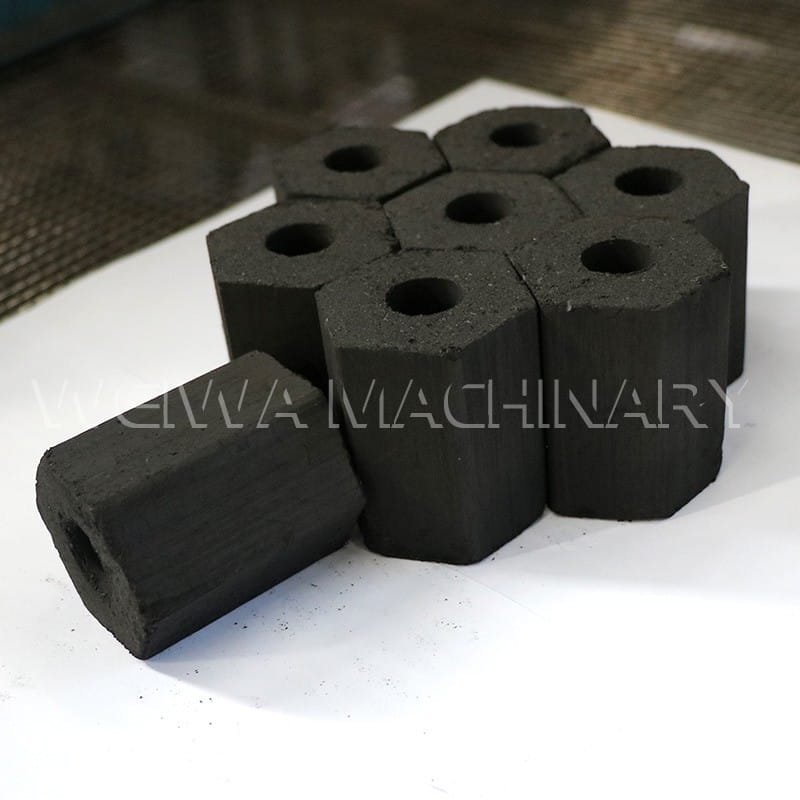
As the hydraulic cylinder engaged, material was compressed inside the mold cavity under gradually increasing pressure. The first briquettes were ejected within seconds. Visually, they exhibited smooth surfaces, sharp edges, and no visible cracks. We measured initial density at approximately 1.2 grams per cubic centimeter, which already exceeded the client’s previous mechanical press results. Over the next four hours, we ran successive batches using rice husk charcoal and sawdust blends, adjusting pressure and dwell time to observe performance variations.
The hydraulic briquette machine maintained stable cycle times throughout the trial. Minor fluctuations in moisture content did not cause jamming or significant density drops, thanks to the adjustable pressure relief and feedback-controlled hydraulic unit. The client’s team personally inspected briquette hardness by dropping samples from waist height, conducted water-resistance tests, and later burned several briquettes to assess ignition time, flame stability, and ash residue. All indicators pointed to a marked improvement over their existing process.
Key Performance Metrics Recorded During the Trial
We documented several quantitative outcomes. Output per hour averaged between two and three tons depending on material type and briquette size. Briquette density ranged from 1.15 ل 1.35 grams per cubic centimeter. Breakage rate after drying and handling remained below two percent. Energy consumption per ton of finished briquettes was lower than the client’s previous mechanical system because the hydraulic press only consumes peak power during compression strokes, with idle phases requiring minimal energy. These metrics reinforced the value proposition of a hydraulic briquette machine for Vietnam manufacturers seeking both quality and efficiency.
Analyzing Why Hydraulic Briquette Press Machines Suit the Asian Market
Asia is home to diverse agricultural economies where biomass waste is abundant but underutilized. Countries like Vietnam, الهند, أندونيسيا, and Thailand are actively promoting renewable energy policies and waste-to-energy initiatives. لكن, many small and medium enterprises still rely on outdated briquetting technologies that cannot guarantee export-grade quality. This is where hydraulic press briquetting machines fill a critical gap. They offer precise density control, adaptability to multiple raw materials, lower maintenance complexity, and the ability to produce premium briquettes suitable for international markets in Japan, كوريا الجنوبية, وأوروبا.
In Vietnam specifically, the combination of expanding domestic clean fuel demand and growing export opportunities for charcoal and biomass briquettes creates a strong business case for upgrading to hydraulic systems. A hydraulic briquette press can process not only wood-based biomass but also municipal organic residues, agro-industrial waste, and even certain mineral fines when formulated correctly. This versatility aligns with the multi-resource reality of Asian supply chains, where raw material availability may shift seasonally between rice husks, باجاس, قذائف جوز الهند, أو نشارة الخشب.
بالإضافة إلى, hydraulic briquette machines integrate well with downstream equipment such as automatic dryers, coolers, and packaging lines. For factories planning to scale from semi-manual workshops to semi-automated production plants, the hydraulic system’s compatibility with PLC automation and remote monitoring adds long-term value. في الآلات Weiwa, we have observed increasing inquiries for hydraulic briquette machine for Vietnam not only from charcoal producers but also from furniture manufacturers, rice mills, and environmental service providers aiming to monetize their waste streams.
Asia’s Policy and Market Drivers Supporting Hydraulic Briquetting Growth
Government initiatives across Asia encourage reductions in open burning of agricultural residues and promote circular economy models. Vietnam’s national strategies on clean energy, India’s biofuel policies, Indonesia’s biomass utilization programs, and Thailand’s alternative energy development plans all indirectly boost demand for reliable briquetting equipment. When coupled with rising international awareness of low-carbon fuels, hydraulic briquette machines become more than just machinery—they become enablers of compliance, export competitiveness, and sustainable branding. The trial we conducted reaffirmed that a well-configured hydraulic press briquetting machine can directly support these macro-level trends at the factory level.
Technical Strengths of Weiwa Hydraulic Briquette Machines
Our hydraulic briquette press designs incorporate lessons from more than thirty years of field experience across Asia, الشرق الأوسط, and Africa. The heavy-duty hydraulic pump station uses high-quality seals and valves to withstand continuous operation in humid climates. Pressure can be finely tuned from low to high ranges to suit soft biomass or dense charcoal powders. The main frame is welded with reinforced steel plates and stress-relieved to prevent deformation over years of service.
Mold inserts are CNC-machined from alloy steel and can be customized with client logos, embossed patterns, or specific dimensional tolerances. Quick-change mold systems allow product variety without prolonged downtime. The PLC interface supports multiple language options, which is valuable for international clients in Asia operating with multilingual teams. Safety interlocks prevent accidental activation during maintenance, and emergency stop buttons are positioned for ergonomic access. These details may seem incremental, but together they determine whether a hydraulic briquette machine performs reliably on a factory floor in Vietnam or elsewhere in Asia.
Another differentiator is our approach to customization and layout planning. Before finalizing orders, Weiwa engineers often provide simplified design drawings showing machine footprints, utility connections, material flow, and operator zones. This helps clients optimize workshop space, estimate utility loads, and prepare foundations in advance. For the Vietnam client, we adjusted the hydraulic unit orientation and conveyor height to match their existing drying tunnel, ensuring a seamless workflow from mixing to briquetting to drying.
Customization as a Competitive Advantage in Asian Markets
Asian factories rarely operate with identical layouts, raw material profiles, or output targets. A one-size-fits-all hydraulic briquette press seldom delivers optimal results. Our ability to modify pressure settings, mold shapes, hopper designs, feeding mechanisms, and control logic according to local conditions has been a key reason why Weiwa hydraulic briquette machines gain repeat orders. During the Vietnam trial, we demonstrated three mold types within one day, enabling the client to compare cubic shisha-style briquettes, round tablets, and rectangular blocks for industrial boilers. This flexibility is increasingly important as Asian producers diversify their product lines to serve both domestic households and industrial buyers.
Post-Trial Feedback and Long-Term Outlook
Following the trial run, the client formally acknowledged the improved briquette quality, reduced breakage, and smoother operation compared to their previous equipment. They highlighted the intuitive PLC interface as a benefit for newly trained operators and appreciated the stability of hydraulic pressure during extended runs. Discussions moved quickly toward finalizing a full production line that would include a carbonization furnace, محطم, خلاط, hydraulic briquette machine, and heat-pump dryer—essentially a turnkey solution supported by Weiwa’s after-sales team.
From our perspective, the trial confirmed that hydraulic briquette machines are not merely an incremental upgrade but a strategic investment for Asian biomass processors. The ability to consistently produce high-density, low-ash, uniformly shaped briquettes opens doors to premium market segments that reject inferior products. It also helps factories reduce material wastage, lower energy intensity per ton of output, and build a more professional brand image in competitive export channels.
We also recognized valuable insights to carry forward. Humidity management around the hydraulic oil cooling system deserves attention in coastal Vietnam locations. Binder selection and mixing homogeneity remain critical even with high-pressure hydraulic presses. Spare parts accessibility and local technical support will influence long-term satisfaction, which is why Weiwa maintains a professional after-sales team capable of remote guidance, توريد قطع الغيار, and periodic maintenance planning. These elements collectively determine whether a hydraulic press briquetting machine delivers sustained ROI or merely short-term gains.
Scaling Hydraulic Briquetting Across Asia Beyond Vietnam
While this trial focused on a Vietnam client, the implications extend across Asia. In Indonesia, similar agricultural residues and a booming shisha charcoal export sector create demand for hydraulic briquette presses capable of high-precision molding. في الهند, rice husk and groundnut shell briquetting for industrial boilers benefits from hydraulic density control. In Thailand and Malaysia, palm kernel shell waste and sawdust blends are well suited to hydraulic systems with customizable molds. Even in more mature markets like South Korea and Japan, niche applications such as specialty charcoal for barbecue or horticultural biochar can leverage hydraulic briquette machines for consistent quality.
The Asian market potential is therefore not confined to one country or one feedstock. It is a mosaic of opportunities where hydraulic briquette machines act as a unifying technology to convert disparate waste streams into standardized, marketable fuel products. Our role at Weiwa Machinery is to continue refining equipment durability, control intelligence, and customization depth so that clients across Asia can adopt hydraulic briquetting with confidence.
Reflections on the Future of Hydraulic Briquette Machines in Asia
Looking ahead, several trends will shape the evolution of hydraulic press briquetting machines in Asia. Automation will deepen, with more factories requesting integrated PLC and IoT features for remote diagnostics, production data logging, and predictive maintenance alerts. Energy efficiency will remain a priority, pushing designs toward regenerative hydraulic circuits and variable-displacement pumps. Sustainability considerations will drive interest in binder-less briquetting for certain lignin-rich biomass, requiring even higher and more precise pressure control that hydraulic systems are well positioned to deliver.
في نفس الوقت, market competition will intensify, and differentiation will depend on more than just machine specifications. It will hinge on the completeness of service: how well a supplier understands local raw materials, how quickly technical issues are resolved, how thoroughly operators are trained, and how flexibly production lines can evolve. Weiwa Machinery’s thirty-year journey has taught us that machines are only as strong as the ecosystems built around them. That is why our hydraulic briquette machine for Vietnam and other Asian markets is never delivered as a standalone product, but as part of a broader commitment to client success.
The Vietnam trial was a milestone, not a destination. It reinforced that hydraulic briquette presses are gaining relevance precisely when Asia needs scalable, ينظف, and economically viable solutions to manage biomass waste and produce renewable fuels. Each hydraulic press briquetting machine we install carries forward this mission, translating engineering precision into tangible benefits for factories, communities, and environments alike.
خاتمة
The successful trial run of our hydraulic briquette press in Vietnam illustrates how the right equipment, configured thoughtfully and supported professionally, can unlock new value from Asia’s abundant biomass resources. From understanding local raw materials to fine-tuning hydraulic pressure, from operator training to post-trial planning, every step reflected Weiwa Machinery’s dedication to quality and long-term partnership. As interest in hydraulic briquette machines grows across Vietnam and the wider Asian region, we remain focused on delivering reliable technology, حلول مخصصة, and responsive after-sales service that clients can trust for decades.
A hydraulic briquette machine is more than a compactor of powder. It is a bridge between waste and worth, between traditional fuel practices and modern clean energy standards, between local Asian workshops and global sustainable markets. We are proud to contribute to this transformation and look forward to supporting more clients across Asia with hydraulic press briquetting machines that perform where it matters most—on the factory floor, day after day.
عن آلات ويوا
Weiwa Machinery brings more than thirty years of professional experience in manufacturing industrial machinery, specializing in briquette machines, carbonization equipment, وأكمل خطوط الإنتاج. We have a professional after-sales team, offer customization services, and provide design drawings to help plan site layouts. Whether you need a hydraulic briquette press, a full briquetting line, or technical guidance for Asian market conditions, we welcome you to contact us for inquiries and quotations.
اتصل بنا
الغوغاء: +8613838093177
Whatsapp: +8613838093177
بريد إلكتروني: info@cjlmachinegroup.com


 WeChat

 +8615937143060
