


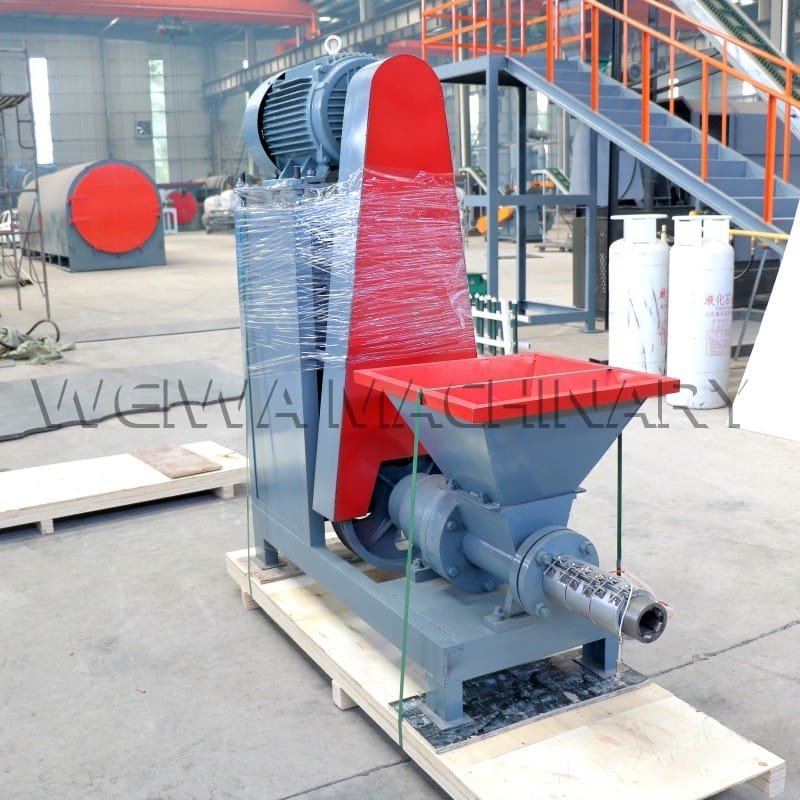
اليوم, we are excited to share a recent success story from the heart of Southern Africa. As a leading manufacturer of biomass briquetting equipment, we recently completed a successful sawdust extruder trial run in Zimbabwe, demonstrating the immense potential of modern charcoal making machines in Zimbabwe.
Understanding the Sawdust Extrude Production Line
The demand for efficient and eco-friendly fuel sources in Africa is growing rapidly. Traditional charcoal production methods are often unsustainable, leading to deforestation and inefficient carbonization. Our solution focuses on utilizing waste biomass—such as sawdust, رقائق الخشب, and agricultural residues—to create high-density briquettes. The core of this operation is the sawdust charcoal making machine, a piece of equipment designed for durability and high output.
Our client in Zimbabwe required a robust system capable of handling local raw materials, primarily sawdust from timber mills. We proposed a complete sawdust extrude production line tailored to these specific needs. Unlike simple presses, this system integrates crushing, تجفيف, and extrusion to ensure the final product meets international standards for calorific value and density. The technology behind the charcoal briquette machine in Zimbabwe relies on high pressure and temperature to soften the lignin in the wood fibers, which acts as a natural binder without the need for any chemical additives.
The Science Behind the Sawdust Charcoal Making Machine
Many people wonder how a sawdust charcoal making machine actually works. The principle is both simple and ingenious. Biomass raw materials, which must be crushed to a particle size of less than 5mm and dried to a moisture content below 12%, are fed into the machine. Inside the chamber, a large screw propeller compresses the material under extreme pressure. This pressure, combined with the frictional heat generated, raises the temperature sufficiently to plasticize the lignin.
This process transforms loose sawdust into a dense, continuous “green” عصا. These rods are then fed into a carbonization furnace. The result is a final charcoal product that is significantly superior to traditional lump charcoal. For our Zimbabwean client, understanding this mechanism was crucial to appreciating the value of the investment. ال charcoal making machine in Zimbabwe market is competitive, but the efficiency of this extrusion method sets a new benchmark for quality.
On-Site Trial Run in Zimbabwe A Step-by-Step Account
الشهر الماضي, our engineering team traveled to Harare to oversee the installation and trial run of the sawdust extruder in Zimbabwe. The atmosphere was charged with anticipation as the local team prepared the raw materials. We started with Step 1: Grinding. Using our hammer mill, we processed locally sourced sawdust to ensure the particles were uniform, preventing blockages in the extruder.
بعد هذا, خطوة 2 involved the rotary dryer. Moisture control is critical; too much moisture and the briquettes will not form properly, too little and the lignin won’t activate. Our dryer achieved the perfect balance, reducing the moisture content to precisely 10-11%. With the material ready, we moved to Step 3: البثق. The moment of truth arrived as we activated the sawdust extrude production line.
Observing the Charcoal Briquette Machine in Action
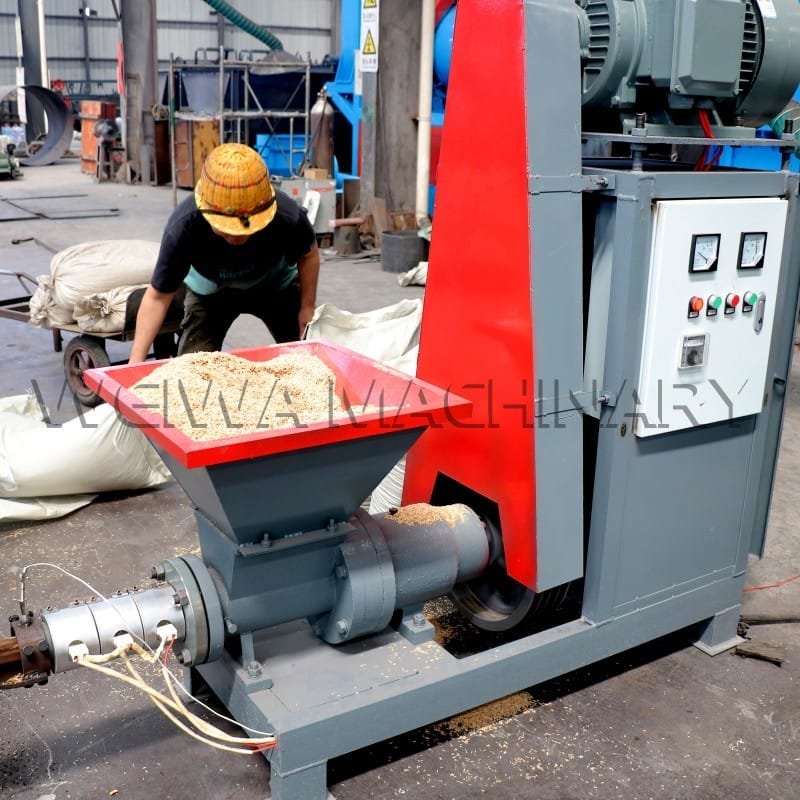
Watching the charcoal briquette machine in Zimbabwe operate is a testament to industrial engineering. The machine roared to life, and within minutes, perfectly formed hollow hexagonal rods began emerging from the die. The client was particularly impressed by the stability of the machine. Thanks to the temperature-adjusting indicator, ال sawdust charcoal making machine maintained a steady operating temperature, ensuring consistent density throughout the batch.
The physical properties of the extruded sticks were remarkable. They measured 50mm in diameter with a 15mm central hole, exactly matching the client’s order. The density was high, meaning the sticks would burn longer and produce more heat. After allowing the sticks to cool, we proceeded to Step 4: الكربنة. The carbonization process converted these “green” sticks into black gold—high-quality charcoal ready for the market.
Performance Metrics and Client Feedback
The results from the trial run exceeded expectations. ال sawdust extruder in Zimbabwe achieved a production capacity of over 300kg per hour, running smoothly without overheating or mechanical issues. The client meticulously tested the final charcoal briquettes. The calorific value was found to be over 20% higher than that of standard wood charcoal available locally. This means end-users—restaurants, الأسر, and industries—will get more energy per kilogram, making this an economically superior product.
بالإضافة إلى, the low pollution emission during combustion was a significant selling point. In urban areas of Zimbabwe, where air quality is a concern, using briquettes made by our charcoal making machine in Zimbabwe offers a cleaner alternative. The client expressed immense satisfaction, noting that the return on investment would be rapid due to the high market value of the premium charcoal produced.
Why Choose a Sawdust Extrude Production Line for Africa?
This successful trial highlights why the sawdust extrude production line is ideal for the African market. Africa generates vast quantities of agricultural and forestry waste annually. Instead of letting this go to waste or causing environmental hazards, our technology converts it into a valuable commodity. ال charcoal briquette machine in Zimbabwe we installed is not just a machine; it is a tool for economic empowerment and environmental sustainability.
بالإضافة إلى, the low pollution emission during combustion was a significant selling point. In urban areas of Zimbabwe, where air quality is a concern, using briquettes made by our charcoal making machine in Zimbabwe offers a cleaner alternative. The client expressed immense satisfaction, noting that the return on investment would be rapid due to the high market value of the premium charcoal produced.
Why Choose a Sawdust Extrude Production Line for Africa?
This successful trial highlights why the sawdust extrude production line is ideal for the African market. Africa generates vast quantities of agricultural and forestry waste annually. Instead of letting this go to waste or causing environmental hazards, our technology converts it into a valuable commodity. ال charcoal briquette machine in Zimbabwe we installed is not just a machine; it is a tool for economic empowerment and environmental sustainability.
For businesses looking to enter the renewable energy sector, investing in a reliable sawdust charcoal making machine is a strategic move. The ability to customize the shape—be it square, سداسية, or pentagonal—allows producers to cater to diverse market preferences across different African nations. Our experience in Zimbabwe proves that with the right machinery, local resources can be transformed into globally competitive products.
عن آلات ويوا
في الآلات Weiwa, we are more than just a factory; we are a partner in your success. مع أكثر 2 million customers worldwide and exports to more than 130 countries—including numerous nations across Africa like Tanzania, جنوب أفريقيا, مصر, and Ethiopia—we have established ourselves as a trusted name in biomass equipment. We specialize in designing comprehensive solutions, from single machines to complete production lines, tailored to your raw materials and capacity requirements. Whether you need a charcoal briquette machine in Zimbabwe or a full-scale pellet plant elsewhere, our team provides end-to-end support, including free design consultation, تصنيع, وخدمة ما بعد البيع. Contact us today to start your project.
اتصل بنا:
الغوغاء: +8613838093177
Whatsapp: +8613838093177
بريد إلكتروني: info@cjlmachinegroup.com


 WeChat

 +8615937143060
