


This week at the Weiwa Machinery production base in Gongyi, خنان, the atmosphere was charged with anticipation as a full-scale coal rod machine production line was carefully loaded into international freight containers bound for South Africa. لفريقنا, this was not merely another export order but a meaningful milestone reflecting the accelerating demand for sustainable fuel processing equipment across the African continent. Standing among the freshly painted machines, technicians conducted final torque checks on the screw shafts, verified electrical control panels, and double-confirmed custom mold specifications requested by our South African client. Observing the scene, it becomes evident how interconnected global manufacturing, biomass waste utilization, and clean energy transitions have become in recent years.
On-Site Dispatch Scene What a آلة قضبان الفحم Shipment to South Africa Looks Like
The production line leaving our factory includes a primary crusher, wheel grinding mixer, آلة بثق الفحم, belt conveyor system, and auxiliary drying supports tailored to local humidity conditions in South Africa. Each unit underwent a multi-stage quality inspection protocol covering dimensional accuracy, weld integrity, motor performance, and no-load running stability. Our engineers ran the charcoal extruder machine continuously for several hours to ensure the high-manganese alloy propeller and #45 steel die head maintained consistent pressure without abnormal vibration. Such pre-shipment testing is essential because once the coal rod machine arrives in South Africa, it must immediately integrate into the client’s existing workshop without prolonged commissioning delays.
Packaging followed export-standard practices. Exposed screw shafts were coated with anti-rust oil and wrapped with stretch film, control cabinets were sealed with moisture-proof desiccant packs, and fragile components such as pressure gauges were removed and cushioned in wooden crates marked with clear orientation arrows. Our logistics team coordinated with the freight forwarder to optimize container space, placing heavier units like the charcoal extruder machine near the front to balance weight distribution. Documentation including commercial invoice, packing list, certificate of origin, and CE-related technical files were cross-checked to prevent customs holdups at Durban Port. Watching the container doors close, one cannot ignore the symbolic significance of a Chinese-manufactured coal rod machine beginning its journey toward Africa’s evolving biomass energy sector.
During the handover meeting with the logistics supervisor, our after-sales manager reiterated key installation notes specific to South African operating environments. Voltage fluctuations, ambient temperature variations, and raw material moisture content all influence how a charcoal making machine performs on-site. We provided the client with bilingual operation manuals, electrical schematics, and a preventive maintenance schedule translated into English to ensure local technicians can confidently manage daily upkeep. This end-to-end approach reflects Weiwa Machinery’s belief that exporting a charcoal briquette machine is not a one-time transaction but the beginning of a long-term partnership.
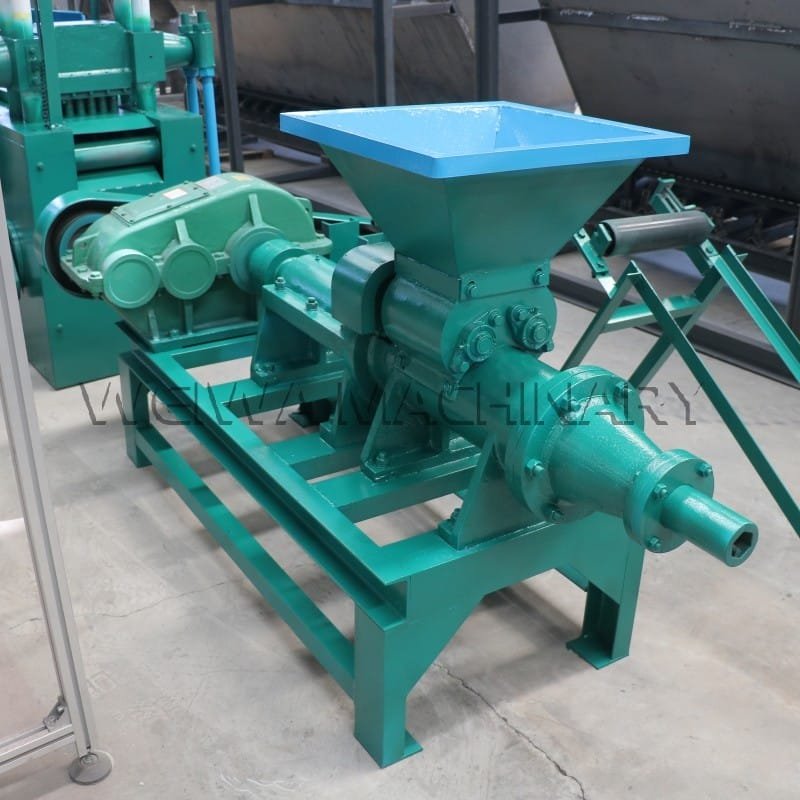
Understanding the Charcoal Extruder Machine and Coal Rod Machine Fundamentals
To appreciate why the coal rod machine in South Africa is increasingly relevant, it is necessary to understand the underlying mechanics of a charcoal extruder machine. At its core, the equipment employs a screw propulsion system inside a closed barrel. Prepared charcoal powder or coal powder blended with an appropriate binder enters the feeding port and is conveyed forward by a rotating screw shaft. As the material moves toward the die head, the pitch of the screw gradually decreases, compressing the loose powder into a high-density state. The material is then forced through a specifically shaped orifice in the die head, emerging as a continuous rod which naturally fractures under gravity or is cut to length by an auxiliary cutter.
The resulting coal rod possesses uniform density, higher calorific value per volume, and improved combustion stability compared to loosely packed powder. From a materials science perspective, the extrusion process aligns fine particles and reduces internal porosity, which in turn lowers air infiltration and smoke emission during burning. A well-configured charcoal extruder machine can adjust rod diameter, شكل, and surface finish by swapping die heads, allowing producers to meet diverse market preferences such as cylindrical rods for household cooking or square rods for industrial gasification furnaces. This adaptability is one reason why charcoal briquette machine lines are favored by entrepreneurs in emerging markets including South Africa.
Beyond the screw extruder design, some coal rod machine configurations integrate forced feeding augers, water-cooling systems for the barrel, and variable frequency drives to regulate extrusion speed. The choice of propeller material significantly affects service life. Weiwa Machinery typically uses high-manganese alloy or surfacing welding reinforcement on screw shafts to resist abrasion from hard charcoal particles. Understanding these technical nuances helps buyers evaluate not only the sticker price of a charcoal making machine but also its total cost of ownership over years of continuous operation.
Raw Material Preparation Before Extrusion Matters Greatly
A charcoal extruder machine cannot perform optimally if upstream processes are neglected. Raw materials such as sawdust, جوز الهند شل الفحم, فروع الخشب, or coal fines must first be carbonized, crushed, and ground to a consistent fineness—usually below 3 mm—to ensure smooth flow inside the extruder barrel. Moisture content is equally critical. Most charcoal briquette machine systems require material moisture between 8% و 12%. Excess moisture causes steam formation under compression, leading to cracked rods or bursting during drying, while overly dry material may lack sufficient plasticity to form coherent shapes even with binders.
Binders themselves deserve careful consideration. Common choices include starch-based adhesives, دبس السكر, أو الطين, depending on local availability and end-use regulations. In South Africa, some operators prefer biodegradable binders to align with environmental expectations. The wheel grinding mixer in the production line plays a decisive role here, homogenizing powder and binder into a plasticky mass ready for the coal rod machine. Skipping or rushing this mixing phase often results in irregular rod surfaces, low compressive strength, and customer complaints downstream. هكذا, a charcoal making machine line should always be viewed as an integrated system rather than an isolated extruder unit.
How Die Head Geometry Influences Rod Quality and Market Acceptance
Within the charcoal extruder machine, the die head acts as the final sculpting tool. Its inner surface finish, taper angle, compression ratio, and orifice shape determine the external appearance and internal density of the coal rod. A poorly machined die head creates flow resistance imbalances, causing bent rods, central voids, or uneven burning characteristics. في المقابل, a precision-machined die head produced from quenched #45 steel or alloy tool steel yields smooth, glossy rods that command better prices in both retail and wholesale charcoal markets. For clients ordering a coal rod machine in South Africa, we often discuss anticipated rod dimensions early in the quotation stage so that custom die drawings can be prepared alongside the main machine.
Market feedback suggests South African consumers value uniformly shaped charcoal rods for braai (barbecue) ثقافة, which remains deeply rooted across the country. A charcoal briquette machine capable of producing consistent-diameter rods with minimal ash content fits neatly into this cultural and commercial context. By educating clients on die maintenance—such as periodic polishing, avoiding thermal shock, and rotating dies to equalize wear—Weiwa Machinery helps extend component lifespan and stabilize product quality over time.
Why the Coal Rod Machine in South Africa Is Gaining Strategic Importance?
South Africa’s energy landscape is undergoing gradual but tangible shifts. While conventional coal and electricity dominate many sectors, rising awareness of deforestation, urban air quality, and fuel affordability has prompted interest in biomass-derived fuels. The country generates substantial agricultural and forestry residues annually, including sawdust from timber processing, bagasse from sugarcane milling, fruit kernel shells, and general wood waste. Without efficient utilization pathways, much of this biomass either decomposes or is openly burned, releasing carbon dioxide and particulate matter unnecessarily. Introducing a charcoal making machine production line transforms these residues into densified fuel, creating local value chains and reducing reliance on unsustainably harvested firewood.
Economically, small and medium enterprises in South Africa are exploring charcoal briquette machine investments as a route to diversify income streams. Compared to large-scale industrial plants, a compact coal rod machine setup requires moderate capital expenditure, can be installed in peri-urban workshops, and relies on relatively straightforward operation skills. With proper market linkage, producers can supply rods for domestic cooking, institutional kitchens, brick kilns, or even export neighboring regions. Government and municipal programs promoting renewable energy and waste-to-energy initiatives indirectly support this trend, although regulatory clarity around briquette quality standards continues to evolve.
From a logistical perspective, South Africa’s relatively developed road and port infrastructure facilitates importing machinery such as a charcoal extruder machine from established manufacturing hubs like China. Buyers benefit from shorter lead times compared to landlocked African nations, and local technical colleges increasingly offer mechanical maintenance training useful for managing biomass equipment. These factors collectively enhance the feasibility of deploying a coal rod machine in South Africa and scaling operations as market demand matures.
Braai Culture and Clean Fuel Demand Align with Charcoal Briquette Machine Output
It is worth emphasizing the cultural dimension. Braai is more than a cooking method in South Africa; it is a social tradition cutting across demographic lines. High-quality charcoal rods produced by a charcoal briquette machine cater precisely to this tradition by offering longer burn time, steady heat output, and reduced smoke compared to loosely piled lump charcoal. Entrepreneurs who position their brand around consistent rod quality, sustainable sourcing, and clean combustion stand to differentiate themselves in both township and urban retail channels. هكذا, the charcoal extruder machine is not only a technical asset but also a cultural enabler when aligned with local consumer habits.
Environmental Policy Trends Supporting Charcoal Making Machine Adoption
Although policy implementation varies by province, broader Southern African development frameworks acknowledge biomass energy as part of a diversified clean energy mix. By converting waste biomass into combustible rods, a charcoal making machine contributes to circular economy objectives—reducing landfill pressure, lowering open burning, and displacing some fossil fuel use. International carbon finance mechanisms and NGO-led forestry projects sometimes incorporate briquette production as a community livelihood component, indirectly creating demand for reliable coal rod machine suppliers. While Weiwa Machinery does not provide carbon credit consulting, we recognize that environmentally sound equipment design, energy-efficient motors, and durable construction align with clients’ sustainability narratives when they present projects to local stakeholders or funding agencies.
Market Prospects for Charcoal Extruder Machine and Related Equipment in South Africa
Looking ahead, several macroeconomic and sector-specific drivers suggest continued growth potential for the charcoal extruder machine market in South Africa. Urbanization concentrates energy demand in cities where clean, portable cooking fuels are preferred. Rural areas simultaneously seek alternatives to diminishing firewood supplies. The tourism hospitality sector, including lodges and game reserves, increasingly sources responsibly produced charcoal to meet eco-certification criteria. Each of these demand nodes can be served by scalable charcoal briquette machine lines tailored to different throughput levels, من 500 kg/h pilot workshops to 2 t/h industrial plants.
على جانب العرض, equipment sophistication is improving. Modern coal rod machine designs incorporate automated feeders, PLC control panels, remote fault diagnosis interfaces, and modular assemblies that simplify relocation if a business expands. Weiwa Machinery has observed growing client interest in combined production lines where a charcoal making machine connects seamlessly with continuous carbonization furnaces, dust removal cyclones, and semi-automatic packaging stations. Such integration reduces manual handling, improves workplace safety, and enhances product uniformity—factors that matter when supplying formal retail chains or institutional buyers.
Competitive dynamics are also shifting. While South Africa already hosts some regional equipment dealers, many charcoal producers still import core machines from Asia due to price-performance ratios and customization flexibility. A charcoal extruder machine built with reinforced propellers, corrosion-resistant contact parts, and climate-adapted electrical components resonates with buyers who prioritize durability over lowest upfront cost. As local financing options for SMEs slowly expand, more entrepreneurs may afford mid-tier charcoal briquette machine packages, further widening market penetration.
Challenges That Charcoal Rod Machine Operators May Face in South Africa
Despite optimism, realistic challenges exist. Raw material seasonality affects feedstock availability; for instance, sugarcane bagasse peaks after harvest periods, requiring producers to stockpile or blend multiple biomass sources. Power supply stability in certain regions may necessitate backup generators or dual-voltage compatibility for the coal rod machine. Skilled operator turnover can disrupt production if standard operating procedures are not documented clearly. علاوة على ذلك, market education is ongoing—some end users still equate charcoal rods with inferior quality simply due to past experiences with poorly made briquettes. Overcoming these hurdles demands not only robust machinery but also supplier commitment to training, توفر قطع الغيار, and responsive after-sales communication, areas where Weiwa Machinery positions itself deliberately.
Future Technology Directions for Charcoal Making Machine Lines
Anticipating client needs five to ten years ahead, equipment manufacturers are experimenting with hybrid heating extrusion to reduce binder dependency, IoT-enabled production monitoring to optimize screw speed versus moisture content, and multi-material die coatings to prolong service intervals. Although not all innovations will suit every market, the trajectory points toward smarter, more resource-efficient charcoal extruder machine systems. For South African adopters, this could translate into lower operating costs, easier compliance with emission-conscious procurement policies, and stronger branding around technologically advanced, clean-fuel products. Weiwa Machinery continues to refine its charcoal briquette machine designs based on field feedback from Africa, جنوب شرق آسيا, وأمريكا اللاتينية, ensuring that each coal rod machine in South Africa benefits from cross-regional lessons learned.
Weiwa Machinery Perspective How We Support Global Charcoal Briquette Machine Projects
Reflecting on the recent shipment, our involvement began months earlier when the South African client contacted us through our website inquiry form. Initial conversations centered on raw material type—predominantly acacia wood charcoal powder and some coal fines—desired rod size of 40 قطر مم, estimated daily runtime of 10 ساعات, and local voltage of 380V/50Hz. Our sales engineer shared reference photos and videos of similar charcoal extruder machine installations, explained expected yield rates, and outlined optional add-ons such as a secondary vibrating screen to remove oversized particles before mixing.
Once the proposal was accepted, our design department produced layout drawings showing equipment spacing, foundation bolt positions, and cable routing for the coal rod machine line. Customization extended to repainting the machine in the client’s corporate color and engraving parameter plates in English. Throughout production, we shared progress photos at major milestones: frame welding completion, machining of screw shafts, assembly of gearbox, and final painting. This transparency builds trust long before the charcoal making machine reaches its destination.
After shipment, our service does not stop. We schedule online commissioning sessions via video call, guide local electricians on control panel wiring, and remain reachable through WhatsApp for urgent troubleshooting. Spare parts kits including propellers, seals, and die heads are recommended at order placement to minimize downtime. This holistic approach underpins why Weiwa Machinery has sustained relationships spanning decades with clients in over fifty countries. A charcoal briquette machine is only as reliable as the ecosystem supporting it, and we strive to be that ecosystem for our partners in South Africa and beyond.
Concluding Thoughts on the South Africa Opportunity and Charcoal Extruder Machine Evolution
Standing beside the loaded container, one realizes the coal rod machine inside represents more than steel and motors. It embodies a convergence of environmental necessity, entrepreneurial ambition, and cross-border industrial cooperation. South Africa’s biomass resources, cultural affinity for charcoal-based cooking, and gradual policy tilt toward cleaner fuels create fertile ground for thoughtfully deployed charcoal making machine lines. Success, however, requires more than purchasing a charcoal extruder machine; it demands understanding material science, respecting maintenance discipline, aligning product规格 with market taste, and choosing a supplier who treats commissioning as seriously as manufacturing.
As Weiwa Machinery continues refining its charcoal briquette machine technology—improving energy efficiency, extending wear-part life, simplifying operator interaction—we remain committed to supporting clients who see beyond short-term transactions toward sustainable, community-embedded fuel enterprises. The production line now en route to South Africa carries our engineering intent and the client’s vision alike. If the past thirty years have taught us anything, it is that every coal rod machine in South Africa, أندونيسيا, نيجيريا, or Brazil contributes incrementally to a larger narrative of turning overlooked waste into valued energy, one densified rod at a time.
For investors, engineers, or entrepreneurs evaluating whether a charcoal extruder machine fits their regional context, we encourage visiting operating sites, testing sample rods, and discussing technical details with experienced manufacturers. The learning curve is manageable, the equipment landscape is maturing, and the global shift toward circular biomass utilization shows no sign of reversing. In that landscape, the humble yet sophisticated coal rod machine will likely remain a quiet but essential protagonist for years to come.
عن آلات ويوا
Weiwa Machinery brings more than thirty years of professional experience in the design, manufacture, and export of biomass fuel processing equipment. Specializing in charcoal extruder machine, آلة قضيب الفحم, آلة صنع الفحم, and charcoal briquette machine production lines, we combine seasoned engineering knowledge with practical field insights to deliver reliable, customizable solutions. Our strengths include a professional after-sales team, tailored design and drawing services for site planning, and flexible configuration to match client capacity and raw material profiles. Whether you are establishing a new briquette workshop in South Africa or upgrading an existing plant, Weiwa Machinery welcomes your inquiry and looks forward to supporting your project from factory layout to stable production.
اتصل بنا:
الغوغاء: +8613838093177
Whatsapp: +8613838093177
بريد إلكتروني: info@cjlmachinegroup.com


 WeChat

 +8615937143060
