


为何马来西亚成为威娃炭化设备的优先市场?
马来西亚生物质资源丰富. 棕榈废料, 椰子壳, 橡胶木边角料, 果树树枝, 家具区的锯末和空果串残渣在几个州都有售. 许多中小型生产商仍然依赖土窑或混凝土砌块窑. 这些方法可以制木炭, 但他们通常需要很长的周期时间, 产生可见烟雾, 提供不均匀的硬度, 并且难以向地方当局或出口买家证明环境合规性.
卧式碳化炉作为中间路径进入该市场. 它不像完全连续的工厂那么复杂, 但它比开放式窑更受控制. 对于想要批量灵活性的马来西亚买家, 推车装载, 可重复使用热解气体和清洁操作, 水平桶形设计通常比任一极端更有意义.
威瓦机械供应煤球机, 干燥系统, 水烟木炭压机和碳化设备销往多个国家. 马来西亚询问模式, 然而, 有一个清晰的形状: 买家拥有生物质, 想要烧烤或水烟市场的木炭, 熟练劳动力有限, 并且无法承担巨大的连续生产线. 这正是马来西亚的木炭制造机应该认真评估的地方.
马来西亚原料现状
来自沿海国家的椰子壳致密且固定碳含量高, 但如果水分含量高,整个贝壳会慢慢碳化. 托盘和家具车间的硬木边角料体积庞大. 竹子生长速度快,碳化方式与硬木不同. 农残具有季节性,往往需要预干燥. 一个好的碳化炉必须接受这些材料,而不强迫客户在第一天就建造一个全新的预处理厂.
本案发运的卧式碳化炉为椰壳指定, 原木块和混合生物质. 客户不想将所有东西粒化. 他们想要装载手推车, 封门, 启动间接加热, 回收气体, 并以更少的体力劳动生产均匀的木炭.
监管和邻国压力
在郊区或乡村工业区, 烟雾投诉可能导致生产停止. 马来西亚买家越来越多地询问烟气问题, 焦油凝析物, 水洗和可燃气体回流. 现代制炭机不再仅以木炭产量来判断. 判断标准是该工厂能否运行而不会对附近的屋村造成滋扰, 工厂和住宅区.
这就是为什么 Weiwa 强调气体净化循环. 离开桶的热解气体经过分离和清洁阶段, 滴落焦油和冷凝物, 并作为可燃气体返回燃烧器. 热身后, 外部燃料需求下降. 正常运行时烟囱的烟雾变得最小. 对于马来西亚网站, 这种差异可以决定项目是扩大还是关闭.
威瓦机械车间调度现场
发货从巩义威娃车间开始, 河南. 技术人员检查了枪管室, 耐火炉衬, 轨道车, 门封条, 煤气管, 燃烧环, 控制柜及安全阀. 卧式炭化炉已涂漆, 但在喷漆之前它已经通过了门密封测试, 气路压力测试和燃烧器点火测试.
卧式筒式炉的装载与立式机器的装载不同. 桶的长度占据了容器对角线的大部分. 沉重的结局, 通常采用石墨填料密封卸料门, 必须正确支持. 在海洋运输过程中,滑橇必须保持轨道对齐完好无损. 如果法兰面变形, 马来西亚第一批可能会泄漏氧气并烧焦木炭.
Weiwa 使用了装配式摇篮, 钢带, 松木垫片, 室内有橡胶垫和干燥剂袋. 控制柜单独装箱. PID控制器, 热电偶和继电器切勿在潮湿的钢室内运行. 由于制炭机是精密热容器,该集装箱被预订为整箱而不是共享拼箱, 不是普货.
集装箱装载前的最终质量检查
马来西亚客户参加现场视频考察. 我们旋转桶, 显示铁轨对准, 打开门封条, 并对回气燃烧器进行了短火焰测试. 铭牌, 型号代码, 电压版本, 备件清单和英文标签已根据形式发票进行验证.
出口马来西亚, 威瓦准备了一份按客户庭院比例缩放的布局图, 英文控制标签, IEC 电气术语, 耐火泥浆, 备用门垫片, 备用热电偶, 燃烧器喷嘴和工具包. 手工盖椰子壳, 原木, 竹子和锯末成型循环. 当地电工和机械师应该能够在不解码翻译缩写的情况下维护机器.
从 巩义 往 巴生港
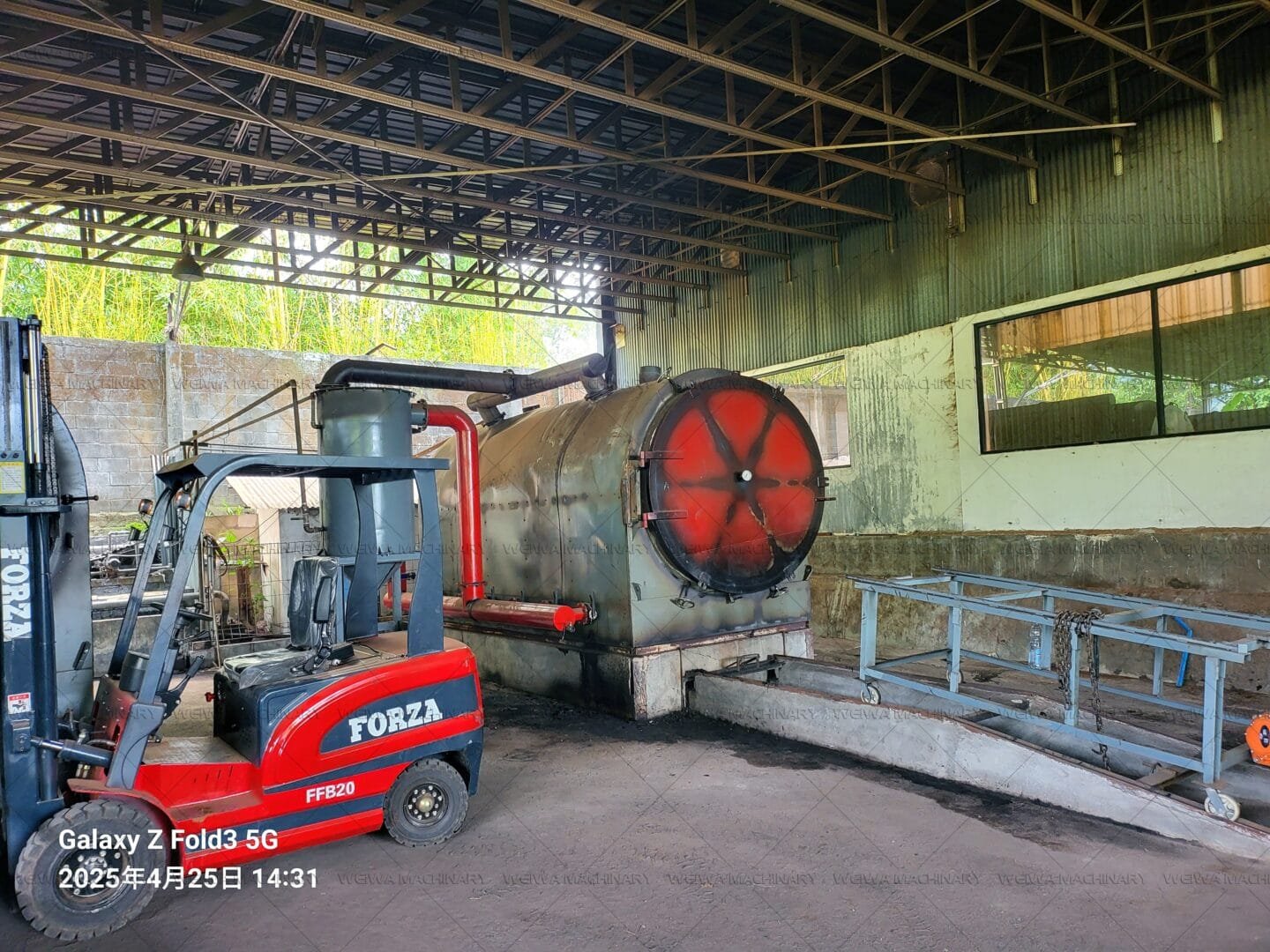
炉子离开车间, 搬到港口, 并驶向巴生港. 从巴生港出发, 马来西亚货运代理安排平板运输至客户堆场. 买家准备了混凝土垫块, 用于冷却和洗涤阶段的稳定电源和水源. 由于该装置是水平且导轨安装的, 并不总是需要高大的起重机. 拥有叉车一台和工人数名, 半天内即可将滑橇定位在垫板上.
这个物流故事对于 SEO 和买家都很重要. 许多搜索查询不仅仅与规格有关. 他们是关于交货的, 备件, 电压, 安装, 培训以及供应商是否真正出口到马来西亚. 马来西亚的木炭制造机必须作为一个完整的项目记录, 不仅仅是产品照片.
真是个 水平碳化炉 实际上是?
卧式碳化炉是安装在轨道上的桶式热室. 腔室水平放置. 操作员将生物质装入手推车或篮子中, 将小车推入桶中, 封住门, 并开始间接加热. 原材料不处于直接火焰中. 热量通过室壁和周围夹套传递, 逐渐驱除水分和挥发物.
随着生物质加热, 它释放热解气体. 该气体含有可燃成分. 而不是将其作为污染排放, Weiwa系统捕获, 冷却, 分离焦油和冷凝物, 净化气体, 并将其送回燃烧器. 然后,燃烧器有助于将室温度维持在接近 600 °C. 主要在启动时需要外部燃料. 气路稳定后, 熔炉走向自持燃烧.
这就是许多生产商从窑炉升级的原因. 传统的土窑会以烟雾的形式损失大部分能量. 卧式碳化炉将部分烟气转化为燃料. 对于液化石油气或柴油成本上涨的马来西亚木炭场, 该循环保护边际.
间接加热与直接火加热
直火碳化是指火焰剧烈接触或包围原材料. 建造成本可能较低,但难以控制. 间接加热将热源与生物质床分开. 温度上升更均匀. 木炭结构保持更完整. 固定碳改善. 飞扬余烬造成的灰烬问题减少.
在马来西亚的审判中, 夹套温度逐渐升高并保持在 580 到 610 ℃范围. 里面的生物质不会像木柴一样燃烧. 它在受控限氧条件下碳化. 结果是黑色的, 稠密, 低烟木炭而不是半燃烧的木材和灰灰.
轨道式桶装和车装
轨道和电车系统是最被低估的优势之一. 大容量椰壳袋, 弯曲的木头和竹棍很难落入垂直的竖井中. 带水平室, 工人们将车装到舒适的高度, 把它推进去, 并锁上门.
在马来西亚的审判中, 两名工人将一辆满载的推车装进下面 40 分钟. 相当于立式窑可能需要更多的人员和更多的攀爬, 铲起或吊篮. 几周后, 劳动力差异对马来西亚木炭制造机经济性的影响不仅仅是机器价格的微小差异.
气体净化和自循环燃烧
气路包括旋风分离器预分离, 焦油凝结, 水洗和回气吹. 使用辅助燃料进行第一次预热后, 燃烧器部分依靠回收的热解气体运行. 客户观察到,与之前的窑相比,外部燃料使用量较低,可见烟雾也少得多.
这对于营销也很重要. 供应烧烤木炭或水烟木炭的马来西亚买家需要一致的产品. 国外买家询问重金属问题, 灰分含量, 固定碳和气味. 更清洁的碳化过程支持更清洁的木炭品牌.
马来西亚卧式炭化炉与传统窑炉的比较
传统窑炉很熟悉. 农民和小企业家都知道他们. 但熟悉度并不等于盈利能力. 每批土窑和砖窑通常需要几天时间. 它们在很大程度上取决于操作员的直觉. 他们因氧化而失去木炭. 他们抽烟. 他们努力为需要规格表的买家记录过程数据.
马来西亚的卧式碳化炉并不神奇. 仍需要足够干燥的原料, 正确的装载密度, 适当的密封和患者温度控制. 但它用可测量的参数取代了猜测: 室温度, 气体压力, 门密封完整性, 冷凝器温度, 燃烧器火焰稳定性和冷却时间.
混合生物质的批次灵活性
马来西亚的生物量很少是均匀的. 一月客户有椰子壳. 再过一个月橡胶木. 再过一个月竹木屑煤球. 连续碳化线通常更喜欢均匀的颗粒尺寸和稳定的进料. 卧式间歇炉能更好地接受变化.
操作员可以在第一批中运行椰子壳, 第二批硬木边角料, 和第三批压块锯末. 食谱改变. 温度曲线变化. 但机器还是一样. 马来西亚一家初创木炭厂, 灵活性降低了风险.
空间与投资平衡
完整的连续式木炭厂非常适合大吞吐量, 但它需要更多的土地, 更多土建工程, 更多输送机, 更多加药设备,更熟练控制. 卧式碳化炉需要混凝土垫块, 电车车道, 气体处理撬, 水源和控制柜.
对于许多马来西亚买家来说, 水平模型处于最佳位置: 比窑炉更受控制, 与连续工厂相比,资本较少. 这就是为什么马来西亚的木炭制造机的搜索结果通常是间歇式筒式炉,而不是巨型旋转或连续系统.
马来西亚现场试用结果
卸载并安装后, 客户端运行了几个批次. 第一批使用的是水分比较高的椰壳. 第二次使用混合硬木原木边角料. 第三种使用竹子和锯末压块的混合物. 每一批都遵循相同的原则: 在现场条件允许的情况下尽可能干燥, 负载均匀, 密封严实, 逐渐加热, 保持温度, 回收气体, 安全冷却, 然后放电.
客户报告说,木炭比旧窑的木炭形状保持得更好. 正常运行时的烟雾要低得多. 升温后外部燃料需求下降. 由于推车装载取代了手动吊篮,因此劳动力变得更加容易. 堆场主管指出,温度数据使重复良好批次变得更加容易.

椰壳试用
椰壳是许多马来西亚木炭项目的明星原料,因为它生产的高密度木炭深受水烟和烧烤市场的青睐. 挑战在于外壳厚度. 整个贝壳由外向内碳化. 如果加热太快, 表面燃烧而中心保持木质.
卧式碳化炉通过逐渐升温和间接加热来解决这个问题. 客户避免突然起火. 外壳保持力得到改善. 破碎分数下降. 成品椰壳炭敲击时有良好的清脆声音, 断裂面呈暗色, 粉比低,批次间外观稳定.
硬木边角试验
来自托盘和家具车间的混合硬木通常含有钉子, 油漆斑点或水分变化. 客户预先分拣出明显的污染, 切割超大块, 并在推车上留有间隙以利于热量渗透. 该炉生产出适合烧烤经销商的均匀块状木炭.
关键的教训是加载模式. 如果购物车超载, 热量无法从中间移动. 如果推车太松, 空旷空间的能源浪费. 马来西亚操作员只需在第二次运行后调整负载密度即可提高批次质量.
竹木屑成型试验
竹子的碳化速度比硬木快,并且会产生更多的挥发性气体. 木屑压球更致密、更均匀. 将它们一起运行需要稍微不同的温度曲线和通风平衡. 威瓦燃烧器和气体回流系统吸收了多余的挥发物,而不是让它们以烟雾的形式逸出.
这次试验证明了一个重要的观点: 马来西亚的卧式碳化炉不是单一配方的机器. 这是一个可控的热系统. 机器保持稳定; 配方随原料变化.
马来西亚木炭制造机购买标准
许多马来西亚人的询问都是从价格开始的. 价格很重要, 但这是错误的第一个问题. 更好的第一个问题是: 我有什么原材料, 什么湿度是现实的, 我可以雇用多少工人, 我有多少土地, 我的买家想要什么等级的木炭, 哪些排放限制会影响我所在的地区.
应该围绕这些答案选择木炭机. 当客户有大量生物质时,维瓦经常推荐卧式炭化炉, 批量生产需求, 有限的球团预算, 以及控制烟雾的强烈需求.
水分管理
高水分是无声的利润杀手. 湿的贝壳和湿的木材废料迫使炉子将外部燃料用于沸水而不是制造木炭. 靠近沿海地区的马来西亚买家尤其必须做好防晒准备, 屋顶储藏室, 气流堆积或旋转干燥机.
在已交付的项目中, 客户在降低平均湿度后改善了结果. 炉子没变. 原料制备发生变化. Anyone researching a horizontal carbonization furnace in Malaysia should budget for drying infrastructure as seriously as for the furnace itself.
Door Seal and Oxygen Control
Carbonization is not combustion of the product. It is thermal decomposition under limited oxygen. If the door seal leaks, oxygen enters, the charcoal glows, fixed carbon drops, and ash rises. The Weiwa chamber uses graphite-packed flange surfaces and compressed door seals to keep the chamber tight.
During Malaysian commissioning, the technician reminded the operator to check the seal before every batch. This five-minute habit prevents expensive batch loss. A charcoal making machine for Malaysia must be easy enough to maintain daily and precise enough to protect product quality.
Spare Parts and Local Maintenance
Thermocouples, door gaskets, 燃烧器喷嘴, solenoid valves and refractory mortar are wear items. Weiwa ships common spares with the container and keeps matching stocks for popular models. Malaysian clients can also source generic industrial parts locally if the manual uses standard IEC names.
Good SEO content answers real buyer anxiety: what breaks, how fast can I get the part, do I need an engineer flight, can my local electrician wire it. The answer for this shipment was no engineer flight, clear drawings, video training, and spare parcels that normally move fast to Kuala Lumpur, 槟城, Johor and Selangor addresses.
Energy Saving Logic That Malaysian Buyers Notice
The strongest commercial argument for a horizontal carbonization furnace is not only charcoal quality. It is operating cost. Traditional kilns throw away the energy inside the smoke. Weiwa’s closed-loop design captures that energy.
Pyrolysis gas forms as biomass heats. Instead of releasing it, the system condenses tar, collects condensate, scrubs impurities, and returns clean flammable gas to the burner ring. After start-up assistance from LPG or diesel, the burner increasingly runs on its own process gas.
For a Malaysian charcoal yard facing fuel price fluctuation, this loop improves resilience. Every cubic meter of recovered gas is one less cubic meter of purchased fuel. Over months, the saving can be large enough to change payback calculations.
Tar and Condensate Handling
Tar is not just waste. It is a byproduct that must be managed safely. The Weiwa system separates tar and condensate into collection points. The client must dispose of or reuse them according to local rules. Some users explore tar as boiler fuel after further treatment. Others send it to approved industrial waste handling.
The blog should not pretend tar is free money. Responsible SEO content tells the buyer the truth: the gas loop saves fuel, but byproduct management is part of running a professional charcoal making machine in Malaysia.
Temperature Hold Near 600 °C
The shipped furnace held jacket temperature in the 580 到 610 °C band during the main hold phase. That range supports deep carbonization without pushing the batch into destructive oxidation. The controller, thermocouple and burner modulation work together.
Malaysian operators new to controlled carbonization often expect a switch-on-switch-off machine. 现实中, the skill is curve management: warm-up, moisture removal, main carbonization, gas-rich peak, temperature hold, cool-down and safe discharge. A horizontal carbonization furnace teaches this skill faster than a fully automated line because the operator sees each stage.
Comparison With Other Charcoal Making Machines
Buyers should not worship one machine type. Each has a place. The right choice depends on throughput, feedstock uniformity, 劳动, land, budget and environmental pressure.
Earth or Brick Kiln
Low capital cost. Familiar. Flexible feedstock. But long cycle, heavy smoke, 质量不稳定, high charcoal loss, poor data, and weak compliance story. Suitable for very small rural trials, not for branded charcoal export.
Vertical Carbonization Furnace
Smaller footprint. Easier to stack in tight yards. But loading bulky shells and logs is harder. Heat distribution can be less uniform if charging is poor. Door and bottom discharge design varies widely by manufacturer.
Continuous Carbonization Machine
High automation, 稳定输出, good for sawdust, 稻壳, EFB pellet and uniform granular feed. But higher capital, more engineering, stricter feed-size requirement, and harder for first-time Malaysian entrepreneurs.
水平碳化炉
Balanced option. Accepts bulky biomass, 推车装载, 间接加热, 气体回收, batch recipe change, moderate footprint, lower automation cost than continuous plants, better quality and smoke control than kilns. For many Malaysian SMEs, this is the practical winner.
Site Preparation for Malaysian Buyers
Before the container arrives, the buyer should prepare the ground. A level concrete pad supports the barrel cradle and rail. A straight trolley lane allows loading and discharge. A separate area houses the gas treatment skid, water tank, pump and condenser.
Power supply must match the control cabinet version. Water supply supports scrubbing and cooling. Fire safety tools must be present. Roofed raw material storage protects feedstock from rain. Finished charcoal needs a cool, dry, spark-safe storage room.
Weiwa sends a layout drawing before shipment. The Malaysian client in this case received chamber position, trolley swing radius, scrubber outlet, burner LPG inlet, electrical panel location and maintenance clearance. Good preparation cuts installation time from days to hours.
Labor Requirement
One horizontal furnace does not need a big team. Two workers can load, one can monitor the panel, and one can handle discharge and packaging. As the plant adds a second or third chamber, labor grows gradually rather than suddenly.
This scalability suits Malaysian family businesses. Start with one horizontal carbonization furnace, prove the market, then add chambers, 破碎机, a mixer, a charcoal briquette press and a screening unit. The charcoal making machine becomes the core of a full line.
Training and Remote Support
Weiwa trains Malaysian clients by video call. Topics include door seal check, first ignition, gas return valve sequence, condenser water flow, emergency shutoff, thermocouple reading, batch log keeping and safe discharge.
Because the same WhatsApp line handles sales and support, the client does not repeat the machine history to five different agents. 对于海外买家, this continuity is as valuable as steel thickness.
Product Quality Buyers Can Sell
Malaysian charcoal usually targets three channels: BBQ lumps, hookah or shisha cubes, and industrial or activated-carbon feedstock. Each channel wants different specs, but all want consistency.
BBQ buyers want low smoke, long burn, 低火花, low ash and clean smell. Hookah buyers want uniform cube size, 低灰分, stable heat, low odor and food-safe handling. Activated carbon producers want high fixed carbon, low impurity and predictable raw charcoal structure.
A horizontal carbonization furnace cannot guarantee market success by itself. But it gives the operator repeatable batches. Repeatability is what turns a backyard kiln into a brand.
Fixed Carbon and Ash Control
Fixed carbon rises when carbonization is deep enough and oxidation is controlled. Ash rises when air leaks, when fines burn, or when contaminated feedstock enters the chamber. The Weiwa design reduces direct oxidation, supports even heating, and lets the operator log each batch.
Malaysian clients who want premium export charcoal should pair the furnace with feedstock sorting, moisture control, mesh screening and honest lab testing. The machine gives control. The business system gives margin.
From Charcoal to Briquette Line
Many Malaysian entrepreneurs start by selling lump charcoal, then move into briquettes. The horizontal carbonization furnace produces base charcoal. Then a crusher reduces it, a wheel mill or double-shaft mixer blends charcoal powder with binder, a briquette press forms shapes, a dryer removes moisture, and a screener grades the product.
This is where Weiwa’s wider machinery range helps. The buyer is not stranded after one machine. They can grow from a single carbonization furnace into a complete charcoal making machine ecosystem.
Common Mistakes Malaysian First-Time Buyers Make
The first mistake is buying the cheapest furnace without checking door seal design, refractory quality, gas path layout and control system. Steel price alone does not determine performance. Thermal design does.
The second mistake is ignoring feedstock moisture. Even the best horizontal carbonization furnace struggles with soaking-wet shells. Drying is not optional in tropical climates.
The third mistake is expecting charcoal quality to fix itself. Machine plus untrained labor still makes bad charcoal. 训练, batch logs and discipline matter.
The fourth mistake is underestimating tar, condensate and wastewater. A responsible charcoal making machine for Malaysia needs a planned byproduct handling routine.
The fifth mistake is choosing continuous equipment too early. Continuous lines reward uniform feed and professional operation. A first-time Malaysian SME often does better with one well-run horizontal batch furnace.
Why Weiwa Horizontal Carbonization Furnace Fits the Malaysian SME?
Weiwa builds the furnace, 刻录机, gas pipe, control box and trolley system inside its own workshop. That integration helps with spare parts, drawings and after-sales logic. When a thermocouple or solenoid fails, the client can match the part number from the manual instead of guessing.
The horizontal model fits Malaysian SMEs because it respects reality: bulky biomass, humid weather, limited engineers, neighbor sensitivity, export ambition, and a budget that cannot absorb a massive continuous plant on day one.
It also respects growth. One furnace becomes two. Lump charcoal becomes briquettes. Local supply becomes export supply. The machine is not the end of the project. It is the thermal heart of the project.
Export Experience and Trust
Weiwa Machinery has exported briquette machines, carbonization furnaces and biomass equipment to many countries and regions. The Malaysian shipment added one more field reference. But more important than the shipment photo is the trial data: stable temperature hold, self-sustaining gas combustion after warm-up, 降低烟雾, better shell retention, and easier labor.
Field proof beats brochure claims. That is why this blog focuses on the Malaysia site, not only the factory.
Customization Options
Chamber size, cart size, burner type, scrubber capacity, condenser design, panel language and spare-part kit can be adjusted. Malaysian clients may request LPG start-up, diesel backup, larger tar tank, extra thermocouple ports, or shisha-grade cooling configuration.
A charcoal making machine for Malaysia should not be a copy-paste container from another project. Palm belt, coconut belt, rubber wood belt and bamboo belt all behave differently.
Environmental Story Malaysian Buyers Can Use
Charcoal has an image problem when linked to deforestation and open burning. A modern horizontal carbonization furnace changes the narrative when paired with waste biomass.
椰子壳, 木屑, bamboo thinnings, rubber wood offcut and empty fruit bunch residue are already generated by agriculture and wood industries. Converting that residue into charcoal captures value from material that might otherwise rot, burn openly or occupy landfill space.
The gas recovery system reduces external fuel demand. The sealed chamber reduces open smoke. The batch log supports quality documentation. None of this makes the plant automatically green, but it gives Malaysian owners a defensible story for buyers, banks, regulators and community leaders.
Smoke Complaint Reduction
在马来西亚的审判中, the client’s old kiln drew complaints during wet-season batches. The horizontal furnace still needs correct operation, but normal runs produced far less visible plume. The neighbor-pressure risk dropped.
For suburban yards in Selangor, Johor, 槟城, Perak or Kedah, that reduction can be the difference between quiet production and repeated visits from local authorities.
Waste-to-Value Economics
If the raw material is currently treated as waste, charcoal revenue is upside. If the raw material is purchased, then moisture, transport and storage costs must be controlled. The horizontal carbonization furnace improves conversion efficiency, but it cannot fix a bad feedstock purchase price.
Malaysian entrepreneurs should model the full chain: collection, 烘干, 运输, 碳化, 冷却, 压碎, 简直, 包装, freight and export margin. The furnace is one node in that chain.
How to Evaluate a Supplier, Not Just a Machine?
Many websites sell similar photos. The buyer should ask harder questions. Does the supplier build the furnace or just trade it? Can they explain the gas path clearly? Do they provide layout drawings? Do they train remotely? Do they keep spares for your model? Can they show a similar Malaysia or Southeast Asia case?
Weiwa’s answer set includes factory-built assemblies, export packing videos, English manuals, IEC 电气术语, model-specific spare kits, remote training, and repeated Southeast Asian shipments. That answer set matters more than a low thumbnail price.
Red Flags in Charcoal Machine Sourcing
Red flag one: no gas path diagram. Red flag two: no door seal detail. Red flag three: no refractory specification. Red flag four: manual only in Mandarin with no English electrical terms. Red flag five: cannot explain startup fuel versus self-sustaining gas mode. Red flag six: promises unrealistic cycle time for whole coconut shell.
A serious horizontal carbonization furnace supplier talks about heat curves, 密封, 焦油, condensate, safety and training. A weak supplier talks only about cheap FOB price.
Questions Malaysian Buyers Should Send to Any Supplier
What is the chamber size and batch capacity? What is the recommended moisture limit? What burner fuel is needed for start-up? How long until gas recirculation sustains the burner? What refractory and insulation are used? What is the door seal method? What spares ship in the container? What is the power supply version? What training is included? What is the container type and loading method? Can you show a similar Malaysia project?
If the supplier answers all ten clearly, the buyer is probably speaking to a real manufacturer. If the supplier dodges, move on.
Case Recap: Horizontal Carbonization Furnace in Malaysia
The shipped unit left Gongyi after hydraulic door-seal testing, burner ignition testing and gas-path pressure testing. It traveled by sea to Port Klang, transferred by flatbed, and was installed on a prepared concrete pad. The Malaysian team ran coconut shell, hardwood offcut, bamboo and sawdust briquette batches.
Results worth repeating: smoother loading, tighter door seal, 稳定的 580 到 610 °C hold, self-sustaining gas combustion after warm-up, lower smoke than the old kiln, better shell retention, and easier operator training. The client moved from doubt to weekly production.
This is the kind of story Google rewards when it is written naturally. Not keyword spam, but real dispatch detail, real feedstock discussion, real trial observation, and real buying guidance for the Malaysian market.
What the Client Liked Most?
They liked cart loading because it saved backs and time. They liked the gas return because it saved fuel. They liked the door seal check because it protected batches. They liked the video training because no engineer flight was needed. They liked the English labels because local electricians could work confidently.
In short, the horizontal carbonization furnace in Malaysia succeeded because it matched local constraints instead of fighting them.
What Weiwa Improved After the Trial?
Field feedback matters. After the Malaysian run, Weiwa reviewed rail alignment tolerance, door-compression feel, condenser cleaning access, control-label clarity and tar tank sizing. Small improvements compound. A manufacturer that ignores field reports stagnates. A manufacturer that listens ships better machines six months later.
New inquiries from other Malaysian states began referencing this shipment. That is how industrial equipment brands grow: one documented project becomes the trust anchor for the next ten inquiries.
Future of Charcoal Making Machine for Malaysia
Malaysia’s biomass economy will keep expanding. Palm residue, coconut processing waste, 橡胶木, bamboo plantations and furniture sawdust are not disappearing. Charcoal demand from BBQ, 水烟, metallurgy and activated carbon sectors remains steady.
The winners will not be the ones with the loudest ads. They will be the ones who control moisture, seal the chamber, recover the gas, train the operator, grade the product, and document the batch. A horizontal carbonization furnace is a tool for that discipline.
From Single Furnace to Factory
The natural growth path is clear. Start with one carbonization furnace. Add raw material drying. Add crushing and mixing. Add briquette pressing. Add screening and packaging. Add dust collection. Add lab testing. Add export documentation.
Weiwa can support that path because the product range covers briquette machines, 烘干机, 压碎机, 搅拌机, presses, screens and carbonization equipment. The Malaysian buyer does not have to relearn a new supplier at every stage.
Why Batch Still Wins for Many Malaysian SMEs?
Continuous looks modern. Batch looks old. But batch with gas recovery, 密封室, rail loading and data logging is not old technology. It is mature technology adapted for SMEs.
For Malaysian entrepreneurs with variable feedstock and limited capital, batch discipline beats continuous complexity. The horizontal carbonization furnace proves that a simpler form factor can still deliver export-grade charcoal.
Buying Process With Weiwa Machinery
The process starts with feedstock photos and moisture estimate. Weiwa proposes chamber size, burner type, gas treatment capacity and layout drawing. The buyer confirms site power, 水, pad size and target product. Proforma invoice follows. Production, 检查, packing and container booking proceed.
装载前, the buyer receives spare-part list, 手动的, layout drawing and inspection video. 抵达后, remote training covers installation check, first ignition, gas return sequence and safety shutdown. Spare parcels can be couriered when wear items are needed.
This process is not glamorous. It is exactly what a serious charcoal making machine for Malaysia should look like.
Lead Time and Shipping Notes
Lead time depends on chamber size, refractory curing, panel build and spare-part kit. Ocean transit to Port Klang depends on season and feeder schedule. Buyers should plan commissioning after the pad, power and water are ready, not before.
Weiwa recommends FCL for horizontal barrels. Shared containers invite damage. A warped flange or bent rail costs more than the freight saved.
After-Sales That Actually Reaches the Client
WhatsApp support on the same line as sales means the Malaysian client does not retell the machine story to a new agent every time. Photos, short videos, thermocouple readings and door-seal questions can be answered quickly.
For common wear parts, Weiwa keeps stocks matching popular models. For electrical parts, the manual uses standard industrial names so local suppliers can help if courier delay happens.
Key Takeaways for Malaysian Charcoal Investors
A horizontal carbonization furnace is not a miracle box. It is a controlled thermal system. It works best when feedstock is sorted and reasonably dry, door seal is checked, gas path is maintained, operator is trained, and batches are logged.
For Malaysian conditions, it often beats traditional kilns on smoke, labor and consistency. It often beats continuous lines on capital risk and feedstock flexibility. That is why the horizontal model keeps appearing in serious charcoal making machine for Malaysia discussions.
Weiwa’s Malaysia shipment proved the practical points: cart loading saves labor, indirect heating protects charcoal structure, gas recovery cuts fuel, sealed operation reduces smoke, and remote training removes the engineer-flight bottleneck.
When You Should Choose This Machine?
Choose it if you have coconut shell, hardwood offcut, bamboo or mixed biomass. Choose it if you want batch flexibility. Choose it if smoke complaints worry you. Choose it if you cannot yet justify a full continuous plant. Choose it if you want a machine your team can actually learn.
When You Should Wait or Choose Another Machine
Wait if your feedstock is always wet and you have no drying plan. Choose a continuous line if you already have uniform sawdust, rice husk or EFB pellet and large stable throughput. Choose a simpler kiln only if your budget is extremely small and quality is not yet important.
Honesty in content builds rankings and trust. Google’s algorithms improve at detecting real experience. Buyers definitely detect it.
关于 WEIWA机械
Weiwa Machinery is a factory-based manufacturer of briquette machines, 碳化炉, 烘干机, 压碎机, 搅拌机, charcoal presses and complete charcoal production lines. The company designs and builds equipment for wood, 椰子壳, 竹子, 木屑, agricultural residue and other biomass materials.
Weiwa Machinery has become the first choice for more than 2 million customers across many countries and regions. The team supports clients with model selection, 布局图, 出口包装, remote training, spare parts and after-sales service.
The horizontal carbonization furnace is one of Weiwa’s most exported batch carbonization models. It serves small- and medium-scale producers who need balanced heat distribution, 间接加热, 气体净化, self-recirculating combustion, low maintenance and high charcoal yield.
Weiwa Machinery is not only a machine seller. It is a project partner for charcoal entrepreneurs in Malaysia and across Southeast Asia, 非洲, Latin America and Eastern Europe.
联系Weiwa机械
暴民 / WhatsApp: +8613838093177
电子邮件: info@cjlmachinegroup.com
产品参考: https://cjljx.com/products/tanhua/horizontal-carbonization-furnace
If you are evaluating a charcoal making machine for Malaysia, send your raw material photos, 水分含量, available space and target product. Weiwa Machinery will propose a horizontal carbonization furnace configuration and layout drawing before you place any order.


 微信
微信

 +8615937143060
