


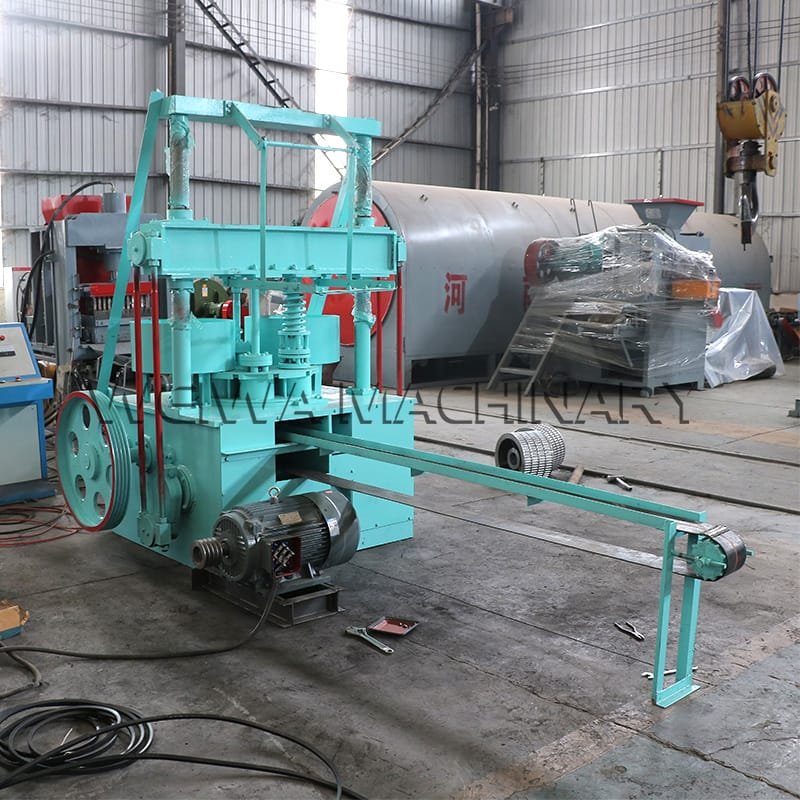
When our Ethiopian client, Mr. Tesfaye, first reached out to Weiwa Machinery last year, he had one clear goal: find a reliable honeycomb briquette charcoal machine that could turn agricultural waste into clean-burning fuel for Addis Ababa’s growing urban households. After months of research and communication, we agreed to manufacture his custom machine—and last month, we traveled to Ethiopia to verify its performance on-site.
For us at Weiwa Machinery, this wasn’t just a routine inspection. It was a chance to prove how our máquina de carvão briquete de favo de mel delivers on its promise of efficiency, durabilidade, and sustainability—while answering a question many entrepreneurs ask: How does this machine actually work?
O que é uma máquina de briquete de favo de mel a carvão? The Science Behind the Fuel?
Before diving into the verification process, let’s demystify what makes a máquina de carvão briquete de favo de mel so transformative for developing economies like Ethiopia’s. At its core, this equipment solves two critical problems:
- Converting low-density biomass (corn cobs, coffee husks, serragem) or coal powder into high-energy briquettes.
- Creating a uniform “honeycomb” shape that maximizes airflow during combustion—reducing smoke by 60% compared to loose charcoal.
Key Components of the Machine
Our client’s machine included four essential parts:
- Raw Material Crusher: Grinds biomass/coal into fine powder (≤5mm).
- Binder Mixer: Adds starch-based binder (10–15% concentration) to bind particles.
- Máquina perfuradora de favo de mel: The heart of the system—uses hydraulic pressure to compress powder into briquettes with 12–24 hexagonal holes (hence the “honeycomb” name).
- Drying Unit: Removes moisture from freshly pressed briquettes (critical for preventing cracking).
Why Honeycomb Shape Matters?
Unlike traditional lump charcoal, honeycomb briquettes have consistent porosity. When burned, air circulates evenly through the holes, ensuring complete combustion. For Ethiopian households relying on charcoal stoves, this means:
- Less soot buildup on cookware.
- 30% lower fuel consumption per meal.
- Fewer respiratory issues from indoor smoke.
How We Prepared the Honeycomb Briquette Charcoal Machine for Ethiopia?
Mr. Tesfaye’s order was specific: he wanted a honeycomb briquette charcoal machine in Ethiopia that could process 500kg of raw material per hour, with a briquette diameter of 100mm (standard for local stoves). To meet this, we customized three features:
- Reinforced Hydraulic System: Ethiopian power grids can fluctuate, so we added a voltage stabilizer to the punching unit.
- Adjustable Mold Plates: He requested both 12-hole and 16-hole molds to test different burning efficiencies.
- Local Language Control Panel: Swahili instructions to reduce operator training time.
Two weeks before the trip, we tested the machine in our factory using simulated Ethiopian materials—coffee husks (a major waste product in Oromia region) mixed with 12% cassava starch binder. The result? Uniform briquettes with a density of 1.2g/cm³—perfect for long-distance transport.
On-Site Verification in Ethiopia: Testing the Honeycomb Charcoal Coal Briquette Forming Machine
When we arrived at Mr. Tesfaye’s workshop in Adama (a city 100km southeast of Addis Ababa), the first thing he said was: “I need to see it work with my own hands.”Here’s how the verification unfolded:
Etapa 1: Preparação de Matéria Prima
Mr. Tesfaye sourced coffee husks from a nearby processing plant—about 800kg of dry material. Our team helped him run it through the crusher: dentro de 20 minutos, the husks were reduced to a fine, crumbly powder. Próximo, the binder mixer: we added 120kg of cassava starch (dissolved in water) and mixed for 5 minutos. The result? A moist, sticky mixture that clung to the mixer blades—exactly what the honeycomb charcoal coal briquette forming machine needs.
Etapa 2: Briquette Formation with the Honeycomb Punching Machine
The moment of truth: activating the máquina de perfuração de favo de mel. As the hydraulic press engaged, the mixture was forced through the mold plate. Within seconds, 100mm-diameter briquettes popped out—each with 16 neat hexagonal holes, no cracks, and a smooth surface. Mr. Tesfaye picked one up: “It’s heavier than I expected. That means more heat.”
We ran the machine non-stop for 4 horas, producing 2,000 Briquetes. The consistency never wavered—even when the power dipped briefly (thanks to our stabilizer).
Etapa 3: Quality Checks—Density, Moisture, and Combustion
To prove the machine’s worth, we tested three key metrics:
- Density: Using a digital scale, we found each briquette weighed 350g—well above the industry standard of 300g. Higher density = longer burn time.
- Teor de umidade: A moisture meter showed 8%—ideal for storage (briquettes with >12% moisture risk mold).
- Combustion Test: We lit a briquette in a traditional Ethiopian menkeshkeshstove. Dentro de 5 minutos, it produced a steady blue flame (no black smoke). Depois 45 minutos, only ash remained—no unburned chunks.
Mr. Tesfaye’s workers cheered. One of them, a 22-year-old named Dawit, said: “This is better than the wood charcoal we used to buy. It doesn’t make my eyes sting.”
Sample Showcase: Real Results from the Honeycomb Briquette Charcoal Machine
The best way to understand a machine’s value is to see its output. Below are photos and data from Mr. Tesfaye’s first production run—shared with his permission:
| Metric | Resultado | Industry Standard |
|---|---|---|
| Briquette Diameter | 100mm | 90–110mm |
| Holes per Briquette | 16 | 12–24 |
| Density | 1.2g/cm³ | ≥1.0g/cm³ |
| Tempo de gravação (per briquette) | 50 minutos | 40–60 minutes |
| Conteúdo de cinzas | 8% | ≤10% |

What’s more, o máquina de carvão briquete de favo de mel uses 80% less energy than traditional coal presses. For Mr. Tesfaye, who pays $0.15 per kWh, this translates to $120/month in savings.
Why This Verification Matters for Ethiopian Entrepreneurs?
Ethiopia is at a crossroads: urbanization is rising (Addis Ababa’s population grew 35% since 2010), but 70% of households still rely on solid fuels. UM honeycomb briquette charcoal machine in Ethiopia isn’t just a piece of equipment—it’s a tool for:
- Waste Valorization: Turning coffee husks, Bagasse de cana -de -açúcar, and maize stalks into profit.
- Energy Security: Reducing dependence on imported charcoal (which costs $300/ton).
- Health Improvement: Cutting indoor air pollution, which causes 12,000 deaths annually in Ethiopia.
Mr. Tesfaye plans to expand his operation to three cities by 2027. With our machine, he can produce 15 tons of briquettes monthly—enough to supply 5,000 famílias.
Sobre Máquinas de Weiwa
Em Weiwa Machinery, we’ve spent 12 years designing máquinas para fazer briquetes de carvão and máquinas de perfuração de favo de mel for clients in Africa, Sudeste Asiático, and Latin America. Our mission? To make clean fuel accessible to everyone—without compromising on quality.
Aqui está o porquê 500+ clients choose us:
- Personalização: We adapt every machine to local materials, poder, and market needs.
- Suporte pós-venda: 24/7 technical assistance + free spare parts for the first year.
- Proven Track Record: Our machines have helped farmers in Kenya turn coconut shells into fuel, and small businesses in Nigeria reduce charcoal costs by 40%.
When Mr. Tesfaye asked us to verify his machine, we didn’t just check boxes—we built trust. Because for us, success isn’t just selling equipment. It’s watching our clients grow.
Final Thoughts: The Future of Honeycomb Briquettes in Ethiopia
As we packed up our tools to leave Adama, Mr. Tesfaye gave us a tour of his new storage facility. Rows of honeycomb briquettes glinted in the sun—ready to be sold at $0.20 per piece (cheaper than wood charcoal). He said: “This machine will change my life. And maybe my community’s too.”
That’s the power of a well-made máquina de carvão briquete de favo de mel. It’s not just about pressing powder into shapes—it’s about creating opportunity.
If you’re an entrepreneur looking to enter Ethiopia’s fuel market, or a farmer tired of wasting crop waste, we’re here to help. Contact Weiwa Machinery today—let’s build a cleaner, more profitable future together.
Ready to start your honeycomb briquette journey?
Visit our website to learn more about our máquinas de carvão briquete de favo de mel—or reach out for a free consultation. We’ll even send you a sample briquette made from your local materials.


 WeChat

 +8615937143060
