


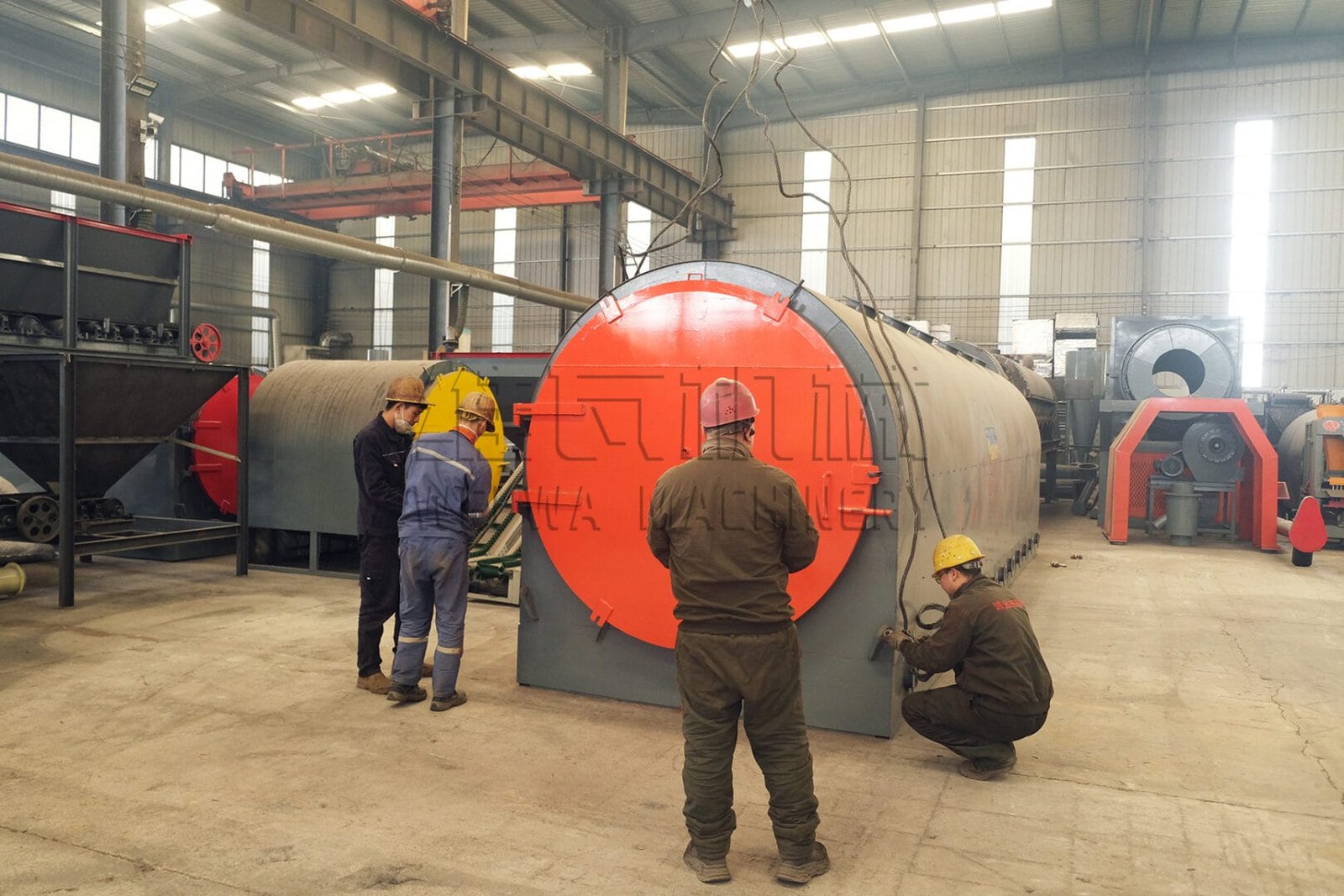
Máquinas de Weiwa Forno de carbonização horizontal Shipped to UK for Charcoal Making
No início deste trimestre, Weiwa Machinery completed factory acceptance testing and loaded a fully customized horizontal carbonization furnace onto a container bound for the United Kingdom. The equipment was ordered by a UK-based biomass recycling enterprise that specializes in converting locally sourced hardwood offcuts, bambu, and coconut shells into premium lump charcoal and biochar for barbecue retail, artisan forging, and horticultural applications. This shipment marks another milestone in our long-term commitment to supporting European sustainable fuel producers with reliable charcoal making machine solutions engineered for high yield, baixas emissões, e facilidade de operação.
Shipment Preparation and Factory Inspection Before Dispatch to UK
Before the horizontal carbonization furnace in UK left our workshop in Gongyi, China, our quality control engineers performed a full-system checkout. The main carbonization chamber—a horizontal barrel-style retort mounted on heavy-duty rails with a removable loading cart—was pressure-tested for seal integrity. The indirect heating system, which allows the furnace to be fired by recovered pyrolysis gas, natural gas, or diesel during startup, was calibrated to ensure stable temperature ramping up to 600 ° c. The gas purification unit, responsible for separating tar and condensates from the off-gas and returning cleaned combustible gas to the burner, was run through a simulated cycle to verify condensation drainage and fan operation.
Each major subassembly—chamber body, insulation layer, sealed furnace door with high-temperature alloy locks, smoke extraction duct, gas recycling pipe, and control cabinet—was photographed and logged. Only after passing a 48-hour dry-run test was the machine approved for export packing. The chamber body was wrapped in anti-scratch polyethylene foam, then weatherproof tarpaulin, and finally secured on a steel skid inside a 20-foot high-cube container using ratchet straps and wooden chocks. Ancillary components such as the tar trap, exhaust fan, thermocouple sensors, and spare seals were packed in reinforced plywood crates with desiccant bags to protect against transoceanic humidity.
The UK client requested CE-marked electrical components and a control panel with English labeling, which we supplied as part of our standard export configuration for European orders. Our logistics team coordinated customs documentation including commercial invoice, packing list, certificate of origin, and bill of lading to ensure smooth clearance at the destination port—Felixstowe or Southampton depending on the final delivery address in England.
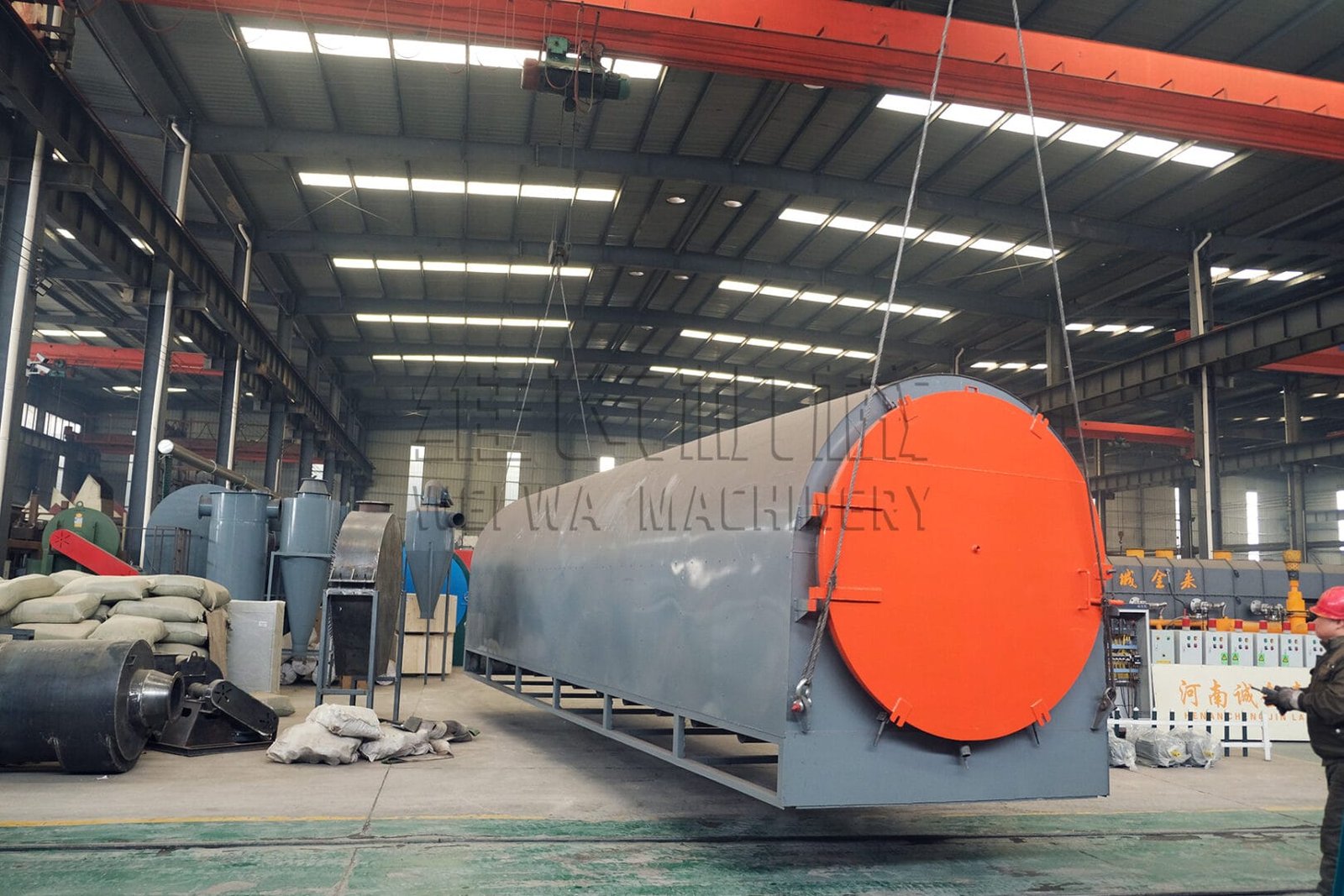
Why the UK Market Needs Modern Charcoal Making Machine Solutions?
The United Kingdom has seen a measurable rise in demand for locally produced, environmentally responsible charcoal over the past decade. Traditional charcoal kiln methods such as ring kilns, earth clamps, or imported charcoal from tropical deforestation have come under scrutiny from environmental regulators and eco-conscious consumers alike. British barbecue enthusiasts, chefs, and landscapers increasingly prefer lump charcoal made from domestic waste wood or sustainably harvested coppice because it burns hotter, produces less smoke, and leaves minimal ash.
No entanto, small- to medium-scale UK producers face two recurring problems with outdated technology: inconsistent charcoal quality due to poor temperature control, and excessive smoke emissions that conflict with local air quality bylaws. A professionally engineered charcoal maker in the form of a horizontal carbonization furnace resolves both issues. By carbonizing biomass in a sealed, oxygen-limited chamber with indirect external heating and programmable temperature monitoring, the producer gains repeatable control over the pyrolysis process. The built-in gas recovery system further ensures that volatile organic compounds are not vented raw but are instead combusted as supplementary fuel, drastically reducing visible smoke and particulate output.
For UK buyers importing a Forno de carbonização horizontal from Weiwa Machinery, the typical use cases include processing mixed hardwood offcuts from joinery workshops, bamboo imported for specialty charcoal, coconut shells arriving via UK ports from Southeast Asia, and even densified sawdust briquettes produced on-site with a briquette press. All of these feedstocks can be carbonized in the same furnace with only minor adjustments to pre-drying time and soak duration.
How a Horizontal Carbonization Furnace Works in Principle?
UM Forno de carbonização horizontal operates on the principle of anaerobic pyrolysis. Raw biomass is loaded into the horizontally oriented retort chamber, which is then sealed to restrict ambient oxygen ingress. An external heat source raises the chamber temperature gradually. Between 100 °C e 200 ° c, residual moisture in the feedstock evaporates and exits through the vapor outlet. From approximately 250 ° C a 450 ° c, thermal decomposition—pyrolysis—begins: hemicellulose, cellulose, and partially lignin break down, releasing volatile gases such as carbon monoxide, metano, hidrogênio, and tar-laden vapors.
In a well-designed Máquina de fabricação de carvão, these combustible volatiles are diverted through a condensation and purification system. Tar and wood vinegar (pyroligneous acid) are separated and collected in designated tanks; the remaining cleaned gas is routed back to the combustion chamber beneath the retort and burned to sustain the required carbonization temperature. This closed-loop energy recovery means that once the process is underway, external fuel consumption drops substantially—often by 30 para 50 percent depending on feedstock moisture and insulation quality.
When the internal temperature stabilizes in the 480 ° C a 600 °C range and the evolution of volatiles diminishes, the soak phase begins. The material is held at peak temperature for a preset period—commonly one to two hours for hardwood logs, slightly less for coconut shells—to complete the conversion to fixed carbon. Afterward, the furnace is allowed to cool naturally or with assisted air cooling until the internal temperature falls below 50 ° c, at which point the sealed door may be opened and the charcoal removed via the loading cart.
Temperature Stages in the Carbonization Process
The dehydration stage from room temperature up to 200 °C drives off free water. Rushing this phase causes surface cracking in dense materials like coconut shell, so a slow ramp is advised. The pyrolysis stage from 250 ° C a 450 °C is where most volatiles are expelled; maintaining a low-oxygen environment is critical to prevent partial combustion which would consume the charcoal rather than forming it. The final carbonization stage above 450 °C completes the aromatic ring restructuring of the char, increasing fixed carbon content and lowering volatile matter to produce a high-calorific-value product suitable for grilling, metallurgical use, or biochar soil amendment.
Suitability of Different Raw Materials for UK Charcoal Producers
Hardwood Logs and Offcuts
Oak, faia, cinzas, and birch are commonly available as workshop offcuts or sustainably coppiced roundwood in the UK. When air-dried to below 20 percent moisture content and cut to fit the furnace cart—typically lengths of 60 para 100 cm depending on chamber diameter—these hardwoods yield dense, long-burning lump charcoal with excellent aroma. O Forno de carbonização horizontal distributes heat evenly along the barrel length, avoiding the cold spots that plague traditional charcoal kiln mounds and giving a more uniform charring rate from front to back.
Bambu
Bamboo carbonizes faster than dense hardwood due to its lower lignin content and hollow structure. It requires close attention to the pre-drying phase because trapped internal moisture can cause popping or uneven carbonization. The resulting bamboo charcoal has a fine porous structure and is sometimes processed further into activated carbon or sold as specialty BBQ charcoal in niche UK markets.
Conchas de coco
Although coconut shells are not native to the UK, they are regularly imported as a byproduct of the coconut processing industry and are valued for producing extremely hard, high-density charcoal with low ash. The indirect heating and accurate thermostatic control of a Weiwa charcoal maker prevent over-firing, which could otherwise embrittle the shells. A typical coconut shell carbonization cycle in our horizontal furnace runs at 500–580 °C with a two-hour soak.
Sawdust Briquettes
Many UK biomass entrepreneurs first produce sawdust briquettes using a screw extruder or punch-type briquette press, then carbonize those uniform blocks in the horizontal furnace. This two-stage approach maximizes bulk density per batch and yields consistently shaped charcoal pieces that pack and ship efficiently. The horizontal design accommodates palletized or cart-loaded briquette stacks without manual shoveling.
Environmental and Economic Advantages Over Traditional Charcoal Kiln
Traditional earth charcoal kiln or metal pit kiln methods typically achieve charcoal yields of 20 para 25 percent by weight on dry wood, with significant unburned hydrocarbon emissions. Em contraste, a properly operated Forno de carbonização horizontal from Weiwa Machinery routinely delivers yields of 28 para 33 percent on similar feedstock thanks to better heat distribution and reduced partial oxidation losses. The gas recycling system not only cuts fuel cost but also brings exhaust opacity well within most European environmental thresholds, an important consideration for UK operators seeking permits under local authority clean air regulations.
From an economic standpoint, the reduced labor requirement—loading and unloading via cart rather than manual pitching—shortens turnaround time between batches. The PLC-based temperature controller (optional on export models) logs each run, allowing the producer to fine-tune ramp rates for different feedstocks and document process parameters for quality assurance. Over a production season, these efficiencies compound into a noticeably lower cost per kilogram of finished charcoal.
Installation Commissioning and After-Sales Support in the UK
Upon arrival, the UK customer can choose between self-installation guided by our illustrated manual and video tutorials, or request remote commissioning assistance via video call with a Weiwa senior engineer. Foundation requirements are modest: a level concrete pad capable of supporting the loaded furnace weight, plus access for a forklift or gantry to position the chamber. Utility connections include a single-phase or three-phase power supply for the control panel, exhaust fan, and optional smoke treatment blower, as well as provisions for the chosen starter fuel (LPG line, diesel tank, or natural gas connection).
We provide English-language operation manuals, spare parts lists, and recommended preventive maintenance schedules. Commonly consumed spares such as door seals, thermocouple probes, and gaskets can be stocked locally or ordered directly from our warehouse with express international shipping. Our technical team remains available via email and WhatsApp to answer process questions—whether the operator is dialing in the first coconut shell run or troubleshooting a temperature sensor reading.
Sobre Máquinas de Weiwa
Máquinas de Weiwa (WEI WA MACHINERY) is a specialized manufacturer of biomass processing equipment with decades of experience in designing and producing charcoal making machine, prensas de briquetagem, trituradores, secadores, and horizontal carbonization furnace systems. Our machines are exported to more than 60 countries across Europe, Ásia, África, e as Américas. We offer turnkey charcoal production line design, customized equipment sizing based on your raw material type and target capacity, factory layout consultation, installation guidance, and responsive after-sales service. Having served more than 2 milhões de clientes em todo o mundo, we pride ourselves on durable engineering, transparent communication, and practical solutions that help our clients turn agricultural and wood waste into profitable, eco-friendly charcoal products.
Contact Weiwa Machinery for a Quote:
MOB / Whatsapp: +86 138 3809 3177
E-mail: info@cjlmachinegroup.com
Product Reference: Horizontal Carbonization Furnace – Weiwa Machinery


 WeChat

 +8615937143060
