


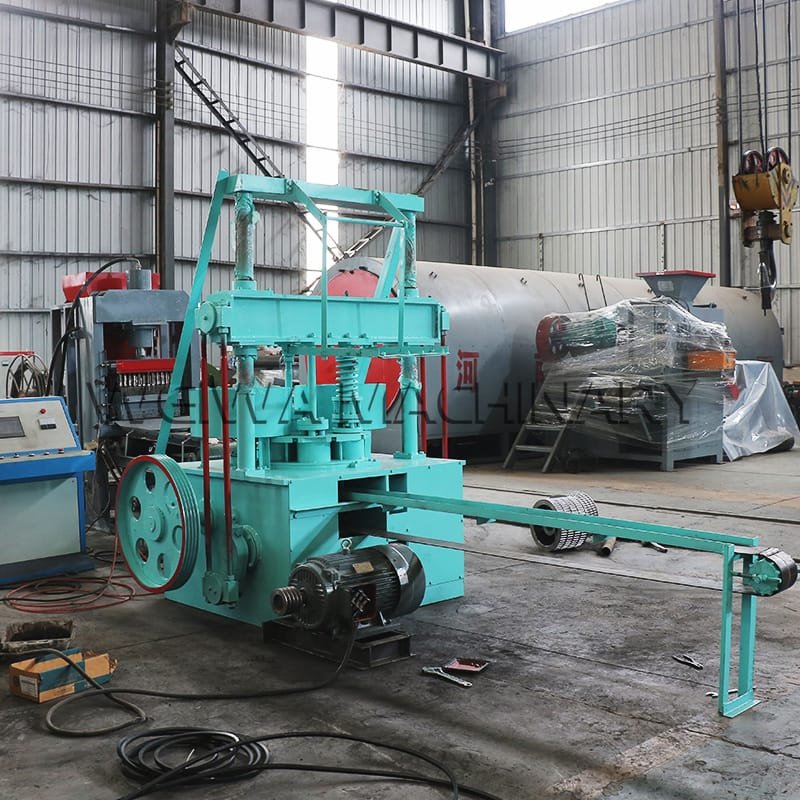
Em Weiwa Machinery, we take great pride in not only manufacturing robust industrial equipment but also in standing shoulder to shoulder with our global partners during real-world commissioning and performance verification. Recentemente, our technical team completed a comprehensive on-site trial run of our honeycomb briquette charcoal machine for a valued client located in Uganda. This project was more than a standard factory acceptance test. It was a deep dive into how our honeycomb charcoal coal briquette forming machine adapts to East African raw materials, climate conditions, and local fuel consumption habits.
Compreendendo o Honeycomb Briquette Charcoal Machine in Industrial Applications
The honeycomb briquette charcoal machine is a specialized piece of equipment designed to compress loose powdered materials such as charcoal dust, pó de carvão, coke fines, and certain biomass residues into uniform, high-density blocks with a characteristic honeycomb structure. Unlike simple extrusion machines, our honeycomb punching machine employs a rotary table mold system combined with a high-pressure punch head. This mechanical action ensures that each briquette achieves consistent structural integrity, which is critical for transportation, storage, and end-use combustion performance.
In Uganda and across many regions of Africa, the demand for clean, acessível, and uniformly shaped fuel is rising rapidly. Traditional firewood and irregular lump charcoal often suffer from uneven burning, excessive smoke, and low energy efficiency. The honeycomb briquette charcoal machine in Uganda offers a transformative solution by converting locally available waste powder into standardized fuel with improved airflow channels. These channels, formed by the punched holes in the briquette, allow oxygen to circulate more effectively during ignition and steady combustion, resulting in faster lighting, reduced smoke emissions, and significantly longer burning times.
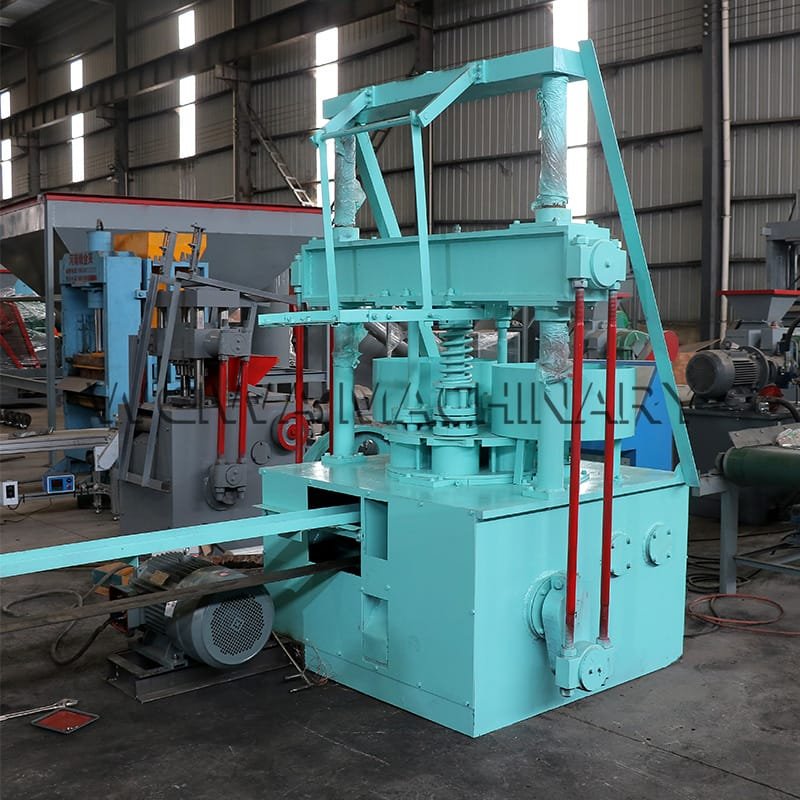
Core Working Principle of the Honeycomb Charcoal Coal Briquette Forming Machine
To appreciate the results of our Uganda trial, it is important to understand how the honeycomb charcoal coal briquette forming machine operates. The process begins with prepared raw material being fed into the hopper. An agitator ensures uniform distribution of the powder before it enters the mold barrels mounted on a rotating indexing table. As the table advances step by step, each filled mold aligns precisely beneath the punch head. The punch descends with calibrated pressure, compacting the loose material into a solid briquette that mirrors the contour and hole pattern of the mold. After forming, the finished briquette is ejected onto a discharge conveyor for cooling and sampling. This cyclic process repeats at adjustable strokes per minute, enabling our coal briquettes making machine to deliver stable output tailored to different production scales.
The punching mechanism is what differentiates a honeycomb punching machine from screw-type extruders. High-pressure stamping minimizes internal voids, increases density, and enhances the briquette’s resistance to cracking during drying and handling. For Ugandan entrepreneurs and fuel producers, this means less product loss and higher market acceptance of the final fuel blocks.
Raw Material Adaptability and Preparation Standards
During the Uganda trial run, our client primarily used a blend of charcoal powder derived from hardwood and locally sourced coal dust. One of the key advantages of the honeycomb briquette charcoal machine is its flexibility in raw material intake. Suitable inputs include coal powder, pó de carvão, Pó de carvão, cinzas de carvão, gangue de carvão, intermediários, carvão marrom, furnace slag, Coca -cola em pó, Carcoal de casca de arroz, and other finely pulverized carbonaceous substances. No entanto, to achieve optimal briquette quality, particle size and moisture content must be controlled. Ideally, the majority of particles should remain below 2 millimeters, with a maximum up to 3 para 5 millimeters. Moisture content is best maintained between 8 e 15 por cento. Overly wet material may cause weak bonding or post-drying cracks, while excessively dry powder might require a minimal amount of natural binder or light misting to enhance cohesion within the honeycomb charcoal coal briquette forming machine.
On-Site Trial Run of the Honeycomb Briquette Charcoal Machine in Uganda
The journey toward the successful Uganda trial began several weeks prior, with detailed discussions between the Weiwa Machinery sales and engineering teams and the client’s production staff. Through WhatsApp and email consultations, we analyzed the client’s raw material availability, target briquette size, expected daily capacity, and local market preferences. Based on this data, we recommended a suitable model of our honeycomb briquette charcoal machine equipped with customizable mold options. Once the equipment arrived in Uganda—packed with waterproof protection for full container load components and wooden cases for smaller parts—our senior engineer traveled on-site to supervise installation and commissioning.
Site preparation is a foundational step that many overlook. The honeycomb punching machine operates with periodic high-impact stamping forces, so the installation foundation must be level, rigid, and capable of absorbing vibration. Our engineer verified the concrete foundation against technical drawings, adjusted anchor positions, and ensured the main frame was aligned both vertically and horizontally within millimeter-level tolerance. This precision setup safeguards the gearbox, rolamentos, and punch assembly of the coal briquettes making machine against premature wear.
Após a montagem mecânica, electrical connections, and lubrication of moving parts including gears, slide bars, e transportadores, we proceeded to the no-load test. This initial run confirmed smooth rotation of the indexing table, accurate punch alignment, and stable conveyor operation. Only after the no-load test was satisfactory did we introduce prepared raw material for the formal load-bearing trial run.
Live Testing With Ugandan Raw Materials
During the loaded trial, the hopper was filled with a pre-mixed batch of charcoal powder and coal fines at approximately 12 percent moisture content, blended with a small proportion of organic binder to demonstrate formulation flexibility. The honeycomb briquette charcoal machine in Uganda operated continuously for several hours, producing round honeycomb briquettes with 16 evenly spaced holes. The client observed the feeding, molding, and ejection cycles at close range, noting the consistency of each piece. Our engineer adjusted the punch stroke depth and mold clearance slightly to optimize density according to the specific compressibility of the local powder mixture.
Throughout the trial, the honeycomb charcoal coal briquette forming machine maintained steady cycling speed, low vibration, and manageable noise levels. The client specifically appreciated the ease of mold replacement, which allows future production of different diameters or shapes without major downtime. Samples were collected at intervals of 30 minutes to monitor dimensional stability, surface finish, and ejection behavior. No visible cracks, edge chipping, or incomplete forming were detected, confirming that the coal briquettes making machine was well matched to the material characteristics.
Operational Observations and Technical Adjustments
One of the valuable outcomes of any on-site trial is the opportunity to fine-tune machine settings to local conditions. In Uganda’s variable humidity, material flow in the hopper can sometimes become uneven if the powder is too fine. Our engineer installed a minor agitation speed adjustment and recommended a light pre-screening step to remove oversized particles above 5 millimeters. Adicionalmente, we demonstrated how adjusting the binder ratio within 3 para 5 percent can compensate for seasonal moisture fluctuations. These practical insights, shared directly during the honeycomb punching machine trial, empower clients to maintain high output quality long after commissioning.
Finished Briquette Sample Showcase and Performance Analysis
Following the successful trial run, we conducted a structured sample showcase session with the client and several local distributors invited to the site. The samples produced by our honeycomb briquette charcoal machine exhibited several noteworthy characteristics that align with both household cooking needs and small-scale commercial heating demands in Uganda.
The dominant shape tested was round with a diameter of 140 millimeters and a height of approximately 90 millimeters, featuring 16 central holes each about 15 millimeters in diameter. This configuration is widely accepted in East African markets because it balances combustion duration with manageable ignition time. The surface of the briquettes was smooth, with clearly defined edges and uniform hole walls. Density was visibly high, and when lightly tapped, the samples emitted a solid, non-hollow sound indicative of thorough compaction inside the honeycomb charcoal coal briquette forming machine.
Combustion-Related Physical Properties
Although full burn-time testing was conducted post-trial over several days, initial ignition trials showed that the honeycomb briquettes lit within a reasonable timeframe when exposed to kindling, thanks to the airflow-friendly hole design. The holes reduce the effective ignition barrier by increasing the surface-area-to-volume ratio at the start of combustion. As the outer layers engage, the internal channels sustain oxygen supply, promoting even burnout from outside inward. This structure helps minimize black-core remnants that are common with solid unperforated blocks. The client noted that such performance aligns with the expectations placed on a reliable coal briquettes making machine in regions where fuel efficiency directly impacts daily operating costs for street food vendors, bakeries, and residential users.
Another advantage observed in the samples is dimensional consistency. Variations in diameter and height across a batch of more than 500 consecutive pieces remained within very tight tolerances, which is essential for stacking, packaging, and automated feeding in downstream applications. The honeycomb punching machine achieves this through precise mold machining and synchronized rotary table indexing, both of which we emphasized during the technical briefing.
Customization Potential for Diverse Market Needs
Beyond the standard round honeycomb shape, we presented the client with mold samples capable of producing square, retangular, hexagonal, and polygonal briquettes. By simply swapping the mold assembly on the honeycomb briquette charcoal machine, the same base unit can serve multiple product lines. Por exemplo, smaller diameter cylinders around 80 para 100 millimeters are popular for household stoves, while larger 160 para 220 millimeter blocks cater to industrial heating or institutional cooking. The honeycomb charcoal coal briquette forming machine also supports varied hole counts—from 12 para 19 or more—depending on airflow and burn-rate targets. During the showcase, the client expressed strong interest in offering both standard and customized sizes to differentiate their brand in the Ugandan market.
Why the Honeycomb Punching Machine Matters for Uganda Energy Transition?
Uganda, like many East African nations, faces a dual challenge of meeting growing energy demand while addressing environmental concerns linked to deforestation and inefficient fuel use. The honeycomb briquette charcoal machine in Uganda represents more than a piece of machinery. It is an enabler of circular economy practices by turning charcoal dust, coal fines, and agricultural residue powders into value-added fuel products. Instead of discarding or underutilizing these materials, local producers can process them into dense, clean-burning honeycomb briquettes that compete favorably with imported fuels or irregular lump charcoal.
From a business perspective, investing in a coal briquettes making machine allows entrepreneurs to control product规格, stabilize supply, and respond to seasonal price fluctuations in raw materials. The ability to adjust briquette size, forma, and density using a single honeycomb punching machine reduces capital expenditure compared to maintaining multiple single-purpose presses. Além disso, the high density and low smoke output of the finished briquettes align with gradual shifts in consumer preference toward healthier, more efficient cooking fuels in urban and peri-urban areas of Uganda.
Sustainability and Waste Utilization
An often-overlooked benefit of the honeycomb briquette charcoal machine is its role in waste valorization. Coal ash, furnace slag, intermediários, and rice husk charcoal are frequently treated as byproducts with little commercial value. When formulated correctly and processed through a honeycomb charcoal coal briquette forming machine, these materials can constitute a significant portion of the feedstock without compromising combustion performance. This not only lowers input costs but also reduces the environmental footprint of both the charcoal production chain and small-scale coal processing activities. Our Uganda client recognized this potential and plans to gradually incorporate more alternative powders as they refine their binder formulations with our ongoing technical support.
Key Takeaways From the Weiwa Machinery Uganda Trial Project
The on-site trial run of the honeycomb briquette charcoal machine in Uganda reaffirmed several core strengths of Weiwa Machinery equipment. Primeiro, the structural robustness of the honeycomb punching machine ensures reliable operation under continuous load, provided foundation and lubrication guidelines are followed. Second, the adaptability of the coal briquettes making machine to varying raw material profiles makes it suitable for regions where powder characteristics fluctuate seasonally. Third, the precision molding system delivers consistent, market-ready briquettes that meet both functional and aesthetic expectations of end users.
Equally important was the knowledge transfer aspect of the project. Throughout the trial and sample showcase, our engineer explained maintenance routines such as weekly lubrication of internal gears and bearings, periodic inspection of punch heads and slide bars, and belt tension adjustment on the discharge conveyor. These practices extend equipment lifespan and preserve product quality over the long term. The client also received a customized operational manual and a binder formulation reference tailored to East African raw materials, further enhancing the value delivered beyond the hardware itself.
Future Collaboration and Market Outlook
Encouraged by the trial results and sample quality, the Ugandan client confirmed their intention to scale up production in the coming months. Discussions are already underway regarding additional mold sets, spare parts packages, and potential integration of a small crushing and mixing line upstream of the honeycomb briquette charcoal machine to further streamline operations. For Weiwa Machinery, this project stands as a testament to the importance of hands-on commissioning support and transparent performance demonstration in building lasting partnerships across borders.
As the market for honeycomb briquettes continues to mature in Uganda and neighboring regions, the role of dependable, technically sound equipment becomes ever more critical. Whether referred to as a honeycomb charcoal coal briquette forming machine, a coal briquettes making machine, or a honeycomb punching machine, the underlying value lies in transforming loose powder into uniform, high-performance fuel blocks that improve energy access, reduzir o desperdício, and create local economic opportunities. We look forward to supporting more clients across Africa and beyond with the same level of dedication showcased in this Uganda trial run and sample showcase.
Sobre Máquinas de Weiwa
Weiwa Machinery is a professional manufacturer specializing in briquette machinery, Equipamento de carbonização, and related production lines. With years of experience serving customers in over 130 países incluindo a Indonésia, Índia, Malásia, Tailândia, Vietnã, Filipinas, Paquistão, Peru, Polônia, Egito, Etiópia, Tanzania, África do Sul, México, e muitos outros, we have become a trusted partner for turnkey solutions in fuel processing and forming industries. Our product range covers honeycomb briquette charcoal machines, charcoal extruders, trituradores, secadores, fornos de carbonização, and customized molding systems. Every machine is tested before delivery, packed according to international shipping standards, and backed by comprehensive after-sales support. We welcome clients worldwide to visit our factory, discuss production requirements, and collaborate on tailored equipment designs that match their market needs.
For quotations, technical consultation, or production line design, feel free to contact us:
MOB: +8613838093177
Whatsapp: +8613838093177
E-mail: info@cjljachinegroup.com


 WeChat

 +8615937143060
