


Why Nigerian Buyers Are Asking for Honeycomb Briquettes Machine?
Nigeria has a large population, a growing informal food sector, and constant demand for cooking fuel. Many small factories still rely on loose charcoal, firewood, or imported fuel products. The problem is that loose carbon powder is messy, hard to store, low in combustion efficiency, and difficult to sell in standardized bags. A honeycomb briquettes machine changes that situation by converting low-value powder into uniform, hole-patterned fuel blocks that are easier to pack, stack, transport, and burn.
The Nigerian client who visited our factory was not looking for a toy machine. He wanted equipment that could handle coal powder, Pó de carvão, anthracite fines, Coca -cola em pó, and biomass charcoal residue. He also wanted proof that the holes would be clean, the edges would be sharp, the density would be high, and the briquette would not crumble after ejection. That is exactly what our honeycomb briquette charcoal machine in Nigeria projects is designed to deliver.
The Nigerian Fuel Context
In Lagos, Kano, Aba, Onitsha, Ibadan, and Port Harcourt, fuel businesses face different raw material conditions. One buyer may have access to coal imported through border trade. Another may collect coconut shell charcoal, sawdust charcoal, or palm kernel shell residue. A good honey comb machine should not be limited to one formula. It should accept several dry carbon powders, work with local binders, and produce a product that matches local stove sizes.
This is why the Nigerian client chose a rotary table punching model instead of a simple extruder. Extruders are good for sticks and bars. For flat, redondo, holed discs, a honeycomb punching machine gives better hole definition, better piece integrity, and more consistent combustion behavior.
What a Honeycomb Briquettes Machine Actually Does?
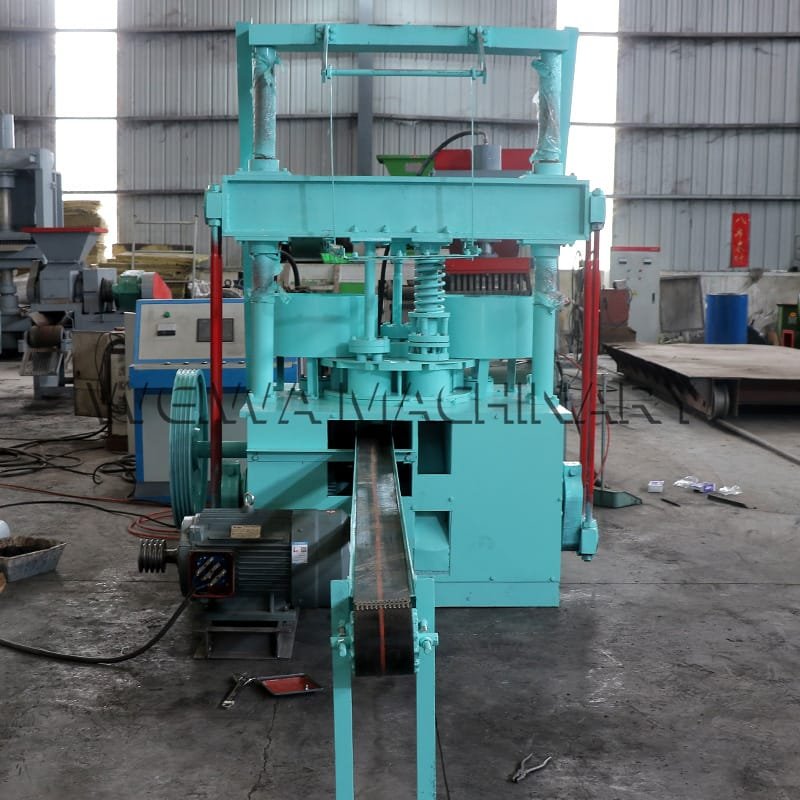
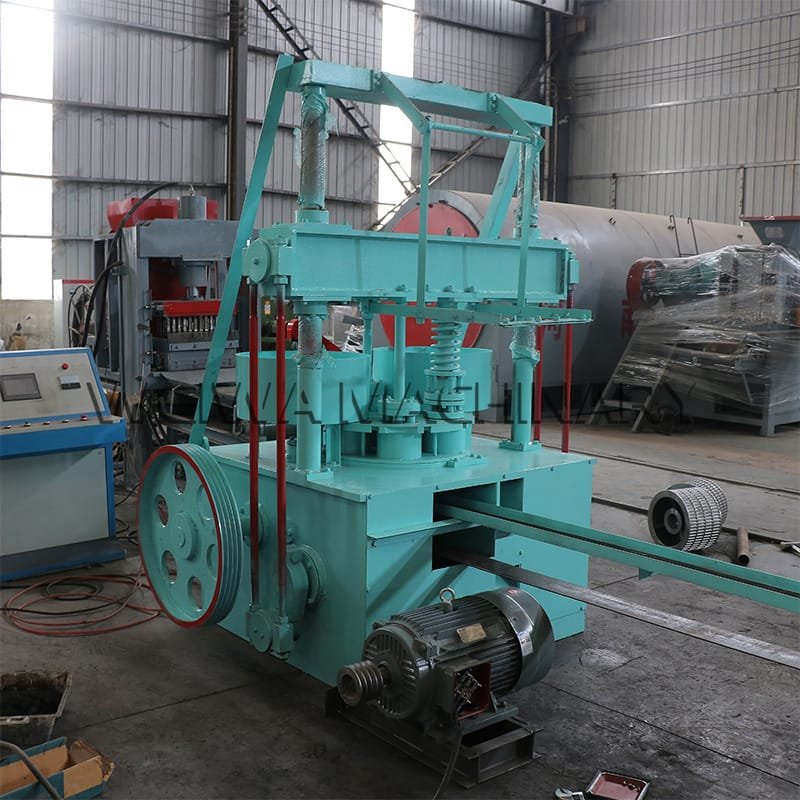
A honeycomb briquettes machine is a mechanical press that compresses fine carbon powder into solid discs with multiple through-holes. The holes are not decoration. They allow air to pass through the fuel so the briquette ignites faster, burns more completely, and releases heat in a steadier way than unstructured lump charcoal.
The working principle is simple to explain but difficult to execute well. Pre-mixed powder drops from the hopper into a mold barrel. A rotating table moves the mold under the punch head. The punch descends with high pressure, compresses the material, forms the central and side holes, and pushes the finished piece out onto the discharge area. The table continues rotating, and the next mold receives material. This continuous motion is what gives the machine linear output and stable hourly capacity.
Rotary Table and Punch Head
Our honeycomb briquette mold making machine uses a precision rotary table. The mold determines the final shape, diameter, height, number of holes, and hole diameter. The punch head determines compression force, surface hardness, and ejection quality. If the mold is accurate and the punch is aligned, the briquette comes out with clean holes and smooth edges.
For the Nigerian trial, we installed a mold configuration suitable for household and small commercial stoves. The client could see that one machine can serve multiple markets just by changing molds. Round shapes, square shapes, hexagonal shapes, rectangular shapes, and custom hole patterns are all possible.
Raw Materials the Machine Accepts
The honey comb machine does not require pure charcoal. It works with any dry carbonaceous powder that has been crushed and screened properly. Common materials include coal powder, Pó de carvão, anthracite coal dust, coke fines, furnace slag, cinzas de carvão, carvão marrom, intermediários, Carcoal de casca de arroz, Carcoal de concha de coco, and sawdust charcoal.
The most important preparation steps are particle size and moisture. Powder that is too coarse creates voids inside the briquette. Powder that is too dry resists binding. Powder that is too wet sticks to the mold and reduces production speed. During the Nigeria trial, we controlled moisture in the practical range and screened the material below the recommended size before feeding the hopper.
Factory Trial Setup for the Nigerian Client
Before the client arrived, our engineering team prepared the machine, the mold, the binder mixture, the crusher, the mixer, and the screening unit. We did not want to show only the press. We wanted to show the full process because Nigerian buyers usually need a production routine, not just a single machine.
The trial began with raw material conditioning. Coal dust and charcoal dust were blended according to the client’s target market. A small percentage of binder was added to improve strength. The mixture was mixed evenly, checked for moisture, and fed into the honeycomb punching machine.
First Run Observations
The first run is always the most important. If the machine stalls, smears the holes, or ejects broken pieces, the buyer loses confidence. In this trial, the first batch came out clean. The holes were uniform. The edges were defined. The surface was smooth. The briquette had visible density and did not shed corners when handled.
Our technician explained each stage while the Nigerian client watched the discharge conveyor. He could see that the machine did not need constant manual correction. The rotary table indexed smoothly. The punch stroke was stable. The mold released the product without sticking. For an export buyer, that visual evidence is stronger than any specification sheet.
Sample Inspection
After the run, we placed samples on the inspection table. The Nigerian client checked diameter, height, hole count, hole diameter, surface finish, edge sharpness, weight, and hardness. The briquettes had consistent dimensions. The hole walls were straight. There were no cracks, no soft spots, and no powder leakage.
We then performed a simple combustion check. The sample ignited readily, burned with a steady flame, produced low smoke compared with loose powder blocks, and maintained heat for a long period. The client specifically liked that the briquette did not collapse during handling and did not break while being stacked in a carton.
Honeycomb Briquette Mold Making Machine and Customization
One of the strongest selling points for Nigeria is mold flexibility. A honeycomb briquette mold making machine is not just a press. It is a platform. The mold defines the product, and the product defines the market.
For household cooking, Nigerian buyers often prefer medium-diameter discs with multiple holes. For small restaurants and roadside food vendors, heavier discs with longer burn time may be better. For industrial heating or boiler use, larger diameters and different hole patterns may be required.
Shape Options
Weiwa Machinery can produce round, cilíndrico, quadrado, retangular, polygonal, hexagonal, and sector-shaped briquettes. The shape is not the limitation. The mold accuracy is the key. Our workshop manufactures molds with tight tolerances so that every piece from the same machine remains consistent across a full production shift.
For the Nigerian client, we discussed local stove compatibility. If the stove opening is fixed, the briquette diameter must match. If the vendor sells by piece, the weight must be predictable. If the distributor packs by carton, the height and stack pattern must be planned. These are commercial details, not just mechanical details.
Hole Count and Burn Behavior
The number of holes changes the burn profile. More holes usually mean faster ignition and better airflow. Fewer holes usually mean slower combustion and longer burning time. Durante o julgamento, we explained how hole diameter, hole distribution, briquette thickness, and raw material formula work together.
The Nigerian client realized that honeycomb briquette production is not only a machine purchase. It is a product-development decision. With the same honey comb machine, he can launch several SKUs for different customer segments.
Honeycomb Punching Machine vs Simple Extruder
Many first-time buyers ask why they should choose a honeycomb punching machine instead of a cheaper extruder. The answer depends on the final product.
An extruder pushes material through a die and cuts it. It can make sticks, bars, and sausages. But for flat discs with through-holes, punching is better. The punch forms the holes from the top and bottom, compacts the body, and gives the briquette higher single-piece density.
For the Nigerian market, piece integrity matters. Vendors buy by the bag. If the briquette breaks, the customer complains. If the holes are blocked, the fire starts slowly. If the edges are rough, the product looks low quality. The honeycomb punching machine solves these problems because hole formation and compression happen in the same stroke.
Mechanical Stability
Our Nigerian client watched the machine run for an extended period. Belt drive, gear transmission, punch guidance, mold alignment, and discharge timing all remained stable. There was no abnormal vibration. There was no frequent jamming. The operator only needed to maintain steady feeding and check moisture.
For African buyers, low maintenance is not a luxury. It is a business requirement. Spare parts should be simple. Molds should be changeable. Bearings, punch pins, and wear plates should be accessible. Weiwa Machinery designs the honeycomb briquette charcoal machine in Nigeria export version with these conditions in mind.
Sample Display from the Weiwa Factory Trial
The sample display is the heart of this blog. The Nigerian client did not just hear about specifications. He held the product.
The first sample was a classic round honeycomb briquette. Diameter was suitable for household stoves. Hole pattern was symmetrical. Surface was smooth. Weight felt high because the compaction was strong. When tapped, the briquette gave a solid sound rather than a dull powdery response.
The second sample used a coal-heavy formula. It burned longer and gave strong residual heat. The third sample used a charcoal-heavy formula. It ignited faster and produced less ash. The fourth sample used a blended agro-charcoal recipe, showing that the machine can support local biomass utilization.
Density and Handling
Density determines transport cost and burn time. A low-density briquette breaks easily and burns too fast. A high-density briquette survives stacking, reduces freight loss, and gives the end user better value. The trial samples showed high compressive feel, bordas limpas, and no powder fall-off.
We also tested stacking. Several pieces were placed on top of each other. None cracked under normal handling weight. For Nigerian distributors who move products by motorcycle, mini bus, or open truck, this matters more than a small difference in machine price.
Combustion Result
The combustion demonstration was simple but convincing. A sample was placed on a standard stove grid. It caught fire steadily, maintained flame, and burned with minimal sparking. Compared with loose charcoal powder, the honeycomb sample gave more ordered combustion. The holes created channels for oxygen, so the fire did not suffocate under its own mass.
The Nigerian client noted that end users in his market care about three things: easy lighting, longo tempo de queima, and low smoke. The honeycomb briquettes machine addresses all three when the formula and mold are configured correctly.
Production Line Behind the Honey Comb Machine
A single press is rarely enough for a serious fuel business. The Nigerian client also reviewed the supporting line. Crushing reduces oversized material. Mixing blends powder, binder, and moisture. Screening removes coarse particles. Conveying feeds the hopper steadily. The honeycomb briquettes machine then forms the final product. Drying and packaging complete the workflow.
We explained that the line can be small or large. A starter project may use a crusher, misturador, screen, and one punching machine. A commercial project may add multiple presses, automatic feeders, belt conveyors, curing racks, weighing machines, and carton sealers.
Capacity Planning for Nigeria
Capacity should be planned around market demand, not machine maximum. If a buyer sells 500 households per week, the line can be modest. If a buyer supplies restaurants, bakeries, pepper roasters, suya vendors, and wholesalers, the line needs higher hourly output and better material storage.
Our team helps Nigerian clients calculate raw material consumption, labor requirement, fonte de energia, binder cost, drying space, packaging cost, and final piece price. This is where Weiwa Machinery adds value beyond the steel. We do not just sell a honey comb machine. We help the client build a profitable fuel product.
Moisture, Binder, and Formula Science
Many machine problems are actually formula problems. If the briquette cracks, the moisture may be wrong. If the briquette sticks to the mold, the binder may be excessive. If the piece breaks during ejection, the punch pressure or material size may be incorrect.
For the Nigerian trial, we used common industrial binders and local starch-based options. The goal was not to hide behind chemicals. The goal was to show that a practical recipe can be repeated daily by ordinary workers.
Moisture Window
Different materials behave differently, but the practical moisture window for honeycomb briquette production is usually moderate. Too dry, and the powder will not bond. Too wet, and the mold becomes dirty. The Nigerian client measured moisture with a handheld meter and saw that consistent input gives consistent output.
This is an important lesson for African buyers. The machine is only as good as the feeding material. A honeycomb briquette mold making machine will perform best when the upstream process is controlled.
Binder Options
Binders can be clay, lime, amido, melaço, paper pulp, or customized agricultural binders. The choice depends on combustion requirement, ash limit, custo, and local availability. For cooking fuel, the binder should not create heavy smoke or bad odor. For industrial fuel, cost and strength may matter more than flavor or smoke level.
Weiwa Machinery does not force one binder formula on every country. For Nigeria, we prefer practical, locally available binders so the client is not dependent on expensive imports.
Export Packing and Shipping to Nigeria
After the trial, the Nigerian client asked about packing. Small units are packed in wooden cases and shipped by LCL. Large production lines are packed with waterproof materials and shipped by full container load. Important components are protected with foam, film, and internal bracing.
We also prepare customs documents, packing lists, commercial invoices, and loading photos. For Nigerian buyers, documentation is as important as the machine because port clearance can delay a project. Weiwa Machinery has exported to more than 130 países, so our export team understands how to prepare equipment for long ocean transport and humid destination conditions.
Spare Parts and After-Sales
A honeycomb punching machine has wear parts. Molds, punch pins, springs, rolamentos, belts, and electrical components may need replacement over time. We supply a standard spare parts list with the machine and can provide extra molds, punch heads, and consumables for Nigerian clients.
Our after-sales support includes installation guidance, commissioning videos, spare parts drawings, online troubleshooting, and production formula advice. For overseas buyers, remote support is often faster than waiting for an engineer to travel. For larger projects, we can also discuss on-site installation and operator training.
Why Weiwa Machinery Is a Practical Choice for Nigeria?
There are many machine suppliers in the world. The difference is not only price. The difference is whether the supplier understands the buyer’s market. Nigeria has variable power supply, dusty environments, different raw materials by region, and price-sensitive end users.
Weiwa Machinery builds honeycomb briquette charcoal machine in Nigeria oriented solutions with simple operation, strong frames, changeable molds, and practical formulas. We do not overcomplicate the machine. We make it work in real factory conditions.
Factory Acceptance Trial Builds Confidence
The factory acceptance trial is one of the most powerful tools in industrial exporting. The client sees the machine run with his own material. He measures the sample. He asks questions. He records video. He sends the video to his partners in Nigeria. By the time the container leaves China, the buyer already knows what he will receive.
This approach reduces disputes, reduces false expectations, and increases long-term trust. For Weiwa Machinery, the trial is not a sales trick. It is part of our engineering culture.
From Machine Supplier to Fuel Business Partner
Our role does not end at the factory gate. We help clients choose mold size, calculate raw material cost, design packaging, plan drying area, select binders, and improve burn quality. A honey comb machine is the center of the project, but the project itself is a fuel business.
Nigerian entrepreneurs who enter this market early can build strong local brands. Cleaner briquettes, standardized packing, steady burn time, and reliable supply create repeat customers. That is the real opportunity behind the honeycomb briquettes machine.
Common Questions Nigerian Buyers Ask
One common question is whether the machine can use only charcoal. The answer is no. It can use coal powder, Pó de carvão, coke fines, and several biomass charcoals. Another common question is whether one machine can make different products. The answer is yes, through mold change.
Buyers also ask about power supply. We can configure machines for different voltage and frequency requirements. Buyers ask about diesel backup. In some cases, a diesel engine option can be discussed for areas with unstable electricity.
Another question is about staff skill. The machine is mechanical and does not require a highly advanced operator. With one trained supervisor and a few general workers, a small line can run daily. The most important skills are material preparation, moisture checking, mold change, and basic maintenance.
How to Start a Honeycomb Briquette Project in Nigeria?
The first step is market research. Visit local markets. Check what vendors sell. Check the stove size. Check the price per piece. Check the burn time customers expect. The second step is raw material sourcing. Find coal dust, pó de carvão, or agro-waste charcoal near your city.
The third step is machine selection. Do not buy the biggest machine immediately. Start with a practical line, prove the product, and expand later. The fourth step is factory trial. Ask the supplier to run your material. Record the samples. Compare density, ignition, burn time, cinzas, and breakage.
The fifth step is packaging and branding. In Nigeria, many buyers still sell loose charcoal. A clean carton of uniform honeycomb briquettes can command better trust and better margin. The machine makes the product. Branding makes the business.
Sample Quality Checklist We Showed the Nigerian Client
We did not evaluate the sample only by appearance. We used a practical checklist. Diameter must match the mold specification. Height must be consistent. Hole count must be correct. Hole walls must be straight. Edges must be sharp but not fragile.
Weight must be stable across pieces. Surface must be smooth. Cracks must be absent. Ignition must be easy. Burn time must meet the target. Ash must be acceptable for the application. Smoke must be lower than loose powder block. Breakage after dropping from a short height must be minimal.
This checklist is now part of our standard trial report for African clients. It helps the buyer compare machines objectively instead of choosing only by price.
Business Potential of Honeycomb Briquettes in Nigeria
Nigeria’s cooking fuel market is large and fragmented. Millions of households use charcoal. Thousands of restaurants use open fire. Hundreds of small factories need cheap heating. Honeycomb briquettes can enter this market because they are cleaner, easier to store, and easier to standardize than loose charcoal.
A Nigerian entrepreneur can supply households, pepper roasters, suya spots, bakeries, small hotels, and rural shops. With good molding, the same honeycomb briquette charcoal machine in Nigeria setup can serve both domestic and semi-industrial users.
Competitive Advantage through Product Quality
Most competitors fight on price. Smart buyers fight on quality. If your briquette lights faster, burns longer, breaks less, and packs cleaner, you can win loyal distributors even with a slightly higher price.
The honeycomb punching machine gives that quality advantage because hole formation, densidade, and shape consistency are built into the production process. The buyer is not relying on hand molding. He is relying on engineered repetition.
Local Raw Materials Reduce Import Risk
Nigeria does not need to import finished fuel forever. Coal dust, charcoal waste, Resíduos agrícolas, and industrial carbon fines already exist inside the country. A honey comb machine turns that waste into a sellable product.
This creates local jobs, reduces waste, and keeps more money inside the Nigerian economy. For serious investors, that is a stronger story than a short-term trading margin.
Technical Points That Matter More Than Marketing Words
Marketing says “high quality.” Engineering asks “what pressure, what mold tolerance, what moisture range, what hole diameter, what ejection angle.” At Weiwa Machinery, we prefer engineering language because export buyers eventually face real production problems.
The punch stroke length affects compression depth. The mold hardness affects service life. The table indexing accuracy affects piece consistency. The hopper design affects feeding stability. The discharge system affects breakage. None of these can be judged from a pretty photo.
Mold Life and Wear
The mold is the most important wearing component. A good honeycomb briquette mold making machine workshop can produce molds with proper heat treatment and machining accuracy. Weiwa Machinery supplies standard and customized molds, and we advise clients to keep spare molds in stock to avoid production downtime.
For Nigerian buyers, mold stock is a smart investment. If demand rises before a new mold can be shipped from China, the business loses sales. One spare mold can protect weeks of revenue.
Punch Pin Alignment
The punch pins must align perfectly with the mold holes. If alignment drifts, holes become incomplete, edges deform, and rejection rate rises. Durante o julgamento, we showed the client how to check alignment, how to adjust the punch assembly, and how to recognize early wear.
This kind of practical training is more valuable than a long warranty document. A buyer who understands his machine will protect his investment better than a buyer who only calls the supplier after something breaks.
Environmental Angle for Honeycomb Briquettes
Honeycomb briquettes are not automatically green, but they can support cleaner fuel use. By compressing waste carbon powder and agro-charcoal residues, the machine reduces loose dust, improves combustion efficiency, and helps small businesses move away from poorly controlled open burning.
In Nigeria, where wood charcoal production can pressure forests, better utilization of charcoal dust and agricultural residues is a practical improvement. The honeycomb briquettes machine does not solve deforestation alone, but it improves fuel efficiency per kilogram of raw material.
Less Waste, Better Combustion
Loose powder often spills, blows away, or mixes with dirt. Compressed briquettes are easier to store and transport. Because the holes improve airflow, the fuel burns more completely and wastes less energy.
For institutional buyers such as schools, caterers, and small factories, predictable burn performance is sometimes more important than the absolute cheapest fuel. Honeycomb briquettes give that predictability.
How Weiwa Conducts a Professional Machine Trial?
Our trial is not a random demo. It follows a sequence. Primeiro, we confirm the client’s raw material. Second, we propose a formula. Third, we prepare the crusher, misturador, screen, and press. Fourth, we run the machine and collect samples. Fifth, we measure the samples. Sixth, we burn at least one sample. Seventh, we prepare a trial report.
The Nigerian client received photos, videos, sample dimensions, burn observations, and a written summary. This document becomes the technical baseline for his factory in Lagos or wherever he chooses to operate.
Trial Report Contents
The report includes machine model, mold specification, raw material blend, moisture level, binder type, capacity observation, briquette diameter, briquette height, hole count, hole diameter, surface condition, approximate burn time, ash condition, and recommendations.
This report protects both sides. The buyer knows what was promised. The supplier has evidence of what was demonstrated. For international trade, this transparency is essential.
Scaling from One Machine to a Factory
Many Nigerian buyers start with one honeycomb punching machine. After a few months, they realize the bottleneck is not pressing. It is crushing, mixing, secagem, e embalagem. Weiwa Machinery helps clients scale in the right order.
If pressing is fast but drying is slow, output stalls. If mixing is poor, briquette quality varies. If packaging is manual, labor cost rises. A successful honey comb machine project is a system, not a single steel box.
Drying and Storage
After ejection, briquettes usually need curing or drying depending on formula and climate. In Nigeria’s humid coastal areas, drying space and ventilation must be planned carefully. In drier northern states, natural curing may be easier.
We advise clients to design rack systems, covered yards, and pallet layouts before machine arrival. A good honeycomb briquette charcoal machine in Nigeria project fails sometimes not because of the press, but because the floor becomes a mud field and the product absorbs moisture.
Packaging for the Local Market
Packaging influences trust. A clear polybag with piece count, weight, burn time, and contact details looks more professional than loose scooping. Cartons protect edges. Shrink wrap protects against humidity during transport.
Nigerian distributors can build private labels. One factory can supply multiple brands. The honeycomb briquette mold making machine allows product differentiation, while packaging creates the customer-facing brand.
Risk Points Nigerian Investors Should Avoid
The first risk is buying only by price. A very cheap machine may have weak frame, poor mold machining, unstable transmission, and no after-sales drawing support. The second risk is ignoring raw material preparation. Even the best honeycomb briquettes machine cannot fix coal powder that is too wet or too coarse.
The third risk is copying a competitor’s product without testing the local stove. If the briquette does not fit the stove, the market will reject it. The fourth risk is underestimating drying space. The fifth risk is poor packaging, which destroys a good product before it reaches the customer.
How to Reduce Risk?
Request a factory trial with your own material. Ask for dimensioned sample photos. Ask for a burn video. Ask for mold drawings. Ask for spare parts list. Ask for voltage configuration. Ask for local binder advice. If the supplier cannot answer these questions, the machine may not be engineered for export.
Weiwa Machinery encourages buyers to ask hard questions. A confident manufacturer does not fear inspection. Our Nigerian client asked many questions, and that is exactly why he left the factory with confidence.
Why the Honey Comb Machine Has a Future in Africa?
Africa’s urban food economy depends on affordable fire. From suya grills to bread ovens to street pepper roasting, heat is daily commerce. Honeycomb briquettes fit this economy because they are portable, stackable, and controllable.
As Nigerian cities grow, loose charcoal becomes harder to handle and harder to standardize. Briquetted fuel becomes the natural upgrade. The honey comb machine is not a temporary gadget. It is part of a longer energy transition toward more efficient solid fuel products.
Weiwa’s View on the Market
We believe Nigerian entrepreneurs who master raw material sourcing, mold selection, and local distribution will dominate their regions. The technology is no longer mysterious. The winner will be the operator with consistent quality, fair pricing, and reliable delivery.
That is why we invest time in trials, formulas, mold design, and training. A honeycomb briquette charcoal machine in Nigeria should not be sold as a mystery box. It should be delivered as a business system.
Final Observations from the Factory Floor
By the end of the trial, the Nigerian client had seen powder become product, product become sample, and sample become evidence. He handled the briquette, measured the holes, felt the density, watched the fire, and discussed mold options for his local market.
The machine ran steadily. The samples were consistent. The combustion was clean enough for cooking-fuel discussion. The mold change demonstration proved the machine could serve multiple products. The packing and shipping plan gave him a clear import path.
For Weiwa Machinery, this is the right way to sell industrial equipment. Not promises, but proof.
Sobre Máquinas de Weiwa
Weiwa Machinery is a manufacturer and exporter of briquette machines, charcoal production equipment, máquinas de carbonização, and related biomass processing lines. We have supplied equipment to customers in more than 130 countries across Africa, Ásia, Europa, o Médio Oriente, e as Américas.
Our product range includes honeycomb briquettes machine, máquina de perfuração de favo de mel, honeycomb briquette mold making machine, charcoal briquette press, coal briquette machine, sawdust briquette machine, coconut shell charcoal machine, forno de carbonização, triturador, misturador, secador, and conveyor systems.
We support clients from the first inquiry to factory layout, raw material testing, machine trial, production line design, export packing, installation guidance, e fornecimento de peças de reposição. Our goal is not only to export machines but to help customers build profitable fuel and recycling businesses.
Weiwa Machinery has become a trusted name for more than 2 million customers in the broader equipment ecosystem. We welcome Nigerian investors, distributors, and factory owners to visit our workshop, send raw material for testing, and start a honeycomb briquette project with engineering support behind every machine.
Contact Máquinas de Weiwa
If you want to test your coal dust, pó de carvão, or biomass charcoal in our factory, contact our team directly. We can run a honeycomb briquette sample, record the trial, and propose a production line based on your Nigerian market.
MOB: +8613838093177
Whatsapp: +8613838093177
E-mail: info@cjlmachinegroup.com


 WeChat

 +8615937143060
