


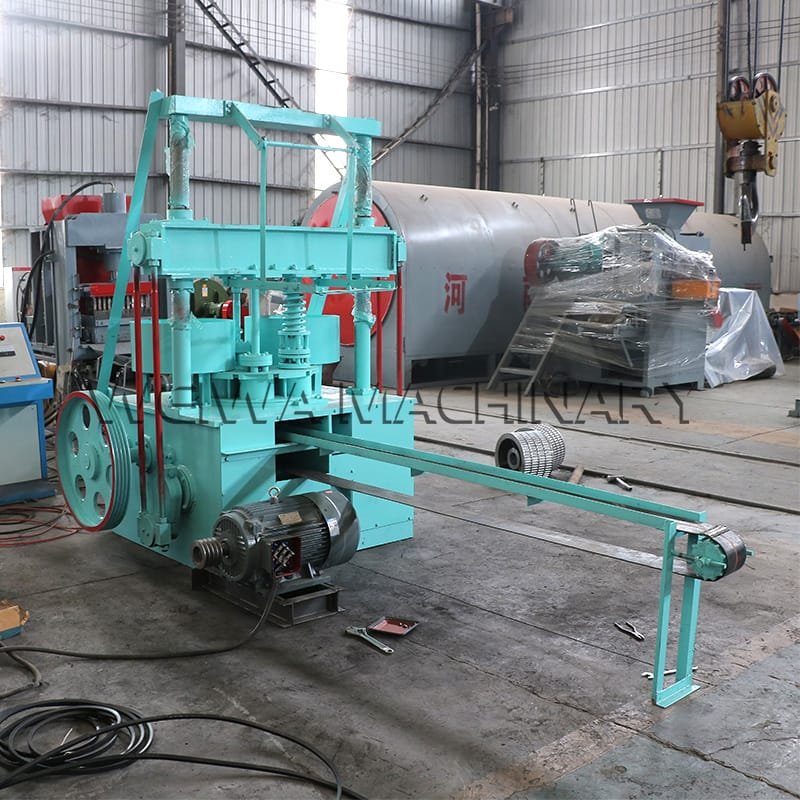
Em Weiwa Machinery, acreditamos que ver é acreditar. When our long-term partner from Venezuela expressed interest in deepening their investment in honeycomb briquette production, we knew a personalized video factory tour would bridge the gap between technical specifications and real-world performance.
O que é um Honeycomb Briquette Charcoal Machine?
To understand the value of this machinery, let’s start with the basics. A honeycomb briquette charcoal machine is a specialized device designed to compress carbon-rich materials (como o pó de carvão, pó de carvão, or biomass) into compact, cylindrical briquettes with a distinct hexagonal or square “honeycomb” structure. This design isn’t just aesthetic—it maximizes combustion efficiency by increasing surface area, ensuring even heat distribution, and reducing smoke emissions compared to loose charcoal.
The core function of these machines lies in their ability to transform low-density raw materials into high-energy, easy-to-handle fuel. For regions like Venezuela, where energy accessibility and cost-effectiveness are critical, honeycomb briquettes offer a sustainable alternative to traditional fuels, making them popular in households, small-scale industries, and even agricultural applications.
Why Venezuela? The Growing Demand for Clean Fuel Solutions
Venezuela’s energy landscape has faced unique challenges in recent years, driving a surge in demand for affordable, confiável, and eco-friendly fuel options. Many communities rely on wood or unprocessed coal, which contribute to deforestation and air pollution. Honeycomb briquettes, with their clean-burning properties and consistent quality, have emerged as a game-changer.
Our Venezuelan client, a leading supplier of household fuels, recognized this trend early. After successfully using our standard honeycomb briquette machines for two years, they sought to upgrade their production line with a higher-capacity model tailored to their specific raw material mix—primarily coconut shell charcoal and coal fines. Seu objetivo? To scale output while maintaining the briquettes’ structural integrity and combustion performance.
Behind the Scenes: Crafting the Perfect Honeycomb Briquette
Before diving into the video tour, let’s demystify the production process. A typical honeycomb briquette machine operates in three key stages:
Preparação de Matéria Prima
The journey begins with selecting and preparing raw materials. For our Venezuelan client, this involves crushing coconut shells into fine powder, mixing it with coal fines at a precise ratio (optimized for density and burn time), and adding a natural binder like starch to enhance cohesion. Consistency here is critical—uneven particle sizes or moisture levels can lead to weak briquettes or machine jams.
Compression and Shaping
The heart of the machine is its hydraulic or mechanical pressing system. In our client’s case, we installed a high-pressure punching unit capable of exerting up to 200 tons of force. As the mixture enters the mold, the press compresses it into a dense cylinder, with the “honeycomb” pattern formed by strategically placed pins inside the mold cavity. This design not only improves airflow during combustion but also reduces the briquette’s weight, making storage and transport more efficient.
Cooling and Quality Control
Freshly pressed briquettes are hot and soft, so they’re transferred to a cooling conveyor. Uma vez resfriado, they undergo rigorous quality checks—measuring dimensions, testing compressive strength, and verifying combustion performance. Our client’s samples consistently achieved a density of 1.2 g/cm³ and burned for over 90 minutos, exceeding industry standards.
Live from the Factory: Testing Our Client’s Customized Machine
Now, let’s walk through the video tour. Filmed in our state-of-the-art workshop, the footage captures every detail of our client’s honeycomb briquette machine in action.
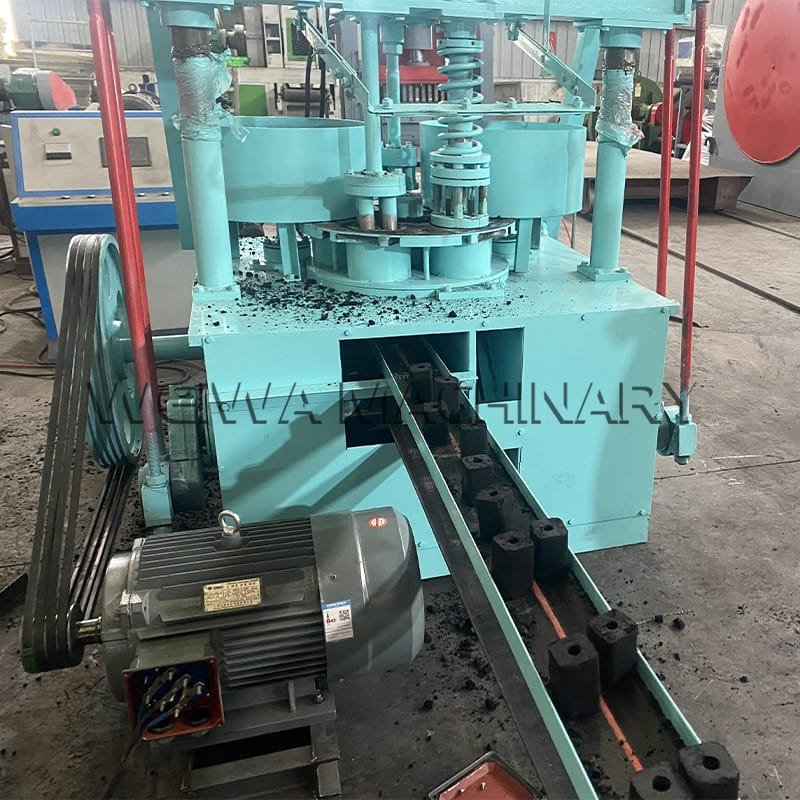
First Impressions: Engineering Precision
The machine’s frame, constructed from heavy-duty steel, immediately stands out. We explained to our client that this robust design ensures stability during high-speed operation, minimizing vibrations and extending the machine’s lifespan. Key components, such as the hydraulic pump and control panel, are sourced from trusted international suppliers, guaranteeing reliability even under continuous use.
The Test Run: From Powder to Briquette
With the raw material loaded, we initiated the test run. The operator adjusted the pressure settings via the touchscreen interface—a feature our client specifically requested for easy customization. Within minutes, the first batch of briquettes emerged from the mold, each one perfectly shaped with sharp edges and uniform holes.
Nosso cliente, watching remotely, noted the machine’s speed: 1,200 briquettes per hour, um 30% increase over their previous model. We highlighted how this efficiency translates to higher daily output, allowing them to meet growing demand without expanding their facility.
Sample Showcase: Performance in Action
After cooling, we presented the client with a sample box of briquettes. Using a portable combustion tester, we demonstrated their performance:
- Ignition Time: Less than 60 seconds, thanks to the porous honeycomb structure.
- Burn Duration: Sobre 95 minutos, with minimal ash residue.
- Heat Output: Consistent at 6,500 kcal/kg, ideal for cooking and heating.
Our client was particularly impressed by the briquettes’ ability to maintain shape during combustion—no crumbling, no excessive smoke. Esse, we explained, is due to the optimized binder ratio and precise compression force, both calibrated to their raw materials.
Addressing Common Questions: Manutenção, Cost, and Scalability
Throughout the video call, our client raised practical concerns, which we addressed transparently:
Maintenance Made Simple
We emphasized that the machine’s modular design allows for quick part replacements. Por exemplo, the mold and pins can be removed in under 10 minutos, reducing downtime. We also provided a detailed maintenance schedule, including daily lubrication, weekly inspections, and annual overhauls.
Cost-Effectiveness Over Time
While the initial investment is higher than basic models, our client calculated a return on investment (ROI) dentro de 14 meses. This is driven by lower material waste (thanks to precise compression), reduced labor costs (automated feeding and ejection), and higher selling prices for premium-quality briquettes.
Scaling Production: Future-Proofing the Investment
We discussed expansion options, such as adding a second machine or integrating a packaging line. Our team even shared blueprints of a proposed production layout, showing how additional units could double output without compromising workflow.
Why Choose Máquinas de Weiwa?
As the video tour concluded, our client reiterated their trust in our partnership. Here’s why we stand out:
- Customization Expertise: We don’t believe in one-size-fits-all solutions. Every machine is tailored to the client’s raw materials, metas de produção, and local market needs.
- Garantia de qualidade: From material sourcing to final assembly, each machine undergoes 72 hours of stress testing to ensure durability.
- Suporte Global: With service centers in Latin America and a dedicated multilingual team, we provide round-the-clock technical assistance, spare parts delivery, and operator training.
Conclusão
For our Venezuelan client, this video factory tour wasn’t just about inspecting a machine—it was about validating a vision. By combining cutting-edge technology with deep industry knowledge, we’ve empowered them to deliver cleaner, more efficient fuel to their community.
Em Weiwa Machinery, we’re more than equipment suppliers; we’re partners in progress. Whether you’re looking to enter the briquette market or scale your existing operations, we’re here to turn your ideas into reality.
Visit our website hereto explore our full range of honeycomb briquette machines, or contact us today to schedule your own personalized factory tour. Let’s build a brighter, greener future—one briquette at a time.


 WeChat

 +8615937143060
