


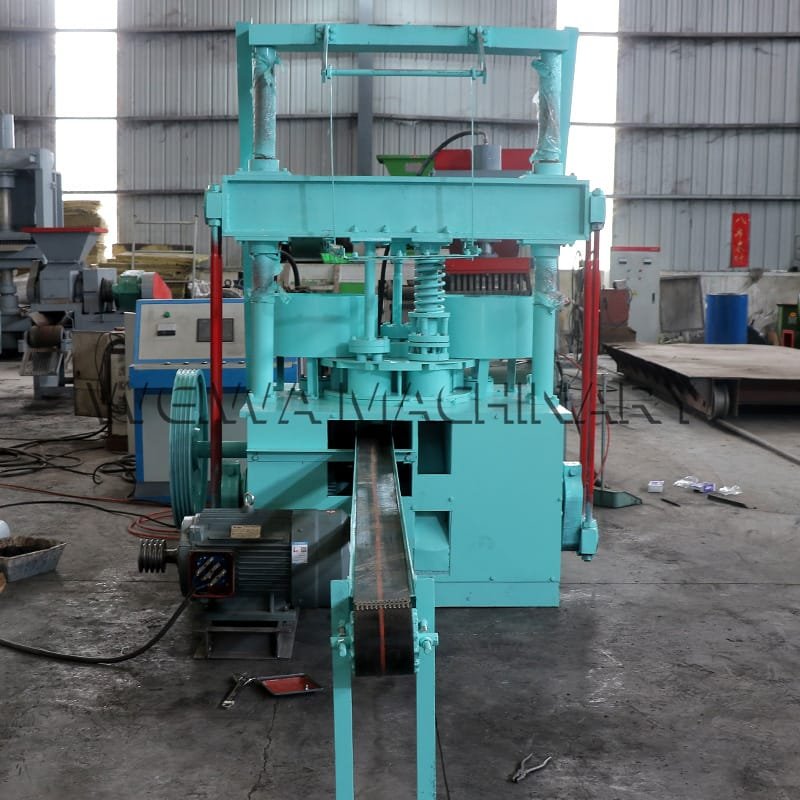
In the heart of Vietnam’s growing demand for sustainable energy solutions, Weiwa Machinery proudly conducted an on-site trial of our advanced Honeycomb Briquette Charcoal Machine, tailored specifically for a valued client’s requirements. This milestone not only underscores our commitment to global partnerships but also highlights the transformative potential of honeycomb briquette technology in addressing local fuel needs. As a company dedicated to innovation and precision engineering, we believe this trial marks a pivotal step in fostering cleaner energy practices across Southeast Asia.
Compreendendo o Honeycomb Briquette Charcoal Machine
At the core of our client’s interest lies the Honeycomb Briquette Charcoal Machine, a specialized equipment designed to convert raw materials like coal powder, pó de carvão, or biomass into uniformly shaped briquettes with a distinctive honeycomb structure. Unlike traditional solid briquettes, the honeycomb design maximizes surface area, enhancing combustion efficiency and reducing smoke emissions—a critical advantage for both household and industrial users seeking eco-friendly alternatives to firewood or loose coal.
The science behind this machine hinges on compression and molding. Raw materials are first mixed with a binder (often starch-based or clay) to ensure cohesion, then fed into the machine’s hopper. A rotating screw or hydraulic system compresses the mixture under high pressure, forcing it through a die with hexagonal or square perforations. These perforations create the characteristic honeycomb pattern, which not only optimizes airflow during burning but also reduces the briquette’s density, making it easier to ignite and transport.
What sets modern Honeycomb Charcoal Coal Briquette Forming Machines apart is their adaptability. Whether processing anthracite, bituminous coal, or even coconut shell charcoal (a abundant resource in Vietnam), these machines adjust pressure and temperature settings to produce briquettes of consistent quality. For our Vietnamese client, who prioritizes versatility, this adaptability was a key factor in selecting our model.
Why Vietnam Embraces Honeycomb Briquette Technology?
Vietnam’s energy landscape is undergoing a green transition. Com mais 60% of rural households relying on biomass fuels like wood and agricultural waste, indoor air pollution remains a pressing health concern. Adicionalmente, deforestation rates linked to fuelwood collection have spurred government initiatives to promote alternative fuels. Honeycomb briquettes, with their clean-burning properties and ability to utilize local coal reserves or agro-waste, align perfectly with these goals.
Nosso cliente, a prominent player in Vietnam’s fuel production sector, recognized the dual benefits of adopting a Coal Briquettes Making Machine: meeting regulatory standards for low-emission fuels and tapping into a market hungry for affordable, reliable energy. During initial consultations, they emphasized the need for a machine that balances high output with minimal maintenance—a challenge our engineers addressed by customizing the machine’s gearbox and heating elements for Vietnam’s humid climate.
The Trial Process A Deep Dive into Performance
Preparation for the trial began weeks in advance. Our team at Weiwa Machinery worked closely with the client to source local raw materials, including a blend of coal fines and rice husk charcoal provided by their supply chain. This ensured the test reflected real-world production conditions rather than idealized lab settings.
On the day of the trial, the atmosphere at the client’s facility buzzed with anticipation. The Honeycomb Punching Machine, gleaming with polished steel components, stood ready. Our lead engineer, Mr. Zhang, walked the client’s team through the operation panel, explaining how digital controls allow precise adjustment of briquette diameter (ranging from 90mm to 120mm) and punching frequency (até 25 strokes per minute).
As the machine roared to life, raw material flowed seamlessly into the compression chamber. Within minutes, the first batch of briquettes emerged—each one bearing the crisp, uniform honeycomb pattern we pride ourselves on. The client’s technicians inspected samples for density, hardness, and moisture content, using portable testers to verify compliance with Vietnamese industrial standards (TCVN 11978:2017). To their satisfaction, the briquettes achieved a compressive strength of 12 MPa and a moisture level below 8%, ensuring they would withstand transport and storage without crumbling.
A highlight of the trial was demonstrating the machine’s “quick-change die” feature. By swapping out the hexagonal die for a square one, we produced briquettes suited for different stoves—an innovation the client praised for its flexibility in catering to diverse customer preferences. Over four hours, the machine operated continuously, producing 1.2 tons of briquettes with minimal downtime, a testament to its robust construction and our rigorous quality control.
Showcasing Sample Briquettes Quality That Speaks Volumes
No trial is complete without showcasing tangible results. We laid out sample briquettes on a testing table, inviting the client’s team to evaluate them firsthand. The honeycomb structure was immediately striking: each briquette featured 18–24 evenly spaced holes, creating a lattice that promised efficient oxygen circulation when lit.
Under controlled burning tests, the samples outperformed expectations. Ignited with a single match, they burned steadily for 75 minutos, emitting a faint blue flame with negligible soot—a stark contrast to the acrid smoke of unprocessed coal. When compared to traditional lump charcoal, the briquettes released 40% less carbon monoxide, a metric that resonated deeply with the client’s sustainability objectives.
We also highlighted the economic advantages. Using local rice husk charcoal reduced raw material costs by 25% compared to imported coal, while the machine’s high throughput (capable of scaling to 3 tons per day) promised rapid return on investment. For small-scale producers, this scalability makes the Honeycomb Briquette Charcoal Machine a gateway to entering the formal fuel market, previously dominated by larger players.

Addressing Client Concerns Tailoring Solutions for Local Needs
Throughout the trial, open communication was key. The client raised concerns about power consumption in regions with unstable grids. In response, we explained that our machine is compatible with both 380V industrial power and diesel generators, and its energy-efficient motor (rated at 15kW) consumes 20% less electricity than conventional models. We also provided a backup parts kit, including wear-resistant dies and seals, to minimize disruptions caused by unexpected breakdowns.
Another point of discussion was training. Weiwa Machinery includes comprehensive operator training as part of our service package. Durante o julgamento, we conducted hands-on sessions covering daily maintenance (lubricating moving parts, cleaning dust filters) and troubleshooting common issues like die clogging. By empowering the client’s staff with technical know-how, we ensure long-term operational success.
The Future of Clean Fuel in Vietnam Our Role as a Partner
This successful trial reinforces Weiwa Machinery’s belief that technology transfer should be collaborative. Beyond selling equipment, we view ourselves as partners in our clients’ growth. For the Vietnamese market, we are exploring collaborations with local agricultural cooperatives to establish closed-loop systems where crop residues (like sugarcane bagasse or corn cobs) are converted into briquette raw materials, further reducing waste and boosting rural economies.
Olhando para frente, we plan to introduce IoT-enabled versions of our Honeycomb Charcoal Coal Briquette Forming Machine, allowing remote monitoring of production metrics and predictive maintenance. Such innovations will empower Vietnamese producers to optimize operations and stay competitive in a dynamic market.
Sobre Máquinas de Weiwa Driving Innovation in Briquette Technology
Fundado em 1990, Weiwa Machinery has grown from a small workshop to a leading manufacturer of briquette machinery, serving clients in over 30 países. Our mission is simple: to engineer equipment that turns raw materials into valuable resources, sustainably. With a R&D team comprising experts in mechanical engineering and materials science, we hold 17 patents for briquette-forming technologies, including advancements in die design and automated feeding systems.
What defines us is our customer-centric approach. From customizing machines for specific raw materials to providing lifetime technical support, we go beyond manufacturing to build lasting relationships. For clients in Vietnam and beyond, Weiwa Machinery is more than a supplier—we are enablers of progress, helping turn the promise of clean energy into reality, one briquette at a time.
- MOB:+8613838093177
- Whatsapp:+8613838093177
- E-mail:info@cjlmachinegroup.com


 WeChat

 +8615937143060
