


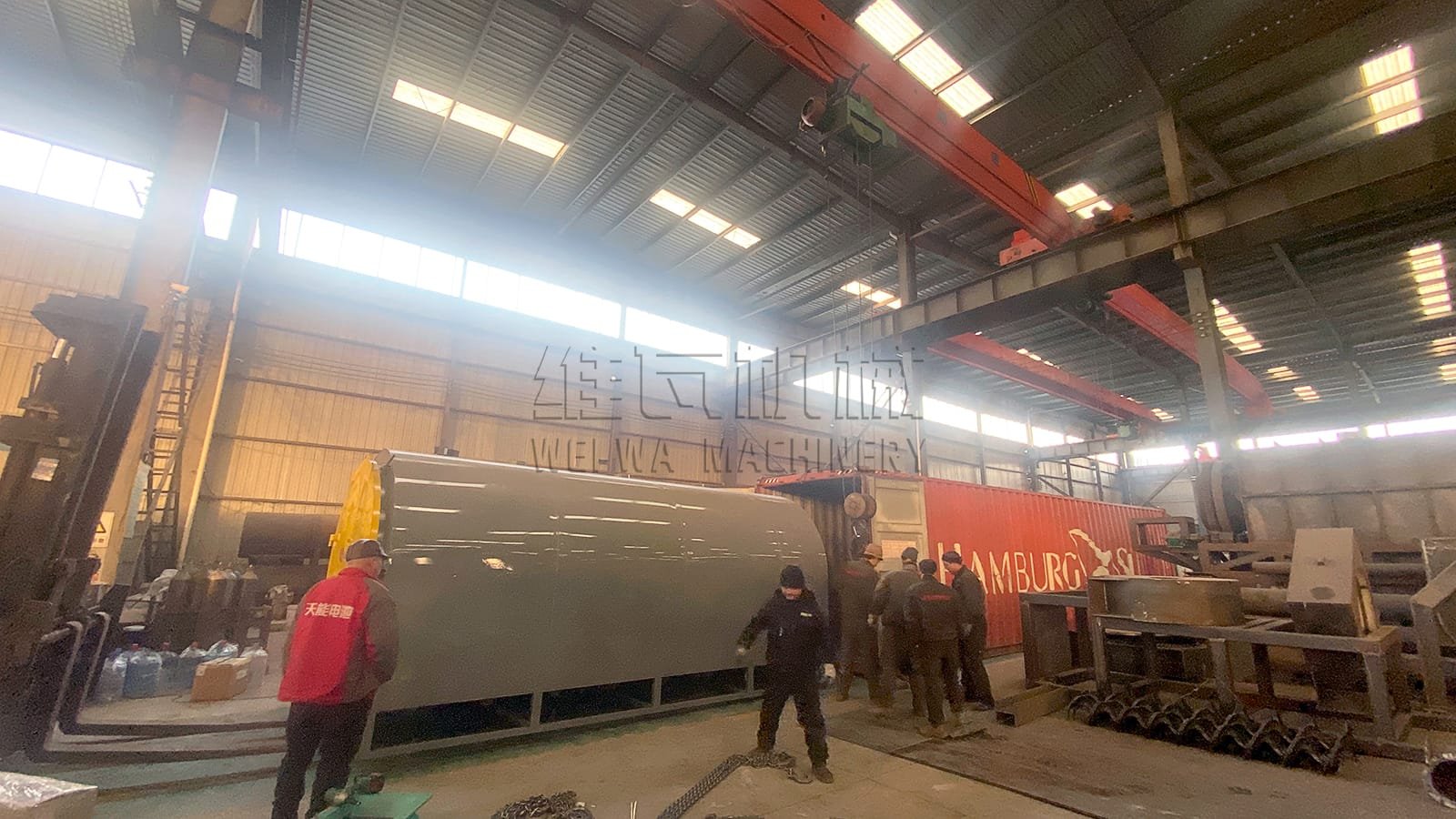
The tropical archipelago of the Philippines, with its rich forestry resources and vast agricultural lands, has long been a promising market for biomass charcoal production. Understanding the unique demands of local producers, Máquinas de Weiwa recently organized a significant shipment of our flagship Forno de carbonização horizontal to a key client in the region. This delivery marks another milestone in our mission to provide sustainable and efficient energy solutions across Southeast Asia. For businesses looking for a reliable Máquina de fabricação de carvão, the deployment of our equipment in the Philippines serves as a live testament to its superior design and operational efficiency.
This blog will delve into the technical advantages of the horizontal carbonization furnace, explain why it is perfectly suited for Philippine raw materials like coconut shells and wood logs, and share insights from the recent factory testing that preceded this shipment. We aim to provide a comprehensive guide for potential buyers evaluating a charcoal kiln for their operations.
Compreendendo o Forno de carbonização horizontal Tecnologia
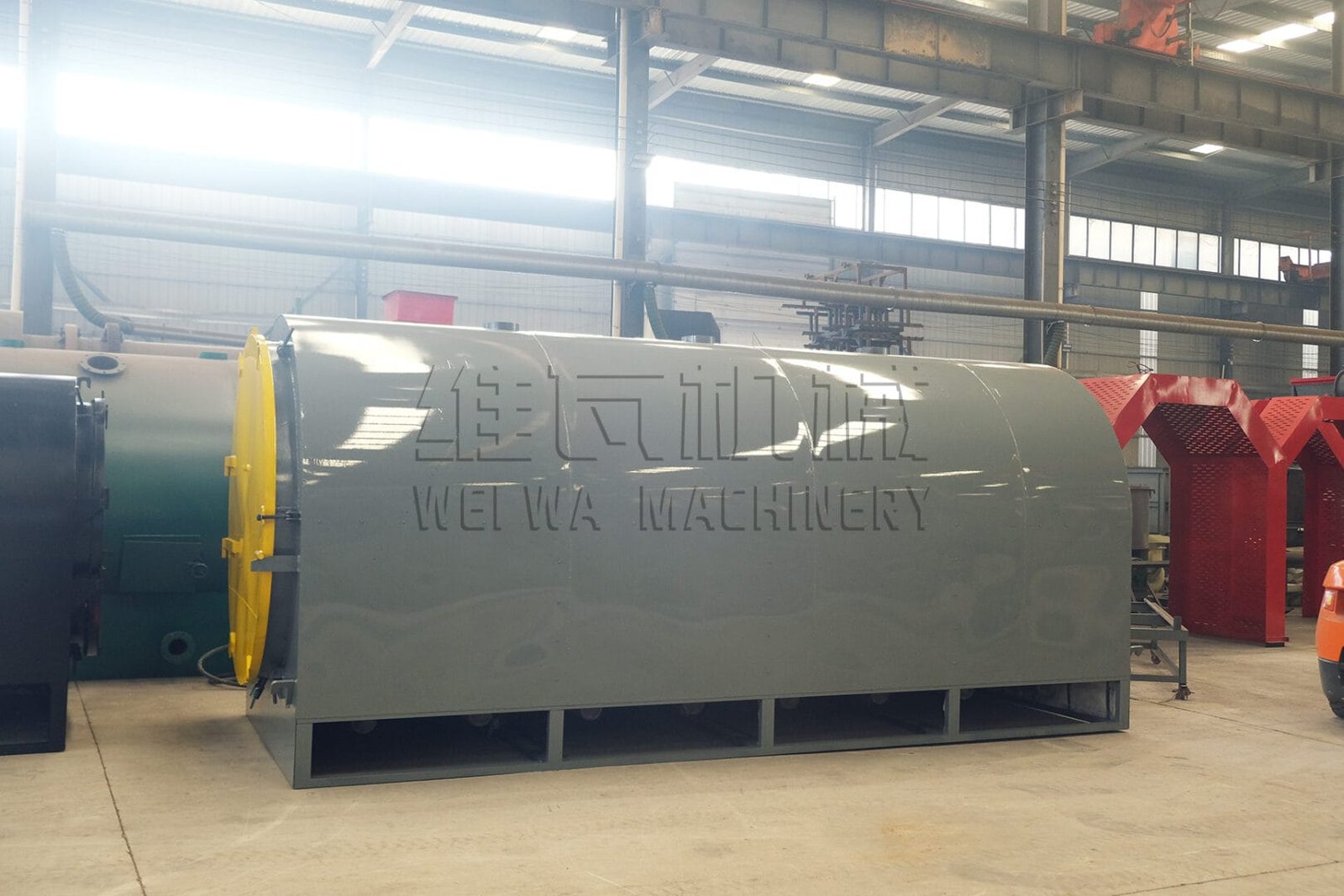
Before we dive into the specifics of the Philippine market, it is crucial to understand what sets a Forno de carbonização horizontal apart from traditional methods. Unlike vertical retorts or brick kilns, our horizontal design utilizes a barrel-style chamber mounted on rails. This configuration is not merely a structural choice; it fundamentally changes the efficiency and safety of the carbonization process. The entire system is engineered for indirect heating, meaning the flame does not directly touch the raw materials. Instead, a sophisticated burner system circulates hot air around the chamber, ensuring that wood logs, bambu, or coconut shells are carbonized gradually and uniformly.
During the recent trial run at our facility, the performance metrics were clear. The furnace achieved a stable internal temperature near 600 ° c, which is the optimal threshold for converting biomass into high-quality charcoal without burning it to ash. For clients in the Philippines, where humidity can affect moisture content, this precise temperature control is invaluable. Nosso Máquina de fabricação de carvão integrates an advanced gas-purification system that recycles tar and condensates. These by-products are broken down, and the resulting clean combustible gas is fed back into the burners. This closed-loop system drastically reduces fuel consumption and eliminates visible smoke, addressing environmental concerns that are increasingly important in regions like Mindanao and Luzon.
Why Philippine Producers Choose the Horizontal Design
When we discuss the Horizontal Carbonization Furnace in the Philippines, we are addressing a specific set of logistical and economic factors. Many local farms and processing plants have limited space but require high output. The compact footprint of our horizontal model makes it ideal for these settings. Além disso, the rail-mounted design simplifies loading and unloading. In the recent shipment, the client opted for custom carts that slide into the chamber, allowing for easy handling of heavy coconut shell briquettes. This contrasts sharply with older charcoal kiln technologies that require manual loading, which is labor-intensive and poses safety risks.
The Philippine market is diverse, encompassing everything from small-scale farmers to medium-sized industrial processors. Our horizontal furnace bridges this gap perfectly. It offers high charcoal yields—often exceeding 30% more than traditional earth kilns—while maintaining low operational costs. During the pre-shipment testing phase, we simulated conditions using coconut husks and sawdust briquettes, common waste products in the Philippines. The results demonstrated that our Horizontal Carbonization Furnace for the Philippines could convert these low-value wastes into premium charcoal suitable for both domestic use and export.
On-Site Testing and Performance Metrics
Transparency is a core value at Máquinas de Weiwa. Prior to dispatching the equipment, we invited the Philippine client to witness a full-scale test at our production base. The goal was to demonstrate the automation capabilities and the quality of the final product. Over a 24-hour cycle, the furnace processed a batch of mixed hardwood logs. The automation system controlled the feed rate of the combustible gas, maintaining the internal atmosphere required for pyrolysis.
One of the most impressive aspects observed during the test was the emission profile. Thanks to the integrated purification system, the exhaust gases were virtually smoke-free. This is a critical selling point for any modern Máquina de fabricação de carvão, as regulatory bodies in the Philippines are tightening restrictions on open burning and high-emission processes. The client was particularly pleased with the consistency of the charcoal produced. Each batch showed uniform blackness and structural integrity, indicating complete carbonization. This level of quality assurance is difficult to achieve with a conventional charcoal kiln, where temperature fluctuations are common.
The feedback from the technical team highlighted the durability of the furnace lining. Designed to withstand repeated thermal cycling, the refractory bricks inside the chamber ensure a long service life with minimal maintenance. For a client investing in a Forno de carbonização horizontal, longevity and ease of upkeep are as important as the initial yield. We demonstrated how the ash removal system works seamlessly, allowing for continuous operation without lengthy cool-down periods between batches.
Market Analysis: Charcoal Production in the Philippines
The demand for charcoal in the Philippines remains robust, driven by both household cooking needs and industrial applications such as steel manufacturing and food processing. No entanto, the industry faces challenges, including deforestation and inefficient production methods. This is where our Horizontal Carbonization Furnace for the Philippines enters the market as a disruptive technology. By utilizing agricultural residues—sugarcane bagasse, cascas de arroz, coconut shells—the furnace promotes a circular economy. It transforms what was once discarded biomass into a valuable commodity.
In discussions with our Philippine distributor network, we identified a growing trend: the shift from manual labor to mechanized solutions. A modern Máquina de fabricação de carvão is no longer a luxury but a necessity for staying competitive. The horizontal carbonization furnace aligns perfectly with this trend. Its ability to handle varied feedstocks means that a single machine can serve multiple purposes throughout the year, depending on harvest cycles. Por exemplo, during the coconut harvest season, the furnace can focus on shell carbonization, while in other months, it can process imported wood logs or sawdust.
Comparing this to older models, the advantages are stark. Traditional pit kilns result in significant charcoal loss due to incomplete combustion and weathering. Em contraste, our enclosed charcoal kiln design ensures that over 95% of the volatile compounds are either captured or converted into usable energy. This efficiency translates directly to profit margins for the end-user. The recent shipment to the Philippines included detailed operational manuals and training videos, ensuring that the client’s team can maximize the return on their investment from day one.
Technical Specifications and Customization
Every Forno de carbonização horizontal leaving our factory is tailored to the client’s specific needs. For the Philippine order, we customized the gas outlet system to handle the high resin content often found in local pine species. This customization prevents clogging and ensures the gas purification system operates at peak efficiency. The capacity of the shipped unit is designed for small- para produtores de médio porte, striking a balance between output and manageability.
Key features include:
- Indirect Heating Mechanism: Ensures even carbonization and prevents charcoal ignition.
- Gas Recycling System: Converts tar and smoke into reusable fuel, achieving near-zero emissions.
- Rail-mounted Chamber: Facilitates easy loading and reduces physical strain on workers.
- Automated Control Panel: Allows operators to monitor temperature, pressão, and gas flow in real-time.
These features collectively make the Forno de carbonização horizontal a superior choice compared to standard rotary kilns or brick mounds. The investment in such a Máquina de fabricação de carvão is an investment in compliance, eficiência, e sustentabilidade.
The Shipment Journey and Logistics
Coordinating the shipment of heavy machinery like a Forno de carbonização horizontal requires meticulous planning. The equipment was disassembled into major components—the main chamber, the burner assembly, the cooling tower, and the control cabinet—each securely packed in waterproof crates. Given the humid maritime climate en route to the Philippines, anti-rust treatment was applied to all metal surfaces.
Our logistics team worked closely with the freight forwarder to optimize container space, ensuring the client received the best value for shipping costs. The consignment included spare parts kits and specialized tools required for reassembly. For any client purchasing a charcoal kiln from overseas, clarity in packaging and labeling is paramount. We ensured that each crate was marked with detailed diagrams showing its position in the final assembly, simplifying the installation process upon arrival.
We understand that importing industrial equipment can be daunting. Portanto, our after-sales service includes remote video guidance for installation and commissioning. The Philippine client will have direct access to our engineers via WhatsApp and email, ensuring any technical queries regarding the Forno de carbonização horizontal are resolved promptly.
Environmental Impact and Sustainability
A significant portion of our discussion with the Philippine client centered on sustainability. O Forno de carbonização horizontal is designed not just for profit, but also for planetary health. By recycling the syngas produced during carbonization, the furnace minimizes reliance on external fuels like diesel or coal. This reduction in fossil fuel consumption lowers the carbon footprint of the charcoal production process.
Além disso, the effective capture of tar prevents soil and water contamination, a common problem associated with traditional charcoal kiln sites. For communities in the Philippines concerned about air quality, adopting our Máquina de fabricação de carvão means contributing to cleaner air and a healthier environment. The Philippine government’s initiatives to promote green technology align perfectly with the capabilities of our horizontal furnace. We believe that businesses adopting this technology will find themselves better positioned to meet future environmental regulations and access green financing opportunities.
Sobre Máquinas de Weiwa
With a legacy of serving over 2 milhões de clientes em todo o mundo, WEI WA MACHINERY has established itself as a leader in the biomass processing industry. Our commitment to innovation is reflected in every Forno de carbonização horizontal we manufacture. We do not just sell machines; we provide comprehensive solutions that encompass consultation, customization, suporte de instalação, and lifetime technical assistance.
Our product range extends beyond carbonization equipment to include briquette presses, drying systems, and pellet mills, making us a one-stop shop for biomass densification. The successful deployment of the Horizontal Carbonization Furnace in the Philippines adds to our growing portfolio of international projects across Asia, África, and South America. We pride ourselves on building relationships based on trust, qualidade, and mutual growth. Whether you are a small farmer looking to add value to crop residues or an industrial player seeking to upgrade your Máquina de fabricação de carvão fleet, Weiwa Machinery has the expertise and equipment to meet your needs.
For inquiries about the Horizontal Carbonization Furnace for the Philippines or any other biomass processing equipment, please feel free to contact us directly.
Informações de contato:
- MOB: +8613838093177
- Whatsapp: +8613838093177
- E-mail:info@cjlmachinegroup.com
We look forward to helping you transform biomass waste into wealth with our state-of-the-art charcoal kiln technology.


 WeChat

 +8615937143060
