


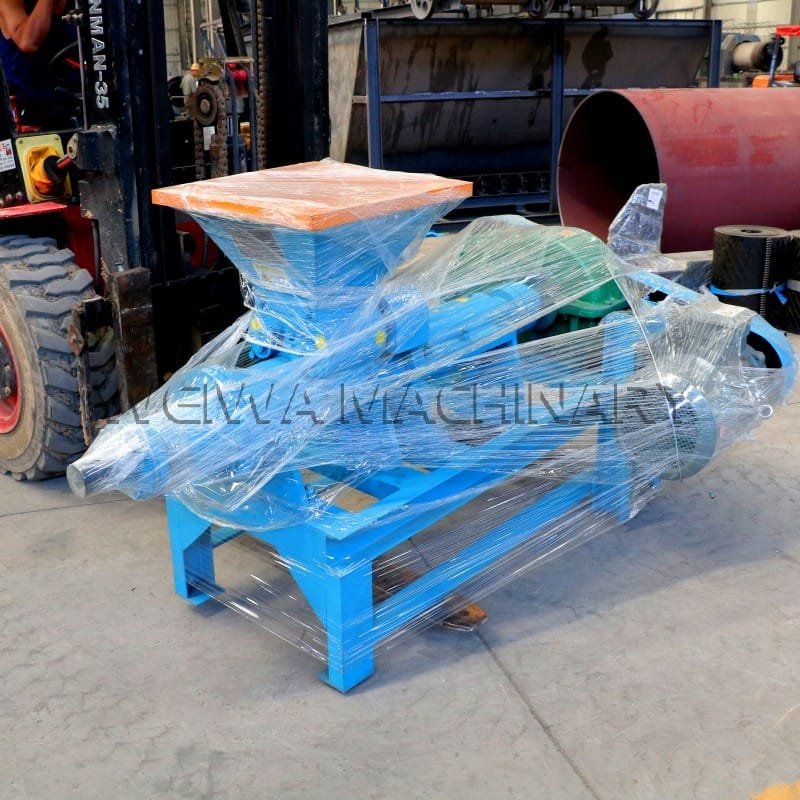
A few weeks ago, a charcoal workshop owner from Luzon contacted Weiwa Machinery with a very practical problem. He had tons of coconut shell charcoal powder, wood charcoal fines, and coal dust sitting in sacks, and every month he threw away or under-sold material that should have been fuel. He did not want a seminar. He wanted to know if a charcoal extruder machine could run on his real Philippine feedstock, in his humidity, with his binder recipe, and still output straight, dense, smokeless rods. We invited him to our Gongyi workshop, rebuilt the line around his sample, and ran a live commissioning session.
Why Philippine Charcoal Producers Keep Losing Money on Dust?
The Philippine barbecue economy is massive. From Manila street stalls to Cebu lechon houses and Davao backyard grills, shaped charcoal is the default cooking fuel. Yet most small and mid-size producers still treat charcoal dust as waste. They sweep it into bags, soak it with water, press it by hand into rough blocks, or sell it to middlemen at a fraction of rod value. The gap between loose powder and a uniform 40 mm BBQ rod is where margin disappears.
A charcoal extruder machine in the Philippines closes that gap. Instead of burning loose fines or dumping them, the factory feeds powder into a screw chamber, compresses it under axial pressure, and pushes it through a die head into a continuous rod. Cut the rod, dry it, pack it, and the same material that once sold at scrap price now competes with imported BBQ charcoal. For our visitor, the math was simple: raise yield per ton of raw charcoal by 25 को 35 percent without buying new carbonization capacity.
What the Philippines Client Brought to the Trial?
We did not use polished factory demo powder. The client shipped three sacks from his own yard:
Coconut shell charcoal powder, 70 percent of the blend, sieved under 3 मिमी.
Wood charcoal fines from mangrove and acacia, 20 प्रतिशत.
Sub-bituminous coal dust, 10 प्रतिशत, because his local market mixes coal rod products for longer burn.
Moisture reading on arrival: 14 प्रतिशत, too high for direct extrusion.
Binder: cassava starch slurry, 8 percent by weight, the cheapest option available in his province.
This mattered. A charcoal briquette machine is only as honest as its worst feedstock batch. If the trial worked on his material, it would work in his factory.
What a Charcoal Extruder Machine Actually Is?
Many buyers search for a charcoal making machine and expect one box that eats wood and spits charcoal. In reality, charcoal making covers carbonization, कुचल, mixing, extrusion, सुखाने, and packing. The extruder is the shaping heart, not the whole body. It sits after the crusher and mixer, before the dryer.
Mechanically, a Weiwa charcoal extrude machine uses a triangular belt drive from the motor to a heavy-duty gearbox. The gearbox output shaft connects to the propulsion shaft through a floating coupling. On the propulsion shaft sits a high manganese alloy screw propeller. As the screw rotates, charcoal paste is dragged forward into a tapering chamber. Volume drops, pressure climbs, and the plasticized mass is forced through a #45 steel die head. The cross-section of that die decides whether you get a cylinder, a square column, a hexagon, or a hollow rod.
Pressure, not glue, holds the rod. A small binder only improves surface hardness and reduces micro-cracking during drying. That is why a well-tuned coal rod machine in the Philippines can run on 6 को 10 percent starch and still beat hand-pressed bricks on burn time.
Key Components We Build Differently at Weiwa
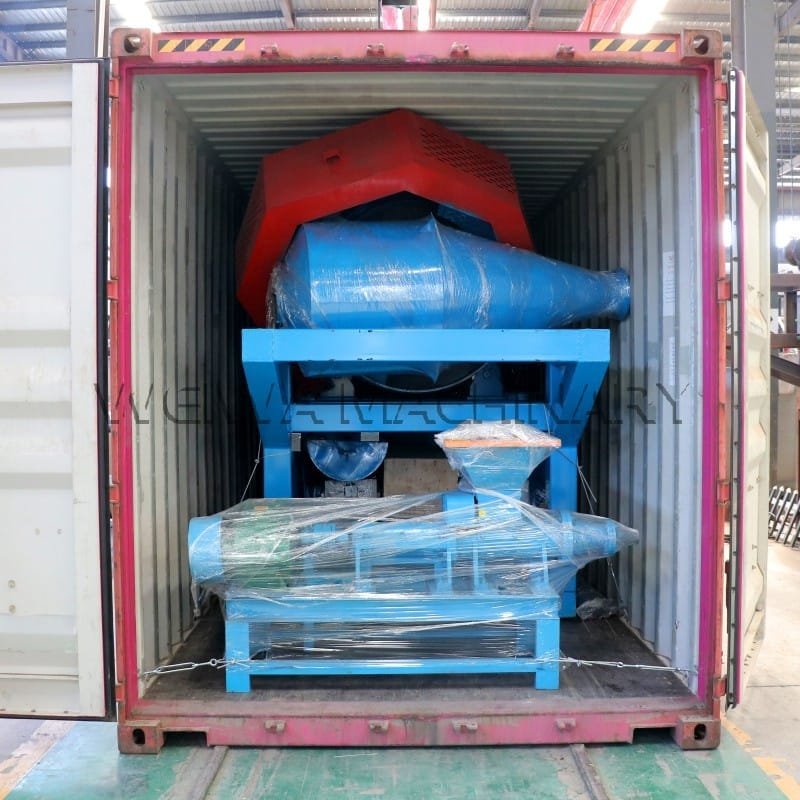
The base and frame use national certified carbon steel, not thin welded tube. The motor is 100 percent copper coil, rated for continuous load under 40 Celsius shop temperature. The gearbox is selected for duty cycle, not peak brochure power. The screw propeller is high manganese alloy, reground and reused two to three times before replacement. The die head is forged #45 steel with a heat-treated insert ring.
For tropical clients we add three quiet upgrades. One, epoxy rust-proofing on the base. Two, a wider pulley cover so cassava binder splash does not reach the belt. Three, ए 0 को 50 hertz variable frequency drive so the operator can slow the screw when feed moisture spikes. None of these show up in a cheap photo, but they decide whether a charcoal extruder machine lasts six months or six years in a Philippine shed.
Preparing the Line Before the Philippines Trial
A rod line is five machines, not one. For the trial we laid out the full sequence so the client could see throughput, not just a single extruder on a bench.
Stage one was crushing. His raw coconut shell chunks went through a Weiwa charcoal crusher with a 3 mm screen. Anything already under 3 mm skipped the crusher, but most hand-broken charcoal still needed one pass. Stage two was mixing. The wheel grinding mixer kneaded charcoal powder, water, and cassava starch into a uniform paste. We targeted 9 को 11 percent final moisture after mixing. Too dry and the rod cracks at the die throat. Too wet and the screw slips, amperage spikes, and the rod surface blisters.
Stage three was the extruder itself. We mounted a 22 kW main motor, ए 60 rpm screw speed setting, and three dies: 40 mm cylinder, 45 mm hexagon, और 50 mm square. Stage four was cutting. A pneumatic cutter sliced the continuous rod into 200 mm lengths. Stage five was batch drying on mesh trays with a fan cycle, because Philippine humidity makes sun drying unreliable in July and August.
Why Moisture Control Decides Rod Quality?
During the first five minutes of any trial, moisture is the only variable that kills output. Charcoal powder is thirsty. If the mix sits for twenty minutes before extrusion, it drinks water from the air and the screw load jumps. We weighed the client’s sample, added starch slurry slowly, and stopped at 10.5 प्रतिशत. The ammeter on the 22 kW motor sat at 38 hertz and 34 amps, well inside the 45 amp nominal ceiling. That stability is what lets a charcoal briquette machine run a 10 hour shift without tripping the breaker.
The Live Trial Run With the Philippines Client
We started the belt feeder at 40 percent speed. The hopper filled, the screw turned, and the first 30 cm of rod came out soft and slightly oval. That is normal. The die head was cold, pressure had not stabilized, and the insert ring needed ten seconds of friction heat. By the 90 second mark the rod exited straight, glossy, and dense enough to tap with a wrench without denting.
We ran the cylinder die for 35 minutes. Output held at 780 kg per hour. Rod diameter measured 39.8 को 40.2 mm across ten random cuts. Surface had no spiral scoring, which means the screw pitch and die chamfer were matched. We switched to the hexagon die. Swap time was 17 minutes including coupling check. Hexagon output ran at 720 kg per hour, flat-to-flat 44.6 मिमी, no corner feathering.
The client then asked for a coal-heavy batch: 30 percent sub-bituminous dust, 70 percent charcoal, same starch. Coal dust is sharper and wears the screw faster, but it also raises calorific value and lengthens burn. The machine absorbed the change without motor overload. Rods came out darker, heavier, and rang when dropped on the steel table. He smiled and said his Laguna buyers pay extra for that ring.
Measured Results From the Two Hour Run
We did not guess. We logged numbers.
Total mixed feed processed: 2.9 टन.
Usable rod recovered after cutter and reject screening: 2.61 टन.
Reject rate from cracking and tail ends: 4.8 प्रतिशत.
Electricity consumed by extruder at 22 kW motor: 41 kWh over 2.1 run hours.
Equivalent specific energy: 0.69 kWh per kg of finished rod.
Cassava starch used: 208 किलोभास, या 8 percent of mix.
Die insert temperature after stabilization: 96 Celsius skin reading.
Rod water displacement test: sank in 4 seconds, indicating density above 1.05 g per cm3.
Those numbers matter more than photos. A charcoal extruder machine in the Philippines that delivers 0.69 kWh per kg and under 5 percent reject on real dust is a machine the owner can finance.
Why Philippine Buyers Prefer Certain Rod Shapes?
Shape is not decoration. In Metro Manila backyard grills, 40 mm cylinders dominate because they fit chrome stove holes. In provincial BBQ stalls, 45 mm hexagons stack tighter in woven sacks and leave fewer air gaps, so the bed ignites evenly. Square 50 mm rods are popular with charcoal exporters shipping to Middle East shisha blenders, who re-crush and re-press the rods into cubes. One coal rod machine in the Philippines with three dies covers all three channels.
The client chose to start with cylinders for his existing retail pack, then phase in hexagons for a hotel supply contract he was negotiating. Because Weiwa dies share one coupling standard, he can change product mix on a Sunday afternoon without an engineer on site.
Coal Rod Versus Pure Charcoal Rod in Tropical Humidity
Philippine rainy season destroys soft briquettes. Pure charcoal rods with low binder can absorb moisture from air and shed fine dust on the shelf. Adding 10 को 30 percent coal dust raises compressive strength and slows moisture pickup. The trade-off is smoke at ignition if coal volatiles are high, so we advised him to keep coal under 30 percent and carbonize the blend lightly after extrusion in a secondary kiln. A charcoal making machine line that stops at extrusion is good. One that adds a short re-carbonization tunnel is better for the Philippine wet season.
How the Same Machine Logic Serves Kenya and Other Markets?
While the trial was Philippine, the configuration maps directly to other emerging charcoal markets. A rod charcoal making machine for Kenya faces similar inputs: coconut and macadamia shell charcoal on the coast, acacia and eucalyptus fines inland, maize cob charcoal in transitional zones. Kenyan buyers often want 50 mm solid cylinders for institutional cooking and 30 mm hollow rods for household jiko stoves. The Weiwa extruder accepts the same screw platform, only the die insert and feeder width change.
Kenya also prices electricity differently, so we often specify a 18.5 kW motor instead of 22 kW and accept 600 को 800 kg per hour instead of 900. The mechanical principle does not change. Screw pitch, floating coupling, and pressure curve stay identical. That is why one engineering file serves both a charcoal extruder machine in the Philippines and a Kenya commissioning.
Common Mistakes First-Time Buyers Make
The first mistake is feeding un-crushed charcoal. Any lump over 3 mm chips the screw flight and scars the die. The second is over-watering the mix because sticky feels safer. Wet paste slips, the rod expands after cutting, and drying takes twice as long. The third is running the screw at 50 hertz on day one. Pressure builds too fast, the floating coupling heats, and the insert ring walks out. We tell every Philippine and Kenya client to start at 30 hertz, watch the ammeter, then climb.
The fourth mistake is ignoring the dryer. A charcoal briquette machine can make perfect rods at 10 am and ruin them by noon if the tray room traps humidity. For the Philippines client we specified a shaded pre-dry yard plus a 40 cubic meter fan drying room at 55 Celsius. Rods reached 6 percent moisture in 14 घंटे. Sun-only drying in Luzon took 3 days and still molded at the core.
Comparing Charcoal Extruder Machine and Charcoal Briquette Machine Terms
Google searchers use both phrases, so we use both honestly. A charcoal extruder machine describes the screw press that makes rods. A charcoal briquette machine is a broader label that can also include roller presses making pill-shaped briquettes or ball presses making shisha cubes. When a buyer from Cebu asks for a coal rod machine in the Philippines, he almost always wants screw extrusion, not roller pressing, because rods pack and burn better for BBQ. When a buyer from Nairobi asks for a rod charcoal making machine for Kenya, the answer is the same hardware family with a different die kit.
Weiwa does not rename the machine to chase keywords. We explain the working principle, show the screw, show the coupling, and let the client choose the die. That builds trust and reduces chargeback complaints.
Full Line Layout the Philippines Client Approved
After the trial he signed for a five-machine line:
Weiwa charcoal crusher, 7.5 किलोवाट, 3 mm screen.
Wheel grinding mixer, 4 kW pan motor, 1 ton per batch.
Charcoal extruder machine, 22 किलोवाट, VFD, cylinder and hexagon dies.
Pneumatic cutter, 1.1 किलोवाट, 150 को 250 mm length adjustable.
Fan drying room, 40 cubic meter cycle, 3 kW blower, 6 kW heater element.
Total footprint: 38 वर्ग मीटर. Total connected power: 37.6 किलोवाट, but realistic draw under 30 kW because mixer and dryer stagger. For a Philippine shed with single-phase limits we can split the heater to night tariff. None of this needed custom steel. It is a standard Weiwa skid with his binder recipe written on the mixer tag.
Cost Recovery Math on Philippine Feedstock
The client paid 9 pesos per kg for mixed charcoal dust and coal fines delivered. After starch, power, labor, and drying, his converted cost into cut green rod was 12.4 pesos per kg. Dried rod at 6 percent moisture packed 22 pesos per kg wholesale to Manila distributors, और 28 pesos per kg under his own retail label. पर 6 tons per day of dried rod, his gross margin covered the machine line in just under seven months. That is why a charcoal extruder machine in the Philippines is not a sustainability trophy. It is a payback instrument.
For Kenya the arithmetic shifts because electricity and starch cost more, but rod wholesale price in Mombasa and Nairobi is higher too. A rod charcoal making machine for Kenya with 4 ton per day output typically clears capital in 9 को 11 months if the binder is molasses instead of imported starch.
After-Sales Reality We Promise
Weiwa does not disappear after sea freight. For this client we bundled three things into the contract. One, ए 40 minute WhatsApp video call for first startup. Two, a spare screw propeller and two die inserts in the same crate. Three, a shared spreadsheet where he logs amperage, नमी, and reject rate every Monday, and our engineer replies within 24 घंटे. A charcoal making machine is mechanical, so something will wear. The question is whether the buyer knows which part and has it in stock. Most Philippine downtime is not motor failure. It is waiting 30 days for a $40 insert ring.
Why Weiwa Charcoal Extruder Machine Holds Up in Tropical Conditions?
Gongyi is not the Philippines. Our summer is dry, his is wet and salty if near the coast. So we changed four shop defaults for export units. The base gets two coats of marine epoxy. The VFD gets a sealed cabinet with a breather. The coupling guard has a drain hole. The control labels are laser-etched, not sticker-printed, because sticker ink sweats off in Cebu. None of these lift the brochure price much, but they are why a coal rod machine in the Philippines from Weiwa survives year two while a painted copy from a trading company fails in year one.
The trial client walked around the running line, picked up a fresh hexagon rod, knocked it against the table, and watched it ring. He said the sound alone told him more than any catalog. We agreed. A charcoal extruder machine either makes that ring or it does not. His did, for two hours, on his own dust.
When to Start With Extruder Only, and When to Add Carbonization?
New buyers often over-spend on a full charcoal making machine with carbonization furnace, कुचल डालने वाला, मिक्सर, extruder, ड्रायर, and packer on day one. If you already buy charcoal powder from a supplier, start with mixer, extruder, cutter, ड्रायर. That is the fastest payback. Add a horizontal carbonization furnace in year two when you want to control raw material cost and escape powder price swings. The Philippines client already bought semi-finished powder from a Negros supplier, so we did not force a furnace into his first phase. A charcoal briquette machine line that matches your actual input is cheaper than a textbook line that impresses visitors.
Final Takeaway From the Philippines Trial
The two hour run proved five things. Real Philippine coconut shell and coal dust can extrude without premium binders. A 22 kW Weiwa screw holds 780 kg per hour with under 5 percent reject. Hexagon, cylinder, and square dies swap in under 20 minutes. Specific energy stays near 0.7 kWh per kg. And the rods sink in water, ring on steel, and dry to 6 percent in a fan room.
For any investor comparing a charcoal extruder machine, a coal rod machine in the Philippines, a charcoal making machine, a charcoal extruder machine in the Philippines, a charcoal briquette machine, or a rod charcoal making machine for Kenya, the hardware family is the same. The difference is die shape, motor size, and dryer design. Weiwa treats those as configuration, not as a new product.
If you run a charcoal yard in Luzon, a coconut shell supply in Mindanao, or a briquette startup in Nairobi, send us 20 kg of your own powder. We will run it on the same line described above, log the ammeter, weigh the rejects, and show you the rods before you pay for anything.
के बारे में वेइवा मशीनरी
हेनान वीवा मशीनरी विनिर्माण कंपनी, लिमिटेड. is based in Gongyi, हेनान, चीन, से अधिक के साथ 30 years of experience building briquette and carbonization equipment. The company designs and exports charcoal extruder machines, coal rod machines, charcoal making machines, जलकर कोयला भट्टियां, crushers, mixers, ड्रायर, and full turnkey lines to more than 130 देशों, including the Philippines, इंडोनेशिया, मलेशिया, केन्या, Tanzania, पाकिस्तान, टर्की, and Mexico. Weiwa uses national certified carbon steel frames, 100 percent copper coil motors, high manganese alloy screws, और #45 steel dies. Every export unit ships with a spare wearing kit, an English manual, and remote commissioning support. The goal is not to sell one machine but to keep a client’s rod line running past year five.
वेवा मशीनरी से संपर्क करें:
भीड़: +8613838093177
Whatsapp: +8613838093177
ई-मेल: info@cjlmachinegroup.com


 WeChat

 +8615937143060
