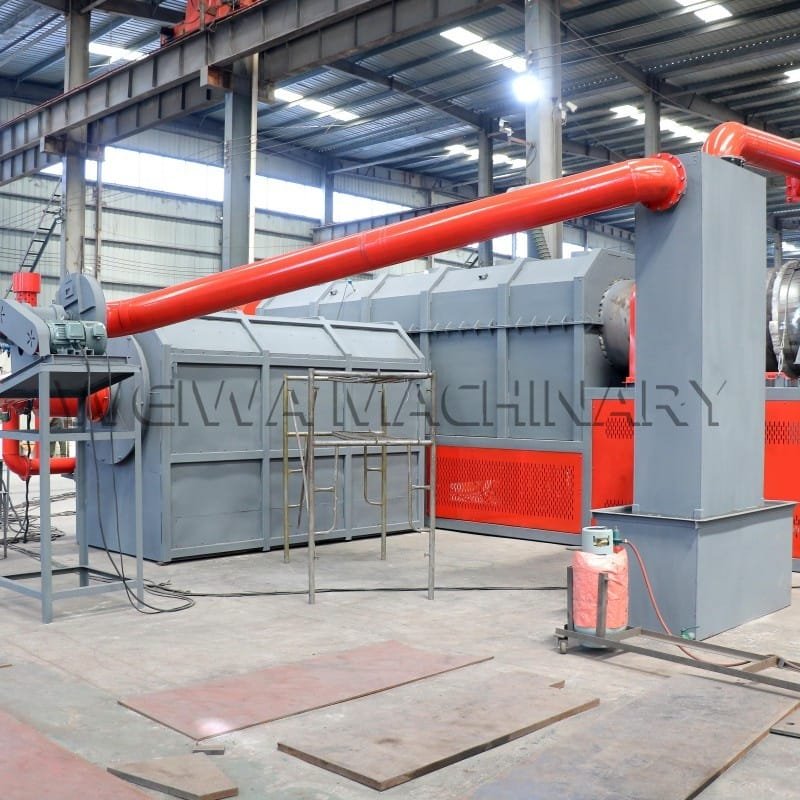
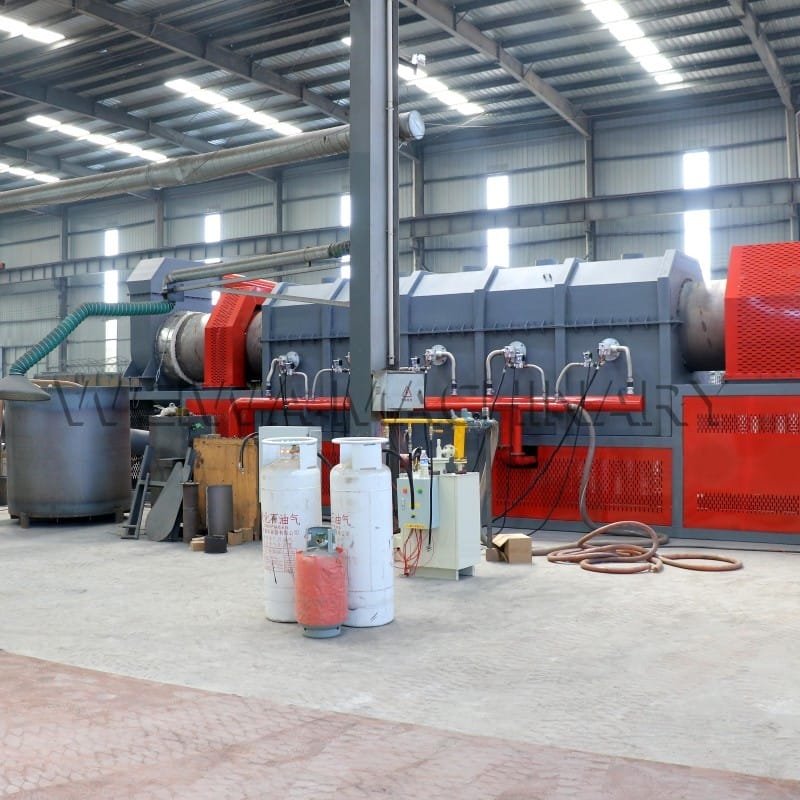
印度尼西亚是东南亚生物质能源和木炭生产最具活力的市场之一. 资源丰富,从椰子壳、棕榈仁壳到稻壳、木片等, 生产高品质生物炭的潜力巨大. 然而, 伴随着这一机遇而来的是当今每个认真的制造商面临的重大挑战: 环境合规性. 随着印尼政府不断收紧工业排放法规, 符合严格的欧盟标准已成为可持续运营和国际贸易的先决条件. 在Weiwa机械, 我们深刻理解这些压力. That is why we have engineered a revolutionary 连续碳化炉 specifically tailored for the Indonesian market—a machine that integrates a high-efficiency 二次燃烧室 to meet and exceed these rigorous demands.
Understanding the Core Technology of 连续碳化炉
Before diving into the specifics of the secondary combustion chamber, it is essential to grasp the fundamental mechanics of a modern 连续碳化炉. Unlike traditional batch-type kilns that require cooling and reloading cycles, a continuous system operates 24 hours a day, 7 days a week. Our design utilizes a sophisticated double-cylinder rotary structure. The inner drum is responsible for pre-drying and initial pyrolysis, while the outer drum handles the main carbonization process. Biomass material spirals through the furnace via a screw propulsion system, ensuring there is no need to stop the feed or discharge process. This mechanism guarantees uniform temperature control, typically maintained between 500°C and 600°C, which is the optimal range for producing premium-grade charcoal with consistent fixed carbon content. For Indonesian producers dealing with high-moisture feedstock like coconut fiber or wet wood chips, this continuous flow is a game-changer for productivity.
The Indonesian Emission Challenge and the EU Standard Benchmark
Indonesia’s Ministry of Environment and Forestry has been progressively increasing scrutiny on industrial smokestack emissions, particularly focusing on pollutants such as Nitrogen Oxides (氮氧化物), Sulfur Dioxide (SO2), and unburned hydrocarbons (挥发性有机化合物). Many local regulations are now modeled after European Union directives, which represent some of the world’s strictest environmental benchmarks. For a Charcoal Making Machine for Thailand or Indonesia, simply burning off gases is no longer sufficient. Without proper treatment, the syngas produced during carbonization—rich in methane (CH4), 一氧化碳 (公司), and hydrogen (H2)—can result in visible smoke and harmful emissions. This not only risks non-compliance and potential factory shutdowns but also damages the corporate image in an era where green credentials are vital for export markets. 所以, the integration of advanced flue gas treatment systems is no longer optional; it is mandatory for survival in the industry.
The Game-Changing Role of the Secondary Combustion Chamber
Recognizing this critical need, Weiwa Machinery’s R&D team focused on innovating the Continuous Carbonization Furnace with Secondary Combustion Chamber. This component is not merely an add-on; it is a core part of the thermal and environmental engineering of the furnace. Positioned strategically after the primary carbonization zone, the secondary combustion chamber acts as a high-temperature incinerator. 这里, we inject additional pre-heated air to create a second-stage oxidation environment where temperatures soar above 1000°C. At this temperature, any remaining combustible gases and tar aerosols are completely oxidized into harmless carbon dioxide and water vapor. This process effectively eliminates black smoke and significantly reduces the emission of pollutants, allowing the exhaust to meet EU-grade standards effortlessly.
Energy Recycling How the Secondary Chamber Saves Fuel and Money
One of the most brilliant aspects of integrating a secondary combustion chamber is the concept of energy recuperation. In a standard 生物炭制造机, the hot flue gas exiting the furnace is often wasted, vented directly into the atmosphere. In our advanced design, the high-temperature gas stream from the secondary combustion chamber is redirected back into the drying section of the 连续碳化炉. This recycled heat energy serves two purposes. 第一的, it preheats the raw biomass, driving off moisture more efficiently and reducing the initial energy load required for pyrolysis. 第二, it supplements the heat required for the carbonization reaction itself. By recovering and reusing this thermal energy, the system achieves a near self-sustaining heat cycle. Operators report a drastic reduction in the consumption of external fuels, such as diesel or natural gas, leading to lower operational costs and a faster return on investment.
Protecting Your Investment Extending Furnace Lifespan
Beyond emissions and energy savings, the secondary combustion chamber provides a crucial protective function for the machinery itself. Direct exposure to open flames and high-velocity combustible gases can cause thermal fatigue and erosion to the internal lining of the furnace over time. By channeling these intense reactions into a dedicated secondary chamber, we shield the primary carbonization drum from direct flame impact. This thoughtful engineering detail significantly extends the service life of the rotary drum and its refractory lining. For factory owners, this means fewer maintenance shutdowns, reduced replacement part costs, and a more stable production schedule. When you purchase a 碳化炉 from Weiwa, you are investing in durability built to withstand the rigors of continuous industrial operation in harsh environments like those found in Kalimantan or Sumatra.
Unlocking Carbon Credits and Green Finance Opportunities
In today’s global carbon economy, environmental performance translates directly into financial assets. Countries and corporations worldwide are purchasing carbon credits (or carbon offsets) to meet their net-zero commitments. 一个 连续碳化炉 equipped with a secondary combustion chamber produces verifiably clean emissions. The documentation proving compliance with EU emission standards opens doors for Indonesian charcoal producers to participate in international carbon trading schemes. By minimizing greenhouse gas leaks (such as methane, which has a global warming potential far higher than CO2), your production process becomes eligible for carbon credit certification. This additional revenue stream can substantially improve the profitability of your biochar project, turning an environmental necessity into a powerful economic advantage.
Tailored Design for Indonesian Raw Materials
Indonesia’s biomass landscape is unique. Whether you are processing coconut shells from Sulawesi, palm waste from Riau, or rubber wood from Java, each material has distinct characteristics. Our engineering team at Weiwa Machinery does not believe in one-size-fits-all solutions. We provide comprehensive customization services. Before manufacturing begins, we analyze your specific feedstock’s moisture content, bulk density, and volatile matter. Based on this data, we adjust parameters such as the rotation speed of the drum, the length of the secondary combustion chamber, and the configuration of the induced draft fan. This bespoke approach ensures that the 木炭制造机 we deliver integrates seamlessly with your existing production line and maximizes the yield of high-quality biochar suitable for both domestic heating and international agricultural markets.
Technical Deep Dive The Synergy of Drying and Carbonization
Let us examine the workflow in greater detail. The raw material enters the feeding hopper and is conveyed into the inner drum of the 连续碳化炉. 这里, the recycled hot air from the secondary chamber raises the temperature to approximately 150-200°C, evaporating surface moisture. The material then moves into the outer carbonization drum. During pyrolysis, organic compounds break down in the absence of oxygen, releasing syngas. Instead of escaping, this syngas is ducted directly into the secondary combustion chamber. 同时, the solid char residue continues its journey through the cooling section before being discharged as the final product. This closed-loop system exemplifies modern engineering efficiency, ensuring that nothing is wasted and that every joule of energy is accounted for.
为什么选择 WEIWA机械 Your Partner in Pyrolysis Technology?
With over thirty years of experience in the machinery manufacturing sector, Weiwa Machinery has established itself as a leader in pyrolysis and biomass conversion technology. We are not just equipment sellers; we are solution providers. Having served more than 2 全球百万客户, we have accumulated unparalleled expertise in tackling real-world production challenges. Our commitment to Indonesian clients goes beyond the point of sale. We offer a professional after-sales service team capable of providing remote guidance and on-site technical support. 此外, we assist clients with site planning and layout design, offering detailed CAD drawings to optimize factory space utilization. We understand that purchasing a 连续碳化炉 is a major capital expenditure, and we ensure that every dollar you invest translates into tangible productivity gains and environmental compliance.
Conclusion Future Proof Your Charcoal Production
The future of charcoal manufacturing in Indonesia belongs to those who embrace innovation and sustainability. Upgrading to a Continuous Carbonization Furnace with Secondary Combustion Chamber is the single most effective step you can take to future-proof your business. It addresses the triple bottom line: protecting the environment by meeting EU emission standards, enhancing economic viability through energy recycling and carbon credits, and ensuring social responsibility by operating a clean, safe factory. Do not let outdated technology hold you back from competing in the global market.
If you are looking for a reliable, 高效的, 并且环保 生物炭制造机, look no further. Contact Weiwa Machinery today to discuss your project requirements. Our engineers are ready to provide you with customized design plans and competitive quotations.
立即联系我们
暴民: +8613838093177
WhatsApp: +8613838093177
电子邮件: info@cjlmachinegroup.com



微信
+8613838093177