


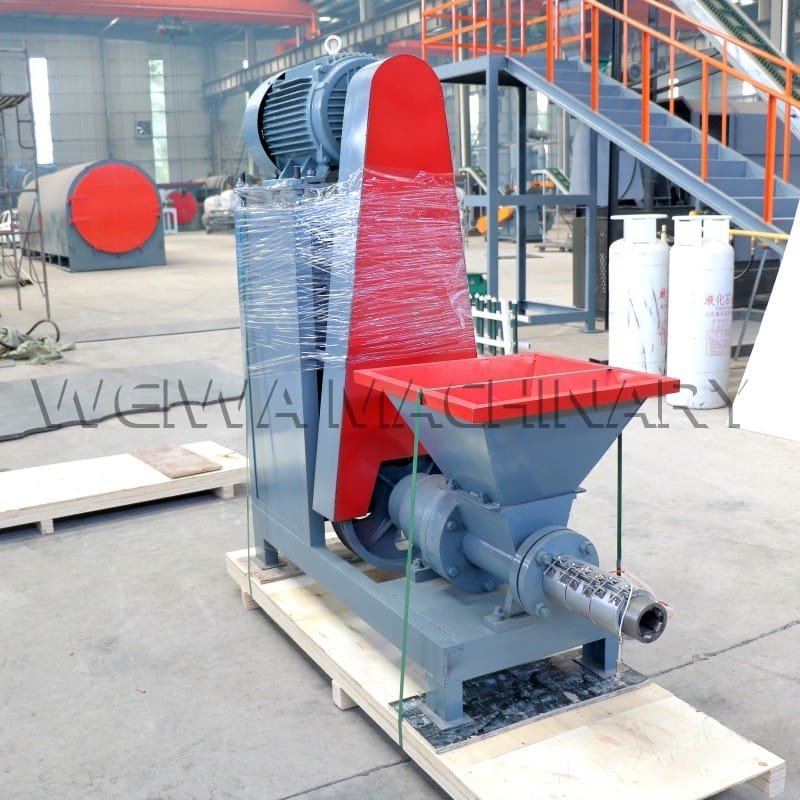
A Milestone Shipment for Green Energy in the Philippines
On a crisp morning at Weiwa Machinery’s production facility, 当工人们小心地将锯末挤出生产线的最终部件装载到集装箱上时,空气中充满了期待. 这不仅仅是另一批货物,它标志着我们在整个东南亚提供可持续能源解决方案的使命中迈出了重要一步. 目的地为菲律宾, 这条生产线将把农业废弃物转化为优质木炭, 应对该地区的环境挑战和经济机遇.
作为生物质加工设备的领先制造商, 威瓦机械很早就认识到木屑木炭生产的潜力. 菲律宾蓬勃发展的木工和家具工业每年产生数百万吨锯末, there’s an urgent need to convert this waste into value-added products. 今天, we’re excited to share the story behind this shipment, the science of sawdust extrusion, and how this technology is reshaping the charcoal industry in the Philippines.
The Growing Demand for Sustainable Charcoal in the Philippines
Environmental Pressures and Waste Management Challenges
The Philippines faces a dual challenge: rising demand for affordable cooking fuel and mounting pressure on its forests. Traditional charcoal production relies heavily on deforestation, contributing to habitat loss and soil erosion. 同时, sawdust—an abundant byproduct of the country’s furniture manufacturing sector—often ends up in landfills or is burned openly, releasing harmful pollutants into the air.
Economic Opportunities in Biomass Conversion
Enter sawdust extrusion technology. By converting sawdust into dense, clean-burning charcoal briquettes, local communities can create a profitable circular economy. These briquettes burn longer than traditional wood charcoal, 产生更少的烟雾, and are cost-effective for households and small businesses. 对于企业家, this represents a low-barrier entry into the renewable energy market.
如何 Sawdust Extrusion Machines 工作?
At the heart of the production line lies the 锯末挤压机—a critical piece of equipment that transforms loose sawdust into uniform briquettes through a process called densification. Let’s break down the key steps:
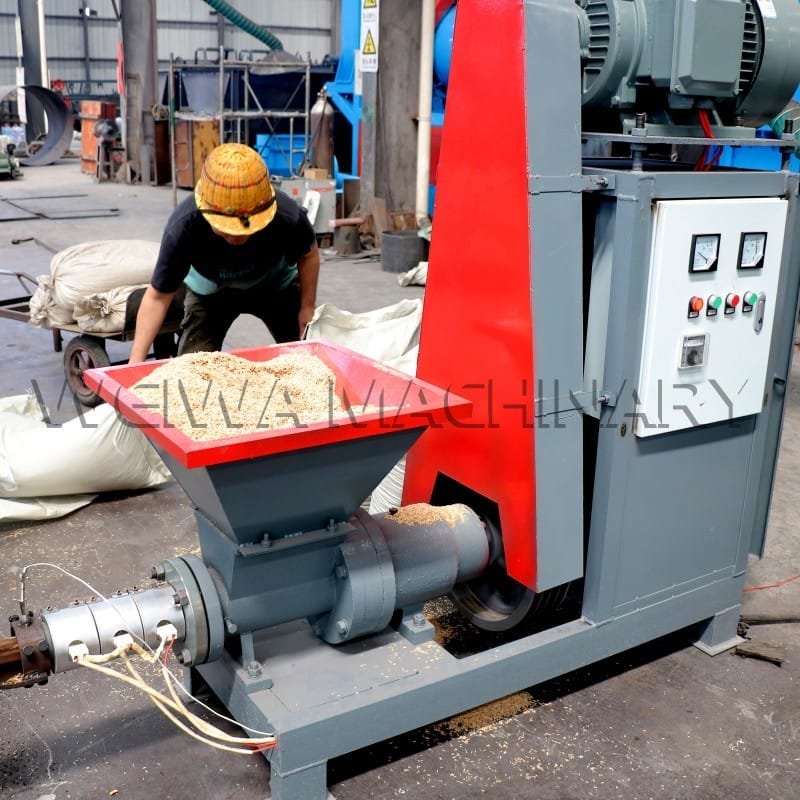
步 1: 原材料准备
Sawdust is first collected and sorted to remove impurities like metal or plastic. It then undergoes drying to reduce moisture content to below 15%, a crucial factor for successful briquetting. Excess moisture weakens the briquettes, making them prone to crumbling during storage or transport.
步 2: Densification via Extrusion
The dried sawdust is fed into the 锯末挤压机, where it’s compressed under high pressure (typically 100–300 MPa) using a screw mechanism. This pressure generates heat, softening lignin—the natural binder in wood fibers—and allowing particles to fuse together. 结果是密集的, cylindrical briquette with minimal void space.
步 3: 冷却和包装
刚挤出的煤球又热又软, so they’re cooled on conveyor belts to harden. 一旦冷却, they’re cut to size and packaged for distribution. The entire process is automated, requiring minimal labor while maintaining consistent quality.
Why Weiwa Machinery’s Sawdust Extrusion Technology Stands Out?
Our sawdust extrusion machines are designed with the unique needs of Southeast Asian markets in mind. 这就是我们的与众不同之处:
High Efficiency and Low Energy Consumption
Equipped with advanced motors and variable-speed drives, our extruders maximize output while minimizing power usage. 例如, a single unit can process 500–1,000 kg of sawdust per hour, making it ideal for small-to-medium-scale operations.
Durability for Harsh Environments
Built with high-strength steel alloys and corrosion-resistant coatings, our machines withstand the humid, tropical climate of the Philippines. We also offer customizations for specific feedstock types, such as coconut shells or rice husks, ensuring optimal performance regardless of raw material variations.
人性化设计
From intuitive control panels to easy-access maintenance points, our equipment is engineered for operators with minimal technical training. We provide comprehensive training programs to ensure your team can run the production line smoothly from day one.
案例研究: Transforming Sawdust Waste in Cebu, 菲律宾
说明我们技术的影响, let’s look at a recent project in Cebu, where a local entrepreneur partnered with Weiwa Machinery to set up a sawdust briquetting plant.
The Challenge
Before adopting our extrusion technology, the entrepreneur relied on imported charcoal, which was expensive and environmentally unsustainable. Local sawmill owners were struggling to dispose of their waste, often paying for landfill fees.
The Solution
We installed a complete production line, including a sawdust dryer, 挤出机, and packaging system. Within six months, the plant was processing 2 tons of sawdust daily, 生产 800 kg of high-quality briquettes.
结果
- 节省成本: Briquette production costs were 40% lower than importing charcoal.
- 减少废物: Sawmill owners now earn extra income by selling sawdust, eliminating disposal costs.
- Market Adoption: Local restaurants and households quickly switched to the cleaner-burning briquettes, 减少室内空气污染.
The Future of Charcoal Production in the Philippines
As global awareness of climate change grows, the demand for sustainable alternatives to fossil fuels will only increase. 在菲律宾, sawdust extrusion technology offers a roadmap to a greener future—one where waste becomes wealth, and communities thrive.
Weiwa Machinery is committed to supporting this transition. Our team of engineers and technicians is already planning follow-up visits to the Philippines to provide ongoing support and explore new applications, such as biochar production for agriculture.
关于 WEIWA机械
成立于 2010, Weiwa Machinery has established itself as a trusted name in biomass processing equipment. Specializing in sawdust extruders, 压块机, 并完成生产线, 我们为超过 50 国家. 我们的使命很简单: to deliver innovative, 可靠的, and eco-friendly solutions that drive sustainable development.
Whether you’re a small business owner looking to start a briquetting venture or a large corporation seeking to reduce waste, 威瓦机械拥有专业知识和设备来帮助您取得成功. 请立即联系我们,了解有关我们产品和服务的更多信息.
联系我们
- Mobile/WhatsApp: +86 13838093177
- 电子邮件: info@cjlmachinegroup.com
Join us in shaping a cleaner, more sustainable world—one briquette at a time.


 微信
微信

 +8615937143060
