


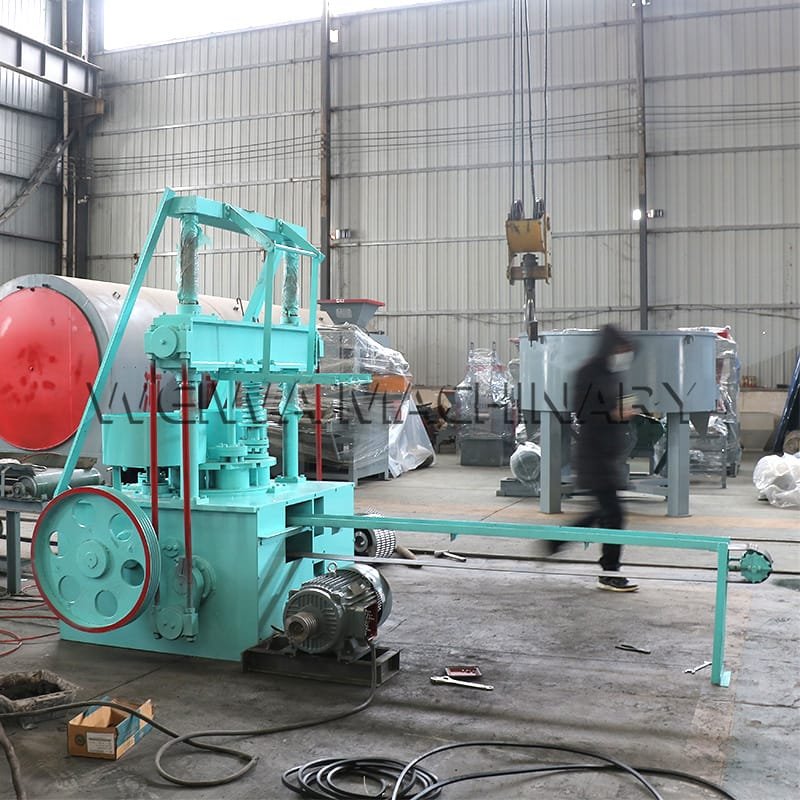
Understanding the Global Demand for Honeycomb Briquette Charcoal Machines
Across West Africa, 能源格局正在经历悄然但重大的转变. 传统木柴和块木炭, 几代人为家庭和小型工业服务, 正在逐渐为更有效的替代品腾出空间——煤基蜂窝煤. At the center of this shift sits one indispensable piece of equipment: the honeycomb briquette charcoal machine.
在加纳, the charcoal briquette market has been growing at a compound annual rate exceeding 7 百分比, driven by rising urbanization, increasing fuel costs, and a government-backed push toward cleaner cooking solutions. A honeycomb briquette charcoal machine in Ghana is no longer an industrial curiosity; it has become a strategic asset for entrepreneurs looking to enter the cooking fuel supply chain with a product that burns longer, 产生更少的烟雾, and costs less per unit of heat delivered than traditional alternatives.
Weiwa Machinery has been manufacturing coal briquettes making machine equipment for over three decades. During that time, we have shipped hundreds of units to more than 130 国家, and West Africa — Ghana in particular — has emerged as one of our most important and fastest-growing markets. The reason is straightforward: Ghanaian buyers demand machines that can handle local raw materials, operate reliably under continuous production conditions, and produce briquettes that meet the precise size and density expectations of end-users who cook with them daily.
When a Ghana-based enterprise recently approached us to commission a full-scale trial of our honeycomb charcoal coal briquette forming machine, we recognized it as an opportunity to demonstrate something that goes beyond a typical factory acceptance test. The trial would become a hands-on educational experience — a detailed walkthrough of how the machine works, what the samples reveal about quality control, and why the engineering decisions behind each component matter for long-term profitability.
The Science Behind a 蜂窝冲孔机
Before describing the trial itself, it is worth pausing to understand what a honeycomb punching machine actually does and why its internal mechanics are so critical to the quality of the finished briquette. Many first-time buyers assume that briquetting is simply about compressing powder into shape. 现实中, the process demands a carefully engineered interplay between material preparation, 模具几何形状, press force, and ejection timing.

Raw Material Preparation and Its Impact on Briquette Quality
A honeycomb briquette charcoal machine does not operate in isolation. What enters the machine determines, to a large extent, what comes out. The raw material — typically a mixture of coal powder or charcoal dust combined with a binding agent such as clay, 淀粉, or molasses — must meet three criteria before it is fed into the hopper.
第一的, particle size must be consistent. The ideal feedstock passes through a sieve with openings no larger than 3 毫米. Oversized particles create weak points in the finished honeycomb structure, leading to cracks during handling and uneven combustion. 第二, moisture content must fall within a narrow band, typically between 12 和 16 百分比. 太干, and the briquette crumbles upon ejection; 太湿了, and the briquette deforms under its own weight before it can be dried. 第三, the binder-to-fuel ratio must be precisely calibrated. 在加纳, where local coal varieties have unique ash and volatile matter profiles, this calibration often requires test runs with actual customer-supplied raw materials — which is exactly what we prepared for during this trial.
How the Rotary Table and Punch-Head Mechanism Operate?
At the heart of every honeycomb charcoal coal briquette forming machine is a rotary table carrying multiple mold barrels. As the table indexes through its cycle, each mold barrel passes under a filling station, a compression station, and an ejection station. The punch-head — a hardened steel component with precisely machined pins — descends into the filled mold barrel at the compression station, applying a force typically ranging from 20 到 40 tons depending on the model.
What makes this design particularly effective for honeycomb-shaped briquettes is the combination of downward compression and the resistance provided by the mold barrel walls. The powder is not simply pressed; it is consolidated under conditions that allow air to escape while the binder activates and begins to set. The resulting briquette achieves a density that balances structural integrity with the porosity required for clean combustion.
The honeycomb punching machine derives its name from the distinctive perforation pattern created by the punch-head pins. These cylindrical holes — typically nine, twelve, or nineteen depending on the briquette diameter — serve a dual purpose. Structurally, they create thin walls of compressed material that heat evenly during combustion. Aerodynamically, they provide the airflow channels that sustain a steady burn without smoke or flare-ups. A briquette with poorly formed or misaligned holes will not burn predictably, which is why mold precision is so heavily scrutinized during factory trials.
Model Selection for Different Production Scales
Weiwa Machinery offers four standard models of the coal briquettes making machine in its honeycomb series, each designed for a distinct production profile. 这 140 模型, driven by a 7.5 kW motor and achieving 32 到 45 每分钟冲程, produces briquettes with a diameter of 140 millimeters at an output of 0.8 到 1.2 吨每小时. This model suits small to medium enterprises entering the market for the first time. 这 160 模型, also with a 7.5 千瓦电机, increases the briquette diameter to 160 millimeters and output to between 1 和 1.5 tons per hour — a popular choice for growing businesses that have established distribution channels.
For higher-volume operations, 这 220 model steps up to an 11 千瓦电机, 交付 2 到 3 tons per hour with a briquette diameter of 220 毫米. The largest configuration, 这 260 模型, uses a 15 kW motor to produce 3 到 4 吨每小时. Briquette height is adjustable across all models within a range of 30 到 140 毫米, giving producers the flexibility to match their customers’ stove dimensions precisely.
The Ghanaian client participating in our trial had initially expressed interest in the 160 模型, which aligned well with their projected daily output target of approximately 10 到 12 tons across a single shift. After reviewing their growth plans during the pre-trial consultation, we recommended they observe both the 160 和 220 models in operation so they could make an informed decision about future capacity needs without underinvesting at the outset.
A Honeycomb Briquette Charcoal Machine in Ghana-Ready Configuration
The trial took place at Weiwa Machinery’s manufacturing facility in Gongyi City, 河南省. The client delegation — comprising a production manager, a quality control specialist, and the company’s managing director — spent two full days observing, questioning, and ultimately operating the equipment themselves under the supervision of our engineering team.
Day One: Machine Setup and Parameter Calibration
The first morning was dedicated to machine preparation. Our engineers walked the clients through every step of the setup process, from leveling the base frame and aligning the motor coupling to installing the mold barrel set configured for the 160-millimeter diameter specification requested by the Ghanaian team. This transparency served a practical purpose: when the machine arrives in Ghana, the client’s own technicians will need to perform these same procedures during installation and periodic maintenance.
Parameter calibration consumed the rest of the morning. Using the raw material blend provided by the client — a mixture of locally sourced Ghanaian coal powder, 木炭粉, and a starch-based binder — our team adjusted the feed gate opening to match the particle size distribution of the feedstock. The compression stroke depth was set to produce briquettes with a target height of 80 毫米, which the client had identified as the standard size for their target market’s cooking stoves.
A critical calibration involved the moisture injection system. Because the client’s raw material arrived with a moisture content of approximately 9 percent — below the optimal 12 到 16 percent range — we introduced a controlled water spray at the mixing stage to bring the feedstock into specification. This adjustment, seemingly minor, would prove decisive for briquette integrity during the production runs later in the day.
Day One Afternoon: Continuous Production and Real-Time Quality Checks
With the 蜂窝木炭型煤成型机 fully calibrated, production began in earnest. The rotary table cycled smoothly at 38 每分钟冲程, and within the first five minutes, the ejection station was delivering uniform honeycomb briquettes at a rate consistent with the projected output of approximately 1.2 吨每小时.
Our quality control team, working alongside the client’s specialist, pulled samples every 15 minutes for dimensional inspection. Using digital calipers, they measured briquette diameter at three points, hole diameter at six points, and overall height at four points. The acceptance criteria — diameter tolerance of plus or minus 2 毫米, hole alignment deviation of no more than 1 毫米, and height tolerance of plus or minus 3 millimeters — were met consistently across all samples collected during the two-hour continuous run.
Density testing added another layer of verification. Random samples were weighed on a calibrated digital scale immediately after ejection, and their volume was calculated from measured dimensions. The average density of 1.15 grams per cubic centimeter fell well within the target range of 1.05 到 1.25 grams per cubic centimeter — dense enough for structural durability during transport and storage, yet porous enough for reliable ignition and clean combustion.
Day Two: Stress Testing and Operator Training
The second day shifted focus from steady-state performance to edge-case resilience. Our engineers deliberately introduced variations in feedstock moisture — from the optimal 14 percent down to 10 percent and up to 18 percent — to demonstrate how the machine responds to real-world inconsistencies that operators in Ghana might encounter. 在 10 水分百分比, briquette surface roughness increased slightly, but the structural integrity remained acceptable. 在 18 百分比, ejection became slightly stickier, requiring a minor adjustment to the mold barrel lubrication interval. The client’s production manager noted these observations carefully, understanding that the rainy season in Ghana could introduce exactly these kinds of moisture fluctuations.
Operator training occupied the remainder of the trial. Under the supervision of Weiwa’s senior technician, each member of the Ghanaian delegation took turns operating the 蜂窝冲孔机 independently — loading the hopper, monitoring the pressure gauge, clearing occasional feed blockages, and performing the shutdown sequence. The hands-on training was recorded on video for the client to use as a reference when training their own staff back in Ghana.
A particularly instructive moment came when the client asked about the wear patterns they should expect on the punch-head pins over time. Our engineer removed a punch-head assembly from a machine that had been in continuous service at our testing facility for over 2,000 小时. The pins showed measurable but uniform wear — approximately 0.3 millimeters of reduction in diameter at the tip — confirming that under proper lubrication and with correctly prepared feedstock, the punch-head has a service life of approximately 3,000 到 5,000 hours before replacement is advisable.
Sample Analysis: What Quality Honeycomb Briquettes Look Like
审判结束时, 这 型煤成型机 had produced approximately 3.5 tons of finished briquettes. Rather than simply stacking the output, our team guided the client through a structured sample analysis that examined every quality dimension that matters to end-users in the Ghanaian market.
Visual and Structural Inspection
A high-quality honeycomb briquette exhibits a uniform dark gray to black surface with no visible cracks, flaking, or color variation. The edges should be sharp and well-defined — rounded or crumbled edges suggest insufficient compression force or binder deficiency. The holes must be cleanly punched through the full height of the briquette. Partial or obstructed holes, which can occur if the punch-head pins are worn or if feedstock contains oversized particles, result in uneven combustion and customer complaints.
We laid out 50 randomly selected samples on an inspection table and invited the client’s quality specialist to examine each one under bright lighting. 全部 50 samples passed the visual standard, with hole alignment confirmed by inserting a go/no-go gauge pin through each perforation.
Combustion Testing
Visual quality alone does not guarantee performance in the cooking fire. To validate the briquettes under realistic conditions, we conducted a controlled burn test using a standard Ghanaian-style metal cooking stove. Five sample briquettes were ignited using a small amount of kindling, and the time to full ignition, burn duration, smoke production, and ash residue were recorded.
The briquettes achieved full ignition — defined as a uniform orange glow across the entire surface — within 4 到 6 分钟, which is consistent with the performance expectations for well-made honeycomb briquettes. Burn duration averaged 72 minutes per briquette under steady-state conditions, meaning a single briquette can sustain cooking for well over an hour. This is a critical selling point in Ghana, where households often prepare meals that require extended simmering.
Smoke production was minimal after the initial ignition phase. The clean burn results from the combination of properly calibrated binder content — which minimizes volatile organic compounds — and the aerodynamic hole pattern that ensures complete combustion of the fuel. Ash residue at the end of the burn cycle was approximately 8 percent of the initial briquette mass, within the acceptable range for coal-based honeycomb briquettes.
Drop and Transport Simulation
Briquettes destined for the Ghanaian market face a demanding logistics chain. They travel from the production facility to distributors, then to retailers, and finally to end-users — often on unpaved roads and in vehicles without suspension damping. A briquette that cannot survive this journey is a briquette that represents lost revenue.
We simulated transport stress by subjecting 20 bundled briquettes — wrapped in the standard 10-piece paper sleeve used by Ghanaian distributors — to a series of controlled drops from heights of 0.5, 1.0, 和 1.5 meters onto a concrete floor. After each drop, the bundles were unwrapped and each briquette inspected for cracks, edge damage, and hole deformation. 在 0.5 米, zero defects were observed. 在 1.0 米, one briquette developed a minor edge chip that did not affect structural integrity. 在 1.5 米, two briquettes showed small cracks that would likely cause breakage during use. These results were consistent with the performance of commercial-grade honeycomb briquettes and reinforced the importance of careful handling during the final distribution stage.
Why the Ghana Market Favors This Technology
Understanding why a honeycomb briquette charcoal machine in Ghana represents such a compelling investment requires looking beyond the machine itself and into the economics of cooking fuel in West Africa. Ghana imports a significant portion of its cooking fuel, and the price volatility of LPG — compounded by periodic subsidy adjustments — has created persistent demand for affordable solid fuel alternatives. Charcoal and coal briquettes fill this gap, particularly in urban and peri-urban areas where households use metal stoves designed specifically for honeycomb-shaped fuel.
The economics are straightforward. A single honeycomb briquette charcoal machine operating at the output level of the 160 model can produce between 8 和 12 tons of finished briquettes per day. At a wholesale price of approximately 150 到 250 Ghanaian cedis per ton (depending on region and quality), a producer can generate daily revenue that comfortably covers raw material costs, 劳动, 电, and machine depreciation while leaving a healthy margin. The capital recovery period for the machine itself, based on conservative production and pricing assumptions, typically falls between six and twelve months.
Beyond pure economics, the honeycomb briquette format offers practical advantages that resonate with Ghanaian consumers. The uniform shape means consistent cooking times, which matters when preparing staple dishes like banku, fufu, and jollof rice that require predictable heat. The perforations ensure that the briquette lights easily — an important consideration for households that may not have access to electric starters or gas torches. And the clean burn, with reduced smoke relative to traditional wood charcoal, aligns with growing health awareness around indoor air pollution.
Another factor driving demand for the honeycomb briquette charcoal machine in Ghana is the regulatory environment. The Ghanaian government has implemented policies aimed at reducing deforestation caused by traditional charcoal production, including restrictions on logging for charcoal burning in certain regions. These policies, combined with tax incentives for businesses engaged in alternative energy and clean cooking solutions, create a favorable investment climate for briquette production enterprises. A producer who enters the market now, with reliable equipment and a consistent supply chain, positions themselves ahead of a regulatory curve that will only tighten in the years ahead.
The distribution infrastructure in Ghana is also maturing in ways that benefit briquette producers. Major urban centers — Accra, 库马西, Tamale, and Sekondi-Takoradi — are connected by an improving road network, and the wholesale fuel distribution channels that already serve the LPG and kerosene markets are increasingly open to handling solid fuel products. A coal briquettes making machine operator who establishes reliable production can leverage existing distribution partnerships rather than building a logistics network from scratch, significantly shortening the path from factory gate to end-user.
Technical Advantages That Differentiate Weiwa’s Approach
Every honeycomb charcoal coal briquette forming machine on the market shares the same basic operating principle. What distinguishes one manufacturer’s offering from another lies in the details of engineering execution, material selection, and after-sales support infrastructure.
Hardened Mold Components for Extended Service Life
The mold barrel and punch-head assembly represent the highest-wear components in any coal briquettes making machine. 在Weiwa机械, we manufacture these components from high-chromium alloy steel that undergoes a multi-stage heat treatment process — quenching to achieve a surface hardness of 58 到 62 HRC, followed by tempering to relieve internal stresses that could lead to premature cracking. This treatment regimen, developed and refined over three decades of production experience, extends the service interval between mold replacements by approximately 30 到 40 percent compared to standard mold assemblies.
Precision-Machined Rotary Table Indexing
The rotary table that carries the mold barrels through their cycle must index with absolute precision. A misalignment of even half a millimeter between the mold barrel center and the punch-head axis results in asymmetric briquettes, uneven punch-head wear, and eventual machine vibration that accelerates bearing fatigue. Our rotary tables are machined on CNC boring mills that maintain a positional accuracy of 0.02 millimeters — a tolerance that is verified on every machine before it leaves the factory floor.
Adaptable Feedstock Handling
Ghanaian coal and charcoal feedstock varies significantly by region and supplier. A machine that works perfectly with one batch of raw material may struggle with another if the feed system cannot accommodate variation in particle size, 水分, or binder composition. 维瓦的 蜂窝冲孔机 incorporates an adjustable feed gate mechanism and a counter-rotating agitator in the hopper that prevents bridging and ensures consistent material flow even when feedstock characteristics change. This adaptability was demonstrated during the Ghana trial when we switched between the client’s supplied material and our standard test blend without any adjustment to the core machine settings beyond the feed gate position.
Energy Efficiency and Motor Protection
Electricity costs represent a significant portion of operating expenses for a briquette production facility, particularly in regions where grid power is expensive or unreliable. Our machines are paired with motors from established Chinese manufacturers — predominantly Y-series or YE3-series high-efficiency units — that deliver the rated power at a power factor above 0.85. The motor starter circuit includes phase-loss protection and overload cutoff, which is especially important in Ghana where voltage fluctuations can damage unprotected equipment.
Bearing and Lubrication System Design
Bearings in a 型煤成型机 operate under heavy radial and axial loads, and any bearing failure during a production shift means costly downtime and potential damage to mating components. Weiwa specifies double-row spherical roller bearings at all major load points — the main crankshaft, the rotary table spindle, and the punch-head guide assembly. These bearings are selected for their ability to accommodate shaft misalignment up to 1.5 degrees without compromising service life, which is a practical necessity in production environments where minor frame settling can occur over months of continuous operation.
The lubrication system deserves particular attention because inadequate or contaminated lubricant is responsible for the majority of premature bearing failures in briquette machinery. Our machines feature a centralized grease distribution manifold that delivers metered quantities of lithium-complex grease to each bearing point on a programmable schedule. Operators in Ghana, where ambient temperatures regularly exceed 35 degrees Celsius during the dry season, should use a grease with a dropping point above 200 degrees Celsius to prevent lubricant thinning and migration away from contact surfaces. We specify NLGI Grade 2 grease with extreme-pressure additives for all standard operating conditions and provide a lubrication schedule card — printed and laminated — with every machine shipment.
Safety Interlocks and Operator Protection
Industrial safety standards in Ghana are evolving rapidly, and Weiwa Machinery designs its equipment to comply with both Chinese GB standards and the relevant ISO machine safety directives. 这 蜂窝冲孔机 is equipped with a transparent polycarbonate guard that encloses the punch-head operating zone. The guard is interlocked with the main motor contactor — if the guard is opened while the machine is running, the motor stops within two seconds. An emergency stop button, wired into the control circuit at the normally-closed contact position, is positioned within arm’s reach of the operator station and is clearly marked with a red mushroom-head actuator.
Electrical enclosures carry an IP54 ingress protection rating, making them resistant to the coal dust and high humidity that characterize briquette production environments. All metallic enclosures are bonded to a common earth ground, and the power cable entry points are fitted with compression glands that prevent dust ingress while maintaining the enclosure’s protection rating.
Daily Maintenance Protocols for Sustained Production in Ghana
Owning a honeycomb briquette charcoal machine is one thing; keeping it running profitably year after year is another. During the Ghana client trial, our engineers devoted a dedicated session to daily, weekly, and monthly maintenance procedures — not as a formality, but because maintenance discipline is the single largest determinant of machine longevity in West African operating conditions.
Daily Inspection Checklist Essentials
Every production day should begin with a ten-minute walk-around inspection before the machine is powered on. The operator should check the oil level sight glass on the main gearbox — a level below the center mark indicates either leakage or consumption, both of which require investigation before starting production. All grease nipple caps should be present and free of caked dust; a missing cap allows abrasive particles to enter the bearing housing, accelerating wear.
The hopper interior should be inspected for caked or hardened material residue from the previous day’s production. Material that has dried and hardened overnight can break loose during feeding and jam the mold barrel inlet, causing a stoppage that takes twenty to thirty minutes to clear. A simple scrape-down with a wooden paddle at the end of each shift prevents this entirely.
The punch-head pins demand particular attention because their condition directly affects briquette hole quality. The operator should run a finger along each pin — wearing gloves — to feel for nicks, gouges, or uneven wear. A pin with surface damage will produce briquettes with rough-edged holes that fracture during handling or burn irregularly. Pins showing visible wear should be replaced during scheduled downtime rather than waiting for a production-affecting failure.
Weekly Deep Maintenance
On a weekly basis, the mold barrel interior surfaces should be inspected with a bore light. Scoring or galling on the barrel walls indicates either contaminated feedstock — check for silica sand or metallic particles in the raw material — or insufficient mold barrel lubrication. The compression stroke limit switch should be tested by cycling the machine without material and verifying that the punch-head stops at the correct bottom-dead-center position. A limit switch that drifts over time will produce progressively shorter briquettes, and the height reduction is often subtle enough that operators do not notice until a customer complaint triggers an investigation.
The V-belt tension between the motor and the main drive pulley should be checked with a tension gauge and compared against the specification in the machine manual. Belts that are too loose slip under load, generating heat and reducing power transmission efficiency. Belts that are too tight impose excessive radial load on the motor and gearbox input shaft bearings. A correctly tensioned belt deflects approximately 10 到 15 millimeters when pressed firmly with a thumb at the midpoint between pulleys.
Commissioning Your Own Honeycomb Briquette Charcoal Machine
For buyers considering a 蜂窝煤木炭机 for their operation in Ghana or elsewhere in West Africa, the trial process we have described here represents the ideal pre-purchase experience. 然而, we recognize that not every buyer can travel to Gongyi for an in-person trial. For those situations, Weiwa Machinery offers remote commissioning support through several alternative channels.
We can conduct a live video trial using samples of your raw material. Simply ship approximately 50 kilograms of your feedstock to our factory by international courier. Our engineers will run the material through the machine configured to your specifications while streaming the entire process via video call. You will see the briquettes being formed in real time, and we will ship the finished samples back to you for your own inspection and burn testing.
For clients who prefer to commission the machine after it arrives at their facility, we provide comprehensive installation and commissioning documentation — including step-by-step illustrated manuals and training videos — that guides your local technicians through every phase of setup and startup. Our engineering team also offers remote support via WhatsApp video call during the first week of operation, which has proven to be an effective way to resolve minor commissioning issues without the cost and delay of dispatching a service engineer.
Preparing Your Site Before the Machine Arrives
A common mistake that delays commissioning is inadequate site preparation. The honeycomb briquette charcoal machine requires a level concrete foundation pad with anchor bolt pockets cast to the dimensions specified in the foundation drawing we provide with every quotation. The foundation should cure for at least seven days before the machine is placed. Three-phase electrical power, typically 380V at 50Hz for Ghana’s grid standard, must be available within five meters of the machine location, terminated at an isolator switch with the correct current rating for the motor size plus a 25 percent safety margin. A water supply for the mixing station — even a gravity-fed tank elevated above the mixer — and a covered raw material storage area protected from rain are equally essential. Clients who complete these preparations before the machine ships typically achieve first production within three to five days of the container arriving on site.
Spare Parts Strategy for Uninterrupted Operation
Every honeycomb charcoal coal briquette forming machine shipment from Weiwa Machinery includes a recommended spare parts package tailored to the specific model and the client’s projected production volume. 对于 160 model purchased by many Ghanaian operators, the standard spares package includes two sets of punch-head pins, one complete mold barrel assembly, a set of drive belts, a set of hopper agitator blades, and an assortment of grease nipple fittings, limit switch contacts, and control circuit fuses. These spares cover the most common wear and replacement items for approximately the first twelve months of operation.
We strongly recommend that Ghana-based operators maintain an additional local inventory of consumables that are not machine-specific but are critical to production continuity — namely, the binding agent (淀粉, 黏土, 或糖蜜), mold release compound for the barrel lubrication system, and the specific grade of grease specified for the centralized lubrication system. Running out of binder on a Friday afternoon and waiting until Monday for a resupply is a scenario that every production manager has experienced and that proper inventory management can prevent entirely.
关于 WEIWA机械
河南维瓦机械制造公司, Ltd brings over 30 years of manufacturing experience to the briquette machinery industry. 总部位于巩义市, 河南省, we operate from a production facility spanning 200,000 平方米, staffed by a team of more than 15 senior project consultants and supported by 15 专利技术. Our product range encompasses the full spectrum of briquette production equipment — honeycomb briquette machines, 球机器, 锯末挤出机, shisha press machines, 碳化炉, 压碎机, and dryers — allowing us to deliver complete turnkey production lines rather than isolated pieces of equipment.
We hold CE, 通标公司, 和 ISO 认证, and our machines are currently operating in over 130 亚洲国家, 非洲, 中东, 欧洲, 和美洲. Every machine we ship is backed by a one-year warranty on major components, lifetime technical consultation, and access to our spare parts inventory. Our commitment is straightforward: when you purchase a Weiwa machine, you are not just buying equipment — you are entering a partnership with a manufacturer that prioritizes your long-term production success.
Contact Weiwa Machinery today to discuss your briquette production requirements or to schedule a trial.
-
- 移动的 / WhatsApp: +8613838093177
- 电子邮件: info@cjlmachinegroup.com


 微信
微信

 +8615937143060
