


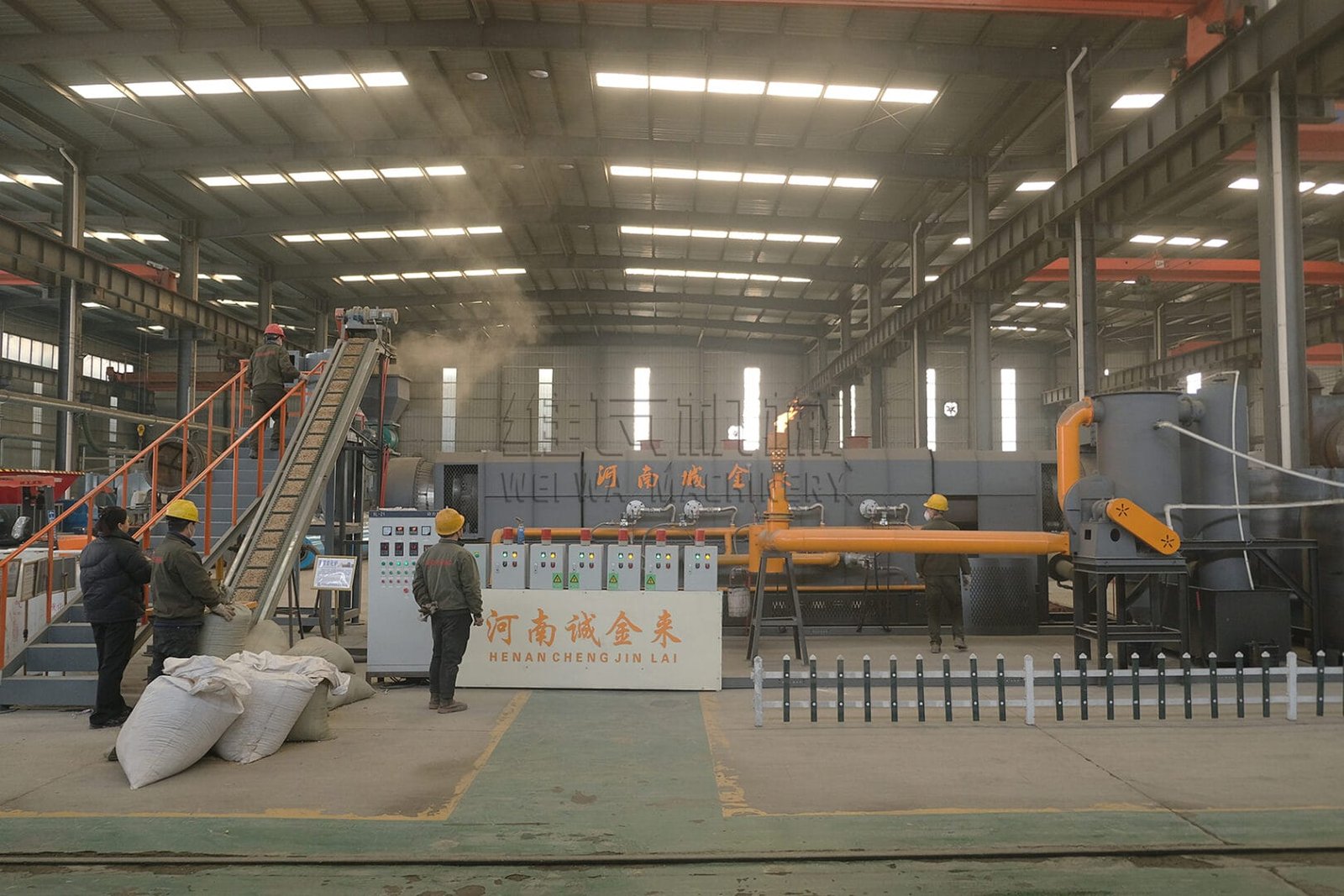
作为生物质炭化、压块设备的专业制造商, 威瓦机械一直致力于为全球生物质废弃物回收提供高效、环保的解决方案. 最近几年, 农业对生物炭的需求, 行业, 可再生能源行业增长迅速. 印度尼西亚, 作为世界上最大的棕榈油生产商之一, 每年产生数百万吨棕榈仁壳. 这些棕榈仁壳传统上没有得到充分利用或被公开焚烧, 引起环境问题
了解 连续碳化炉 及其工作原理
连续式炭化炉是一种先进的热处理系统,旨在通过不间断进料和出料方式将生物质材料通过限氧热解转化为生物炭. 与传统间歇窑不同,传统间歇窑在每个周期后都需要冷却和重新装载, 连续式碳化炉能够 24/7 运行时具有一致的温度控制和更高的能源效率. 典型结构包括双筒回转滚筒,内滚筒负责干燥和预热, 外筒保持炭化温度. 生物质原料,例如棕榈仁壳, 椰子壳, 稻壳, 木屑, 木片在受控条件下螺旋穿过炉子.
碳化过程中, 有机材料在 450°C 至 600°C 的温度下分解, 释放主要由一氧化碳组成的挥发性气体, 甲烷, 和氢气. 这些可燃气体被收集, 纯化的, 并重新进入燃烧室作为补充热源. 该气体回收系统使连续式炭化炉在初始预热后实现自持热循环, 显着降低外部燃料消耗. 整个过程密封,最大限度减少烟雾排放,确保环保合规. 均匀的停留时间和精确的温度控制使生物炭质量稳定,固定碳含量高, 低水分, 以及适合农业和工业应用的良好孔隙度.
连续式碳化炉特别适合大规模生物质加工,因为它消除了停机时间, 降低劳动强度, 并提供可预测的输出. 对于印度尼西亚处理丰富棕榈仁壳的投资者, 该技术代表了从废物处理到增值生物炭生产的变革性一步. 威瓦机械精益求精的结构设计, 密封机构, 我们的连续碳化炉适应热带气候的自动化水平, 高湿度原料, 以及印度尼西亚种植园和棕榈油厂常见的当地电力配置.
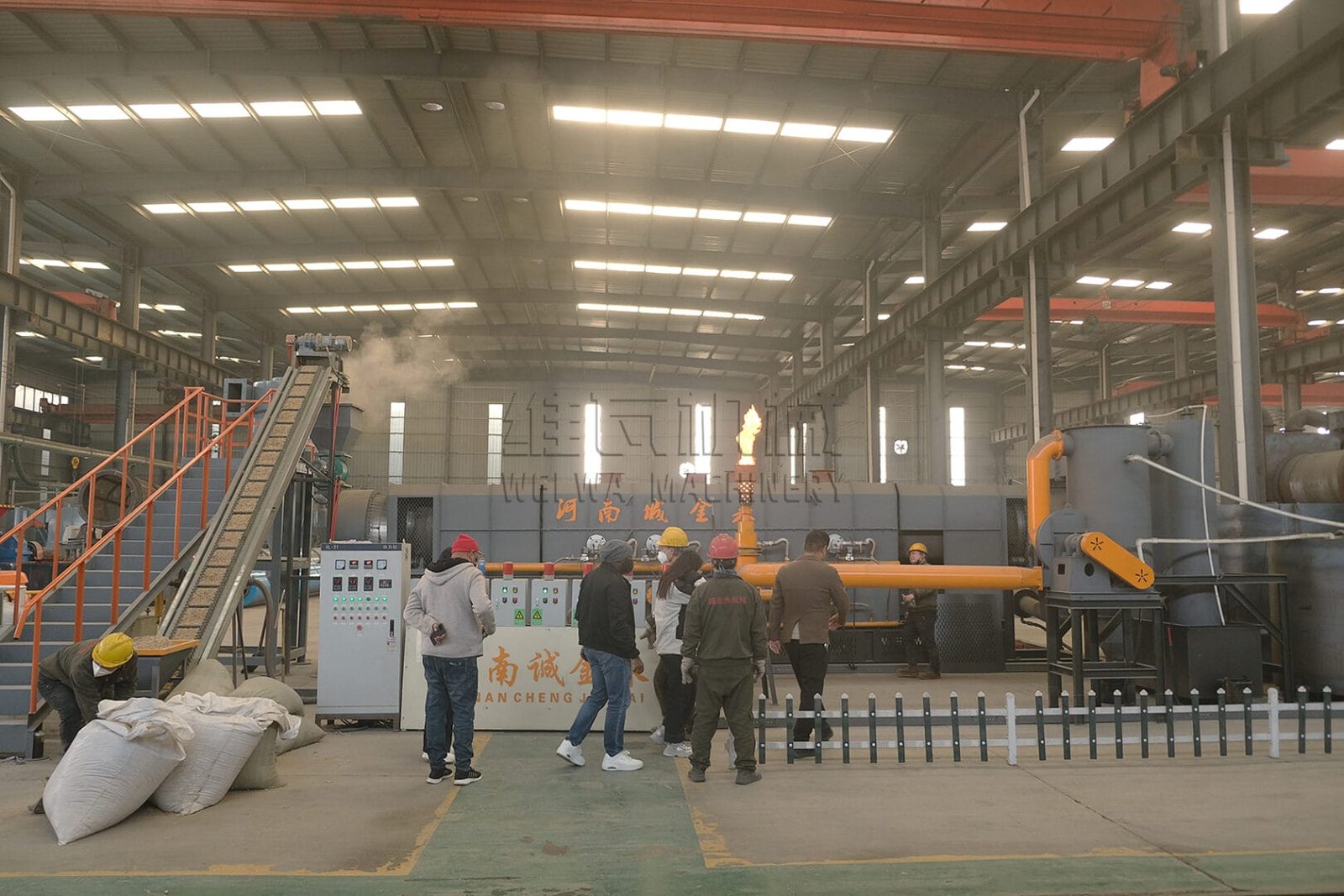
为什么印度尼西亚是连续碳化炉部署的战略市场?
印度尼西亚产量超过 45 每年产生数百万吨棕榈仁壳,作为棕榈油工业的副产品. 大部分 PKS 要么被储存, 用作低品位锅炉燃料, 或通过露天焚烧不当处置. 随着环境法规的压力越来越大以及人们对土壤退化的认识不断增强, 印度尼西亚利益相关者正在积极寻求可持续的替代方案. 由 PKS 生产的生物炭不仅可以固碳,还可以作为土壤改良剂以改善保水性, 养分利用率, 和酸性热带土壤中的微生物活动. 此外, 高品质 PKS 生物炭可加工成烧烤木炭, 水烟木炭, 或在工业应用中用作还原剂.
印尼政府出台多项政策支持可再生能源, 减少废物, 和低碳农业. 对生物炭生产商的补贴, 限制露天焚烧农业废弃物, 国家温室气体减排目标为采用现代制炭机创造了有利的生态系统. 而且, 印度尼西亚的地理位置使生物炭和木炭产品能够高效地出口到亚洲, 中东, 和欧洲. 对于像威瓦机械这样的设备制造商, 丰富的生物质的组合, 监管动力, 和市场需求使印尼成为连续式炭化炉应用最有前景的地区之一.
另一个关键因素是印度尼西亚生物质资源的多样化,超越棕榈仁壳. 来自沿海地区的椰子壳, 来自爪哇的稻壳, 来自苏门答腊岛的橡胶木锯末, 棕榈种植园的空果串都是连续碳化炉的可行原料. 安装在区域中心的一台机器可以处理多种生物质类型,只需稍微调整进料速度, 温度区, 和停留时间. 这种灵活性提高了投资回报并降低了原料短缺的风险, 这对于印度尼西亚等群岛市场的长期运营至关重要.
印尼连续式炭化炉现场试验准备
连续式炭化炉部署前, 威瓦机械技术团队前往印度尼西亚客户现场评估基础设施, 生物质可用性, 和操作要求. 选择用于试验过程的棕榈油厂大约 30 每小时产生数吨新鲜水果串,产生约 18 到 20 每天吨棕榈仁壳. PKS 水分含量范围为 12% 到 18% 取决于季节风化, 且粒径大多在以下 30 毫米, 符合我们的连续碳化炉的进料要求,无需大量预破碎.
现场已有380V三相电源, 设备布置空间充足, 和基本物料搬运系统. 我们的工程师审查了当地的排放标准, 安全协议, 和维护方便性. 基于此评估, 配置双筒转鼓中容量连续式炭化炉, 集成气体回收装置, 旋风除尘, 以及带有温度监控功能的基于 PLC 的控制面板. 备件通常容易磨损, 例如密封圈和螺旋送料器, 已包含在发货中. 我们还准备了印尼语操作手册,并安排远程技术支持,协助当地团队进行调试.
该试验的主要目的之一是验证连续式碳化炉是否能够在湿度较高的现实条件下保持 PKS 的稳定碳化。, 功率波动, 且存在原料变异性. 客户对生物炭固定碳百分比特别感兴趣, 成品率, 烟雾排放水平, 自加热后的油耗, 以及整体的操作简便性. 还讨论了定价考虑因素, 与传统窑炉相比,连续式炭化炉价格是印尼中小企业的关键因素. 我们的目标是证明尽管初始投资较高, 连续系统可降低运营成本, 更好的产品均匀性, 以及更严格地遵守环境规则.
PKS 碳化试验的执行和观察
试验从预热阶段开始,使用少量液化石油气将炉温升至 200°C 左右进行干燥,然后升至 500°C 开始热解. 一旦内鼓达到目标炭化温度, 使用变速螺旋输送机将 PKS 连续送入系统. 物料通过旋转的滚筒向前运动, 逐渐失去水分, 经历热分解, 并形成生物炭. 停留时间设定为 25 和 35 分钟取决于湿度水平和所需的碳化程度.
在最初的两个小时内, 炉子稳定下来并开始产生足够的可燃气体来维持燃烧室. 外部液化石油气供应减少,并最终在气体回收回路达到平衡后停止. 从那时起, 以自加热模式运行的连续式炭化炉, 确认设计的能源效率. 排出的生物炭通过水冷螺旋卸料器冷却至60℃以下后再收集, 防止自燃并保持多孔结构.
连续营业五天以上, 系统平均处理 950 到 1,050 每小时公斤 PKS,生物炭产量约为 28% 到 31% 按重量. 生物炭的实验室分析显示固定碳含量介于 74% 和 79%, 周围灰分含量 10% 到 13%, 下面的水分 5%, 和 pH 值范围 8.8 到 9.3. 这些特性非常适合印度尼西亚酸性土壤的土壤改良,并满足工业木炭混合的一般规范. 由于挥发性气体经过多级净化和燃烧,出口处测得的烟雾排放量在可接受的范围内. 客户指出,与之前的批量碳化尝试相比,车间区域仍然明显清洁.
操作员报告说,连续碳化炉在初始设置后需要最少的手动干预. PLC 接口使他们能够监控滚筒温度, 气体压力, 进给速度, 以及实时放电状态. 对螺杆进料器频率进行细微调整,解决了因 PKS 尺寸不规则造成的偶尔桥接问题. 试验期间未发生重大堵塞或机械故障. 客户估计劳动力需求接近 40% 与传统窑炉操作相比更低, 尽管使用相同的工作空间,每日吞吐量仍增加了一倍以上.
连续式炭化炉与传统间歇式窑炉性能比较
结合试验结果, 将连续式碳化炉与印度尼西亚仍广泛使用的传统间歇式碳化方法进行比较是有用的. 间歇式窑通常以以下周期运行 8 到 12 包括装载在内的小时数, 加热, 碳化, 冷却, 和卸货. 他们经常严重依赖外部柴火或柴油, 散发可见烟雾, 由于热量分布不均匀,生产的生物炭碳化程度不一致. Yield loss is common because over‑carbonization or under‑carbonization occurs in different parts of the kiln.
相比之下, the continuous carbonization furnace maintains a steady thermal profile along the drum length, ensuring that each particle of PKS experiences similar temperature and residence time. This leads to uniform biochar quality batch after batch. Energy consumption per ton of feedstock is lower because the recovered syngas replaces external fuel after startup. The continuous system also occupies a smaller footprint relative to the output capacity and can be enclosed to further control dust and odor. Although the continuous carbonization furnace price is higher upfront, the payback period shortens when factoring in fuel savings, labor reduction, 更高的产量, and access to premium biochar markets that demand consistent specifications.
Environmental performance is another differentiator. Indonesian regulators have increased scrutiny on open burning and unauthorized emissions from small‑scale charcoal operations. The continuous carbonization furnace equipped with gas recovery and dust removal aligns better with compliance requirements. 庭审期间, local environmental officers visited the site and acknowledged the low smoke output and stable operation. For palm oil mills aiming to integrate waste‑to‑value projects under corporate sustainability programs, this compatibility reduces regulatory risk and supports ESG reporting.
Market Prospects for Charcoal Making Machine in Indonesia
印度尼西亚木炭机市场预计未来十年将稳步扩大. 多种因素共同促成了这一趋势. 第一的, 生物质残留量与棕榈油一起持续增长, 米, 椰子, 和橡胶生产. 第二, 随着农民寻求恢复土壤肥力的方法,国内农业生物炭的需求正在上升, 在干燥季节保持水分, 并减少对化肥的依赖. 第三, 日本等市场对印尼木炭产品的出口需求依然强劲, 韩国, 中东, 以及欧洲部分地区, 其中高密度, 低烟木炭是烧烤和水烟应用的首选.
连续碳化炉能够很好地满足这一需求,因为它们可以大规模生产标准化生物炭. 小型企业可以从紧凑型模式开始,然后随着原料供应和市场渠道的稳定升级到更高产能的设备. 威瓦机械不仅收到了棕榈油厂的询问,还收到了农业合作社的询问, 生物质贸易商, 和印度尼西亚的绿色能源初创公司. 他们中的许多人正在根据预计的生物炭销售价格来评估连续碳化炉的价格, 这取决于质量, 形式 (粉末, 粒状, 压块的), 和应用.
另一个增长动力是东南亚碳信用机制的日益一体化. 生物炭因其应用于土壤时的长期固碳潜力而受到认可. 记录原料来源的项目, 生产流程, 和土壤应用可能有资格进入自愿碳市场. 虽然认证需要严格的数据收集, 连续碳化炉通过自动温度记录简化了记录保存, 吞吐量计量, 和气体平衡估计. 随着印度尼西亚碳金融的成熟,这种技术优势可能会变得更有价值.
还值得注意的是,印度尼西亚的岛屿地理鼓励分散处理. 而不是长距离运输大量生物质, 许多投资者更喜欢在种植园或工厂附近安装木炭制造机. 威瓦连续碳化炉的模块化特性允许集装箱运输, 现场组装, 和容量定制 300 公斤/小时以上 2,000 kg/h. 这种适应性与加里曼丹生物质可用性的分散模式相匹配, 苏门答腊岛, 苏拉威西岛, 和巴布亚. 随着农村基础设施的改善, 更多地点将成为可行的连续生物炭生产线.
热带条件下 PKS 碳化的技术考虑
尽管与新鲜木质生物质相比,棕榈仁壳的水分相对较低, 印度尼西亚的气候条件可能会使地表湿度高于 15% 在雨月里. 当原料水分低于以下时,连续式炭化炉性能最佳 15% 避免干燥区能源消耗过多. 在降雨量较多的地区, 可以在上游添加一个简单的带顶料堆或补充旋转干燥机. 威瓦机械经常建议客户在投料前进行水分检查,并相应调整投料量,以保持滚筒温度稳定.
PKS particle size distribution also influences flow behavior inside the drum. Oversized shells may roll too quickly and exit before full carbonization, while fine particles can create dust or accumulate near the discharge seal. The screw feeder and drum inclination in our continuous carbonization furnace are adjustable to accommodate such variations. 印度尼西亚审判期间, we observed that a mix of whole and broken PKS within 10–30 mm worked well. For operations planning to process coconut shells or rice husks simultaneously, we recommend separate feeding bins or pre‑mixing to avoid segregation inside the drum.
Heat resistance and corrosion protection are additional considerations in tropical coastal areas where salinity and humidity are high. 威娃连续式炭化炉内筒采用高温合金钢,外部结构采用防腐涂层. 选择密封组件以确保其在循环热应力下的耐用性. 这些设计选择延长了使用寿命并减少了计划外停机时间, 这对于连续作战目标至关重要 24/7 运行时间表. 鼓励印度尼西亚的客户每年安排预防性维护 3 到 6 月数取决于吞吐量和原料磨蚀性.
印度尼西亚连续碳化炉价格和投资回报率的经济视角
印尼买家经常询问的问题是连续式炭化炉价格以及投资是否合理. 定价取决于容量, 配置 (例如。, 带或不带烘干机, 除尘等级, 自动化等级), material specification, and shipping terms. While a continuous system costs more than a basic brick kiln or small batch retort, the comparison should consider total cost of ownership. Factors include fuel consumption, 劳动, yield loss, product selling price, environmental penalties avoided, and equipment lifespan.
In the PKS trial described above, the client estimated that the continuous carbonization furnace reduced external fuel cost by approximately 40% after the self‑heating stage. Labor was reduced from six workers per shift to three. Biochar yield improved by about 5 percentage points compared to their previous method, and the uniformity allowed them to negotiate better pricing with a domestic soil amendment distributor. Taking these variables into account, the preliminary payback period was projected between 12 和 18 months assuming stable PKS supply and biochar sales. Of course, actual ROI varies by location, scale, 和市场准入.
Weiwa Machinery supports Indonesian clients with transparent quotation, optional turnkey packages including installation and training, and guidance on layout design to optimize material flow. We also help customers calculate expected throughput, energy balance, and space requirement so that the selected continuous carbonization furnace matches their business plan. For those concerned about upfront cost, we can discuss phased capacity expansion, where an initial smaller unit validates the process and a larger furnace is added later. This approach lowers entry barriers while preserving scalability.
Future Development and Innovation Directions for Biochar Equipment in Indonesia
As the biochar industry matures in Indonesia, equipment suppliers and operators will need to address efficiency, digitalization, and product diversification. Weiwa Machinery is exploring enhancements such as IoT‑based remote monitoring to help Indonesian clients track furnace performance from mobile devices, predictive maintenance alerts to reduce unexpected stops, and optional secondary heating zones to fine‑tune biochar properties for activated carbon precursors. Integration with downstream briquetting or crushing units can also create a complete PKS‑to‑value chain on a single site.
There is growing interest in co‑carbonizing PKS with other biomass such as rice husk or sewage sludge to modify biochar characteristics. The continuous carbonization furnace is inherently suitable for such trials because temperature and residence time can be programmed and repeated. Research collaboration between equipment manufacturers, universities, and agricultural extension centers in Indonesia could accelerate the development of location‑specific biochar formulations. This would strengthen the scientific basis for biochar application in tropical soils and support policy decisions on organic soil amendments.
On the policy side, clearer standards for biochar quality, 安全, and carbon accounting in Indonesia will benefit both producers and buyers. As regulations evolve, charcoal making machines that can document process parameters and output consistency will have a competitive edge. Weiwa Machinery is prepared to provide data interfaces and compliance documentation to support clients who wish to participate in certified biochar or carbon credit projects. Our continuous carbonization furnace is designed not only as a production tool but also as a transparent, traceable unit within a broader sustainability framework.
Conclusion of the Indonesia Trial and Market Outlook
The on‑site trial of Weiwa Machinery’s continuous carbonization furnace in Indonesia demonstrated that PKS can be efficiently and cleanly converted into high‑quality biochar under continuous operation. 温度控制稳定, effective gas recovery, consistent yield, and reduced labor were observed throughout the five‑day test. The client expressed satisfaction with equipment reliability, 生物炭质量, and alignment with environmental expectations. Feedback indicated strong interest in scaling up to a full production line once market contracts are secured.
Looking forward, the prospects for continuous carbonization furnaces and charcoal making machines in Indonesia remain positive. Abundant biomass, supportive policies, rising agricultural demand for soil improvement, and export opportunities form a solid foundation. While the continuous carbonization furnace price requires careful evaluation, the technical and economic advantages over traditional batch methods are increasingly recognized by Indonesian investors. Weiwa Machinery will continue to refine our equipment for tropical conditions, provide localized support, and collaborate with partners to unlock the full potential of biochar in Indonesia.
For companies and entrepreneurs exploring biomass carbonization in Indonesia, PKS 资源与连续加工技术的结合提供了一条从废物到价值的引人注目的途径. 威瓦机械欢迎垂询, 现场评估, 和试验安排以帮助您做出明智的决定. 我们的团队随时准备协助技术咨询, 布局规划, 和售后服务,以确保在印度尼西亚生物炭市场取得长期成功.
关于 WEIWA机械
威瓦机械是一家专业生产生物质炭化设备的专业制造商, 木炭制造机, 压块机, 及相关生产线. 拥有多年设计经验, 制造, 及国际项目部署, 我们为全球客户提供可靠的设备和交钥匙解决方案. 我们的产品范围包括连续碳化炉, 间歇式炭化窑, 旋转式干燥机, 压碎机, 输送机, 和压块机. 我们为亚洲客户提供服务, 非洲, 欧洲, 和美洲, 重点关注能源效率, 环境合规性, 和长期耐用性. Weiwa Machinery supports every project with customized configuration, 安装指导, 操作员培训, 及备件供应. Our mission is to help global partners transform agricultural and forestry waste into valuable biochar and charcoal products through practical and sustainable technology.
Contact us today to discuss your project in Indonesia or other markets:
暴民: +8613838093177
WhatsApp: +8613838093177
E‑Mail: info@cjlmachinegroup.com
参考: https://cjljx.com/products/tanhua/连续碳化炉


 微信
微信

 +8615937143060
