


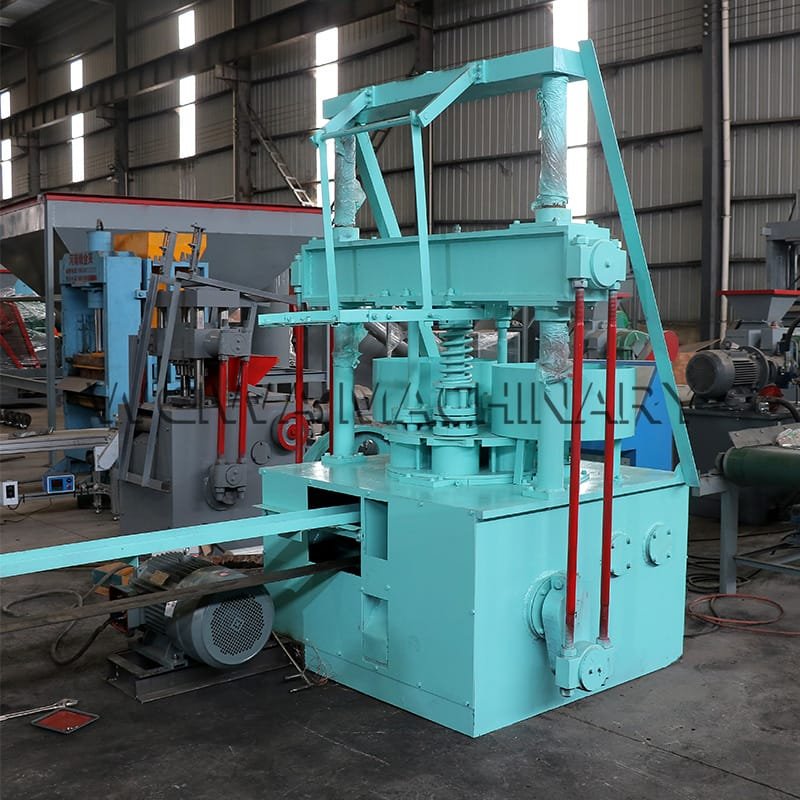
最近, the engineering team of WEIWA机械 traveled to Lusaka, 赞比亚, 安装, 校准, and commission a 蜂窝煤成型机 for a local clean-fuel production enterprise.
为什么赞比亚是蜂窝煤生产的理想市场?
经济实惠的需求, 赞比亚的清洁燃烧烹饪和取暖燃料继续增加. Traditional firewood and rudimentary charcoal production contribute to deforestation and produce inconsistent burn quality. 通过引入一个 赞比亚蜂窝煤成型机, local entrepreneurs can convert widely available coal fines, 木炭灰尘, and certain biomass residues into uniform honeycomb briquettes that ignite easily, 燃烧时间更长, and emit significantly less smoke. This not only creates local employment but also reduces reliance on imported LPG and diminishes environmental pressure from slash-and-burn charcoal making.
Our Zambian client recognized this opportunity and selected Weiwa Machinery’s mechanical punching type 蜂窝冲孔机 for its robustness, ease of mold change, and suitability for locally sourced raw materials including anthracite powder and carbonized coconut shell or wood charcoal mixed with a starch-based binder.
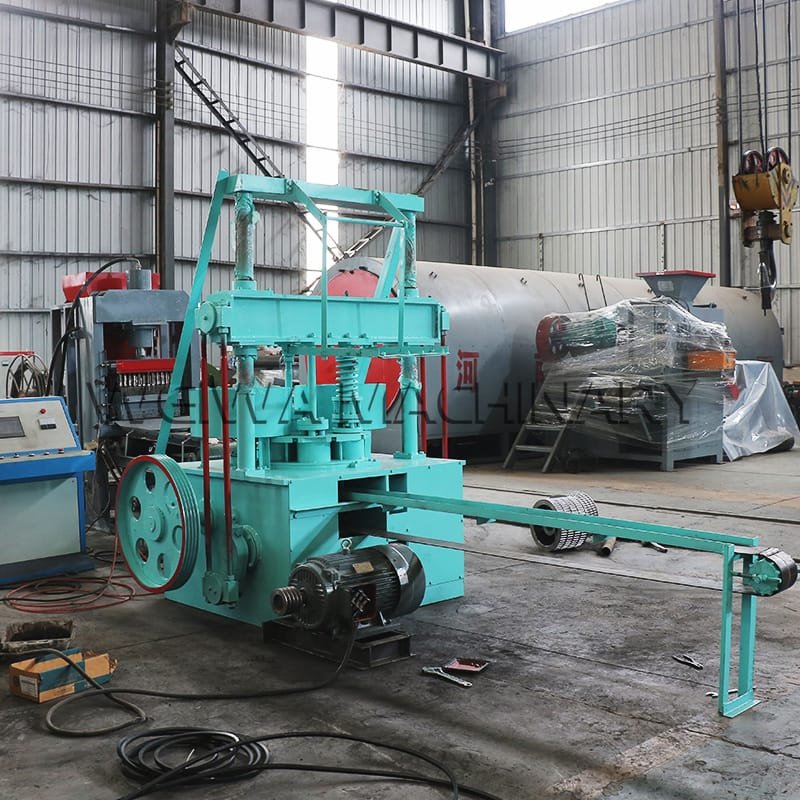
了解 蜂窝木炭型煤成型机
蜂窝冲孔机的工作原理
一个 蜂窝木炭型煤成型机 operates on a high-pressure stamping principle. Crushed and sieved raw material (particle size typically below 3 毫米, moisture content 8%–15%) is fed into the hopper where an agitator ensures even distribution. The material drops into a rotating mold cavity. On each cycle, a punching ram compresses the powder under several tons of pressure, forcing it through a die that imprints the characteristic honeycomb hole pattern—usually 12, 16, 19, 或者 21 evenly spaced holes depending on mold specification.
The honeycomb voids increase the briquette’s exposed surface area, promoting secondary air intake during combustion. This results in more complete oxidation of volatile matter, higher thermal efficiency, and reduced visible smoke. 成型后, the finished briquette is ejected onto a belt conveyor for cooling and optional sun or oven drying before packaging or direct sale.
Key Components of Our Coal Briquettes Making Machine
这 型煤成型机 supplied by Weiwa Machinery integrates five major subsystems: a reinforced machine frame, an electric motor with V-belt and gear reduction transmission, a feeding hopper with stirring shaft, a stamping punch assembly with replaceable mold and punching needles, and a discharge conveyor. Wear-resistant alloy steel is used for the mold sleeve and punching head to extend service life under continuous high-pressure operation. The control panel provides start–stop, 紧急停止, and optional digital displays for stroke count and operating hours.
Raw Material Preparation Requirements
To achieve dense, crack-free honeycomb briquettes, raw material preparation is critical. Coal or charcoal powder must be ground to less than 3 毫米. Moisture should be adjusted—typically 10%–13%—by either sun-drying or using a rotary dryer. A binder such as cassava starch, corn starch, or specially formulated inorganic binders is mixed in at 3%–6% by weight to improve green strength before carbonization or final drying. Our engineers advised the Zambian team on binder preparation, emphasizing proper gelatinization temperature and even blending to avoid soft spots in the briquette body.
Pre-Arrival Preparation and Site Inspection in Zambia
Before our engineers departed China, we confirmed the client’s workshop had a level concrete foundation capable of anchoring the machine base, access to three-phase power matching the machine’s motor rating (commonly 7.5 kW or 11 kW depending on model), and sufficient space for material staging, binder mixing, and briquette curing. 抵达后, 这 赞比亚蜂窝煤成型机 was unloaded with a forklift and subjected to a visual inspection to verify no transit damage to the hydraulic lines, punch assembly, or electrical components.
Step-by-Step On-Site Installation of the Honeycomb Punching Machine
Positioning and Anchor Bolting
The first step was placing the main frame on the pre-cast foundation and using a spirit level to confirm horizontal alignment within ±1 mm across the base plate. Anchor bolts were tightened to specification. Proper leveling prevents eccentric wear on the punching ram and reduces vibration during high-speed cycling.
Power Connection and Transmission Check
After securing the frame, our technicians connected the three-phase supply through a dedicated isolator and verified correct rotation direction of the main motor. The V-belt tension was adjusted to avoid slippage or excessive side loading on the pulley bearings. The gearbox oil level was checked and topped up with the recommended viscosity lubricant.
Hydraulic and Pneumatic (如果适用的话) System Setup
Although the featured model is mechanically driven, some larger 蜂窝冲孔机 configurations include hydraulic mold clamping or auto-lubrication. In those cases, hydraulic hoses are routed neatly, bled of air, and pressure tested. Our team labeled each line and demonstrated bleed procedures to the local operators.
Mold Insertion and Punching Head Alignment
The client opted for a 140 mm diameter hexagonal mold with 19 holes—a popular size for household and small commercial cooking in Zambia. The mold sleeve was inserted into the turret and locked. The punching head was then lowered manually to verify concentric entry into the mold bore. Any misalignment beyond 0.2 mm was corrected by shimming the mold seat. Precise alignment is essential to prevent premature die wear and ensure clean ejection of the honeycomb briquette.
调试, Calibration, and First Trial Run
Binder Mixing Demonstration
With the machine mechanically ready, our engineers supervised the preparation of a test batch: charcoal powder blended with 5% cassava starch binder and water to reach approximately 11% 水分. The mixture was kneaded in a wheel mill for even distribution—a step we always emphasize during commissioning of a 型煤成型机.
Pressure and Stroke Adjustment
The stamping pressure was initially set to a conservative level and gradually increased while observing briquette density and surface finish. For the Zambian raw material blend, optimal compaction was achieved at roughly 80%–85% of maximum rated punching force. Excessive pressure can cause the binder to squeeze out or the briquette to stick in the die, while insufficient pressure leads to friable products that crumble in transport.
First Production Run and Observations
Once the feed hopper was charged, 这 蜂窝煤成型机 was started in jog mode, then switched to continuous operation at 35–40 strokes per minute depending on material flow. Within the first ten minutes, uniformly shaped honeycomb briquettes began discharging onto the belt. The machine ran smoothly with vibration within acceptable limits and noise below 75 dB(一个) measured at one meter. The Zambian operators were trained to recognize abnormal knocking sounds, overheating of the transmission housing, and irregular briquette ejection—all part of our standard post-installation briefing.
Honeycomb Briquette Sample Analysis and Quality Indicators
Visual and Dimensional Inspection
Samples collected during the Zambia trial were measured with calipers. Diameter variation stayed within ±1 mm of the nominal 140 毫米, and height deviation was under ±2 mm. The honeycomb holes were centered and of uniform diameter (大约 15 毫米), confirming correct mold machining and proper punch penetration depth. Surface smoothness indicated adequate binder activation and appropriate moisture at pressing.
Physical Strength and Drop Test
To simulate handling, random samples were dropped three times from a height of one meter onto a concrete floor. Well-formed briquettes from the Weiwa 蜂窝木炭型煤成型机 showed no edge chipping or splitting—a key quality metric for market-ready fuel. Green strength is further improved after the briquettes are fully air-dried or oven-dried post-pressing.
Estimated Combustion Characteristics
While formal calorific testing was done previously in our Zhengzhou factory using similar raw material blends, honeycomb briquettes of this type typically deliver a calorific value between 5,500 和 6,800 kcal/kg depending on the proportion of anthracite versus charcoal dust. The honeycomb structure promotes faster ignition (usually within 3–5 minutes under kindling) and sustains glowing combustion for 90–120 minutes per standard-size piece in a properly ventilated stove. These performance traits are why many buyers specifically search for a 赞比亚蜂窝煤成型机 rather than generic biomass presses.
Operator Training and Maintenance Recommendations
Before leaving the site, our engineers conducted a half-day training session covering daily start-up and shut-down sequences, lubrication points and intervals (generally weekly for open gears, monthly for sealed bearings), mold replacement procedure, and troubleshooting common issues such as bridging in the hopper, minor ejection sticking, or uneven briquette density. We also provided a Chinese–English illustrated operation manual and recommended spare parts list—standard practice for every Weiwa 型煤成型机 export.
为什么选择 WEIWA机械 Honeycomb Punching Machine for Your Briquette Plant?
Weiwa Machinery has been manufacturing briquetting and carbonization equipment for more than 15 年, exporting to Africa, 东南亚, 南美洲, 和中东. 我们的 蜂窝冲孔机 models range from 120 MM TO 220 mm diameter capability, with customizable hole counts and shapes (圆形的, 正方形, flower, 六角形). Each unit is factory-tested before shipment, and we offer remote video guidance as well as on-site engineer dispatch when required. The successful installation documented here in Zambia reflects our commitment to practical, market-adapted solutions—not just selling iron, but ensuring our customers can profitably produce high-quality honeycomb charcoal briquettes from day one.
Request a Quotation or Learn More
If you are planning to set up or upgrade a briquette production line and are considering a 蜂窝煤成型机, 蜂窝木炭型煤成型机, or a complete 型煤成型机 系统, contact Weiwa Machinery for a tailored proposal including capacity calculation, 布局图, and raw-material-specific recommendations.
WEIWA机械 (WEI WA机械)
地址: 黄山路, 紫荆路, Gongyi City, 郑州, 河南, 中国
暴民 / WhatsApp: +86 138 3809 3177
电子邮件: info@cjlmachinegroup.com
Weiwa Machinery products are exported to many countries and regions. WEI WA机械已成为超过的首选 2 全球百万客户.


 微信
微信

 +8615937143060
