


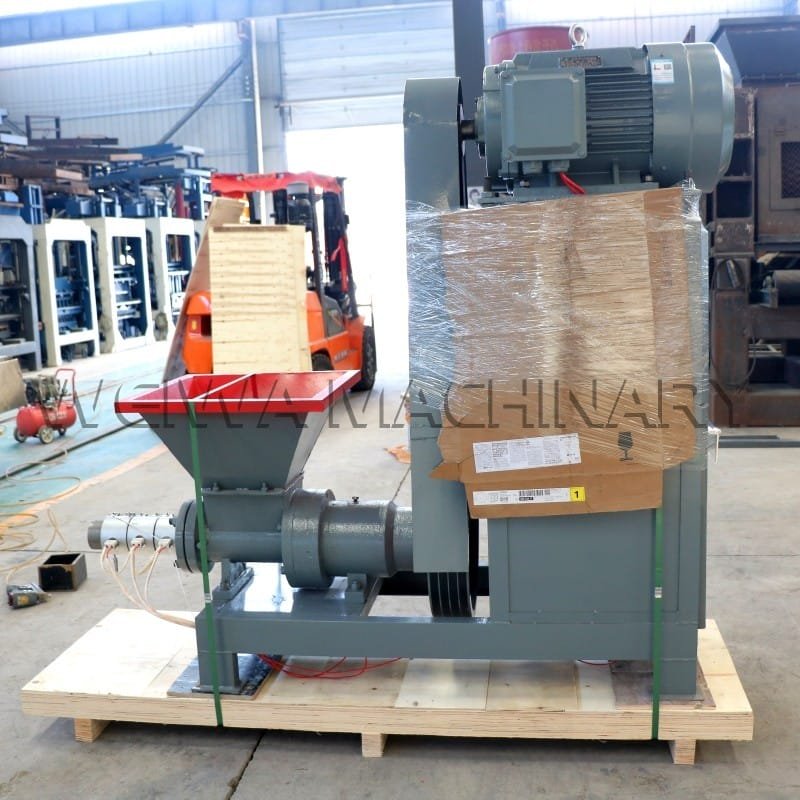
该订单包括一台锯末挤出机, 支撑部件, 备件, 和海运文件. 肯尼亚买家不再只问价格. 他们询问输出一致性, 耐湿性, 模具磨损, 碳化相容性, 和售后支持. 这一转变表明当地市场正在变得更加专业.
威瓦机械厂发货日
加载过程一大早就开始了. 我司生产团队对机身进行检查, 检查丝杠轴, 测试电控箱, 并确认试运行时加热圈达到稳定温度. 出口包装前, 使用合格的锯末运行挤出机以验证压力, 表面光洁度, 和型煤密度.
一旦测试运行通过, 设备进入包装区. 易损部位选用木箱. 钢框架用于重型车身. 前往非洲港口的出口订单往往面临长途运输, 多个处理点, 和潮湿的容器条件, 因此保护与机器规格一样重要.
对于肯尼亚客户, 我们准备了英文操作手册, 备用螺套, 加热器备件, 适用的碳刷备件, 以及拟建生产车间的布局图. 买家的工厂空间有限, 所以我们的工程团队调整了物料流程,使破碎机, 干衣机, 挤出机, 冷却区, 碳化区域可以容纳在一个紧凑的化合物中,而不会产生安全瓶颈.
当叉车将最后一个托盘移入集装箱时, 场景看上去很简单. 背后是数十年的制造经验, 反复设计调整, 以及为出口标准而构建的供应链. 这是海外买家很少看到但总是受益的部分.
为什么木屑煤球对肯尼亚及附近市场很重要?
肯尼亚拥有庞大的非正式和半正式能源部门. 家庭使用木炭做饭. 面包店使用固体燃料作为烤箱. 酒店和餐馆寻找进口液化石油气的更清洁替代品. 茶厂, 谷物干燥机, 砖窑需要负担得起的热能. 在此背景下, 锯末煤球不是一个业余爱好项目. 它们是对燃料成本和木材稀缺的商业反应.
木屑是家具车间产生的, 木材场, 胶合板厂, 托盘制造商, 和木工集群. 在很多城镇, 该材料被视为废物. 当处理正确时, 相同的材料成为致密燃料,比松散生物质具有更好的运输效率. 这就是为什么锯末煤球受到小型初创公司和中型燃料供应商关注的原因.
上诉很简单. 如果大量收集,木屑通常很便宜或免费. 压块减少粉尘污染. 成品木棍或木块比松散的木材废料燃烧时间更长. 碳化煤球可以在许多应用中替代传统木炭. 对于一位肯尼亚企业家来说, 商业模式可以从一台机器开始,发展成为一个完整的生产场.
用木屑制作木炭煤球的解释
许多买家将煤球制作与木炭制作混淆. 它们有联系但不相同. 用锯末制作木炭球通常涉及两个阶段. 第一阶段是致密化. 第二阶段为碳化.
致密化中, 干燥的锯末在热量和压力下由螺杆系统压缩. 天然木质素软化并充当粘合剂. 当水分和粒径得到控制时,无需化学粘合剂. 输出是固体煤球棒, 常常是空心的, 正方形, 圆形的, 六角形, 或根据模具定制形状.
碳化中, 这些棒在低氧环境中加热. 挥发性成分被驱除. 物料变成固定碳较高的机制木炭, 降低烟雾, 和更好的燃烧稳定性. 最终产品可服务烧烤市场, 家庭烹饪, 机构厨房, 金属加工炉, 和深加工后的工业锅炉.
新投资者的重要教训是,仅靠挤压机并不能生产木炭. 它可以制作型煤坯料. 木炭的质量取决于原材料的清洁度, 干燥精度, 挤出温度, 冷却方式, 碳化曲线, 和碳化后处理. 一台好的机器有帮助, 但流程纪律决定利润.
买家应尊重的原材料标准
木屑应低于周围 12 挤出前水分百分比. 粒度要细且一致, 通常在 5 毫米,进给平稳. 钉子等异物, 石头, 塑料, 潮湿的树皮会导致堵塞, 表面质量差, 和螺杆过早磨损. 建立简单的进料筛选规则的非洲工厂通常比那些在线追逐最便宜机器的工厂获得更好的产出.
烘干机的选择改变一切
一些买家认为挤出机就是整个项目. 在实践中, 烘干机往往决定项目能否生存. 如果水分含量居高不下, 机器挣扎, 煤球裂纹, 并且加热器消耗多余的电力. 适用于肯尼亚和类似气候, 气流干燥机, 旋转式干燥机, 或可以根据每小时容量选择组合系统, 湿度, 和可用空间.
真是个 木屑挤出机 实际上确实如此?
木屑挤压机是生物质成型生产线的核心成型装置. 它接收经过调节的锯末,并使用大螺杆将其推入加热的桶中. 随着材料向前移动, 压力上升. 温度软化天然粘合剂. 在模头出口处, 材料以具有中心孔或实心轮廓的连续致密棒形式存在.
该机器有时被称为型煤挤压机, 螺杆压球机, 生物质挤压机, 或木炭棒机. 不论名字, 它的工作是一样的: 将松散的林业和农业剩余物转化为统一的, 运输友好的燃料库存.
Weiwa 型号专为连续运行而设计. 螺杆和内套是易损件. 加热环温度必须与材料类型相匹配. 进料速度必须与螺杆容量相匹配. 当这些变量达到平衡时, 该机器可以每小时生产稳定的煤球.
输出直径通常范围为 45 MM TO 80 毫米, 尽管可以讨论更小和更大的工具. 形状选项包括方形, 六角形, 五边形, 圆形的, 和边缘型材. 正确的形状取决于当地客户的喜好, 窑炉几何形状, 及包装方法.
为什么木质素比胶水更重要?
一些首次购买者询问他们应该购买哪种活页夹. 适用于多种锯末类型, 更好的答案是过程控制而不是化学品. 在高温和压力下, 生物质中的木质素变得足以粘合颗粒. 这就是为什么干燥, 温度设定, 和螺杆压缩比是工程决策, 不是可选的调整.
如果原料纤维含量很高, 例如玉米秆或棉花秆, 预破碎和水分管理变得更加重要. 如果材料很轻, 比如稻壳, 压缩设置与致密硬木锯末不同. 好的供应商不会向每个国家销售相同的设置. 供应商询问客户实际向料斗中喂入的是什么.
肯尼亚木屑煤球的市场潜力
肯尼亚处于更广泛的东非能源转型之中. 传统木炭生产会损害树木. 进口燃料增加成本. 机制煤矿提供了一条中间道路: 使用已经存在的残留物, 将其升级为更高价值的燃料, 并出售给每天需要热量的用户.
城市需求明确. 内罗毕, 蒙巴萨, 基苏木, 纳库鲁, 埃尔多尔, 和锡卡有食品生意, 面包店, 烘焙作业, 和住宅烹饪需求. 农村需求不同但同样强劲. 玉米磨粉机, 咖啡加工机, 茶叶烘干机, 农产品加工单位需要的热能不完全依赖木柴.
出口角度也很有趣. 乌干达等周边市场, 坦桑尼亚, 卢旺达, 南苏丹, 赞比亚, 刚果民主共和国也面临着类似的燃料缺口. 质量稳定的肯尼亚燃料生产商最终可以向区域经销商供货, 不仅仅是当地家庭.
烧烤和酒店部分
东非的热情好客和烧烤文化不断发展. 买家想要点燃速度更快的木炭, 闻起来更干净, 运输过程中破损更少, 并且燃烧时间更长. 如果碳化处理得当,用锯末制成的机制木炭可以满足这些期望. 优质包装加上一致的尺寸可以将产品从商品袋转变为品牌燃料品牌.
工业和机构部门
面包店, 家禽养殖场, 烟草固化, 砖烧制, 小工厂需要热量. 如果煤球的价格低于进口柴油或液化石油气并且性能可靠, 采购经理倾听. 挑战在于一致性. 工业买家不会容忍湿度峰值或灰烬意外. 这就是为什么培训和质量控制比营销口号更重要.
垃圾发电的故事吸引了合作伙伴
投资者和发展合作伙伴喜欢循环经济故事. 木屑煤球将木材废料转化为能源, 减少露天焚烧, 创造就业机会, 并降低对原生森林木炭的依赖. 拥有洁净车间的肯尼亚企业家, 记录的输出数据, 可靠的机器可以吸引经销商, 合作社, 甚至是纯粹交易者无法访问的融资对话.
煤棒机与木屑挤压机
一些买家搜索煤棒机而不是生物质成型机. 这些术语在中国出口市场中重叠,但在实践中含义不同. 煤棒机通常使用粘合剂和压力将煤粉或木炭粉形成棒. 锯末挤出机在热量和天然木质素结合下形成原始生物质.
如果客户已经有木炭粉, 木炭压球机或煤棒机可能是正确的选择. 如果客户有木屑, 稻壳, 竹尘, 咖啡壳, 甘蔗残留物, 或农作物秸秆, 锯末挤出机通常是起点.
威瓦机械帮助客户避免买错第一台机器的常见错误. 富含锯末的车间第一天不需要煤棒机. 木炭粉贸易业务可能也不需要完整的生物质挤压生产线. 正确的前端取决于材料, 不时尚.
木屑以外的常见原料
相同的技术系列可以处理破碎后的木片, 分支, 稻壳, 咖啡壳, 渣, 花生壳, 棉茎, 向日葵茎, 竹尘, 手掌记住, 大豆皮, 和茶渣. 机器并不神奇. 每种原料都具有理想的水分, 粒度, 和压缩行为. 我们的团队在推荐模具尺寸和螺杆配置之前会审查样品或照片.
从工厂装车到肯尼亚车间
集装箱出发后, 肯尼亚买家仍有工作要做. 基础准备, 电源, 原料储存, 粉尘控制, 消防安全, 和员工培训都影响结果. 我们向客户发送布局图, 但当地土建工程仍然是买方的责任. 好的项目之所以成功,是因为买家将机器视为一个生产系统, 没有一个铁盒子.
典型的工作流程看起来像这样的叙述形式而不是项目符号. 木屑来自当地作坊. 过大的块被删除. 物料进入干燥机直至水分落入可接受的范围. 干燥后的材料送入挤出机. 螺杆将其压缩成热煤块棒. 棒冷却并变硬. 硬化的棒移动到碳化炉. 碳化煤球再次冷却, 获得评分, 最后打包上市.
该批货物中的肯尼亚客户已与家具作坊有过接触. 这给了他稳定的木屑来源. 他的下一个瓶颈是雨季干燥. 我们的建议是根据最坏情况的湿度来调整烘干机的尺寸, 天气不正常, 因为当生产目标最重要时,平均天气永远不会出现.

为什么非洲买家的要求越来越高?
十年前, 许多询问只要求最便宜的机器. 今天, 认真的非洲买家提出更好的问题. 螺杆材质是什么? 多久换袖子? 是否提供布局图? 你能帮忙确定烘干机的尺寸吗? 我应该保留哪些备件? 如何降低破解率? 这种成熟度对行业来说是健康的.
威瓦机械迎接成熟. 两个月后出现故障的廉价机器损害了整个市场. 设计合理的锯末挤出机可能会花费更多的前期成本, 但它保护输出, 减少停机时间, 并为燃料生产商建立品牌声誉.
在肯尼亚, 声誉在交易者网络中快速传播. 一名因煤球质量不佳而失去店主的客户. 一名干净的客户, 稠密, 长燃木炭获得重新订购. 机器是基础, 但适用性和流程知识决定了基础是否成立.
随机器同行的工程支持
我们的出口产品不仅限于钢铁和电机. 发货前, 我们审查产能目标, 原料类型, 水分来源, 本地电压, 容器访问, 劳动技能, 以及未来的扩张计划. 这可以防止购买机器的经典错误 500 kg/h当原料供应只能支撑 200 kg/h, 或购买一个 200 当需求已经需要时,以 kg/h 为单位 800 kg/h.
抵达后, 买方收到有关安装顺序的指导, 皮带对齐, 电气连接范围, 加热器校准, 螺杆间隙调整, 和首轮材料比例. 远程视频支持可以解决大多数问题. 对于较大的项目, 可根据地区协商现场调试, 项目规模, 和服务协议.
备件策略是对话的一部分. 丝杠轴, 内套, 加热环, 轴承, 腰带, 和控制器组件应根据运行时间进行库存. 一家燃料企业等待三周才收到一个套管,其损失的钱比套管本身的成本还多. 我们帮助客户建立合理的备件清单,而不是超大的仓库.
定制及工厂布局规划
没有两个生物质车间是完全相同的. 肯尼亚一处地点可能有一块狭窄的城市地块. 另一个可能在木材丛附近拥有五英亩土地. 一位买家想要手动喂食. 另一个想要输送机集成. 一位客户只销售生煤棒. 另一个想要完整的木炭品牌.
威瓦机械提供场地规划定制服务和设计图纸. 图纸涵盖了机器位置, 物质流, 烘干机位置, 集尘空间, 冷却面积, 碳化区, 成品储存, 防火隔离, 和操作员路径. 良好的布局减少了劳动力, 降低事故风险, and improves daily output without changing the machine model.
For export clients, we also consider container loading dimensions. A beautiful factory layout means nothing if the equipment cannot enter the client country or fit through the workshop gate. Our export team checks overall dimensions, disassembly points, and crating method before production finishes.
买家为何选择威瓦机械?
Weiwa Machinery has more than thirty years of working experience in machinery manufacturing. That history matters because biomass briquette equipment is not a smartphone accessory. It operates under heat, friction, 振动, and dusty conditions every day. Experience teaches which steel grade, screw angle, heater placement, and frame thickness actually survive real workshops.
Our team handles not only sawdust extrude machines but also crushers, 烘干机, 输送机, 碳化炉, and complete biomass briquette production lines. 这使我们能够设计整个流程,而不是出售孤立的盒子. 想要将锯末变成煤球的客户收到系统视角, 不仅仅是机器报价.
我们还拥有专业的售后团队. 售前咨询, 生产计划, 包装, 货运单据, 安装指导, 操作员培训, 故障排除, 和备件供应由了解出口机械的人员负责, 不仅仅是国内销售.
定制服务不是口号. 这意味着我们调整产能, 电压, 形状, 模具尺寸, 喂养方式, 干燥机类型, 以及根据客户的车间布局. 许多非洲买家从小规模开始,后来扩大规模. 我们设计第一阶段,因此第二阶段不需要重建一切.
肯尼亚的发货是该地区的一个信号
每一批货物都讲述一个故事. 肯尼亚通讯社告诉我们,东非买家希望当地燃料独立. 他们想要运行的机器. 他们想要可以向建筑商展示的图纸. 他们想要可以重新订购的备件. 他们希望供应商能够在集装箱到达后做出答复, 不仅仅是付款前.
木屑煤球不会在一夜之间取代所有木炭. 但在肯尼亚各地, 乌干达, 坦桑尼亚, 赞比亚, 尼日利亚, 加纳, 南非, 和其他市场, 方向是可见的. 废弃生物质正在成为库存. 松散的灰尘正在成为品牌燃料. 非正式车间正在成为注册燃料供应商.
获胜的企业家不会是那些购买最便宜机器的企业家. 他们将是那些了解水分的人, 受控原料, 维护螺丝, 训练有素的操作员, 包装一致, 并选择了具有真正工程深度的制造商.
在肯尼亚开展木屑压块业务
新投资者应从原料安全开始. 没有稳定的锯末或生物质供应, even the best machine sits idle. The second step is moisture control. The third step is choosing the right extruder size. The fourth step is planning carbonization before selling promises. The fifth step is building distribution, because good fuel with no sales channel still loses money.
Many Kenyan entrepreneurs underestimate workshop discipline. Briquette making looks simple in a video. 现实中, raw material changes with season. Humidity changes with rain. Power supply changes with location. Operator skill changes with training. The machine must be robust, but the business must be managed.
That is why Weiwa Machinery sends more than a price list. We send questions first. What is your monthly sawdust tonnage? What moisture level is typical? What shape does your market prefer? What local voltage do you use? Do you plan raw briquettes or carbonized charcoal? The answers shape the proposal more than the buyer initial budget line.
Small Startup Model
A small model can begin with a crusher if feedstock is coarse, an airflow dryer, one sawdust extrude machine, a cooling rack, and a batch carbonization unit. This model fits urban fringes where land is expensive and raw material comes from nearby carpentry clusters. Output may be modest, but cash flow can start quickly if the founder controls distribution.
Medium-Scale Fuel Supplier Model
A medium model adds higher-capacity drying, conveyor feeding, dual extruders, centralized dust removal, mechanical cooling, and a larger carbonization system. This model suits entrepreneurs supplying bakeries, 机构, and regional charcoal dealers. 品牌, sieving, and uniform stick length become important because buyers compare products shelf to sack.
Full Production Line Model
A full line includes raw material receiving, 筛选, 压碎, 烘干, 挤压, hardening, 碳化, 冷却, 等级, 包装, and storage. This model requires stronger capital, bigger land, and better management. But it can supply multiple cities and build a recognizable fuel brand across East Africa.
Common Mistakes First-Time Buyers Make
The first mistake is chasing the lowest price without checking screw material and after-sales support. The second mistake is ignoring the dryer. The third mistake is feeding wet or mixed waste into the hopper. The fourth mistake is expecting charcoal immediately from the extruder. The fifth mistake is scaling sales before stabilizing quality.
Another frequent issue is copying a YouTube layout from another continent. Climate differs. Raw material differs. Voltage differs. Labor cost differs. A Kenya workshop needs a Kenya-specific plan. Weiwa engineers prefer to adapt the design rather than copy a generic photo from another market.
Buyers also forget fire safety. Biomass dust, hot briquettes, and carbonization gases demand separation, ventilation, extinguishers, and trained staff. A profitable briquette business can be destroyed by one careless corner of the yard. Process safety is part of machine selection, not an extra chapter nobody reads.
Quality Indicators Buyers Should Check
Surface of the briquette should be smooth, not cracked or fluffy. Density should feel high for the size. Moisture of feedstock should be verified with a meter, not guessed. Output should remain stable after the machine warms up. Screw temperature should be controllable. Finished stick should not disintegrate during cooling.
碳化后, good machine-made charcoal should be low in smoke during lighting, high in fixed carbon relative to feedstock, low in unburned wood core, and consistent in size. Ash level depends on raw material. Sawdust from clean hardwood behaves differently from mixed workshop sweepings.
We always tell clients to keep a sample board. Keep one briquette from week one, week four, and week twelve. Compare length, 直径, cracks, 颜色, 并燃烧时间. If quality drifts, the process is changing somewhere. The machine is talking; the operator must learn to listen.
Sustainability Angle for Kenya and Africa
Machine-made briquettes support cleaner fuel access. They use residues that would otherwise rot, burn openly, or block workshops. They reduce pressure on natural forest charcoal when produced at scale with disciplined feedstock sourcing. They create local jobs in collection, 压碎, 烘干, 挤压, 碳化, 包装, 和分布.
For development agencies and municipal programs, briquette enterprises can be part of waste management strategy. For private entrepreneurs, they can be part of energy business strategy. For women-led cooperatives, they can be part of rural enterprise development. The same machine serves many goals if the business model is clear.
Africa does not lack biomass. It lacks processing discipline, 可靠的设备, and honest technical support. That gap is exactly where an experienced manufacturer adds value beyond the invoice.
Why This Kenya Order Matters to Us?
We do not measure success only by containers shipped. We measure it by whether the Kenyan client can still run the machine six months later, whether his briquettes find repeat buyers, and whether he expands the line with confidence.
The dispatch day ended with photographs, seal numbers, bill of lading data, and a short video sent to the client. But the real project starts after unloading. When the machine enters the Mombasa or Nairobi workshop, our engineers remain reachable. When the first batch cracks, we help diagnose moisture or temperature. When demand grows, we help plan phase two.
This is the difference between a machine seller and a machinery partner. Weiwa Machinery prefers the second role.
Technical Notes Buyers Often Overlook
Voltage and frequency must match the destination country. Kenya commonly uses 230V/50Hz single phase for small loads and 415V/50Hz three phase for industrial equipment, but the buyer should confirm local supply before production. Wrong electrical configuration causes delays, extra cost, and controller damage.
Foundation matters. A vibrating extruder on a weak concrete slab develops alignment problems. The base should match machine weight, 振动, and maintenance access. Our layout drawing marks foundation requirements, but local civil engineers must execute them correctly.
Feeding method affects screw life. Manual shovel feeding creates uneven load. Hopper with variable screw feeder creates steadier throughput. Steady feeding reduces surge current, lowers jam risk, and extends sleeve life. Small upgrades in feeding often deliver bigger gains than chasing a slightly larger motor.
Heater zones need monitoring. Too low temperature produces soft, low-density sticks. Too high temperature scorches material and wastes power. The correct band depends on feedstock, 水分, 环境温度, and screw compression ratio. Experienced operators learn the sound and smell of correct extrusion.
Expanding From Sawdust to Multiple Biomass Streams
Kenyan entrepreneurs often start with sawdust because furniture clusters generate it daily. Later, they discover rice husk from milling, coffee husk from processing, sugarcane bagasse from juice plants, maize cob residue, 椰子壳, 竹尘, and forestry offcuts.
Each material changes the process. Rice husk is light and slippery. Bagasse holds more moisture. Coffee husk has its own ash behavior. Bamboo dust compacts differently from softwood sawdust. A flexible line can handle several streams, but die selection, dryer capacity, and screw configuration must be reviewed.
Weiwa Machinery helps clients build a material matrix. The matrix records moisture, 粒度, 堆积密度, 预期产出, and carbonization result for each feedstock. 随着时间的推移, the client becomes a fuel expert instead of a machine owner.
Carbonization Options After Extrusion
After the sawdust extrude machine produces briquette sticks, the client can choose batch kilns, movable steel kilns, vertical carbonization furnaces, or continuous systems for larger capacity. Batch methods are simpler and cheaper to start. Continuous systems require more engineering and higher throughput justification.
For Kenya beginners, batch or semi-batch carbonization often makes sense. It limits capital risk, allows process learning, and produces marketable charcoal without complex automation. 随着需求的增长, the client can add controlled gas recovery, cooling chambers, and grading stations.
The mistake is buying the most advanced carbonization plant on day one. Technology should match management capacity. A simple system run well beats a complex system run poorly.
Branding Sawdust Briquettes in the Kenyan Market
Commodity fuel competes on price and always attracts copycats. Branded fuel competes on trust. Clean sacks, uniform stick length, moisture-controlled product, labeled weight, QR code for traceability, and consistent burn performance create repeat customers.
Weiwa Machinery cannot build the client brand, but our machine consistency makes branding possible. If every batch varies, no marketing helps. If output is stable, the entrepreneur can invest in packaging, distributor training, and customer education.
In East Africa, women-owned hotels, outdoor grilling venues, bakery chains, and eco-conscious households are willing to pay more for cleaner fuel. The premium is earned through reliability, not slogans.
Risk Management for New Biomass Fuel Businesses
Feedstock risk comes first. If the sawdust supplier switches to mixed construction waste, quality collapses. Supplier contracts, incoming inspection, and covered storage reduce this risk.
Power risk comes second. Unstable voltage shortens controller life. Voltage protectors, correct cable sizing, and stabilized control panels reduce breakdowns.
Market risk comes third. Selling only to one broker is dangerous. Successful producers build direct relationships with bakeries, charcoal shops, 机构, and bulk users.
Machine risk comes fourth. Buying from unknown traders with no spare parts pipeline creates long downtime. Choosing an established manufacturer with export experience reduces this risk substantially.
Compliance risk comes last but matters more over time. Local environmental rules, fire codes, and business licensing differ by county. A responsible entrepreneur engages authorities early instead of asking for forgiveness after neighbors complain about smoke.
How Weiwa Machinery Supports Export Clients?
Our export process begins with inquiry analysis. We identify whether the client needs a single machine, a small line, or a full plant. Then we propose capacity, machine models, 干燥机类型, carbonization method, 电压配置, and estimated footprint.
After order confirmation, production follows our workshop schedule. Key parts are inspected. Trial run uses material close to the client feedstock when samples are provided. Packing matches sea freight requirements. Documents include commercial invoice, 包装清单, bill of lading support, certificate requirements if needed, and operation files.
发货后, our after-sales team supports commissioning remotely, reviews photos and videos from the site, advises on first-run adjustments, supplies wear parts, and helps the client plan capacity expansion. The relationship continues because biomass fuel production is a running business, not a one-time purchase.
为什么 30 Plus Years Still Matters in 2026?
Machinery trends change. Online inquiries change. Social media changes. But physics does not change. Biomass still needs drying. Lignin still binds under heat and pressure. Screws still wear. Bearings still need alignment. Electrical panels still need protection.
Thirty plus years of manufacturing experience means we have seen bad sawdust, rainy-season moisture, weak foundations, wrong voltage, overloaded feeders, and unrealistic output claims. That history helps us protect new clients from expensive lessons.
Weiwa Machinery does not promise miracle machines. We promise practical machines, honest capacity ranges, export-grade packing, technical drawings, spare-part support, and engineering advice shaped by decades in the field.
接触 WEIWA机械 for Quotation and Layout Design
If you want to turn sawdust into briquettes, build a charcoal briquette business in Kenya, or expand an existing biomass fuel workshop, 威瓦机械可以提供帮助. We supply sawdust extrude machines, 生物质成型燃料生产线, 烘干机, 压碎机, 碳化设备, and complete project support.
Our team provides customized service and design drawings for site planning. Whether you have a small urban plot or a large agro-industrial yard, we can propose a layout that matches your raw material, 预算, 劳动, and growth plan.
With more than thirty years of working experience and a professional after-sales team, Weiwa Machinery is ready to support your project from factory loadout to local production.
Contact us today for quotation, machine video, 布局图, and spare-parts list.
联系Weiwa机械
暴民: +8613838093177
WhatsApp: +8613838093177
电子邮件: info@cjlmachinegroup.com
欢迎来我厂参观. Send your raw material photos, 水分含量, 目标容量, 和当地电压. We will design a practical sawdust briquette solution for your market.


 微信
微信

 +8615937143060
