


从生物质废物到煤球, 木炭和生物炭: 设备选择实用指南, 流程设计和合规性.
对于生物质燃料项目开发商, 木炭和水烟木炭生产商, 农业和林业废物处理器, industrial-fuel suppliers and resource-recovery contractors. Visit cjljx.com.
Equipment procurement is moving from “buying a machine” to building a verifiable resource-recovery line.
Briquette machines and carbonization furnaces sit at the intersection of biomass resource recovery, solid-fuel processing and the biochar industry. Project performance depends not only on the main machine, but on the fit between 原料, moisture and particle size, target product, pyrolysis or forming process, and local environmental and product regulations.
Public industry sources show continued interest in biochar, wood pellets and biomass fuels, supported by waste utilization, energy substitution, soil improvement and carbon-removal applications. 同时, buyers face stricter expectations around feedstock sustainability, product standards, emissions control, supply-chain traceability and carbon accounting.
These figures are drawn from public industry reports and are not a substitute for project-specific feasibility analysis. See the sources section for scope and limitations.
The most reliable route is to define the raw material and the product first, then select the equipment and the compliance evidence needed to sell that product.
- What is the feedstock: 木屑, 木屑, 椰子壳, 稻壳, 竹子, 稻草, 渣, nut shells or a blend?
- What is the product: 木炭棒, 球煤, honeycomb charcoal, 水烟木炭, 烧烤木炭, biomass pellets or biochar?
- How will capacity be measured: wet feedstock, dry feedstock, finished charcoal or saleable output?
- Where will the product be sold: local fuel markets, 工业锅炉, agriculture or export markets?
- What evidence is required: 原料, 产品, 排放量, certification, project acceptance or carbon-removal MRV?
Industry Boundary: Briquettes, Mechanism Charcoal and Biochar Are Not the Same Product
1.1 Briquettes and pressed fuels
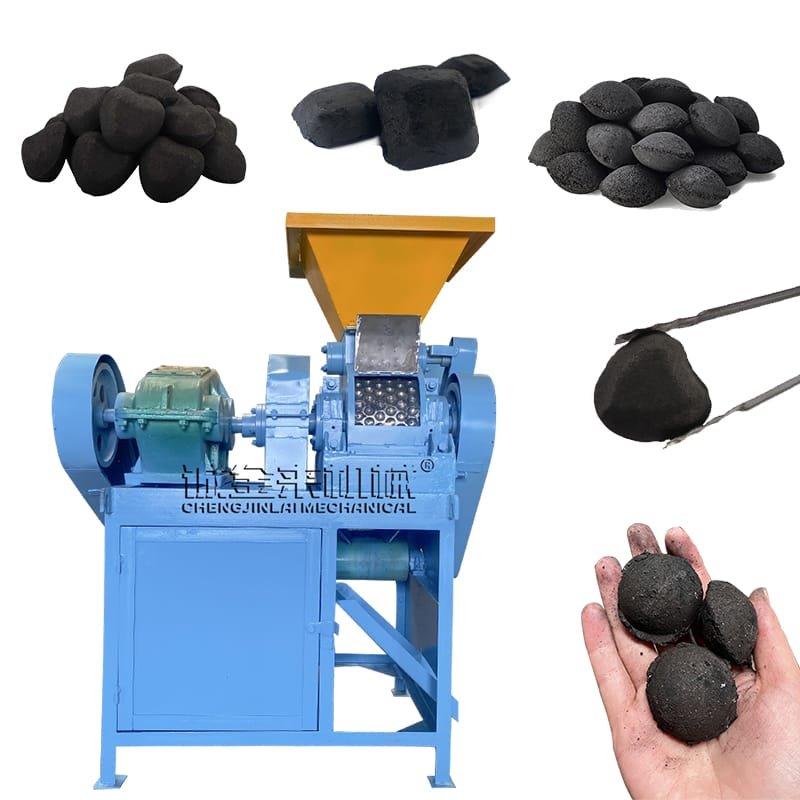
Briquette machines, charcoal-powder presses and roller presses convert difficult-to-handle powders into regular shapes through mixing, moisture adjustment, suitable binders and mechanical or hydraulic forming.
Typical outputs Pillow, 椭圆形, 球, egg-shaped, 戳, 正方形, 六角形, shisha and BBQ briquettes.
1.2 Mechanism charcoal
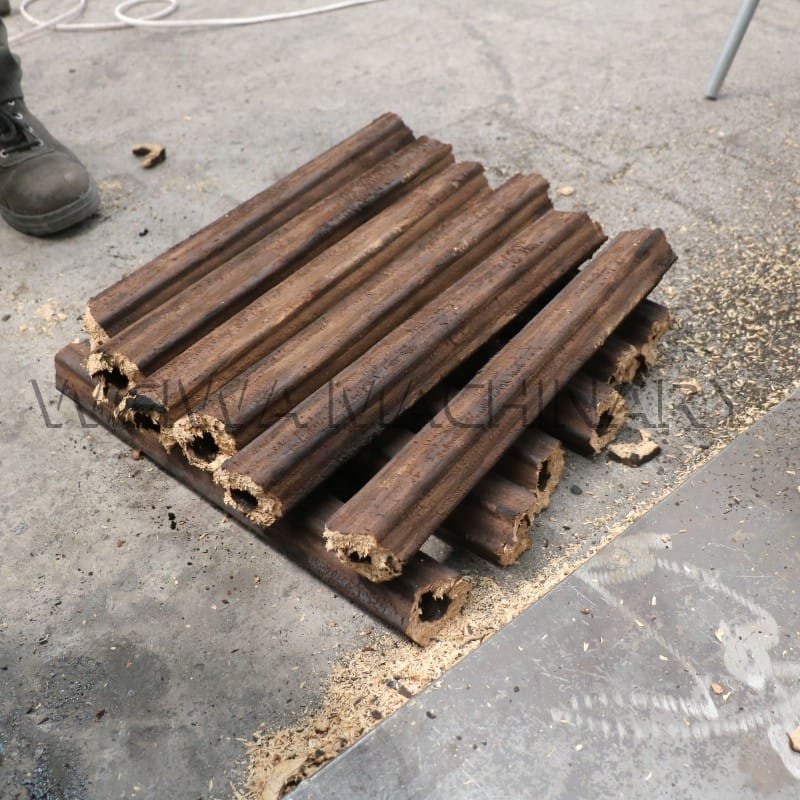
Mechanism charcoal is commonly made by crushing and drying sawdust, 木屑, bamboo powder, nut-shell powder, coconut-shell powder or straw powder, followed by extrusion or pressing and then carbonization.
Key point Forming and carbonization must be designed as one process.
1.3 生物炭
Biochar is a carbon-rich solid produced by heating biomass under oxygen-limited conditions. Its suitability for agriculture, 过滤, soil remediation or carbon removal depends on testing and the intended market.
Evidence needed 固定碳, 灰, 挥发物, 水分, ph, EC, H/Corg and contaminant testing.
The core performance indicators of forming equipment are not capacity alone. Buyers should also assess finished-product strength, 罚款, dimensional stability, demoulding, die life, continuous operation and downstream drying conditions.

Market Signals: Demand Is Expanding, While Quality and Compliance Are Becoming the Gatekeepers
2.1 生物炭: rapid development with incomplete market coverage
这 2023 Global Biochar Market Report by the International Biochar Initiative and the US Biochar Initiative was based on 1,007 survey responses covering more than 100 国家. It estimated that:
- Global biochar production reached at least 352,304 tonnes in 2023.
- The corresponding carbon-dioxide removal was estimated at about 650,000 tonnes of CO₂, using an assumption of approximately 1.9 tonnes of CO₂ per tonne of biochar.
- Biochar output showed reported compound growth of approximately 91% compared with the 2021 survey baseline.
- Combined 2023 revenue reported by biochar producers, 经销商, value-added producers and equipment manufacturers was about US$610 million; equipment manufacturers reported approximately US$241 million.
- More than half of surveyed producers were not producing under a specific certification or standard.
- 多于 75% reported using syngas, pyrolysis gas or steam for feedstock drying or other process heat.
2.2 Wood pellets and solid biomass fuels
一个 2024 USDA Foreign Agricultural Service report stated that EU wood-pellet consumption declined 1.2% 在 2023 to approximately 24.5 million tonnes, influenced by a warm winter and lower commercial power-sector demand. The report also highlighted renewable-energy targets, heating-sector transition, forest-biomass sustainability and supply-chain requirements.
Bioenergy Europe reported that global wood-pellet production was approximately 48.3 million tonnes in 2024 and global consumption exceeded 45 million tonnes for the first time. Europe remained the largest production and consumption region, while ENplus-certified pellets represented approximately 75% of the European pellet-heating market in 2024.
- Design for stable and traceable feedstock, not nominal capacity alone.
- For Europe and other regulated markets, prepare fuel-quality, sustainability and supply-chain documentation.
- Model the effects of energy prices, incentives, weather and policy on project economics.
- Include sampling, 测试, packaging and batch traceability in the line design.
2.3 Carbon removal: a furnace is not a carbon credit
The European Commission held a 2024 workshop on biochar carbon-removal certification methodologies. This points to a more structured certification environment, but a carbonization furnace is not itself a carbon-removal project and does not automatically create carbon credits.
A claimable carbon-removal project generally requires defined feedstock and project boundaries, energy and transport accounting, a documented carbon-storage pathway, monitoring-reporting-verification (MRV), and third-party review under an accepted methodology.
Feedstock Determines the Equipment: Four Parameters to Confirm Before Quotation
3.1 Feedstock type and source
Raw materials differ substantially in ash, 挥发物, fiber structure, oil content, moisture and particle size. Public CJL product information references sawdust, 木屑, 分支, 作物残留物, 渣, 咖啡壳, 稻草, bamboo powder, 棕榈贝壳, 椰子壳, 花生壳, 核桃壳, corn cobs and rice husks.
Source also affects compliance. The Climate Action Reserve’s 2024 eligible-feedstock draft lists agricultural residues, 林业副产品, food-processing residues, urban green waste and wood-processing by-products as potential feedstocks, while emphasizing soil-carbon, forest-management, contamination and environmental-law safeguards.
3.2 Moisture
Moisture affects drying load, extrusion performance, carbonization energy, density and finished-product strength. Public CJL information lists the following indicative conditions:
| Equipment reference | Publicly stated moisture condition | How to use the information |
|---|---|---|
| 木屑挤出机 | Some biomass feedstocks: 关于 12% or below | Indicative machine-page parameter; verify through testing |
| 连续碳化炉 | Feedstock moisture below 15% | Confirm on a wet-basis or dry-basis project specification |
| Large-Scale Biochar Equipment | Feedstock moisture below 20% | Confirm by raw material, temperature and throughput |
3.3 Particle size and shape
Public CJL pages reference charcoal powder below 3 mm for certain extrusion and shisha-charcoal lines, particle sizes below 20 mm for some continuous-carbonization applications, and below 5 mm for a large-scale biochar line. These are equipment-page references, not universal standards.
Unstable particle size can cause fluctuating feeding, local overheating, inconsistent forming strength and uneven carbonization. Put the particle-size range into the technical agreement rather than simply writing “suitable for sawdust or straw.”
3.4 Target product and sales standard
- Shape and dimensions
- Unit weight or bulk density
- Burning time, 灰, volatile matter and fixed-carbon targets
- 抽烟, odor and low-ash requirements
- 燃料, shisha-charcoal, BBQ-charcoal, industrial or agricultural application
- ENplus, local fuel standards, customer specifications or third-party testing
- Packaging format, daily output and container-loading requirements
Equipment Selection: From Single-Machine Parameters to a Complete Line
4.1 Powder briquetting
A common route for charcoal powder, 煤粉, coke powder or mineral powder is:
Weiwa’s public Ball Charcoal Briquettes Machine page lists roller-press models with stated capacity ranges from 1–2 t/h to 25–30 t/h, 取决于型号, feedstock and process conditions. The page also lists roller diameter, roller width, 电机功率, dimensions and weight. Final quotation and line design should be based on feedstock trials.
The public Hydraulic Shisha BBQ Press Machine page states a pressure range of 100–200 tonnes, PLC control, automatic/manual operation and customized moulds. Buyers should confirm mould design, demoulding, density and downstream drying together.
4.2 Charcoal sticks and mechanism-charcoal forming
CJL’s public Charcoal Extrude Machine information describes forming coal powder, 木炭粉, coconut-shell charcoal powder and rice-husk charcoal powder into sticks or other cross-sections, 包括圆柱形的, square and hexagonal shapes.
| 模型 | 力量 | Public capacity | 方面 | 重量 |
|---|---|---|---|---|
| 140 | 15 千瓦 | 0.8–1.0 t/h | 1.9 × 1.1 × 1.17 m | 650 公斤 |
| 160 | 22 千瓦 | 1.2–1.5 t/h | 2.2 × 1.3 × 1.4 m | 850 公斤 |
| 180 | 22–30 kW | 1.0–1.2 t/h | 2.2 × 1.3 × 1.4 m | 1,050 公斤 |
The values above are public manufacturer parameters and do not replace wet-basis/dry-basis capacity confirmation. State feedstock moisture, 粒度, binder method, finished dimensions and capacity basis in the quotation.
4.3 连续碳化炉
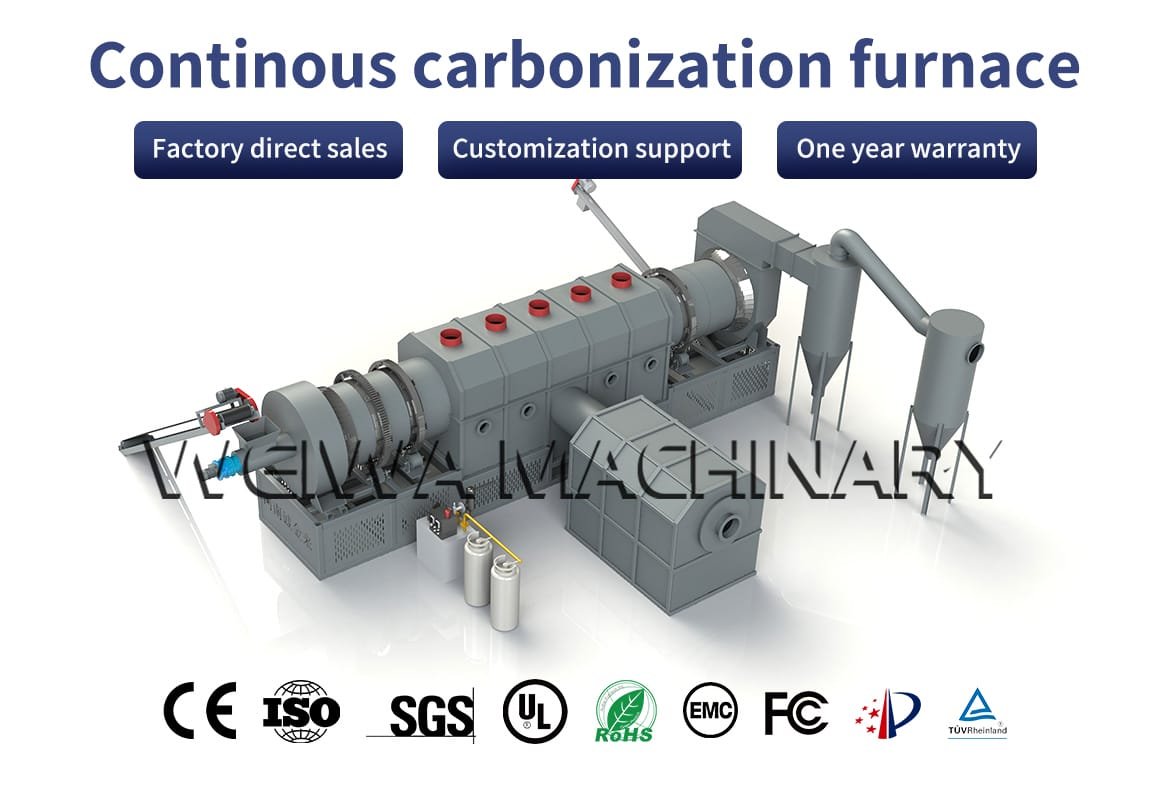
Continuous carbonization is suited to projects with stable feedstock supply, extended operating hours and larger throughput. Public CJL information references shells, 木屑, 渣, 稻草, 稻壳, 椰子壳, peanut shells and palm-kernel shells, with feeding, 碳化, combustible-gas recovery, gas treatment and cooled discharge as possible process sections.
Public L1–L4 references show feed capacity from 800–1,200 kg/h to 3,200–4,800 kg/h. Project calculations must distinguish feed capacity, dry-basis throughput, actual charcoal yield, combustible-gas reuse, start-up fuel and emissions-treatment configuration.
4.4 卧式碳化炉
Horizontal furnaces are presented for block-shaped feedstocks such as wood blocks, 竹子, 分支, 椰子壳, 垃圾木, 树桩, pallets and corn cobs. Public information describes sealed charging, preheating/drying, oxygen-limited carbonization and cooling, with optional gas recovery, rails and carts.
Public information for the hoisting furnace describes a circulating inner-chamber arrangement. One furnace body can be configured with three carbonization chambers; each cycle is stated at approximately 1.5–2 tonnes of mechanism-charcoal sticks and about eight hours. Actual cycle time depends on moisture, packing density, heat source and cooling method.
4.5 Biomass pellet equipment
CJL’s public Biomass Wood Pellet Making Machine page references corn stalks, 稻草, wood chips and sawdust, 和 6/8/10 mm pellet sizes. Listed CJL560A, CJL700 and CJL720 models show public capacities from 1 到 2.5 t/h.
Pellet projects should additionally verify fuel standards, dryer control, cooling/screening/packing, feedstock traceability or sustainability documentation, 灰, 耐用性, mechanical strength and bulk density.
Environment and Compliance: Do Not Treat Marketing Phrases as Emissions Conclusions
5.1 Feedstock compliance comes before operation
Biomass does not automatically mean “non-polluting feedstock.” Wood source, construction waste wood, municipal waste, 污泥, e-waste and contaminated biomass may carry different risks. A project should establish a feedstock-acceptance system covering source documentation, supplier and transport records, 水分, ash and particle-size testing, and—where needed—heavy metals, chlorine, sulfur, PAHs, PCBs and dioxin risk.
5.2 Emissions must follow local permits and testing
Some CJL carbonization-equipment pages describe condensation, desulfurization, spray towers, water-curtain dust removal and cooling towers, and use promotional language referring to EU emission standards. The public pages reviewed do not provide a complete applicable standard, test report, pollutant concentrations, operating conditions or third-party acceptance record.
Do not publish unsupported promises such as “zero emissions,” “completely pollution-free” or “compliant with all EU environmental standards.”
5.3 Biochar quality requires testing
Biochar for soil, filtration or carbon removal should not be judged by color, lightness or output alone. A practical test plan may include:
- Moisture, 灰, volatile matter and fixed carbon
- ph, electrical conductivity and cation-exchange capacity
- H/Corg, O/Corg and relevant stability indicators
- Heavy metals, PAHs, PCBs and dioxin-related contaminants
- Surface area and pore structure
- Batch-level linkage between feedstock, 温度, residence time and product indicators
Agricultural performance, long-term stability and carbon-removal quantities require validation for the specific feedstock, process and use. A single brochure parameter cannot be presented as a universal result.
Project Design: What a Qualified Equipment Inquiry Should Include
To let a manufacturer select a realistic equipment route, the project brief should include:
Feedstock
- Name and photos
- Source and monthly supply
- Moisture range
- Particle-size range
- 灰, impurities and foreign matter
- Seasonality or blending issues
产品
- Charcoal stick, 球, 蜂窝, Shisha, 烧烤, pellet or biochar
- Dimensions and shape
- Daily or hourly target
- Packaging format
- Target country and buyer standard
- Testing or certification needs
Site & delivery
- Building length, width and height
- Power and available fuel
- 水, drainage and fire protection
- Country and port
- Installation and training
- 3D layout, trial or full-line design
Manufacturer Reference: Public Information from Weiwa Machinery
According to the company’s public website, 河南维瓦机械制造公司, 有限公司. is located in Gongyi, 河南省, 中国, and covers briquette machines, 碳化炉, 破碎设备, drying equipment and production lines. The About Us page states more than 30 多年的经验, 大约 112,000 square metres of plant area, more than 200 machine tools and more than 100 r&D personnel. These are company-stated figures and should be supported by current corporate credentials, factory evidence, certificates and project acceptance documents before formal publication.
The public product and solution range covers:
- Coal-powder, charcoal-powder, coke-powder and mineral-powder briquetting
- Charcoal sticks, square charcoal, ball charcoal, honeycomb charcoal and shisha charcoal
- 连续的, horizontal and hoisting carbonization furnaces
- 稻壳, 椰子壳, 木屑, 竹子, straw and shell feedstock processing
- Biomass pellet production
- 压碎, mixing, 进食, 烘干, cooling and packing systems
- 3D design, plant layout, 试验, customized moulds, 安装, training and technical service
Public case and delivery pages show project or delivery information associated with Singapore, 印度尼西亚, 美国, 阿根廷, 中国, 肯尼亚, Uganda and Cameroon. These pages demonstrate equipment and project scenarios; actual capacity, running time, environmental acceptance and commercial results should be supported by project documents or customer-authorized evidence.
Procurement Checklist: 12 Questions to Answer Before You Buy
- Is capacity measured on wet feedstock, dry feedstock or finished product?
- Has the stated capacity been tested with the same or a comparable feedstock?
- What moisture and particle-size range is required, and what happens outside that range?
- Is a binder required? How will dosage and formulation be verified?
- What are actual charcoal yield, heat consumption and combustible-gas reuse?
- How are carbonization cycle, cooling time and continuous operation defined?
- Which pollutants does the off-gas system address, and what test method and operating condition apply?
- Are crushing, 烘干, 输送, dedusting, cooling and packing included?
- Which wearing parts are needed, and what are their replacement cycle, price and lead time?
- Are moulds customized? How are mould life and replacement cost defined?
- Are 3D layout, 安装指导, training and trial support included?
- Which exact models do the certificates cover? Can certificate numbers, issuers, validity and documents be provided?
Contracts should also define acceptance conditions for feedstock, product specifications, capacity basis, continuous runtime, energy-test method, 屈服, dust and off-gas configuration, response time and warranty scope.
The strongest equipment proposal closes the loop between feedstock, process, product and compliance.
The opportunity in briquette-machine and carbonization-furnace projects comes from agricultural and forestry residues, wood-processing by-products and solid-fuel demand. The barrier to durable projects is feedstock stability, product consistency, emissions control, 测试, traceability and market documentation.
对于投资者
Secure real feedstock data, run trials and define the product before selecting the line.
For equipment buyers
Define the target market and testing requirements before comparing main-machine prices.
For manufacturers
Use process diagrams, clear parameter definitions, trial data and compliance documents instead of unsupported “high capacity, low energy” claims.
Request a Project Configuration
If you are evaluating a carbonization furnace, mechanism-charcoal line, charcoal-powder briquetting machine or biomass-pellet system, send your feedstock photos and test data, target product, 目标容量, project country, plant dimensions and energy conditions. The CJL Machinery team can then discuss the process route, equipment configuration, layout and quotation scope.
WhatsApp: +86 13838093177
电子邮件: info@cjlmachinegroup.com
Publication note: Public website pages contain inconsistent contact details, customer counts, export-country counts and certification claims. Before publishing a final corporate version, confirm the preferred contact details, legal English company name, certificate numbers, patent information, case data and latest equipment parameters internally.
Selected Public References
- International Biochar Initiative / US Biochar Initiative — 2023 Global Biochar Market Report, 2024.
- Climate Action Reserve — Eligible Biochar Feedstocks List, March 6, 2024.
- USDA Foreign Agricultural Service — Wood Pellets Annual: European Union, 七月 5, 2024.
- Bioenergy Europe — Pellets Statistical Report announcement, June 25, 2025.
- European Commission — Carbon Removal Certification: Biochar Methodology, June 18, 2024.
- CJL Machinery official website, including product, case, About Us and Contact pages; accessed October 19, 2026.


 微信


 +8615937143060
