


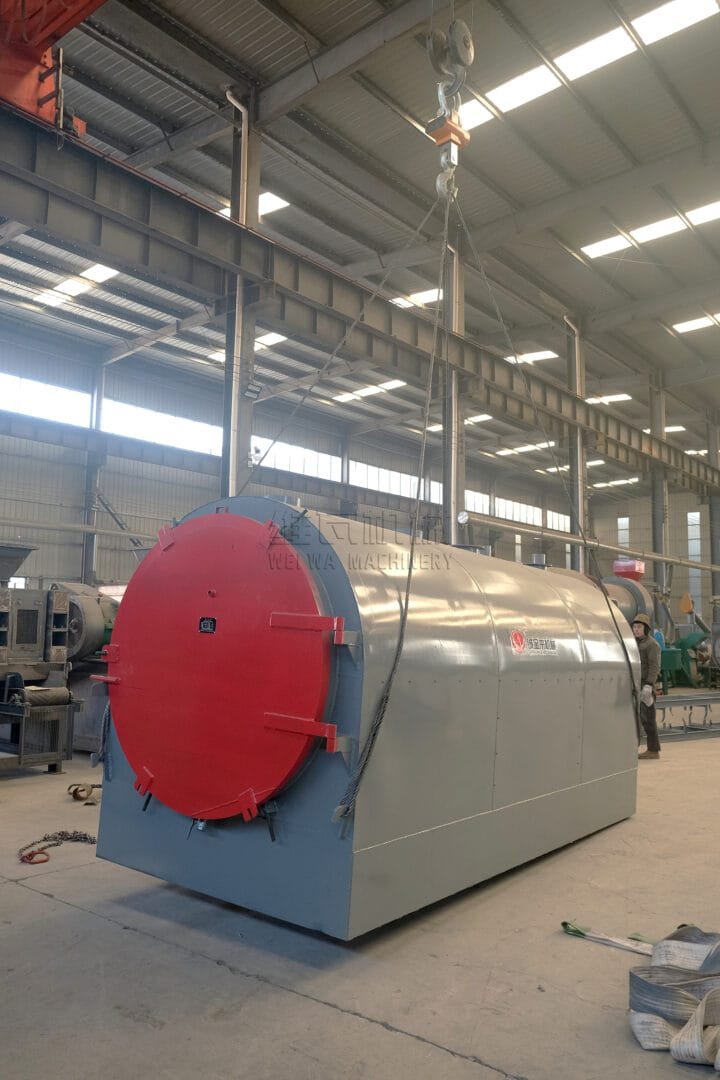
郑州工厂的清晨,充满了叉车低沉的嗡嗡声和重型机械周围钢链有节奏的叮当声。. 对于威瓦机械团队, 这不仅仅是又一个离开车间的出口订单. 这是一台经过全面测试的卧式碳化炉启程前往菲律宾的长期合作伙伴. 过去十年, we have supplied biomass processing equipment to more than 30 国家, yet every shipment carries its own story, its own technical adjustments, and its own anticipation of how our machines will perform thousands of kilometers away.
This particular unit was customized for processing coconut shells, 木屑煤, and mixed hardwood—raw materials abundantly available across the Philippine archipelago. 客户, based in Luzon, had spent months comparing different types of charcoal making machine technologies, from traditional earth kilns to modern continuous carbonizers, before deciding that a batch-type charcoal maker with rail-mounted chambers would best suit their current scale and labor structure. Standing beside the furnace during final factory loading, our lead engineer ran through the pre-departure checklist one last time: door sealing integrity, purification tower connections, thermometer calibration, and control panel labeling in English. These details matter when a horizontal carbonization furnace in the Philippines will soon operate under tropical humidity, coastal salt air, and fluctuating biomass moisture content.
As the truck slowly pulled away from the workshop toward the port of Qingdao, it carried more than steel plates and welded seams. It carried the expectation that this charcoal kiln would help transform agricultural residues into high-value charcoal with less smoke, less fuel, and more consistent yields than the traditional pits still common in rural parts of the Philippines. In the sections that follow, we will walk through the shipment preparation process, the technical features of the furnace that make it suitable for Philippine conditions, and a detailed look at how carbonization works in tropical biomass contexts. Along the way, we will explain why equipment choice matters not only for productivity but also for environmental compliance and long-term profitability.
Pre-Shipment Preparation at the Weiwa Machinery Factory
Every horizontal carbonization furnace leaving our factory undergoes a multi-stage quality assurance process that begins long before the paint dries. For export orders, the first step is raw material verification. The inner tank of the furnace is constructed from high-temperature resistant alloy steel designed to withstand repeated heating cycles up to 600 °C. Each welding seam is inspected visually and, when required by the destination country’s regulations, tested with non-destructive methods to ensure no micro-cracks could lead to gas leakage under thermal stress. The middle layer consists of aluminum silicate fiber insulation, which reduces heat loss and keeps the outer shell temperature within safe limits for operators. The outer painted steel shell is treated with anti-corrosion coating, an important consideration for machines destined for coastal regions such as many provinces in the Philippines.
Once the mechanical assembly is completed, the furnace moves to the no-load heat test area. 这里, our technicians ignite the burners and bring the chamber to target carbonization temperature while monitoring how evenly heat distributes along the horizontal barrel. Because a charcoal making machine must process batches without creating over-charred ends or under-carbonized centers, this test reveals whether adjustments are needed in burner placement, flue gas circulation, or insulation thickness. For the unit shipped to the Philippines, we recorded a steady temperature curve with less than 10 °C variation from the inlet to the outlet side when operating at 580–600 °C, confirming balanced indirect heating.
After the heat test, the smoke purification system is connected and run using a simulated gas stream. This system is central to why many clients replace traditional charcoal kiln setups with a Weiwa horizontal carbonization furnace. It separates tar and condensates from the flue gas, allowing clean combustible gas to be redirected into the burners. This recycling loop reduces external fuel consumption and minimizes visible smoke emissions. 针对菲律宾市场, where some local governments are tightening environmental oversight on charcoal production, this feature is often decisive. During pre-shipment testing, we verified that the purification tower, condensation pipes, and relief valves operated correctly and that the gas return line maintained stable pressure.
Packaging for overseas shipping is the final factory stage. The furnace body is wrapped with waterproof polyethylene film and cushioned with foam boards at all protruding parts such as thermometers, 阀门, and lifting lugs. Steel frames are built around the main chamber to prevent shifting inside the container. 对于这批货物, we selected a 20-foot high-cube container to accommodate the rail-mounted base and the detachable trolley carts. Spare parts, 英文操作手册, 接线图, and a tool kit were packed in a separate reinforced wooden crate clearly labeled for customs clearance. 板条箱内, we also placed a USB drive containing video tutorials on installation, startup, and routine maintenance—resources our Philippine client requested to help train their on-site operators.
Before the truck departed, our sales manager and the client joined a short video call at the factory gate to confirm the container number, seal number, and estimated arrival timeline at the Philippine port. It was a small ritual we have adopted for long-distance shipments, one that reinforces trust and ensures both parties share the same reference points once the equipment is in transit. Watching the container disappear down the road, we knew the next time we would see this horizontal carbonization furnace it would be surrounded by coconut trees and the humid air of a Philippine workshop.
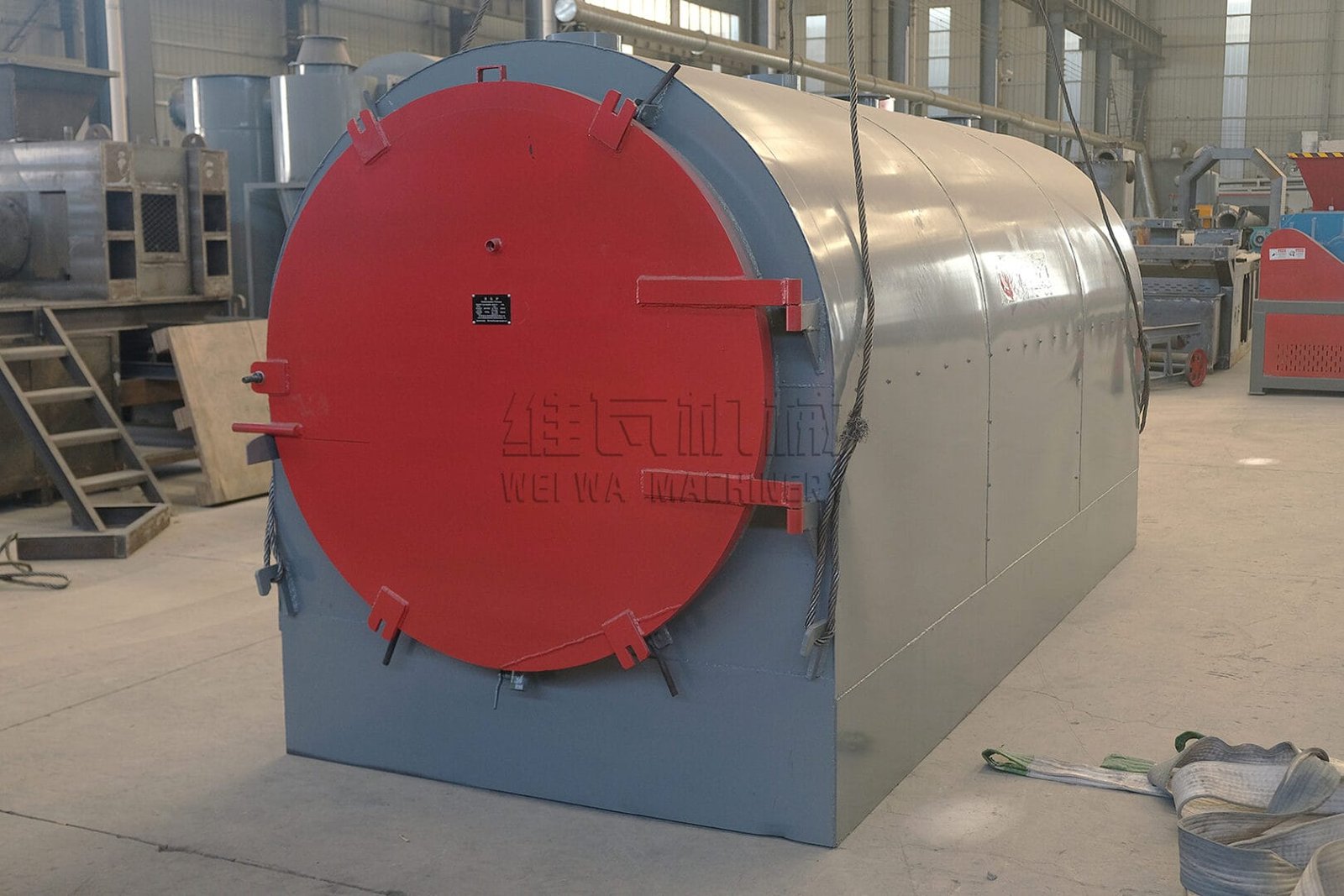
From Zhengzhou to the Philippine Port Logistics and Timeline
International shipping is as much a part of the customer experience as the machine itself. For this horizontal carbonization furnace in the Philippines, the logistics chain began with inland trucking from Zhengzhou to Qingdao port, a journey of roughly 650 kilometers passing through Henan and Shandong provinces. We work with freight forwarders experienced in handling heavy industrial equipment, ensuring that suspension and securing methods meet both Chinese road transport regulations and the carrier’s ocean vessel requirements. Low-bed trailers are used to keep the center of gravity stable when transporting the furnace base and purification system together.
At Qingdao port, the container underwent customs declaration under the ordinary trade export category. Our documentation team prepared the commercial invoice, 包装清单, 提货单, 原产地证书, and the machinery inspection report. For Philippine imports, accurate HS code classification is essential; charcoal making machine and carbonization equipment typically fall under chapters related to industrial furnaces and environmental protection machinery, but local interpretations can vary. We advise clients to consult their customs broker in advance to anticipate any duties, taxes, or Bureau of Customs clearances specific to biomass processing equipment.
Ocean transit from Qingdao to Manila generally takes 7 到 10 days depending on the shipping line and weather conditions. During this period, the container experiences vibration, humidity changes, and possibly salt spray if stored on deck. This is why factory waterproofing and anti-corrosion measures are not optional—they are integral to delivering a charcoal maker that arrives in commission-ready condition. We also purchase marine cargo insurance covering all-risk clauses, including damage from handling, 水分, and unforeseen delays. Our Philippine client received real-time tracking updates and was notified three days before vessel arrival so they could prepare their local transport from the port to the installation site.
Upon arrival at the Port of Manila, the container entered the Philippine customs process. Importers of industrial machinery may be asked to present technical specifications, proof of payment, and sometimes an environmental compliance certificate depending on the province where the machine will operate. While Weiwa Machinery cannot handle Philippine customs on the client’s behalf, we provide all necessary supporting documents, including detailed English descriptions of how the horizontal carbonization furnace controls emissions and recycles gas, which can help demonstrate alignment with sustainability goals. Once cleared, the container was loaded onto a local truck for the final leg to the client’s facility, where our remote commissioning support would begin.
It is worth noting that shipping a charcoal kiln of this size is not merely a matter of moving weight from point A to point B. It involves synchronizing factory readiness, document accuracy, maritime schedules, and local ground logistics. When these elements align, the machine arrives on time, the installation team is ready, and production can start within days rather than weeks. 对于小- to medium-scale producers in the Philippines, minimizing downtime between delivery and first batch is often critical to cash flow and market commitments.
Why the Philippines Needs Advanced Carbonization Technology?
The Philippines is an archipelago with abundant biomass resources. Coconut shells alone represent a massive untapped or underutilized feedstock in many regions, especially in Quezon, Laguna, Davao, and parts of Visayas where coconut cultivation dominates the landscape. 稻壳, 甘蔗甘蔗渣, 竹边角料, and sawmill waste add to the available raw material base. 传统上, much of this biomass is either discarded, openly burned, or processed in rudimentary charcoal kiln setups such as earthen pits or improvised steel drums. These methods are labor-intensive, yield inconsistent charcoal quality, and generate substantial smoke that affects both worker health and nearby communities.
A modern charcoal making machine like the horizontal carbonization furnace addresses several of these pain points simultaneously. 第一的, it introduces controlled atmosphere carbonization. By limiting oxygen entry and managing the heating rate, the furnace produces charcoal with higher fixed carbon content and lower volatile matter compared to pit methods. 针对菲律宾市场, where barbecue charcoal and hookah charcoal command different price tiers based on quality, this consistency can translate into better market positioning. 第二, the gas recycling system reduces fuel wood or LPG consumption after the initial ignition phase, an important cost factor given fluctuating energy prices. 第三, the batch-based horizontal design allows operators to switch raw materials more easily than in continuous systems, which is useful in areas where coconut shell supply may be seasonal while sawdust briquettes are available year-round.
Environmental regulations in the Philippines are gradually evolving. While enforcement varies by region, there is growing awareness of air quality issues linked to open biomass burning. Local government units in some provinces have begun discouraging traditional kilns or requiring permits that demonstrate emission controls. A horizontal carbonization furnace in the Philippines equipped with tar separation and gas recirculation is better positioned to meet such requirements because the visible smoke is drastically reduced and the combustion of recycled syngas is more complete. For entrepreneurs seeking to scale up and potentially apply for sustainability-linked certifications or carbon credit projects, starting with cleaner technology avoids the need to retrofit later.
Labor availability is another factor. Many rural areas face outmigration of skilled workers to urban centers, leaving charcoal production in the hands of small family teams. A charcoal maker with simplified controls, clear temperature indicators, and safe door-sealing mechanisms lowers the technical barrier to entry. Our Philippine client, 例如, plans to employ three operators per shift, none of whom have prior industrial furnace experience. The training videos and manuals we provided are designed for exactly this context: practical, visual, and focused on safety and repeatability rather than theoretical thermodynamics.
最后, there is the question of yield. Traditional pit carbonization often achieves 20–25% charcoal yield from dry wood by weight, with significant losses due to partial combustion and uneven heating. A well-operated horizontal carbonization furnace can push yields to 30–35% or more depending on raw material density and moisture content. Over dozens of batches, this difference compounds into meaningful extra output without increasing feedstock procurement. For a producer in the Philippines where biomass collection already involves transport costs and seasonal variability, improving conversion efficiency is as important as the machine’s purchase price.
技术概述 水平碳化炉
To understand why this equipment is suited for the Philippine context, it helps to examine its core components and how they interact during a carbonization cycle. The main chamber is a horizontal barrel mounted on rails or a fixed robust frame, 取决于型号. 里面, one or more trolleys carry the raw material in mesh baskets or loose form. The barrel is oriented horizontally to allow even longitudinal heat distribution and to simplify loading and unloading compared to vertical charcoal kiln designs that require top-loading cranes or hoists.
Heating is typically indirect. Burners located at one or both ends heat the outer wall of the chamber, and the resulting thermal radiation and convection raise the temperature inside the inner tank where the biomass sits. As the temperature climbs past 200 °C, the biomass begins to release volatile compounds—water vapor first, then acetic acid, tar vapors, 甲醇, and combustible gases such as methane and carbon monoxide. In a traditional kiln, much of this exits as smoke. In a charcoal making machine with a purification system, these gases are ducted through a condensation and separation unit. Tar and wood vinegar liquid are collected in reservoirs, while the cleaned gas is piped back to the combustion chamber as supplementary fuel.
The furnace operates under slight negative pressure managed by a draft fan, which helps pull gases through the purification train and prevents backflow of smoke when the door is opened at the end of a cycle. Temperature is monitored via a dial or digital thermometer inserted into the chamber, and some models include multiple sensing points along the barrel to detect gradients. Once the target temperature range—usually 550–650 °C for wood and coconut shells—is maintained for a predefined duration, the heating stops and the cooling phase begins. Natural air cooling or optional water-cooling jackets can be used; the latter shortens turnaround time between batches, which matters for producers aiming for daily throughput.
Safety features include spring-loaded pressure relief valves, ceramic fiber door seals, and insulated outer surfaces. The door locking mechanism is designed to remain secure under thermal expansion and is equipped with a visual indicator to confirm proper closure before firing. 致菲律宾客户, we also added a multilingual label set in English and simple icons to remind operators of critical steps: seal check, purge valve position, and emergency shutdown sequence. These small details accumulate into a charcoal maker that is not only technically capable but also operable by non-specialist staff in remote locations.
Customization options for the horizontal carbonization furnace in the Philippines often include trolley size adjustment, chimney height extension for local wind conditions, and control panel voltage compatibility (220V/380V, 50Hz as common in the Philippines). Our exported unit also included an upgraded electrostatic tar precipitation unit upon the client’s request, reflecting increasing interest in emission control even at the small–medium scale. Regardless of options, the core principle remains the same: convert biomass to charcoal in a controlled, recyclable-gas environment that balances yield, 劳动, 和环境影响.
Carbonization Science in the Philippine Context
Carbonization is essentially the thermal decomposition of organic material in a low-oxygen environment. 在菲律宾, where ambient humidity is high and biomass moisture content can exceed 20–30% during rainy seasons, understanding the phases of carbonization helps operators optimize results with a horizontal carbonization furnace. The process can be divided into four overlapping stages: 烘干, pre-carbonization, main carbonization, and cooling.
Drying occurs up to approximately 150–180 °C. Free and bound water exit the biomass as vapor. If feedstock is not pre-dried, this stage consumes significant external energy and extends the cycle. In Philippine conditions, some producers use solar drying yards or simple roofed racks to reduce moisture to below 15% before loading the charcoal making machine. This step pays off in shorter furnace runtime and more uniform final charcoal.
Pre-carbonization ranges from 180–280 °C. Hemicellulose begins to decompose, releasing early volatiles and some tar precursors. The material starts to darken but is not yet charcoal. During this phase, the furnace atmosphere must remain oxygen-limited; any air ingress can cause glowing combustion that ruins batch uniformity. The sealed door and gasket system of a horizontal carbonization furnace are critical here, as is the slight negative pressure maintained by the exhaust fan.
Main carbonization from 280–600 °C is where cellulose and lignin break down extensively. Large volumes of syngas are generated, and the material transforms into porous charcoal with increasing fixed carbon. For coconut shells, which are denser than softwood, holding the upper part of this range (around 580–620 °C) for several hours helps achieve the hardness and low ash preferred in premium markets. A charcoal kiln without temperature control often overshoots or undershoots this window, leading to brittle or under-carbonized product. The Weiwa furnace’s burner modulation and insulation allow the operator to hold the plateau steadily once reached.
Cooling is frequently underestimated. Fresh charcoal is highly reactive and can reignite if exposed to air while still hot. After the heating cycle ends, the furnace is left sealed to cool passively or with controlled air restriction. Only when internal temperature drops below 100 °C is the door opened and the trolley rolled out. Rushing this stage is a common mistake among new operators and can negate the gains of a well-run carbonization cycle. Our Philippine client’s operation manual emphasizes cooling time explicitly and includes a simple rule: if the chamber wall is too hot to touch comfortably, the charcoal inside is not ready for unloading.
Understanding these stages helps explain why a charcoal maker with instrumentation and controlled heating outperforms a pit or drum. It is not merely about containing fire; it is about managing time, 温度, and gas flow so that biomass becomes charcoal rather than ash. In the Philippine setting—where feedstock varies from coconut shell to bamboo to sawdust briquette—this controllability allows one machine to serve multiple raw material streams with only minor parameter adjustments.
Raw Material Considerations for the Philippine Market
Coconut shells are perhaps the most discussed feedstock when talking about horizontal carbonization furnace in the Philippines. They are relatively uniform in size, 稠密, and produce charcoal with high calorific value and low ash, suitable for both barbecue and activated carbon precursor markets. 然而, shells arrive with varying moisture depending on whether they are sun-dried after de-husking. Pre-drying or mixing with drier materials can stabilize the batch energy balance. Overly wet shells prolong the drying stage and increase condensate load in the purification system.
Wood logs and branches, especially from mango, acacia, narra, 和竹子, are also common. These materials carbonize differently than shells due to lower density and higher initial moisture. A charcoal making machine processing mixed wood should avoid overpacking the trolley, as airflow between pieces influences heat penetration. Our Philippine client plans to run separate batches for shells and wood initially, then experiment with mixed loads once operators gain confidence in reading temperature curves and adjusting burn times.
Sawdust briquettes deserve special mention. In many Philippine provinces, sawmills generate fine residues that are otherwise discarded or burned openly. Pressing sawdust into briquettes before carbonization improves bulk density and makes handling inside the horizontal carbonization furnace easier. Briquettes also tend to carbonize more uniformly than loose sawdust, which can compact and create anaerobic pockets that slow heat transfer. The furnace’s mesh baskets work well for briquettes, provided they are not overfilled and are arranged to leave gaps for gas circulation.
Rice husks and sugarcane bagasse are more challenging in a batch horizontal furnace unless pre-compacted or co-processed with other materials. Their low density and high silica content (in husks) can affect ash characteristics. Some Philippine users mix a thin layer of husk with heavier feedstock to utilize waste without compromising the main batch quality. This kind of adaptive strategy is easier with a charcoal kiln</-type that allows visual inspection through sight glasses and flexible batch composition than with a continuous reactor that demands strict feed consistency.
Regardless of material, feedstock preparation—size reduction, 烘干, and cleaning—directly affects how the horizontal carbonization furnace performs. We advise clients in the Philippines to allocate space and budget for a simple rotary dryer or at least covered drying racks. The furnace is the heart of the process, but what enters it determines much of the outcome. A well-run charcoal maker cannot fully compensate for consistently poor feedstock preparation, whereas even modest equipment can shine when fed properly dried, sized, and clean biomass.
Installation and Commissioning Expectations in the Philippines
When the container arrives at the client’s site, the first task is to verify all items against the packing list. The furnace body is unpacked and moved to its foundation—a level concrete pad with sufficient drainage to prevent water accumulation around the base during monsoon months. In coastal or high-humidity areas of the Philippines, we recommend adding a rust-protective paint touch-up kit and checking grounding connections for the control panel to mitigate corrosion and electrical risk.
The rail system or fixed frame is aligned and anchored. The purification tower is positioned according to the layout drawing, usually adjacent to the furnace with short, well-supported piping to minimize condensation drops and pressure loss. The chimney is assembled and secured with guy wires if required by local wind loads. All gaskets and door seals are inspected again after transport, as vibration can shift ceramic fiber packing slightly. These are not glamorous tasks, but they determine whether the horizontal carbonization furnace will seal correctly during its first heat-up.
Electrical connection comes next. The control panel includes terminals for main power, draft fan, optional water pump, and instrumentation. Philippine industrial sites often use 220V/380V 3-phase 60Hz supplies, though some rural workshops operate on single-phase 220V with limited 3-phase access. We configure panels accordingly when discussing orders, and for this client the unit was wired for 380V 3-phase with clear labeling. A licensed electrician should perform the final hookup and verify phase sequence to avoid fan reversal.
Once assembled, a cold test runs the fan and checks door locking and relief valve movement without firing. Then comes the first ignition—a cautious, supervised startup where the team follows the manual step by step: initial fuel (firewood or LPG), gradual temperature ramp, observation of gas generation, and activation of the return gas line once the purification system warms. This first batch is often conservative in size and duration, prioritizing familiarity with the charcoal making machine over maximizing output. Our remote support team stayed online via WhatsApp video during this phase, answering questions about flame color, thermometer response, and condensation drainage.
After the first successful batch, parameters are fine-tuned: how long to hold at peak temperature for coconut shells versus wood, when to engage the gas return valve, how to adjust damper positions for stable pressure. Within a week, most operators develop a feel for the furnace’s behavior in their specific environment. For this horizontal carbonization furnace in the Philippines, the client reported consistent door sealing, clean gas return flame, and charcoal with uniform black coloration and minimal residual smoke odor after the third batch—encouraging signs that the equipment and the site conditions were aligning well.
Operational Tips for Tropical Climates
Operating a charcoal maker in the Philippines introduces climatic factors less prominent in temperate manufacturing locations. High ambient humidity affects both feedstock and equipment. Biomass stored under partial cover can still equilibrate to 12–18% moisture during rainy seasons; planning batch schedules around dry spells or using covered drying can prevent extended drying phases inside the furnace that consume external fuel.
Condensation management is another tropical consideration. The purification system collects tar and wood vinegar liquid, which are water-emissive and can condense vigorously when hot gas meets cooler pipes. Ensuring the condensation tank is adequately sized, insulated where appropriate, and drained regularly prevents liquid buildup that could backflow or clog lines. For coastal installations, using stainless or coated components in the gas path extends life in salt-laden air.
Personnel comfort and safety intersect with climate as well. The furnace exterior is insulated but still radiates warmth, and Philippine summers can push workshop temperatures high. Scheduling batches during cooler parts of the day, ensuring ventilation around the furnace area, and providing PPE suitable for high-heat environments helps sustain safe operations. A horizontal carbonization furnace is not inherently dangerous when used as designed, but like any thermal equipment it demands respect for heat, 压力, and moving parts—especially in settings where formal safety training may be limited.
Maintenance rhythms also adapt to climate. Door gaskets may age faster under UV and heat cycles; a spare set on hand avoids downtime. Fan bearings in humid environments benefit from periodic grease checks. Electrical enclosures should be kept closed and, if possible, dehumidified or at least elevated above floor level in case of occasional site flooding. These are not complex measures, but they reflect the mindset that a charcoal kiln is a long-term asset whose performance depends on small, consistent habits as much as on initial build quality.
Lastly, record-keeping—simple logs of batch date, 原料类型, moisture estimate, start/end times, 峰值温度, and yield—builds institutional knowledge. Over months, these logs reveal how seasonal biomass changes affect the charcoal making machine performance and guide adjustments. 在菲律宾, where typhoons or dry spells shift biomass availability, such records turn anecdote into actionable insight.
Comparing Modern Furnaces with Traditional Charcoal Kilns
It is useful to place the horizontal carbonization furnace in contrast with traditional Philippine practices such as pit kilns, mound kilns, and drum retrofits. Traditional methods rely heavily on operator intuition, earthen sealing, and uncontrolled airflow. They can produce acceptable charcoal at very low capital cost but suffer from low and variable yields, high labor intensity, long cycle times, and significant smoke. Environmental and health downsides are increasingly recognized, and in some municipalities, such methods face restrictions.
A modern charcoal making machine shifts the variables from intuition to instrumentation. Temperature control, 气体回收, insulated chambers, and sealed doors replace guesswork with observable parameters. 初期投资较高, but the payback often comes through yield improvement, fuel savings, reduced labor per ton of charcoal, and access to higher-value markets that demand consistent quality. 例如, a charcoal kiln that reliably produces low-smoke, high-fixed-carbon charcoal can serve restaurants, 度假村, and urban distributors looking for premium barbecue fuel—segments less accessible to informally produced charcoal.
There is also scalability. A single horizontal furnace processes a defined batch size, but additional units or larger models can be added without re-engineering the entire process. 相比之下, scaling pit kilns usually means more pits, more land disturbance, and more smoke concentration—often exacerbating rather than solving operational and compliance issues. The horizontal carbonization furnace in the Philippines we shipped occupies a modest footprint yet integrates with future auxiliary equipment such as dryers, 压碎机, and briquette presses if the client chooses to expand into downstream products.
That said, modern equipment is not a magic bullet. It requires feedstock preparation, 操作员培训, and maintenance discipline. The best outcomes occur when entrepreneurs view the charcoal maker as part of a system—site layout, raw material supply, 烘干, 碳化, 冷却, 贮存, and marketing—rather than as a standalone purchase. Weiwa Machinery’s role is to supply the machine and the knowledge; the client’s role is to integrate it into a viable local workflow. When both sides align, the contrast with traditional kilns becomes not just technical but economic and environmental.
Market Outlook for Charcoal and Biochar in the Philippines
Domestic demand for charcoal in the Philippines remains steady, driven by household cooking in certain regions, street food vending, and the hospitality sector’s barbecue culture. 同时, niche markets are emerging: 水烟木炭, 水烟木炭, activated carbon from coconut shells, and biochar for soil amendment in agriculture. Each segment has different specifications—hardness, 固定碳, 灰分含量, size uniformity—that a controllable horizontal carbonization furnace can help meet through adjusted temperature profiles and batch compositions.
Government and NGO programs promoting rural industrialization and waste-to-resource initiatives occasionally highlight biomass carbonization as a pathway to add value to agricultural residues. While incentives vary and should be verified independently, the broader trend favors technologies that demonstrate reduced emissions and resource efficiency. A charcoal making machine with gas recycling and tar capture aligns with this narrative more readily than open burning or primitive kilns, which can be advantageous when engaging local authorities or community stakeholders.
出口潜力也存在. Philippine coconut shell charcoal and activated carbon already reach regional and international markets. Producers who can document process control, 一致的质量, and environmental measures may find it easier to meet buyer requirements, especially from markets with sustainability criteria. Even if a charcoal kiln operator focuses primarily on domestic sales initially, building disciplined processes early creates optionality for export later.
Competition is present, 当然. Importers of charcoal from neighboring countries, domestic informal producers with low overhead, and other modern equipment suppliers all shape the landscape. Differentiation through quality consistency, reliable supply, and transparent practices is where a well-run horizontal carbonization furnace in the Philippines can carve its niche. The technology alone does not guarantee success, but it removes several historical constraints—yield variability, 烟雾过多, fuel inefficiency—that have long limited the sector’s professionalization.
After-Sales Support and Long-Term Partnership
Delivering a charcoal maker is not the end of our engagement; it is the beginning of a longer collaboration. Weiwa Machinery maintains an English-speaking technical team that handles remote troubleshooting via video call, messaging apps, and email. 致菲律宾客户, we scheduled a series of check-ins after commissioning: one week post-first-batch, one month later, and quarterly thereafter for the first year. These touchpoints cover performance review, spare parts planning, and any operational questions that arise as batch volumes scale up.
Spare parts availability is part of the discussion early on. We recommend keeping a basic kit on-site: door gaskets, thermometer probes, fan belts, and common valve seals. 对于海外客户, we ship these with the machine or via express air freight when needed. Because the horizontal carbonization furnace uses standardized components wherever possible, many consumables can also be sourced locally in the Philippines, reducing dependency on long lead-time imports for minor items.
Documentation evolves too. As the client refines their process, we update manuals or add notes specific to their configuration—for example, optimal hold time for their typical coconut shell moisture range, or chimney condensation drainage frequency in their coastal humidity. This living knowledge base turns a generic charcoal making machine into a site-adapted asset. We also encourage clients to share feedback on wear patterns, local feedstock quirks, and any modification ideas. Several improvements in our recent furnace versions originated from field observations in Southeast Asia, 包括菲律宾.
For larger installations or multi-unit projects, on-site visits can be arranged subject to mutual agreement, visa, and safety conditions. Our engineers carry passports and have experience working in tropical workshops, from Southeast Asia to East Africa. Until then, digital support bridges the distance. In an era where a charcoal kiln in Luzon and a factory in Zhengzhou can be connected by a smartphone call, geography matters less than responsiveness, clarity, and mutual commitment to making the equipment work.
关于 WEIWA机械
Weiwa Machinery is a professional manufacturer of biomass carbonization and briquetting equipment based in Zhengzhou, 河南省, 中国. 拥有超过 30 多年行业经验, we specialize in horizontal carbonization furnace, vertical carbonization kilns, continuous carbonization plants, 木炭压块机, 压碎机, 和干衣机. 我们的产品远销多个国家和地区, and we have become the first choice for more than 2 million customers worldwide who seek reliable, 节能, and environmentally conscious charcoal production solutions.
We combine practical design with advanced gas-purification technology to help small- to medium-scale producers improve yield, 减少油耗, 并降低排放. From customized equipment selection and factory testing to international shipping and technical training, we provide end-to-end support tailored to local market needs. Whether you are looking for a single 木炭制造机 or a complete production line, 我们的团队准备协助.
联系我们
暴民: +86 138 3809 3177
WhatsApp: +86 138 3809 3177
电子邮件: info@cjlmachinegroup.com
网站: https://cjljx.com/products/tanhua/horizontal-carbonization-furnace


 微信
微信

 +8615937143060
