


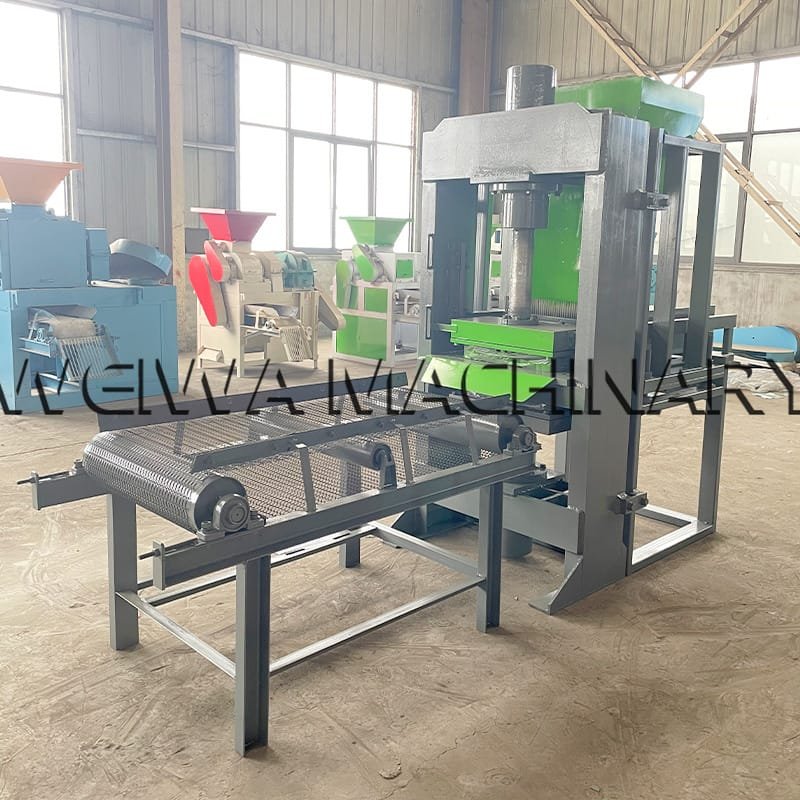
As global demand for renewable energy and sustainable waste management continues to rise, hydraulic briquette machines have emerged as a vital solution across industries. Tại máy móc Weiwa, we recently had the privilege of conducting an on-site trial of our hydraulic press briquetting machine for a client based in Brazil.
Understanding Hydraulic Briquette Machines and Their Mechanism
Hydraulic briquette machines are engineered to compress biomass materials into dense, solid briquettes using high-pressure hydraulic force. Unlike mechanical presses that rely on screws or rollers, hydraulic systems deliver uniform pressure, ensuring consistent briquette density and durability. These machines are ideal for converting agricultural residues like sugarcane bagasse, trấu gạo, Sawdust, coffee pulp, and other organic matter into usable fuel sources.
Our hydraulic briquette press integrates precision-engineered cylinders and control systems that allow operators to adjust pressing parameters according to material characteristics. This adaptability makes it suitable for diverse raw materials commonly found in Brazil’s agro-industrial sectors.
Why Brazil? The Rising Potential for Hydraulic Briquette Machines
Brazil stands out as one of Latin America’s most dynamic economies, with vast agricultural resources and growing environmental awareness. The country generates millions of tons of agricultural waste annually, much of which is either burned openly or left to decompose—contributing significantly to air pollution and greenhouse gas emissions.
The Brazilian government has been promoting cleaner energy alternatives under its National Bioenergy Plan (Plan Nacional de Biocombustíveis), creating fertile ground for technologies such as hydraulic briquette machines. Ngoài ra, rising energy costs and the need for decentralized power solutions in rural areas make locally produced biomass briquettes an attractive option.
For these reasons, the application of a hydraulic briquette machine for Brazil is not just viable but essential. It enables local businesses to transform waste into value while reducing dependency on fossil fuels.
Preparing for the Trial: Customization Based on Client Needs
Before shipping our hydraulic press briquetting machine to Brazil, our engineering team worked closely with the client to understand their specific requirements. They operate a medium-sized facility processing coffee husks and sugarcane bagasse—two abundant byproducts in their region.
Given the fibrous nature of coffee husks and the moisture variability in bagasse, we customized the mold design and feeding system to optimize compression efficiency. We also adjusted the hydraulic pump capacity to match local voltage standards and climate conditions. Such tailored solutions reflect our commitment to providing hydraulic briquette machine customization services that align with regional demands.
This phase highlighted another key strength of Weiwa Machinery: our ability to offer full technical support including layout planning, operational training, and spare parts availability throughout Brazil.
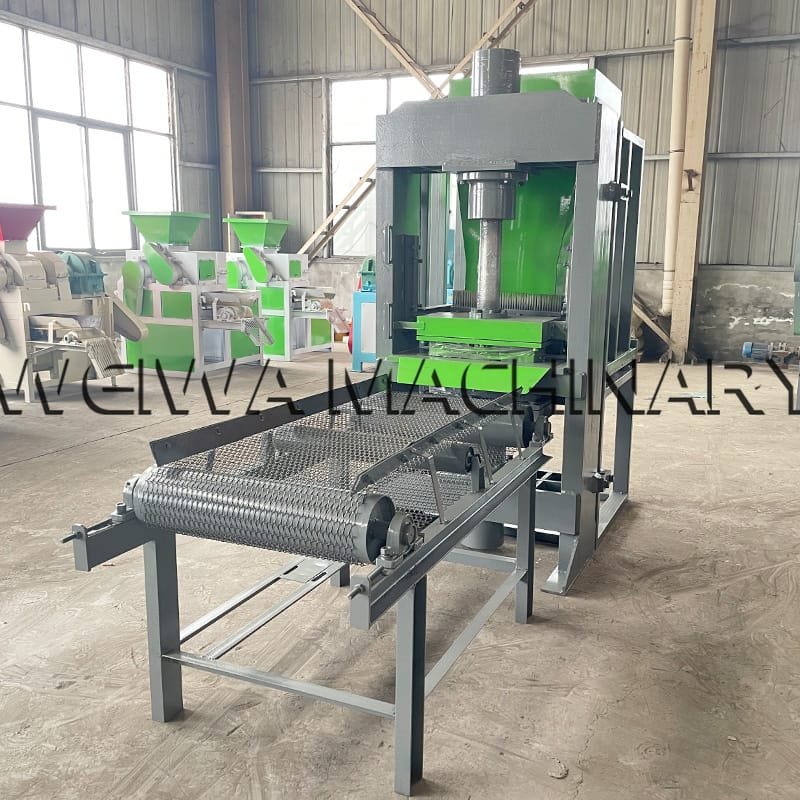
On-Site Testing: Bringing the Hydraulic Briquette Press to Life
Upon arrival at the client’s facility in Minas Gerais, our technician accompanied the shipment to oversee installation and commissioning. Over five days, we conducted multiple tests using varying ratios of coffee husk and bagasse blends. Each test aimed to evaluate briquette quality, production speed, energy consumption, and machine stability.
The results were highly encouraging. The hydraulic briquette press consistently produced uniform cylindrical briquettes measuring 50mm in diameter, with densities exceeding 1.2 g/cm³. The client reported minimal dust emission and low noise levels compared to their previous mechanical press.
What truly stood out was the machine’s ability to handle inconsistent feedstock without clogging—a common challenge when dealing with natural biomass fibers. Thanks to the intelligent pressure regulation system embedded in our hydraulic briquette machine, operators could fine-tune compression cycles based on real-time feedback.
Analyzing Performance Metrics Post-Trial
To quantify the success of the trial, we monitored several performance indicators:
- Briquette Density: Averaged between 1.18–1.25 g/cm³ depending on blend ratio.
- Production Rate: Achieved up to 800 kg/hour under optimal settings.
- Energy Consumption: Approximately 18 kWh per ton of briquettes produced.
- Downtime: Less than 2% qua 40 hours of continuous operation.
These figures demonstrate that investing in a hydraulic briquette machine for Brazil can yield tangible economic returns within months. Hơn nữa, the briquettes met ENplus certification criteria for calorific value (>16 MJ/kg) and ash content (<8%), opening doors to both domestic and export markets.
Addressing Common Concerns About Hydraulic Systems
Despite their advantages, some potential buyers hesitate due to misconceptions about hydraulic briquette presses being complex or maintenance-intensive. During our engagement in Brazil, we addressed these concerns directly:
- BẢO TRÌ: Modern hydraulic systems require scheduled fluid checks and seal replacements every 500 operating hours—well within manageable limits.
- Training: Our team provided hands-on instruction covering startup procedures, emergency protocols, and troubleshooting techniques.
- Safety: Equipped with overload protection and dual-hand controls, our hydraulic briquette machine ensures operator safety even in demanding environments.
Such transparency builds trust and reinforces Weiwa Machinery’s reputation as a reliable partner in emerging markets like Brazil.
Exploring Market Opportunities Beyond Biomass Fuel
While most clients initially adopt hydraulic briquette machines for producing solid biofuels, many discover additional revenue streams post-implementation. Ví dụ, charcoal briquettes made from compressed coconut shells or wood chips serve niche markets such as barbecue restaurants and metallurgical industries.
In Brazil, where tourism and gastronomy thrive, branded briquettes for grilling applications could tap into premium pricing segments. Similarly, industrial users seeking eco-friendly alternatives to coal in lime kilns or brick factories represent untapped demand waiting to be unlocked through targeted marketing and localized distribution networks.
By leveraging our expertise in hydraulic press briquetting machine development, Weiwa Machinery helps clients explore diversified applications beyond traditional biomass fuel production.
Sustainability Impact: Aligning With Brazil’s Green Agenda
One cannot discuss the deployment of hydraulic briquette machines in Brazil without acknowledging its alignment with sustainability goals. Every ton of briquettes manufactured replaces approximately 0.7 tons of coal, thereby avoiding roughly 2.1 tons of CO₂ emissions.
Hơn thế nữa, diverting agricultural residues from open burning improves air quality—particularly crucial in densely populated farming regions. Several municipalities in São Paulo and Paraná have already introduced incentives for cleaner biomass utilization projects, signaling strong governmental backing.
Our collaboration with Brazilian partners underscores Weiwa Machinery’s dedication to advancing green technology globally. Through innovation and partnership, we aim to empower communities to embrace circular economy principles rooted in resource efficiency.
Partnering With Weiwa Machinery: More Than Just Equipment Supply
Choosing the right supplier goes beyond purchasing machinery; it involves securing ongoing support and strategic guidance. Tại máy móc Weiwa, we pride ourselves on delivering comprehensive solutions tailored to each customer’s journey.
With over thirty years of experience in designing and manufacturing hydraulic briquette machines, we possess deep insights into optimizing performance across varied contexts. Our professional after-sales team ensures minimal downtime through prompt technical assistance and readily available spare parts.
We also specialize in customized service offerings such as factory layout planning, electrical schematic drawings, and operational manuals translated into Portuguese—making adoption seamless for Brazilian enterprises.
Whether you’re evaluating your first hydraulic briquette press investment or scaling existing operations, Weiwa Machinery welcomes you to contact us for inquiries and quotations. Let us help turn your biomass waste challenges into profitable opportunities.
Unlocking Brazil’s Biomass Potential Together
The successful trial of our hydraulic briquette machine in Brazil reaffirmed both the technological readiness and market appetite for advanced briquetting solutions. As more industries seek cleaner, cost-effective energy alternatives, the role of hydraulic press briquetting machines will only grow in importance.
From coffee farms in Minas Gerais to sugar mills in Goiás, the opportunity to convert waste into wealth is tangible. With Weiwa Machinery as your trusted partner, you gain access to proven equipment, localized expertise, and unwavering support—all geared toward long-term success in Brazil’s evolving bioeconomy.
Ready to explore how a hydraulic briquette machine can revolutionize your business in Brazil? Reach out today for expert advice and personalized recommendations.
Weiwa Machinery is a leading manufacturer of hydraulic briquette machines with over 30 years of industry experience. Headquartered in China, we provide global clients with cutting-edge briquetting solutions backed by a professional after-sales team. Our services include customized machine designs, detailed site layout planning, technical drawing preparation, and multilingual support. Whether you’re looking to process agricultural waste, industrial residues, or specialty materials, Weiwa Machinery delivers efficient, bền, and user-friendly equipment tailored to your needs. Contact us now to request a quote or consultation for your project.


 WeChat

 +8615937143060
