


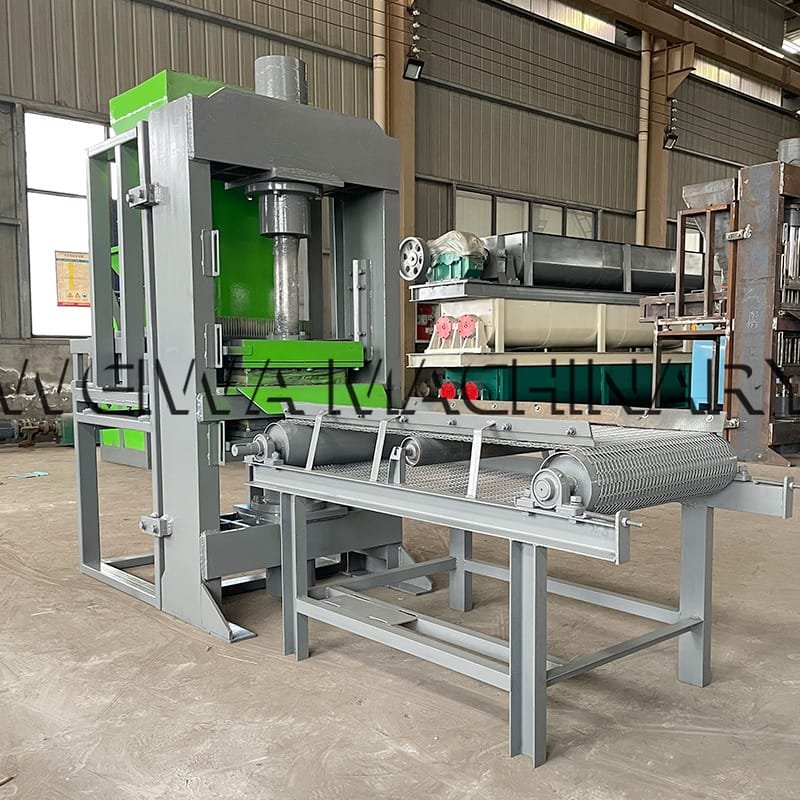
Máy báo chí BBQ Shisha BBQ Selected by Malaysia Client
The Malaysia client operates in a state with steady demand from shisha lounges, halal barbecue restaurants, and export buyers in the Middle East. Their old mechanical press could shape charcoal, but the output had micro cracks, rough edges, and variable weight per piece. In the hookah market, those defects are not cosmetic. They decide ignition speed, ash volume, and how long a cube smolders on a bowl. The procurement team contacted Weiwa Machinery after seeing our hydraulic shisha bbq press machine at a regional trade event and comparing reject rates with three other suppliers.
During the technical meeting, we did not start with price. We started with raw material. Malaysia generates abundant coconut shell, vỏ hạt cọ, and rubberwood waste, all of which can be carbonized into high grade charcoal powder. The real question was not whether hydraulic pressure works, but how to tune the hydraulic shisha charcoal making production machine to local moisture patterns, binder ratio, and retail size preferences. That approach aligned with the client’s goal: a hookah charcoal briquette press machine that produces smoother cubes with tighter structure and longer flame life.
Client Requirements Before Purchase
The Malaysia team listed five non negotiable points. First, finished briquettes must be dense enough to survive packing and shipping without edge chipping. Second, the burn must be smokeless at ignition and odorless during session. Third, cube weight variation must stay under four percent so retail packs look uniform. Fourth, the line must accept coconut shell charcoal powder with occasional coarse particles up to three millimeters after sieving. Fifth, the hydraulic system must hold pressure steadily in high humidity conditions without overheating. Only a hydraulic shisha bbq press machine with a dedicated pump station, PLC control, and customizable mold set could meet all five.
Why Hydraulic Design Outperforms Mechanical Stamping for Shisha Charcoal?
Mechanical stamping presses use a crank or eccentric wheel to push the punch down. The force curve rises and falls with rotation speed, so the peak pressure is brief and the exhaust of trapped air is incomplete. A hydraulic shisha charcoal briquette press machine uses a pump and cylinder to apply controllable, constant force for a settable dwell time. This difference sounds academic until you cut a briquette in half. The hydraulic sample shows homogeneous structure. The mechanical sample often shows a loose core and a compressed skin.
For hookah charcoal, the core density decides combustion. If the center is porous, air channels form inside the cube, the piece ignites unevenly, and the user gets flare ups or premature burnout. The hydraulic shisha bbq press machine closes those pores by pushing pre compressed powder through a three stage cycle: exhaust pre press, constant high pressure holding, and slow demolding. The result is a finer microstructure and a harder surface that resists abrasion in woven bags.
Pre Pressing Exhaust Stage
Charcoal powder carries air between particles. If you strike it once at high speed, the air compresses and tries to escape sideways, creating lamination lines. The Weiwa hydraulic hookah charcoal making machine begins with a low tonnage pre press that squeezes powder toward the mold wall and opens escape paths through the feeder throat. This stage is timed, not just pressured, so the operator can adapt to finer or coarser feed.
Constant High Pressure Holding
After exhaust, the main cylinder climbs to the set tonnage, commonly sixty to two hundred tons depending on model, and holds for a programmable interval. Holding matters more than peak number. A short spike leaves springback. A controlled hold lets the binder film redistribute and the particles interlock. The hydraulic shisha charcoal making production machine stores pressure recipes on the PLC, so the Malaysia client can switch from twenty five millimeter cubes to thirty millimeter round tablets without recalibrating manually.
Slow Demolding and Low Rejection Rate
Fast ejection cracks brittle charcoal. The Weiwa hydraulic shisha bbq press machine uses a proportional valve to release mold pressure gradually while the lower cylinder pushes the briquette out with aligned speed. Combined with polished mold cavities, rejection rate stays inside three percent even when running six days a week. For the Malaysia client, that meant roughly one rejected tray per shift instead of one per ten minutes.
How the Hydraulic Shisha Charcoal Making Production Machine Works?
The full hydraulic shisha charcoal making production machine is not a single press. It is a synchronized line: máy nghiền, máy trộn, conveyor, feeding bin, hydraulic press, discharge belt, and optional dryer or cooler. Weiwa sizes each module to the press cycle so the buffer bin never starves or floods the mold.
Carbonized coconut shell arrives as lumps under five centimeters. A hammer crusher reduces it to under three millimeters. A double shaft mixer blends charcoal powder with cassava starch or molasses binder and a small water dose. The mix drops into a stirring hopper above the hydraulic shisha bbq press machine. A volumetric feeder drops a calibrated charge into the mold cavity. The cylinder descends, exhausts, holds, and releases. Finished cubes fall onto a belt, pass a visual inspection zone, and stack into trays.
PLC Recipe Storage for Repeatable Density
Operators in Malaysia rotate shifts. Hand tuning causes drift. The touch screen PLC on the hookah charcoal briquette press machine stores recipes by material: coconut only, coconut plus wood, fine grade export cube, coarse local bbq cube. Each recipe locks tonnage, hold time, feeder speed, and eject delay. When the client switches SKU, they tap one button. Density variation dropped from six percent on the old press to under three percent on the Weiwa hydraulic line.
Finer Feed and Denser Briquettes Improve Burning Performance
The Malaysia client cared most about burn because their buyers judge charcoal in the first ten minutes of a shisha session. We ran a side by side test: mechanical press cube versus hydraulic shisha bbq press machine cube from the same batch of coconut shell powder.
The hydraulic cube ignited faster because the surface was sealed and the binder was evenly cured. It did not spark because internal air pockets were gone. It held shape for seventy eight minutes on a standard clay bowl versus fifty one minutes for the mechanical cube. Ash was lighter gray, not black, and volume was thirty percent lower. Those are the numbers that let the Malaysia client move from commodity pricing to premium lounge pricing.
Density alone is not the win. The win is controlled density. If you over press, ignition slows. If you under press, the cube crumbles. The hydraulic shisha charcoal making production machine lets the client set a target specific gravity, for example one point four five grams per cubic centimeter for export cubes, and hold it across humidity changes. That is why hydraulic hookah charcoal making machine adoption is rising in Malaysia, Indonesia, and Vietnam simultaneously.
Malaysia Raw Materials and Workshop Layout Planning
Weiwa Machinery does not sell a press and disappear. For this Malaysia project, our engineering team requested workshop drawings, ceiling height, incoming power, and average ambient humidity. The client sent a twelve meter by eight meter ground floor hall with three phase power and one staff entrance. We returned a CAD layout showing the hydraulic shisha bbq press machine at the center, crusher isolated behind a partition to cut noise, mixer elevated for gravity feed, and a manual packing table at the discharge end.
Coconut Shell Charcoal Powder Preparation
Malaysia coconut shell carbon is excellent but inconsistent in moisture after monsoon weeks. We specified a two hour sheltered aging pile and a final vibrating sieve at zero point nine millimeters to remove fiber. The hydraulic hookah charcoal making machine performs best when feed fluctuation stays narrow. After one week of running the new prep routine, the press reject rate fell further because mold fill became uniform.
Workshop Airflow and Humidity Control
Hydraulic oil temperature rises in tropical workshops. We added a water cooled heat exchanger on the pump station and set the PLC to derate cycle speed if oil exceeds fifty five degrees Celsius. The Malaysia client initially thought this would cut output. In practice, stable oil temperature removed pressure sag, so average pieces per hour stayed higher than the old machine at full speed.
Hookah Charcoal Briquette Press Machine Commissioning Results
Commissioning took four days. Day one was mechanical alignment and no load running. Day two was single cavity manual feed to confirm mold release. Day three was auto mode at sixty percent speed with coconut powder. Day four was full speed with mixed recipe and packaging trial.
Final accepted configuration for the Malaysia client:
Press model Weiwa HS 120 hydraulic shisha bbq press machine, twin cylinder sixty plus sixty tons, fifteen kilowatt pump, zero point seven five kilowatt feeder, capacity four strokes per minute, forty two pieces per stroke in twenty five millimeter cube mold, approximate output four hundred to six hundred kilograms per hour depending on recipe. Mold steel quenched and polished. Touch screen PLC with four recipe slots. Discharge belt with mesh section to drop stray fines.
Quality check after seventy two hours continuous run: average cube weight twenty four point eight grams, standard deviation zero point seven grams, surface hardness no chip on one meter drop test onto rubber mat, moisture of finished cube under six percent after overnight cooling, burn time seventy to eighty minutes, ash residue under twelve percent of initial weight.
The client’s production manager said the hydraulic shisha charcoal making production machine felt slower in stroke but faster in money because packing line returns dropped. Previously, eight percent of bags were complained about for broken corners. After switch, complaint rate was below one percent in the first export container.
Máy móc Weiwa Customization and After Sales Support
Weiwa Machinery has more than thirty years of experience in briquetting and carbonization equipment. The Malaysia hydraulic project used that experience in three ways: custom mold geometry, remote commissioning, and spare parts mapping.
Mold customization went beyond shape. The client wanted a chamfered edge on the cube so it looked premium but did not trap ash. We adjusted the upper punch relief angle and extended demold travel by six millimeters. The hookah charcoal briquette press machine accepted the change without frame modification.
Remote support used video call and PLC data log export. When the client reported a slight tonnage drop in week two, our engineer read the pressure curve, identified inlet filter partial clog, and shipped the replacement seal kit before the line stopped. That is the difference between selling a hydraulic shisha bbq press machine and running a production partnership.
Spare parts package included hydraulic seals, mold springs, plow blades for mixer, lưới màn hình, and PLC fuse set. Maintenance schedule was written in English with Malay terms for shift leaders. Weekly greasing points, monthly cylinder rod inspection, and quarterly pump valve overhaul were mapped on the layout drawing.
Why Malaysia Charcoal Makers Are Moving to Hydraulic Lines?
Malaysia sits on biomass surplus but competes with imported Indonesian and Vietnamese shisha charcoal. To win export contracts, local factories must match cube aesthetics and burn time while keeping cost lower. The hydraulic shisha charcoal making production machine does that by cutting rejects, stabilizing density, and letting one operator manage feeding while PLC handles pressure.
The same machine serves barbecue retailers. Hydraulic hookah charcoal making machine output can be reconfigured to larger twenty eight millimeter cubes for grill use with a mold swap taking under twenty minutes. The Malaysia client now runs shisha cubes on day shift and bbq cubes on night shift using the same hydraulic shisha bbq press machine frame.
Internal Process Details That Affect Google Relevant Buyer Trust
Buyers from Egypt, Thổ Nhĩ Kỳ, and Saudi Arabia who visit Malaysia suppliers ask for three proofs: density photo of cut section, burn video on standard bowl, and factory power draw per ton. The Weiwa hydraulic line makes all three easy. Cut section shows no honeycomb. Burn video shows steady white ash front. Power draw stays near rated because hydraulic pump avoids mechanical impact spikes.
When the Malaysia client sends samples to new distributors, they include a small card printed with cube specific gravity and burn time measured on the hydraulic shisha charcoal briquette press machine recipe. That card closes deals faster than a catalog.
Conclusion and Next Step
The Malaysia case confirms a pattern Weiwa Machinery sees across Southeast Asia. A hydraulic shisha bbq press machine is not simply a stronger press. It is a process controller that turns inconsistent local powder into export grade hookah charcoal with finer texture, denser body, and cleaner combustion. The hydraulic shisha charcoal making production machine reduced rejects, improved burn time by roughly fifty percent over the old mechanical unit, and gave the client confidence to sign lounge supply contracts they previously declined.
Weiwa Machinery brings more than thirty years of field experience, a professional after sales team, customization of mold and line layout, and CAD planning for your workshop. If you are preparing a hookah charcoal briquette press machine project in Malaysia, Indonesia, Việt Nam, or the Middle East, contact our team for a tailored proposal and factory layout.
Contact Weiwa Machinery
Đám đông: +8613838093177
WhatsApp: +8613838093177
E-mail: info@cjlmachinegroup.com
Product reference: Máy báo chí BBQ Shisha BBQ


 WeChat

 +8615937143060
