


Why Zambia Is Becoming a Strong Market for Charcoal Briquettes?
Zambia has a large base of charcoal users in both urban and peri-urban areas. Many households, small restaurants, poultry farmers, bakeries and barbecue vendors still rely on charcoal for daily cooking and heating. Đồng thời, traditional lump charcoal generates a lot of fine waste during breaking, transport and retail handling. That waste is not garbage. With the right charcoal briquette machine, it becomes the raw material for a higher-value product.
Making charcoal balls in Zambia works because the country already has demand, feedstock and distribution channels. Sawdust, maize cob char, Charcoal vỏ dừa, wood offcuts and kiln fines are available in different provinces. A ball charcoal briquettes machine upgrades these loose materials into clean, stackable, export-ready fuel. For local entrepreneurs, the business model is attractive because the input is often cheap or underused while the finished briquette can be packaged, branded and sold at a better margin.
Another factor is energy access. Liquefied petroleum gas penetration is still limited in many towns, and imported fuel products add logistics cost. Locally pressed charcoal balls reduce reliance on imported formats and create jobs in collection, nghiền nát, mixing, pressing, sấy khô, bagging and local distribution. Development programs and clean-cooking discussions across Africa also favor briquettes that emit less smoke and use agricultural or forestry residue instead of fresh-cut wood.
What a Máy than than Ball Really Does?
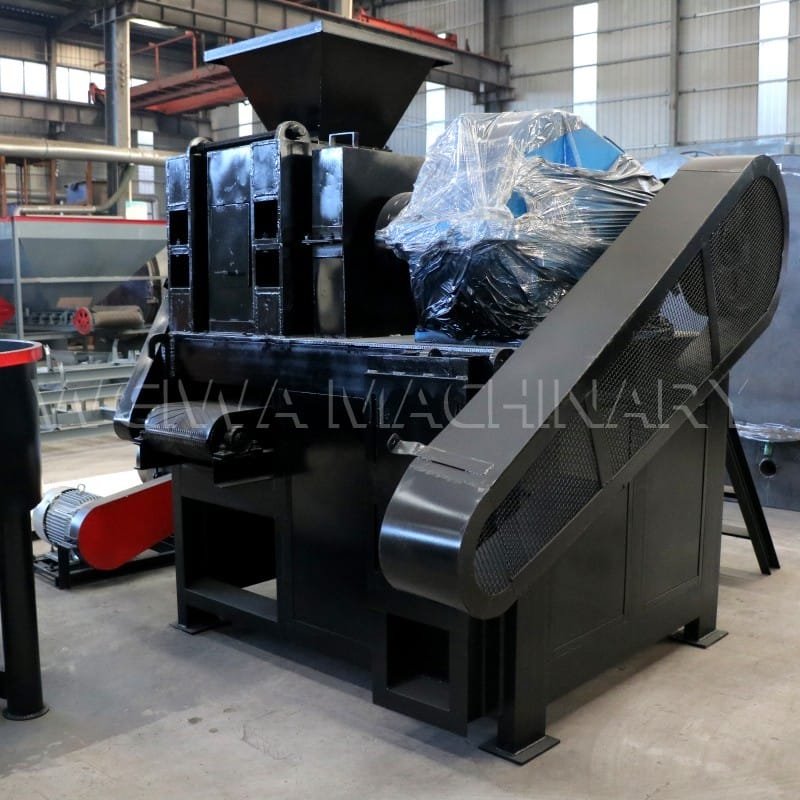
A ball charcoal briquettes machine is a roller pressing type charcoal briquette machine. Two counter-rotating rollers carry matching mold pockets. Conditioned charcoal powder falls into the roller nip, high pressure compacts the material, and finished balls eject when the pockets separate. The same charcoal ball press machine can make round balls, oval balls, pillow shapes, egg shapes or square blocks by changing the roller set.
Roller Pressing and Mold System
The roller pair is the heart of the machine. Pocket depth, roller diameter, surface hardness and pressing force decide ball size, Tỉ trọng, surface finish and rejection rate. Weiwa Machinery processes roller surfaces with alloy treatment and CNC pocket engraving so the molds keep stable shape under continuous load. When a Zambian client wants 30 mm BBQ balls for restaurants or 50 mm pillow briquettes for household heating, the solution is usually a different mold configuration rather than a completely different machine.
Materials Suitable for a Charcoal Ball Press Machine
The machine is not limited to charcoal. It can handle coal powder, Bột Coke, carbon black, gypsum powder, desulfurization gypsum, Bột sắt, bột đồng, aluminum ash, mineral powder and several industrial fines. In the Zambian context, the most common feedstock mix is charcoal dust plus a natural or starch-based binder plus controlled moisture. Correct particle size is important. Material that is too coarse will not fill the pockets, while material that is too wet will stick, smear or produce soft balls.
Complete Charcoal Briquette Machine Production Line Explained
A single press is enough for trial production, but a commercial plant needs a connected line. Weiwa Machinery designs the full system around local raw material, target capacity, moisture condition, power supply and final packaging format. The goal is stable hourly output, low labor dependency and consistent briquette quality from the first shift to the last shift of the month.
Crushing and Mixing Stage
Raw charcoal chunks, kiln waste and coarse biomass char first pass through a crusher. The output should be fine and uniform. After crushing, the material enters a twin shaft mixer where water and binder are added in controlled proportion. Mixing quality decides bonding strength. Poor mixing creates balls that crack after drying or break during bagging. For Zambian clients, Weiwa often adjusts mixer speed, paddle angle and discharge height based on charcoal friability and seasonal humidity.
Pressing and Drying Stage
The conditioned mixture feeds the charcoal ball press machine. Formed balls then move to a mesh belt dryer or another suitable curing system. Drying removes surface and internal moisture so the briquettes become hard enough for stacking, transport and retail sale. In Zambia, rainy-season humidity can slow natural curing, so a controlled dryer helps the plant keep output and quality stable throughout the year. After drying, balls are cooled, graded, weighed and packed into bags for BBQ vendors, wholesalers or cross-border buyers.
Making Charcoal Balls in Zambia as a Business Model
Entrepreneurs exploring making charcoal balls in Zambia usually start with three questions. Where will the charcoal fines come from every week? What ball shape and size does the local market prefer? And what capacity justifies the investment in a full line? The answer is rarely the biggest machine on the price list. A practical plant matches daily feedstock supply with realistic sales volume.
A small operator can begin with a crusher, máy trộn, charcoal ball press machine and simple drying area. As demand from barbecue joints, bakeries and residential distributors grows, the plant can add conveyors, silos, automatic feeders, larger dryers and bagging systems. The advantage of briquettes is branding. Lump charcoal from different kilns looks similar, but a uniformly shaped, neatly bagged charcoal ball can carry a company name, weight label and quality promise.
Price stability is another advantage. Loose charcoal powder has low perceived value. Finished briquettes have predictable size, known burn time and easier storage. That makes it easier to sign supply agreements with hotels, poultry farms and institutional kitchens. In mining and metallurgy, pressed carbon and mineral powder briquettes also reduce material loss and improve furnace handling, which explains why industrial buyers in Zambia and neighboring markets are increasingly interested in roller press technology.
Why Zambian Buyers Choose Weiwa Machinery?
Weiwa Machinery has more than thirty years of experience in briquette presses, carbonization equipment and auxiliary machinery. That experience matters when a client is not just buying one machine but building a production line in another country. Voltage, container size, humidity, binder availability, labor skill and local charcoal source all affect machine selection. A generic quote cannot solve these issues. A factory-engineered proposal can.
Our team prepares layout drawings, capacity calculations, roller recommendations, spare-part lists and commissioning documents in English. Customers in Indonesia, Ấn Độ, Malaysia, Việt Nam, Pakistan, Thổ Nhĩ Kỳ, Ba Lan, Nam Phi, Egypt and many other countries have used Weiwa equipment for coal, than, mineral and metal powder projects. The Zambian line follows the same engineering discipline: precise manufacturing, reliable structure, high pressing pressure and practical after-sales support.
After delivery, Weiwa provides operation guidance, roller maintenance advice, mold replacement support and spare-part supply. For overseas buyers, this continuity is critical. A briquette plant is not a one-time purchase. It is a running system that needs correct adjustment during the first weeks of production.
Talk to Máy móc Weiwa for Custom Briquette Line Design
If you plan to start making charcoal balls in Zambia, the smartest first step is not ordering the cheapest machine online. The smarter step is sending your raw material photos, độ ẩm, daily target, available workshop size and power supply to a manufacturer that has done this for decades. Weiwa Machinery will review the material, propose a suitable charcoal briquette machine configuration, draw the site layout and help you avoid common mistakes such as wrong binder ratio, oversized crusher, unstable feeder, weak dryer capacity or mismatched roller pockets.
We welcome Zambian investors, charcoal traders, biomass project developers and existing fuel distributors to contact us. Whether you need a single charcoal ball press machine or a complete ball charcoal briquettes machine production line, our engineering team can customize the design and support you from factory drawing to commercial production.
Contact Weiwa Machinery
Đám đông / WhatsApp: +8613838093177
E-mail: info@cjlmachinegroup.com
Weiwa Machinery is a manufacturer with over thirty years of working experience in briquette and carbonization equipment. We provide professional after-sales service, customized machine configuration, factory layout drawings and site planning. If you want a practical, durable and commercially viable charcoal ball production line, contact us today and get a tailored quotation for your Zambian market project.


 WeChat

 +8615937143060
