


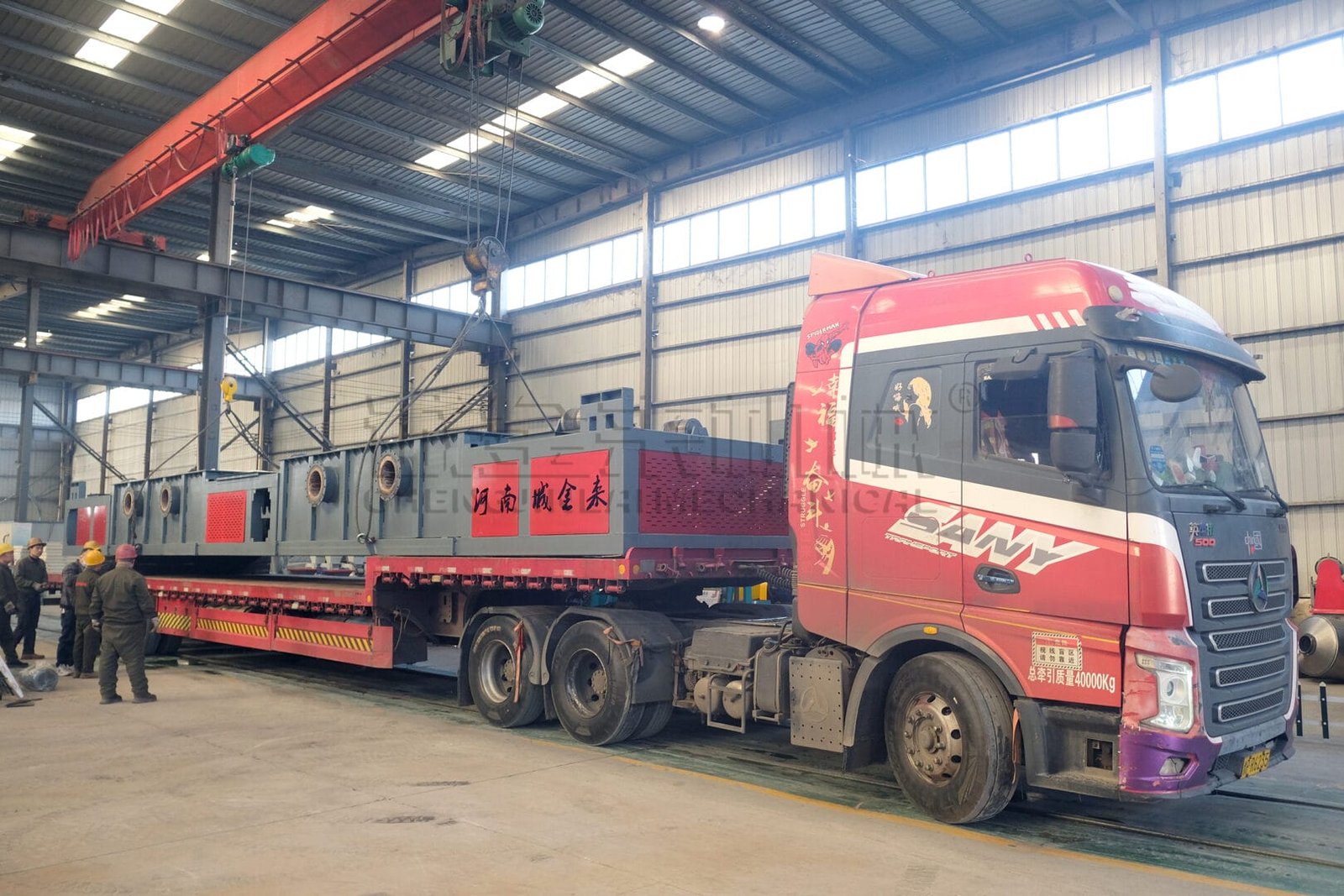
In the golden dawn of early autumn, the air at Weiwa Machinery’s export yard carried the hum of purpose and the warmth of a mission fulfilled. Workers moved with practiced precision, securing steel frames, checking electrical connections, and loading the star of the day—a state of the art continuous carbonization furnace—onto a flatbed bound for India. This was not just another shipment; it was a bridge between our manufacturing expertise and India’s growing demand for sustainable charcoal production, a testament to how continuous carbonization furnace in India is reshaping local industries. As a company dedicated to green technology, we watched with pride as this equipment, designed to turn biomass waste into high value charcoal, began its journey to empower Indian entrepreneurs and contribute to the nation’s circular economy.
Các Lò cacbon hóa liên tục as a Core Innovation for Modern Charcoal Making
To grasp why this continuous carbonization furnace for India matters, we must first understand what makes it a game changer in charcoal production. Traditional charcoal kilns often rely on batch processing, where materials are loaded, heated, cooled, and unloaded in cycles. This method is time consuming, labor intensive, and prone to inconsistent quality due to fluctuating temperatures. Ngược lại, a continuous carbonization furnace operates non stop, feeding raw biomass such as coconut shells, trấu gạo, Sawdust, or bamboo at one end and discharging ready to use charcoal at the other, all while maintaining stable thermal conditions.
The science behind it lies in controlled pyrolysis—the decomposition of organic matter under high heat in an oxygen limited environment. Our furnace uses advanced temperature regulation systems, including multi zone heating elements and real time gas monitoring, to ensure that every kilogram of input material undergoes uniform carbonization. Unlike batch kilns that lose heat during loading and unloading, continuous models retain energy efficiency, reducing fuel consumption by up to 30% compared to conventional methods. For regions like India, where biomass waste is abundant but energy costs are rising, this efficiency translates to higher profit margins for charcoal producers.
Another key feature is scalability. Whether a small startup needs a furnace processing 500 kg of biomass per hour or a large enterprise requires 2 tons per hour, our design allows customization. This flexibility aligns perfectly with India’s diverse market, from rural cooperatives using coconut shells to urban manufacturers repurposing agricultural residues. When clients ask about continuous carbonization furnace price, we emphasize that it is an investment in long term savings—lower operational costs and higher output quickly offset the initial expenditure.
Preparing the Continuous Carbonization Furnace for India’s Tropical Conditions
Shipping heavy industrial equipment across continents demands meticulous planning, especially for a country like India with its tropical climate and varied infrastructure. Tại máy móc Weiwa, we treat each delivery as a partnership, starting with adapting the furnace to local conditions. For this shipment, our engineering team conducted a climate risk assessment, focusing on humidity, bụi, and temperature fluctuations common in Indian states like Tamil Nadu and Maharashtra, where coconut and sugarcane farming thrives.
We upgraded the furnace’s insulation layer to withstand high ambient temperatures without compromising internal heat retention. Seals and gaskets were reinforced to prevent moisture ingress, which could disrupt pyrolysis reactions. Electrical components were rated for 50 Hz power grids (standard in India) and fitted with surge protectors to guard against voltage instability in rural areas. Even the control panel was localized with English and Hindi instructions, ensuring operators can navigate settings intuitively.
Before crating, the furnace underwent a rigorous 72 hour trial run at our factory. We simulated Indian biomass feedstocks—mixing coconut shells with rice husks to mimic local waste streams—and monitored carbonization rates, charcoal yield, and emission levels. The results were stellar: a consistent charcoal output of 98% purity, with ash content below 5%, meeting India’s Bureau of Indian Standards (BIS) for commercial charcoal. This pre shipment testing gave us confidence that the continuous carbonization furnace would perform flawlessly upon arrival, addressing any concerns about reliability in India’s dynamic operating environments.
Careful Loading at Weiwa Machinery Factory Preparing Continuous Carbonization Furnace for India
The excitement surrounding this shipment began long before the continuous carbonization furnace reached Indian shores—it started right inside our factory in China, where every detail of the loading process was geared toward ensuring safe, efficient transport to India. On the designated loading day, our export yard buzzed with coordinated activity as staff from logistics, quality control, and technical teams converged to prepare the furnace for its long journey.
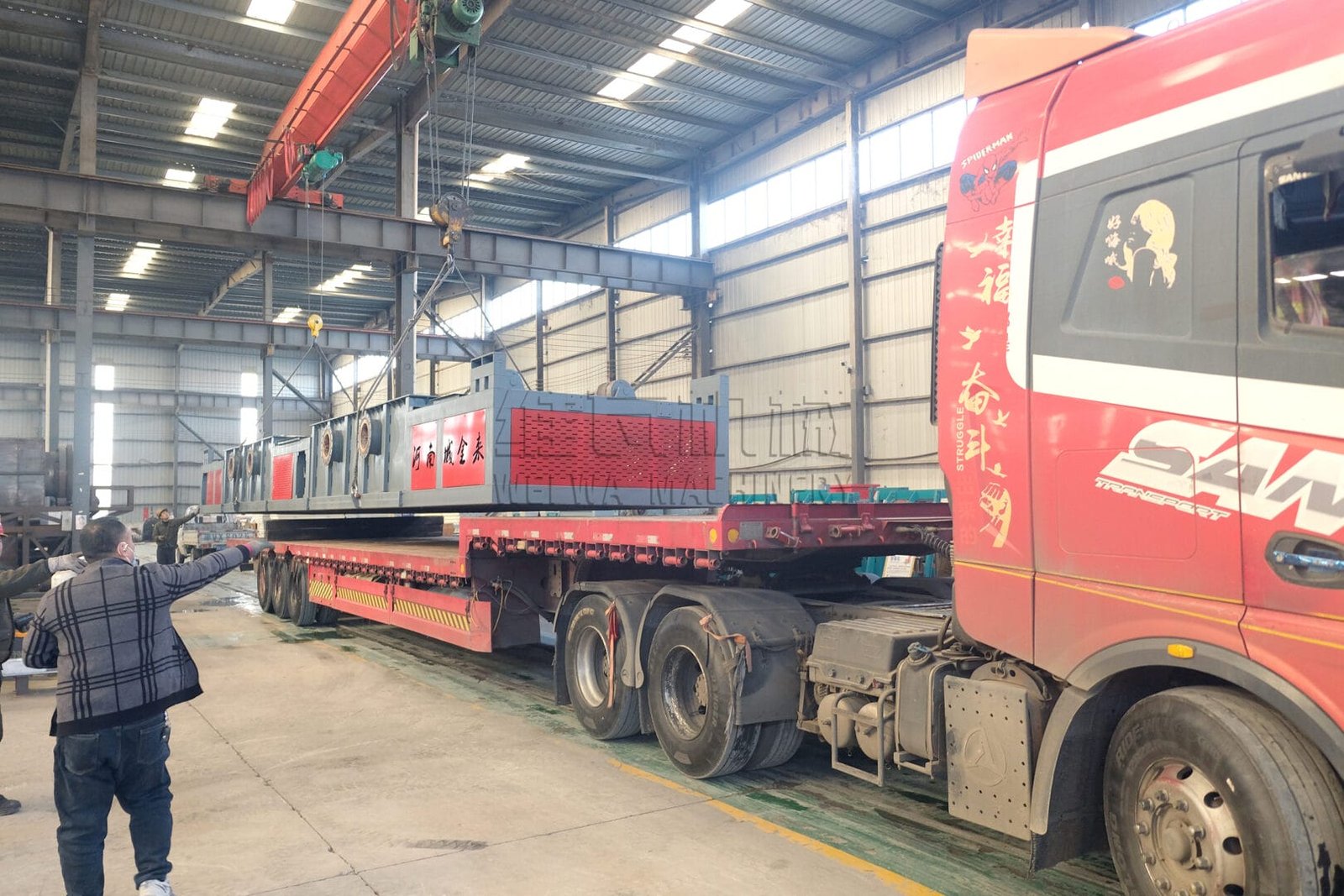
Team members worked in tandem to guide the furnace onto the low bed trailer, using synchronized controls on the hydraulic jacks to achieve perfect alignment. Throughout the process, our engineers referred to the climate adaptation notes compiled for Indian conditions—reinforced insulation, voltage compatibility, and humidity safeguards were all verified one final time before the container doors closed. “Loading a continuous carbonization furnace is more than moving metal; it’s about preserving performance integrity,” said Liu Feng, our lead logistics coordinator. “Every step we take here ensures the client in India receives a machine that’s ready to operate at peak efficiency from the moment it arrives.”
As the truck departed our factory gate, headed for the port of departure, the scene encapsulated the care and precision that defines Weiwa Machinery’s approach to international deliveries. This was not simply a case of shipping equipment; it was a demonstration of our commitment to making continuous carbonization furnace price a worthwhile investment by guaranteeing reliability from factory floor to final installation.
Successful Test Run Proving Performance of Continuous Carbonization Furnace in Real Conditions
The moment of truth came with the test run. Tại 8 AM, workers fed a batch of dried coconut shells into the furnace’s hopper. Within minutes, sensors confirmed the internal temperature had climbed to 600°C—the optimal range for complete carbonization. Gas produced during pyrolysis was channeled into a combustion chamber, where it fueled secondary heating, creating a self sustaining cycle that minimized external fuel use. By noon, the first batch of charcoal emerged: jet black, lightweight, and emitting a faint woody aroma.
Weighing samples revealed a yield of 35%—meaning 1 ton of coconut shells produced 350 kg of charcoal, exceeding India’s average batch kiln yield of 25%. Laboratory tests showed the charcoal had a calorific value of 7,000 kcal/kg, ideal for cooking, luyện kim, and water filtration. Emissions were equally impressive: particulate matter levels were 40% lower than India’s Central Pollution Control Board limits, thanks to our integrated scrubber system that captures tar and smoke.
Ramesh’s team was quick to note the ease of operation. With the touchscreen interface, we adjusted the feed rate and temperature in seconds. No more guessing like with our old kiln—this continuous carbonization furnace gives us control, and that means better quality every time, said Anjali, a trainee operator. The success of this trial run proved that continuous carbonization furnace in India is not just viable but superior to legacy technologies.
Growing Prospects for Continuous Carbonization Furnace Across India
India’s push toward renewable energy and waste valorization positions continuous carbonization furnace for India as a cornerstone of its green transition. The country generates over 500 million tons of agricultural waste annually, much of which is burned openly, contributing to air pollution. Converting this waste into charcoal addresses two crises: waste management and energy access. For rural households, affordable charcoal from local biomass reduces reliance on firewood, easing deforestation. For industries, it provides a cost effective alternative to fossil fuels in processes like iron smelting and food drying.
Market trends support this growth. A recent report projected India’s charcoal market to expand at 8% CAGR thông qua 2030, driven by demand from hospitality, nông nghiệp, and export sectors. Government initiatives like the National Biomass Cookstove Program and subsidies for clean energy projects further incentivize adoption. Tuy nhiên, challenges remain—lack of technical know how and upfront capital can deter small players. This is where companies like Weiwa Machinery step in, offering financing options and training to make continuous carbonization furnace price accessible.
Our vision for India extends beyond sales. We aim to establish regional service centers to provide spare parts and maintenance, ensuring minimal downtime. Collaborations with local agricultural universities are also underway to optimize feedstock recipes for different Indian states—for example, blending sugarcane bagasse with groundnut shells in Gujarat or mixing bamboo chips with corn cobs in Northeast India. By tailoring solutions to local contexts, we believe continuous carbonization furnace will become as ubiquitous in India’s countryside as the crops it transforms.
Trusted Supplier of Charcoal Making Machine in India
Tại máy móc Weiwa, we don’t just manufacture equipment; we build ecosystems for sustainable growth. Founded in 2008, our company has spent over a decade refining carbonization technology, earning certifications like ISO 9001 and CE. Our R&D team of 30 engineers focuses on solving real world problems—from improving energy efficiency to reducing emissions—ensuring our machines stay ahead of industry needs.
What sets us apart is our customer first approach. From the initial consultation to post installation support, we prioritize transparency and collaboration. When clients inquire about continuous carbonization furnace price, we provide detailed breakdowns, including installation, đào tạo, and lifetime maintenance estimates, so there are no hidden surprises. Our global network spans 20 quốc gia, but India holds a special place—we see it as a land of opportunity where innovation meets tradition, and where our technology can drive meaningful change.
As we watched the Kerala facility come alive with the hum of the continuous carbonization furnace, we were reminded of why we do what we do. It’s not just about selling machines; it’s about empowering people to turn waste into wealth, to breathe cleaner air, and to build businesses that last. For anyone seeking a reliable charcoal making machine in India, we invite you to join us on this journey. Together, we can turn biomass into brilliance.
Về Máy móc Weiwa
Weiwa Machinery is a leading manufacturer of continuous carbonization furnaces and charcoal making machines, headquartered in China with a global presence. Since 1990 we have specialized in designing energy efficient, eco friendly pyrolysis equipment tailored to diverse markets. Our commitment to innovation, chất lượng, and customer support has made us a trusted partner for clients in agriculture, waste management, and renewable energy sectors worldwide. Visit our website to learn more about our continuous carbonization furnace solutions and how we can support your business in India and beyond.
- Đám đông:+8613838093177
- WhatsApp:+8613838093177
- E-mail:info@cjlmachinegroup.com


 WeChat

 +8615937143060
