


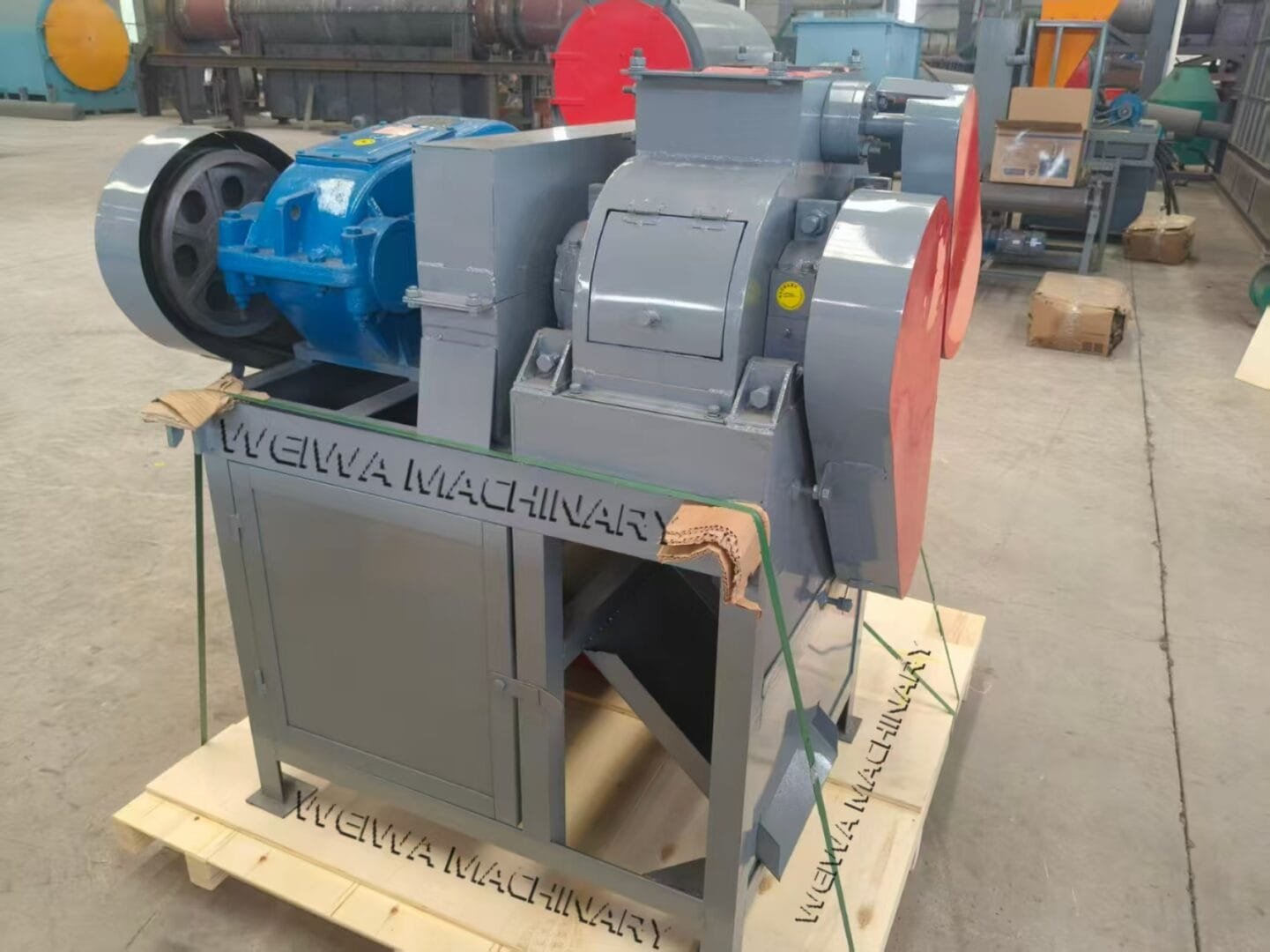
Congo Shipment Milestone From Weiwa Factory
The Congo bound line was built after our engineering team received raw material photos, moisture test results, workshop dimension sketches, and target ball diameter from the client. We did not send a generic quotation. Before production started, we ran a roller pocket trial using charcoal dust samples from the client’s yard. The samples contained coconut shell char, hardwood charcoal fines, and a small percentage of palm kernel shell residue. After conditioning with cassava starch binder, the mixture pressed cleanly into 30 mm round balls and 40 mm pillow balls.
Factory acceptance covered no load running, load running with charcoal powder, roller gap inspection, gearbox noise check, dryer temperature curve test, and control cabinet emergency stop simulation. Only after these steps did we apply anti rust oil to the rollers and gearbox, wrap the line in plastic film, and fix the heavy frames inside a 40 foot high cube container. The ball charcoal briquettes machine left our gate as a complete system, not as separate machines the client would struggle to connect.
For Weiwa Machinery, a shipment to Congo carries extra meaning. Central Africa has abundant biomass residue, a mature traditional charcoal trade, and rising urban demand for clean cooking fuel. A charcoal ball press machine placed inside that environment does more than produce balls. It converts dispersed waste powder into a bankable commodity.
Why Making Charcoal Balls in Congo Is Growing Fast?
The Republic of Congo and the Democratic Republic of Congo share one contradiction. They rely heavily on charcoal for cooking, baking, street food grilling, and small industrial heating, yet they discard huge volumes of charcoal fines every week. Traders screen lump charcoal at rural kilns and throw the dust aside. Sawmills dump charcoal powder. Coconut shell processors leave black residue in open yards. Introducing a charcoal briquette machine into that supply chain means the waste becomes the raw material.
Urban Fuel Demand in Kinshasa and Brazzaville
Kinshasa, Lubumbashi, Brazzaville, Pointe Noire, and Mbuji Mayi consume charcoal at scale. Imported LPG remains expensive for low income households. Traditional lump charcoal is uneven in size, smoky, and tied to deforestation. Uniform charcoal balls made by a ball charcoal briquettes machine burn longer, break less during transport, and fit standard 5 kg or 10 kg retail sacks. Supermarkets and restaurant suppliers in Congo increasingly ask for branded briquettes instead of loose dust.
Waste Charcoal Fines as Low Cost Raw Material
When an entrepreneur starts making charcoal balls in Congo, the biggest cost advantage is feedstock. Charcoal fines are often available free or at a very low collection price from existing charcoal dealers. The same applies to carbonized sawdust, sugarcane bagasse char, cassava stem char, and broken coconut shell char. A well tuned charcoal ball press machine accepts blends of these powders if particle size and moisture are controlled. That flexibility protects the producer when one feedstock becomes seasonal or expensive.
Field data from similar Weiwa lines in Africa suggests small and medium Congo plants can reach payback in six to eighteen months depending on local charcoal price, bagged briquette premium, and collection logistics. The math works because the input is cheap, the output is denser, and the product can be marketed as cleaner fuel.
What a Máy than than Ball Actually Does?
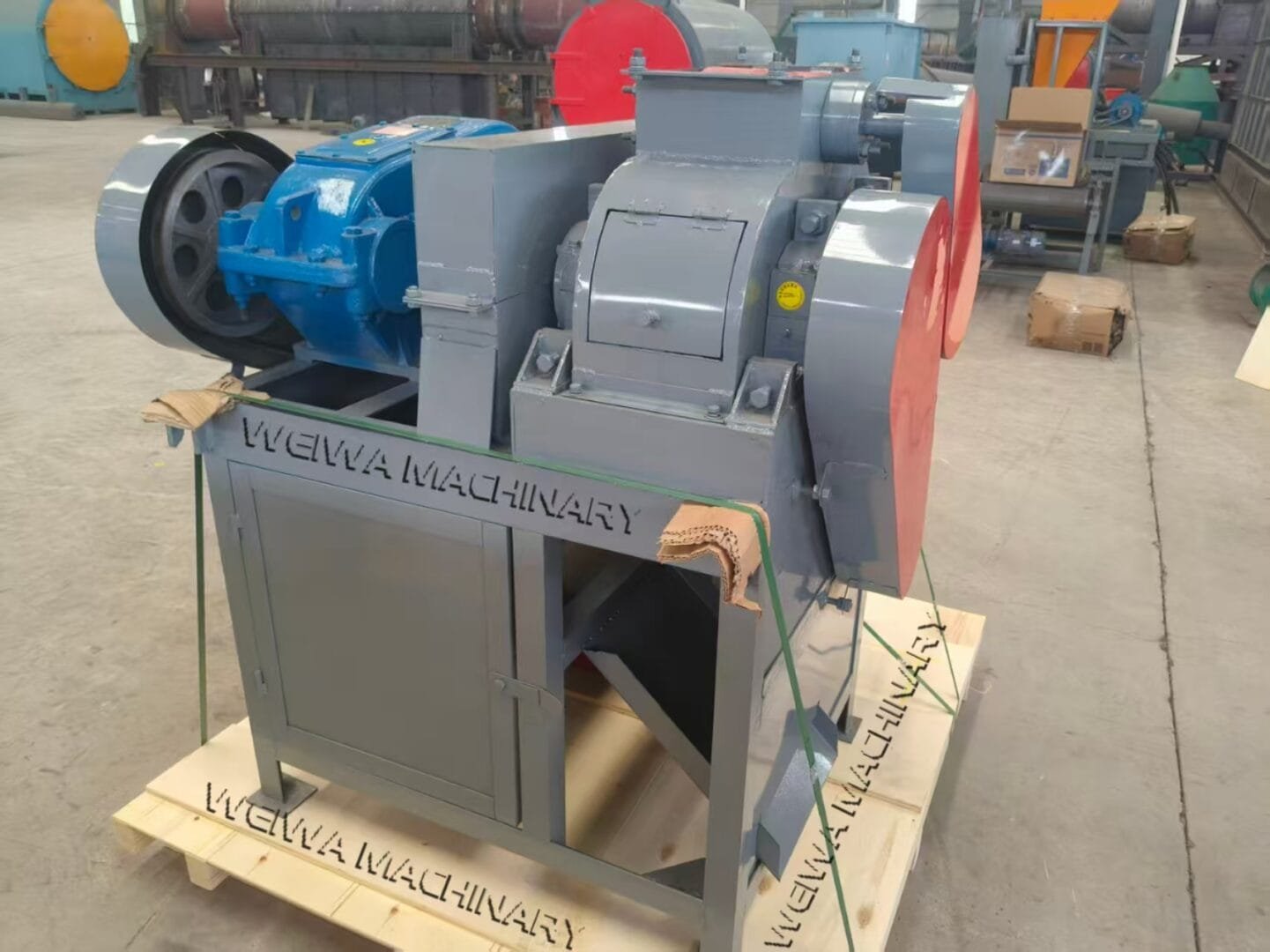
A ball charcoal briquettes machine is a roller pressing type briquette press. It is not a screw extruder and not a single stroke hydraulic press, although Weiwa also manufactures those for other shapes. In the roller press, two counter rotating alloy rollers carry matching mold pockets. Charcoal powder pre mixed with water and binder falls into the feeding hopper, is forced into the roller pockets by a screw feeder, and is squeezed at high pressure into a solid ball. Pressure typically ranges between 15 Và 30 MPa depending on recipe and moisture. The output ball has low porosity, high drop resistance, and uniform size.
Roller Press Principle of Charcoal Ball Press Machine
The core of any charcoal ball press machine is the roller pair. Weiwa uses 65Mn or high chromium alloy forged rollers, surface hardened, pocket machined by CNC. When the gap between rollers is set correctly and the feed screw maintains steady material level, every pocket fills, every ball compacts, and every discharge falls cleanly without tailing powder. If the powder is too dry, balls crack. If too wet, they stick to the roller. The machine itself does not decide recipe; your raw material does. That is why our sales engineer asks for a one kilogram sample before confirming mold depth.
Many buyers assume the machine alone makes the business. In reality the ball charcoal briquettes machine is only one node in a chain. The chain starts with carbonization or powder collection and ends with drying and packing. But because the press determines shape, Tỉ trọng, and brand identity, it is the node most buyers remember.
Common Briquette Shapes for Congo BBQ Market
With changeable roller sleeves, the same charcoal briquette machine can produce oval balls, Hình dạng trứng, hình dạng gối, round ball, square cube, or custom logo embossed balls. For Congo household cooking, 35 ĐẾN 45 mm pillow shape is common. For urban BBQ brands, 25 ĐẾN 30 mm round charcoal balls with low ash are preferred. For industrial smelting or foundry use, 60 ĐẾN 80 mm oval or square blocks tolerate handling better. Weiwa stocks standard molds and also cuts custom molds from client CAD files within two working weeks.
Full Charcoal Briquette Machine Production Line Explained
When Congo clients ask for making charcoal balls in Congo at commercial scale, we never ship only a press. A complete charcoal briquette machine production line from Weiwa contains crushing, mixing, conveying, pressing, sấy khô, and optional screening and packing. Below is the standard flow we drew for the recent Congo container order.
Crushing and Twin Shaft Mixing Stage
Charcoal chunks from the kiln or trader yard are first fed to a hammer crusher or vertical crusher. Output size is controlled under 3 mm. Fine powder matters because coarse particles create weak balls and fast burnout. After crushing, the powder enters a twin shaft paddle mixer together with measured water and binder. Cassava starch, corn starch, molasses, bentonite, or lime can be used. Congo clients with access to cheap cassava flour usually choose starch binder at four to six percent. The mixer runs eight to twelve minutes until the mass feels like damp coffee grounds. Conveyor transfers the mix to a buffer silo above the press.
Pressing With Charcoal Ball Press Machine
From the silo, the mix feeds the charcoal ball press machine. A variable speed screw feeder regulates thickness of the material layer. The rollers compress the feed into balls of standard diameters such as 30, 40, or 50 mm. Hydraulic assisted models keep constant pressure when moisture fluctuates. Mechanical spring models are simpler and cheaper for stable powder. Electric models suit cities with reliable three phase power. Diesel engine models suit remote sites. For the Congo client, we prepared electrical diagrams for 380V three phase with fluctuation tolerance and labeled the cabinet in English with a French glossary because many local technicians read French better than English.
Mesh Belt Drying and Bagging Stage
Freshly pressed balls still carry bound moisture from the binder. They pass through a mesh belt dryer with controlled hot air below 300 degrees Celsius until moisture falls under five percent. In warm Congolese climates, some micro plants use solar tunnels, but industrial lines need controlled drying to protect calendar time and export contracts. After drying, balls cool, pass a vibrating screen, broken pieces return to the mixer, qualified balls drop into a semi automatic weighing and sewing machine. The finished sacks are ready for Kinshasa retail or wholesale distribution to neighboring provinces.
Throughout the line, dust collectors, belt guards, and a central control cabinet improve safety. For making charcoal balls in Congo, we also review power supply stability. If the client’s workshop has three phase 380V with fluctuations, we tune motor protection and offer diesel backup for the crusher or conveyor if requested.
How Congo Investors Calculate Briquette Business Return?
A Congo investor evaluating a ball charcoal briquettes machine line usually starts with five numbers. First, daily availability of charcoal fines in tons. Second, purchase or collection cost per ton. Third, binder cost per ton of mix. Fourth, finished bagged briquette selling price per kilogram. Fifth, expected hourly output of the charcoal ball press machine. A 1 ton per hour line running two shifts can convert roughly 16 tons of mixed powder into 14 ĐẾN 15 tons of dried balls per day, allowing for moisture loss and screen return.
Because lump charcoal in Congo already sells at a known urban price, the briquette producer can price slightly below lump charcoal while still earning margin, or price at parity and win customers with cleaner burning and uniform size. Either way, the charcoal briquette machine turns a dispersed informal waste stream into sacks with a barcode, a weight, and a brand. That step is what moves the product from roadside scoop sales to supermarket shelves.
Why the Congo Client Chose Máy móc Weiwa?
Our Congolese client compared several suppliers on roller hardness, spare part stock, gearbox design, and layout service. They chose Weiwa because we did not send a generic video and a PDF price. We asked for raw material photos, moisture test results, workshop dimension sketch, and target ball diameter before proposing a configuration. That engineering first approach reduces the risk of buying a ball charcoal briquettes machine that looks correct in a video but fails after two weeks of abrasive Congolese charcoal dust.
Weiwa charcoal ball press machine rollers are forged from high chromium alloy, designed to withstand abrasive charcoal powder. The main frame uses thickened channel steel to absorb vibration during continuous operation. An adjustable pressure spring or hydraulic unit allows operators to fine tune roller gap according to feedstock characteristics. Spare roller sleeves, binder formulation guidance, foundation drawing, and French labeled electrical cabinet were included with the export order.
Another reason is after sales. Our team provides 24/7 written consultation, remote video commissioning, and on site technician dispatch when the project scale justifies it. For a Congo investor, buying a charcoal briquette machine is not a one time transaction. It is a two year relationship covering spare parts, roller re machining, binder recipe adjustment, and capacity upgrade.
Talk to Weiwa for Custom Charcoal Briquette Machine Line
Weiwa Machinery has more than thirty years of professional experience in briquette and carbonization equipment. We specialize in providing customized solutions, including detailed design drawings and site planning services, to meet the unique needs of our clients. Our dedicated after sales team ensures ongoing support, from installation to maintenance, guaranteeing your satisfaction. Whether you plan to start making charcoal balls in Congo, expand a BBQ charcoal brand, or supply industrial smelting plants with uniform fuel balls, our engineers will propose a ball charcoal briquettes machine configuration based on your real raw material, not a brochure.
We invite you to send us a small raw material sample, your workshop size, target ball shape, and local voltage. We will return a line layout, capacity calculation, and quotation. You are welcome to visit our factory in China or schedule a video call with our commissioning team.
Contact Weiwa Machinery
Đám đông: +8613838093177
WhatsApp: +8613838093177
E Mail: info@cjlmachinegroup.com
Weiwa Machinery has exported to more than 130 countries including Indonesia, Ấn Độ, Malaysia, Việt Nam, Pakistan, Thổ Nhĩ Kỳ, Ba Lan, Nam Phi, Zambia, Tanzania, and now further into the Congo market. A charcoal ball press machine from our workshop is selected after we analyze your raw material sample, target capacity, available workshop size, and local fuel price. That is how making charcoal balls in Congo becomes a repeatable business instead of a trial and error gamble.


 WeChat

 +8615937143060
