


Ấn Độ, a nation celebrated for its rapid industrialization and technological advancement, is currently standing at a critical crossroads. The immense energy demands required to power its growing economy are colliding with a global imperative for sustainability. In this landscape, the traditional reliance on fossil fuels is gradually giving way to innovative, eco-friendly alternatives. One such alternative that has witnessed exponential growth is biomass briquettes, specifically charcoal briquettes. For businesses looking to capitalize on this burgeoning market, các Máy than than Ball has emerged as the cornerstone of production.
The Rising Potential of Making Charcoal Balls in India
The Indian subcontinent presents a unique and fertile ground for the making charcoal balls industry. With a population exceeding 1.4 billion, the demand for affordable and efficient cooking fuel is perpetual. Traditional fuels like firewood and LPG (Liquefied Petroleum Gas) come with their own sets of challenges—deforestation on one end and price volatility on the other. This is where the máy ép bóng than becomes a game-changer.
Indian entrepreneurs and industrialists are increasingly recognizing the economic viability of converting waste biomass into high-density fuel. Agricultural waste, which was once burned in fields causing severe air pollution, is now being repurposed into valuable fuel briquettes. The process of making charcoal balls in India is not just an environmental initiative; it is a profitable business model. From the bustling markets of Delhi to the industrial corridors of Tamil Nadu, there is a palpable shift towards adopting mechanized solutions for fuel production. Our analysis of the Indian market indicates that the demand for high-quality Máy than than Ball units is set to surge, driven by both government subsidies for green energy and a grassroots-level demand for cheaper fuel alternatives.
What is a Máy than than Ball?
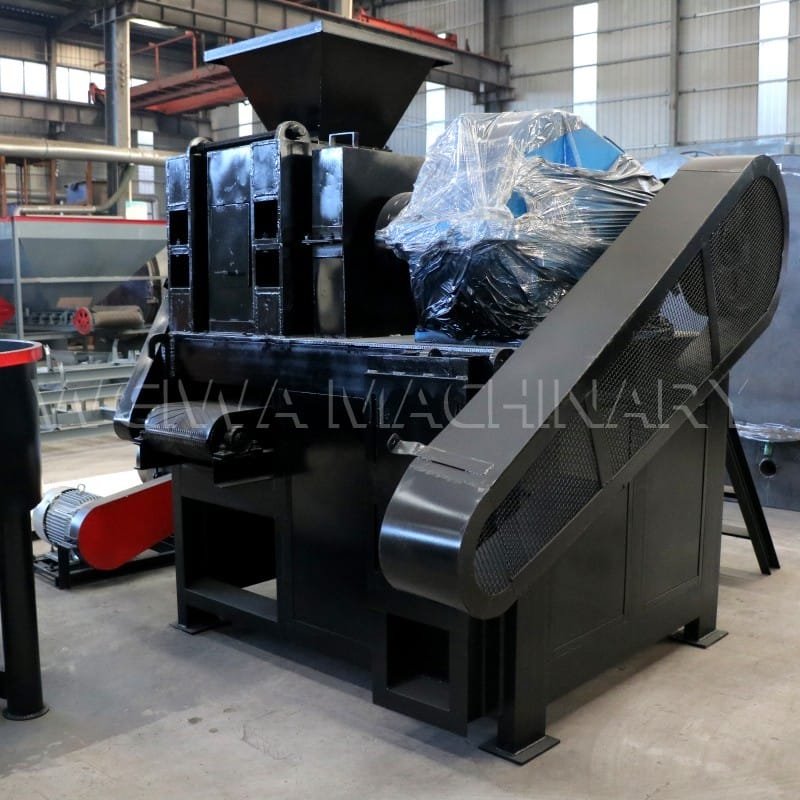
To appreciate the value proposition, one must first understand the engineering marvel that is the Máy than than Ball. Unlike simple screw presses, the roller-type briquetting press utilized by Weiwa Machinery applies immense pressure to powdered raw materials. The core principle involves forcing coal, than, or mineral powder through two counter-rotating rollers engraved with specially designed pockets or molds.
These molds determine the final shape of the briquette—be it oval, pillow, egg, or square. When we discuss a Máy briquette than, we are referring to a system capable of transforming loose, low-value dust into high-density, easy-to-handle fuel blocks. The high pressure exerted by our machines ensures that the resulting briquettes have a high mechanical strength, meaning they won’t crumble during transport or handling. This structural integrity is paramount for commercial distribution, especially in a vast country like India where logistics can be challenging.
The Science Behind High-Pressure Briquetting
The effectiveness of a máy ép bóng than lies in its ability to achieve “cold binding.” Without the need for high-temperature carbonization during the forming stage, the machine relies on precise pressure calibration and binders to agglomerate particles. The raw material is fed into the middle of the two rollers. Due to the rotation of the rollers and the friction between the material and the roller surface, the material naturally enters the ball socket. As the sockets close, the pressure peaks, compressing the powder into a solid mass. Weiwa Machinery’s design focuses on reliable structure and precision manufacturing, ensuring that the pressure applied is consistent, resulting in uniform density across all briquettes.
The Complete Production Line: Beyond Just Pressing
While the Máy than than Ball is the heart of the operation, a complete production line is essential for efficiency. Many clients interested in making charcoal balls often overlook the supporting machinery required for a seamless workflow. At Weiwa, we provide comprehensive turnkey solutions.
The journey begins with a crusher, which breaks down raw materials like charcoal chunks or coal lumps into a fine powder. This powder is then conveyed to a twin-shaft mixer. Here, the magic of consistency happens—the powder is mixed with an appropriate amount of water and a binding agent (such as starch or molasses). This mixing process is crucial; uneven mixing can lead to weak briquettes or blockages in the press.
Once homogenized, the mixture is stored in a silo before being fed into the Máy briquette than. After molding, the freshly formed briquettes are still wet and fragile. They require careful drying, typically achieved using a mesh belt dryer. This multi-tiered conveyor system gently dries the briquettes using controlled heat, ensuring they retain their shape without cracking. Only after this final drying stage are the briquettes ready for packaging and shipment.
Raw Materials: Turning Waste into Wealth
One of the most compelling aspects of investing in a máy ép bóng than is the versatility of raw materials. Ấn Độ, being an agrarian economy, generates massive quantities of biomass waste annually. Our machines are engineered to handle a wide spectrum of materials:
- Coal/Coke/Charcoal Powder: The most common feedstock, ideal for BBQ charcoal and heating.
- Agricultural Residues: Sawdust, trấu gạo, Vỏ dừa, and bagasse can all be carbonized and pressed.
- Metal and Mineral Powders: For industrial applications, our machines can compact iron powder, magnesium oxide, bột đồng, and desulphurization gypsum.
For Indian businesses, this means lower input costs. Instead of purchasing expensive raw materials, they can utilize local agricultural byproducts, thereby creating a circular economy. Các making charcoal balls in India initiative aligns perfectly with the government’s Swachh Bharat (Clean India) mission by reducing field burning and converting it into economic wealth.
Why India Chooses Weiwa Machinery for Their Charcoal Briquette Machine
With a presence in over 130 quốc gia, Weiwa Machinery is not just a manufacturer; we are a global partner in industrial development. Our experience in the Indian market gives us unique insights into the specific needs of local businesses. We understand the nuances of Indian coal quality, the humidity levels affecting production, and the logistical challenges involved in shipping heavy machinery across the subcontinent.
Của chúng tôi Máy than than Ball models are built with robust materials to withstand the rigors of continuous operation. We offer customization options—whether you need a specific briquette shape for the BBQ market or a high-capacity press for industrial boiler fuel. The feedback from our clients in Indonesia, Malaysia, and Vietnam has been instrumental in refining our designs, and we bring that same level of excellence to our Indian clientele.
Packaging and Logistics: A Seamless Experience
Delivering a heavy industrial machine like a máy ép bóng than requires meticulous planning. Weiwa Machinery employs a dual-layer packaging strategy to ensure your investment arrives in pristine condition. For smaller units, we use sturdy wooden cases suitable for Less than Container Load (LCL) shipping. For larger, full-container-load (FCL) shipments, our big-size equipment utilizes nude packing with reinforced fixings, while small, sensitive parts are secured in custom wooden cases. We manage the entire logistics chain, ensuring that your Máy briquette than reaches your facility in Mumbai, Chennai, or Kolkata without a scratch.
The Economic Impact of Making Charcoal Balls in India
Let’s delve deeper into the financial incentives. The cost of LPG cylinders has been fluctuating, making it an unreliable option for small-scale vendors and households. A Máy than than Ball allows entrepreneurs to produce fuel at a fraction of the cost. A single production line can generate significant employment opportunities—from sourcing raw materials to operating the machinery and distributing the final product.
Hơn nữa, the quality of briquettes produced by a Weiwa máy ép bóng than is superior. They have a higher calorific value, longer burn time, and lower ash content compared to traditional lump charcoal. This makes them highly desirable for restaurants, hotels, and metallurgical industries that require consistent heat. By making charcoal balls, Indian businesses are not just saving money; they are elevating their operational efficiency.
Technical Specifications and Customization
When you invest in a Máy briquette than from Weiwa, you are investing in precision. Our roller presses are designed to mold mixed powders into shapes ranging from 20mm to 80mm. Whether your target market demands the classic pillow shape for industrial use or the sleek, round shape for retail BBQ packs, our team can customize the roller molds accordingly. We also provide detailed design drawings and site planning services. Before a single component is shipped, our engineers work with you to plan the optimal layout for your production facility, ensuring maximum space utilization and workflow efficiency.
Overcoming Challenges in the Indian Market
Despite the immense potential, businesses venturing into making charcoal balls in India face hurdles. Power supply inconsistencies, raw material variability, and lack of technical know-how are common issues. This is where Weiwa Machinery’s after-sales service shines. We don’t just sell you a Máy than than Ball and disappear. We provide comprehensive training for your operators, guiding them on maintenance schedules, troubleshooting common issues, and optimizing production parameters. Our professional after-sales team is just a call away, ensuring minimal downtime for your operations.
Environmental Compliance and Sustainability
Environmental regulations in India are becoming stricter. Industries are mandated to reduce their carbon footprint. Using a máy ép bóng than is a proactive step towards compliance. Briquettes are considered a renewable energy source, especially when derived from biomass. They produce significantly less smoke and sulfur dioxide compared to coal. Bằng cách áp dụng của chúng tôi Máy briquette than, companies can proudly market their products as “green fuel,” opening doors to environmentally conscious consumers and premium pricing.
The Future Outlook: A Partnership with Weiwa
As India marches towards its goal of becoming a $5 trillion economy, the role of efficient energy solutions cannot be overstated. The market for making charcoal balls is poised for explosive growth. Early adopters who invest in high-quality, reliable machinery like the Máy than than Ball from Weiwa Machinery will undoubtedly secure a dominant position in this market.
We have seen a significant uptick in inquiries from Indian clients looking for robust, high-yield briquetting solutions. From small-scale farmers wanting to add value to their crop residue to large steel plants seeking efficient fuel sources, the applications are diverse and widespread.
Về Máy móc Weiwa
Với hơn ba mươi năm kinh nghiệm trong lĩnh vực sản xuất máy móc, Weiwa Machinery has established itself as a beacon of reliability and innovation. We are more than just a factory; we are a solutions provider. Our expertise spans across the coal industry, luyện kim, and biomass processing sectors. We pride ourselves on our ability to deliver not just machines, but complete systems tailored to your specific needs.
Our commitment to quality is unwavering. Every máy ép bóng than that leaves our facility undergoes rigorous testing to ensure it meets international standards of performance and durability. We believe in building long-term relationships with our clients, which is why we offer extensive after-sales support, including spare parts supply and technical consultation.
Whether you are looking to start a new venture in making charcoal balls in India or upgrade your existing production line, Weiwa Machinery has the perfect Máy briquette than for you. We invite you to join our family of over 2 million satisfied customers worldwide.
Ready to transform your business?
Contact us today for a detailed quotation and consultation. Our team is ready to assist you with factory visits, customized design plans, and competitive pricing.
Đám đông: +86 138 3809 3177
WhatsApp: +86 138 3809 3177
E-mail: info@cjlmachinegroup.com
Let Weiwa Machinery help you build a sustainable and profitable future with our advanced Máy than than Ball.


 WeChat

 +8615937143060
