


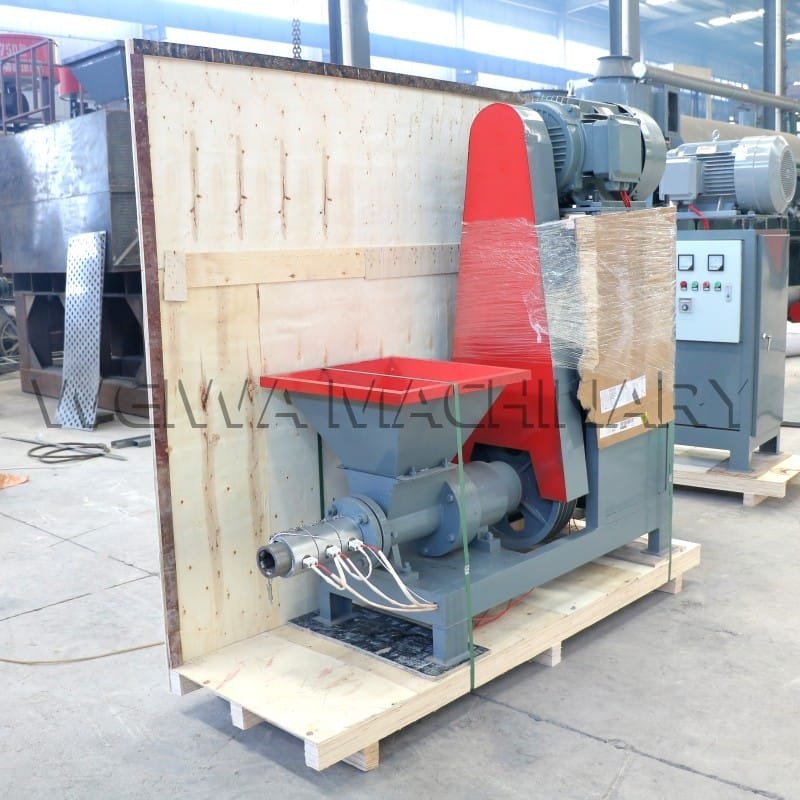
Witnessing Our Biomass Briquette Line Set Sail for South Africa
On a crisp morning at our manufacturing base, the air buzzed with purpose as crates marked “Weiwa Machinery – Biomass Briquette Machine for South Africa” were carefully loaded onto shipping containers. This wasn’t just another delivery; it was a bridge between our expertise in biomass processing technology and South Africa’s growing demand for sustainable energy solutions. As representatives from both our team and local partners looked on, the sawdust extruder, biomass briquette machine, and auxiliary equipment began their journey across oceans—destined to transform agricultural waste into clean, efficient fuel in the heart of Africa.
ที่ Weiwa Machinery, we’ve long recognized that biomass energy isn’t just a trend; it’s a necessity for regions seeking to balance economic growth with environmental stewardship. แอฟริกาใต้, with its vast agricultural sectors and reliance on traditional charcoal, presented an ideal landscape for our biomass briquette solutions. วันนี้, we share not only the story of this shipment but also a deep dive into how biomass briquette machines are revolutionizing charcoal production in South Africa—and why our technology is leading the charge.
The Growing Imperative for Sustainable Charcoal Production in South Africa?
To understand the significance of our biomass briquette machine in South Africa, we must first contextualize the region’s energy challenges. เป็นเวลาหลายทศวรรษ, South Africa has depended heavily on wood-based charcoal, often sourced through unsustainable deforestation. This practice not only depletes natural forests but also contributes to soil erosion and biodiversity loss. ในขณะเดียวกัน, the country generates millions of tons of agricultural and forestry waste annually—sawdust, แกลบ, corn cobs, and sugarcane bagasse—much of which is either burned openly (releasing harmful pollutants) or left to rot (wasting potential energy).
Enter biomass briquetting: a process that compresses loose biomass residues into dense, high-calorific fuel blocks using specialized equipment like sawdust extruders and biomass briquette machines. These briquettes burn cleaner than traditional wood charcoal, produce less smoke, and utilize waste materials that would otherwise go unused. For South Africa, adopting this technology means curbing deforestation, reducing carbon emissions, and creating income opportunities for rural communities reliant on agriculture.
Our decision to focus on the South African market stems from both data and dialogue. Market research revealed a 15% annual increase in demand for alternative fuels, driven by rising awareness of climate change and government incentives for renewable energy projects. ที่สำคัญกว่านั้น, conversations with local entrepreneurs and NGOs highlighted a critical gap: while interest in biomass briquetting was high, access to reliable, easy-to-operate machinery remained limited. That’s where Weiwa Machinery steps in—with robust, user-friendly equipment designed to thrive in diverse operational settings.
Demystifying Biomass Briquette Machines
For those new to the technology, let’s unpack what makes a biomass briquette machine (and its companion, the sawdust extruder) such a game-changer. At its core, the process begins with raw biomass—typically sawdust, though our machines handle everything from coconut shells to peanut shells. The material is first dried to reduce moisture content (ideally below 12%, as excess water hinders compression). Next, it enters the sawdust extruder, where high pressure and friction heat the particles, softening lignin (a natural polymer in plant matter) to act as a binder. ในที่สุด, the densified mixture is forced through a die in the biomass briquette machine, emerging as uniform, solid briquettes ready for use.
Key Features of Weiwa’s Biomass Extruders and Briquetting Machines
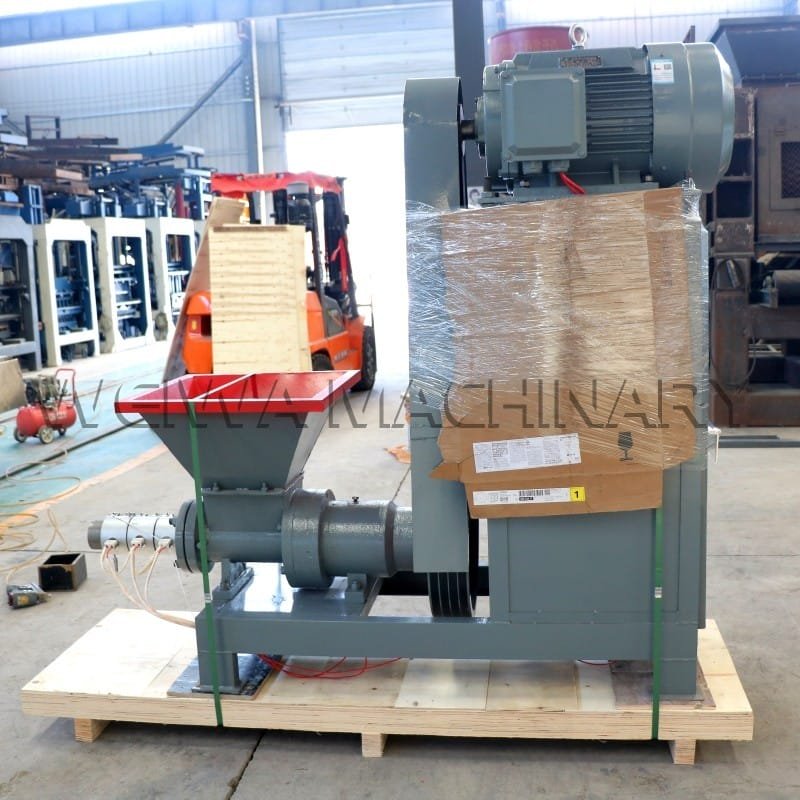
What sets our machines apart is their adaptability. Unlike one-size-fits-all models, Weiwa’s biomass extruders and briquetting machines are engineered with modular components, allowing operators to adjust pressure, อุณหภูมิ, and die sizes based on feedstock type. ตัวอย่างเช่น, softwoods like pine may require higher compression, while hardwoods like eucalyptus need precise moisture control. Our sawdust extruder features a variable-speed motor and automated feeding system, minimizing manual intervention and ensuring consistent output even with irregularly sized waste.
Crucially, these machines are built for durability. South Africa’s varied climates—from humid coastal regions to arid inland areas—demand equipment that resists corrosion and operates reliably under fluctuating temperatures. Our biomass briquette machines are constructed with heavy-duty steel frames, wear-resistant alloy dies, and sealed bearings, tested to withstand continuous use in harsh conditions. We’ve also prioritized ease of maintenance: quick-release dies, accessible lubrication points, and clear troubleshooting guides mean even small-scale operators can keep production running smoothly.
Why Biomass Briquettes Outshine Traditional Charcoal?
A common question we encounter is: How do biomass briquettes compare to traditional wood charcoal?The answer lies in both performance and sustainability. Let’s break it down.
Traditional charcoal is made by slowly burning wood in low-oxygen kilns, a process that destroys up to 75% of the original biomass energy. ในทางตรงกันข้าม, biomass briquetting preserves nearly 90% of the feedstock’s calorific value by compressing rather than combusting it. Tests conducted in our lab show that our briquettes have a calorific value of 4,500–5,500 kcal/kg—on par with premium hardwood charcoal but with 30% less ash residue. This means users get more heat per kilogram, reducing fuel consumption and costs.
Sustainability and Health Benefits for South African Communities
Environmentally, the benefits are stark. Traditional charcoal production drives deforestation, with estimates suggesting 10–20 trees are felled to produce one ton of charcoal. ถ่านชีวมวลอัดก้อน, however, repurpose waste: one ton of sawdust can yield approximately 0.8 tons of briquettes, diverting waste from landfills and incinerators. นอกจากนี้, burning biomass briquettes emits fewer particulates and greenhouse gases than wood charcoal. A study by South Africa’s Department of Environmental Affairs found that switching to biomass briquettes could cut household air pollution by 40% in rural areas, directly improving public health.
Economically, the case is equally compelling. For smallholder farmers, collecting sawdust or crop residues is often free or low-cost, turning waste into a revenue stream. Entrepreneurs can set up small-scale briquetting units with minimal capital, using our compact sawdust extruders that fit in spaces as small as 50 ตารางเมตร. In provinces like KwaZulu-Natal and Mpumalanga, where agriculture dominates, this model empowers local economies while addressing energy poverty.
On-Site in South Africa
As our biomass briquette machine and sawdust extruder near their destination, our South African partners are gearing up for installation. We’ve been working closely with them to ensure a seamless transition, providing virtual training sessions on machine operation, safety protocols, and maintenance best practices. One key focus has been tailoring the setup to local feedstocks: in regions with abundant sugarcane farming, partners plan to prioritize bagasse; in timber-processing hubs, sawdust will be the primary input.
Weiwa Machinery doesn’t just sell equipment—we build partnerships. Our after-sales support includes on-site technical assistance during the first production cycle, remote monitoring via IoT-enabled sensors (ไม่จำเป็น), and a 24/7 helpline staffed by engineers familiar with African operating conditions. For a market like South Africa, where infrastructure gaps can pose challenges, this level of support is non-negotiable. We’ve learned that success hinges not just on delivering great machines but on empowering users to maximize their potential.
Looking ahead, we envision a network of biomass briquetting hubs across South Africa, each turning local waste into clean fuel. Beyond households, these briquettes could supply small industries—bakeries, brick kilns, and poultry farms—reducing their reliance on expensive imported coal. With government backing for renewable energy and growing consumer demand for eco-friendly products, the stage is set for biomass briquetting to become a cornerstone of South Africa’s green transition.
เกี่ยวกับ เครื่องจักร Weiwa
ที่ Weiwa Machinery, we’re more than manufacturers—we’re innovators dedicated to solving global energy and waste challenges. Founded over a decade ago, our mission has been to design machinery that makes sustainable practices accessible to businesses of all sizes. From small-scale sawdust extruders to full-scale biomass briquette production lines, every product reflects our commitment to durability, ประสิทธิภาพ, and user-centric design.
ร.ของเรา&D team continuously refines our technology, incorporating feedback from clients worldwide to address real-world needs. Whether it’s adapting machines for high-altitude operations or integrating energy-saving features, we prioritize practical innovation. Based in [Your Location], we serve clients across Asia, แอฟริกา, และละตินอเมริกา, with a growing presence in markets like South Africa where biomass energy potential is vast.
For more details on our sawdust extrude machine and biomass briquette solutions, visit our product page: . ด้วยกัน, let’s turn waste into opportunity—one briquette at a time.
- ม็อบ:+8613838093177
- Whatsapp:+8613838093177
- อีเมล:info@cjlmachineGroup.com


 Wechat

 +8615937143060
