


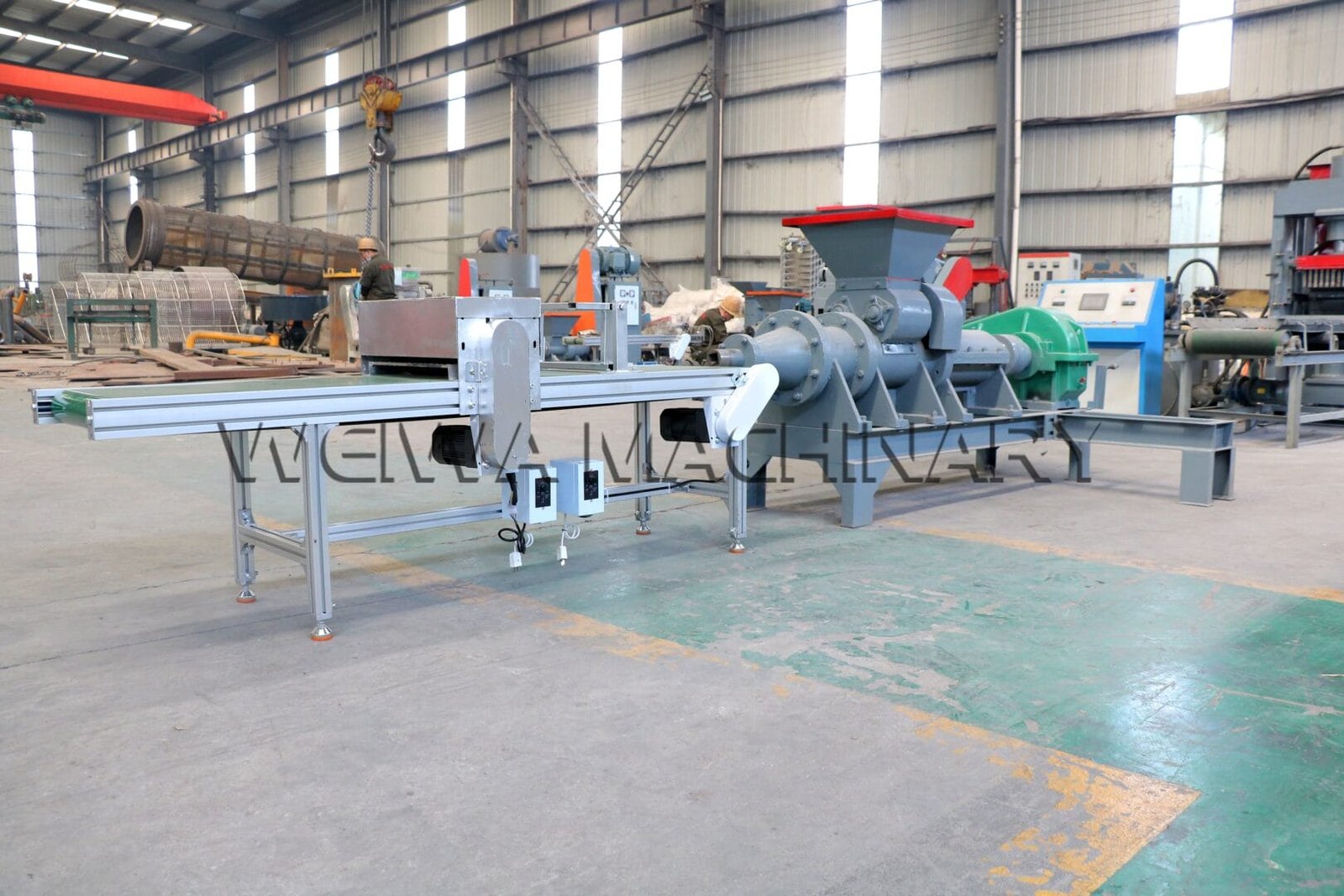
In an exciting development for sustainable energy and waste recycling, Weiwa Machinery has successfully shipped a state-of-the-art เครื่องขับไล่ถ่าน to a client in Kenya. This delivery not only underscores our commitment to empowering African businesses but also highlights the growing market potential for charcoal briquettes—a clean, affordable, and eco-friendly alternative to traditional fuels.
The Shipping Journey: From Our Factory to Kenya’s Shores
The journey of our เครื่องขับไล่ถ่าน to Kenya began in our modern manufacturing facility, where every component is precision-engineered to ensure durability and efficiency. Over decades of experience, Weiwa Machinery has refined our production processes to deliver machines that can handle diverse raw materials—from sawdust to agricultural waste—while maintaining consistent output quality.
ก่อนจัดส่ง, our team conducted rigorous quality checks, ensuring the machine’s motor, extrusion chamber, and cutting system (more on this later!) were in perfect working order. The machine was then carefully packed to withstand international shipping conditions, with protective crating around the main body, conveyor, and control panel.
Once loaded onto the shipping container, our logistics team coordinated with reliable freight forwarders to ensure timely delivery to Kenya. Along the way, we maintained close communication with our Kenyan client, providing updates and addressing any concerns to guarantee a smooth handover. This end-to-end support is a hallmark of Weiwa’s service, ensuring clients feel confident from factory to installation.
Market Potential in Kenya and Africa for BBQ charcoal briquette
Kenya, เช่นเดียวกับหลายประเทศในแอฟริกา, faces a dual challenge: meeting rising energy demands while reducing reliance on expensive, polluting fossil fuels. Sawdust briquettes offer a compelling solution, and the market potential is enormous. Here’s why:
1. Abundant Raw Materials
Kenya’s timber and woodworking industries generate vast amounts of sawdust as a byproduct. Instead of letting this waste go to landfill (or causing air pollution when burned openly), businesses can now turn sawdust into briquettes—creating a valuable fuel source while reducing environmental harm. Agricultural waste, such as rice husks or corn cobs, can also be processed, further expanding the feedstock options.
2. Rising Demand for Clean Energy
With urbanization and industrial growth, Kenya’s demand for affordable, clean energy is skyrocketing. Households, small businesses, and even institutions (like schools or hospitals) are seeking alternatives to charcoal or firewood, which are often unsustainable and contribute to deforestation. Sawdust briquettes burn cleaner, produce less smoke, and have a higher calorific value—making them an attractive choice.
3. โอกาสทางเศรษฐกิจ
Producing sawdust briquettes in Kenya isn’t just environmentally friendly—it’s profitable. Entrepreneurs can sell briquettes to local markets, create jobs in production and distribution, and even export to neighboring countries. The low cost of raw materials (often free or cheap) and the high demand for affordable fuel mean healthy profit margins for businesses that invest in quality machinery like ours.
4. Policy Support for Sustainability
Governments across Africa, including Kenya, are increasingly prioritizing renewable energy and waste management. Initiatives to promote biomass energy and reduce carbon emissions create a supportive regulatory environment for businesses in the sawdust briquette sector. This policy tailwind makes now an ideal time to enter the market.
How Our เครื่องขับไล่ถ่าน Turns Charcoal into Briquettes
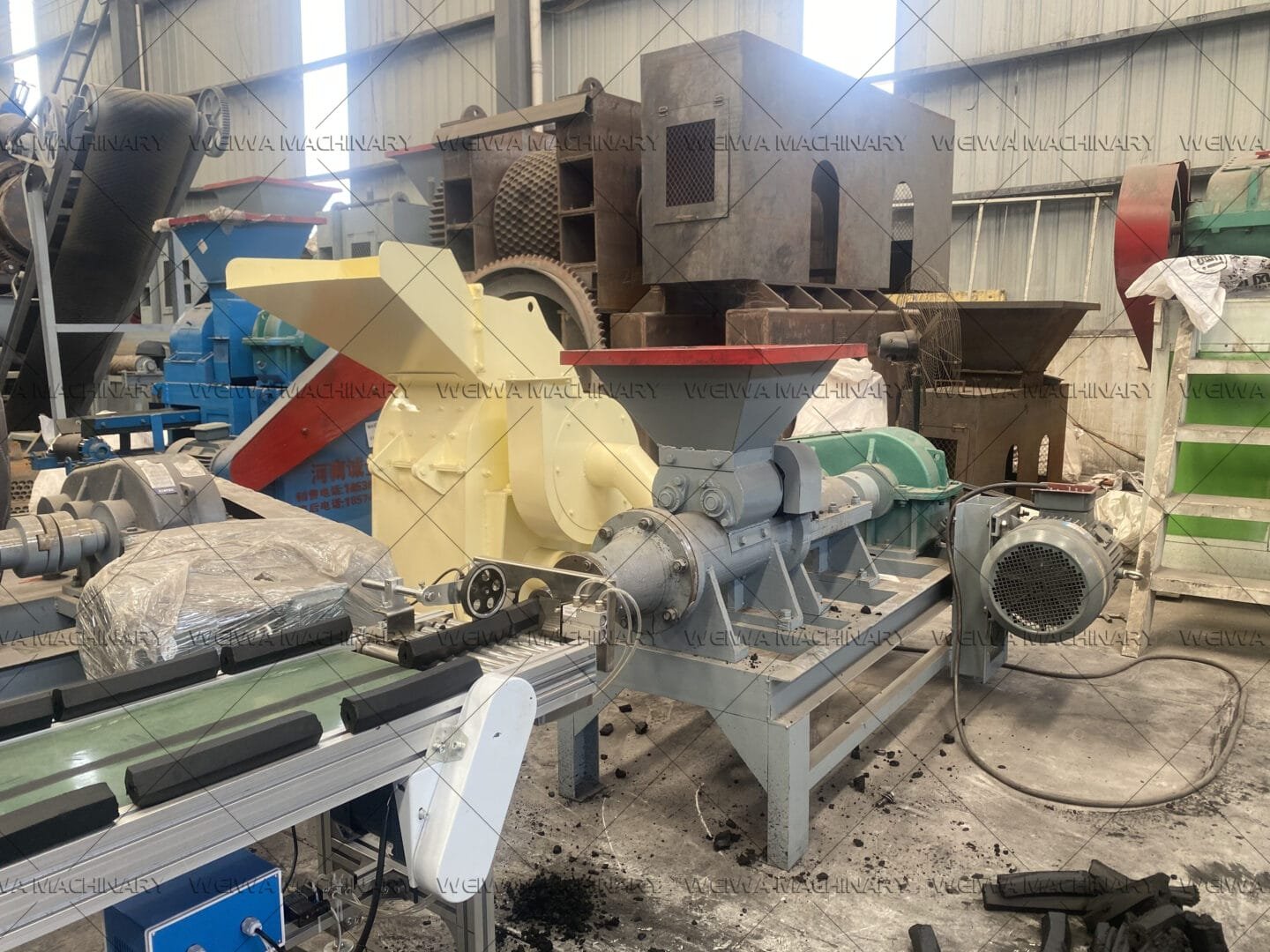
At the heart of this transformation is our เครื่องขับไล่ถ่าน—a robust, easy-to-operate piece of equipment designed to efficiently compress coal powder (or other biomass) into dense, uniform briquettes. Let’s break down how it works, including the critical cutting systemthat ensures precision:
ขั้นตอน 1: Feeding the Raw Material
The process begins with feeding sawdust (or other biomass) into the machine’s hopper. Our machine can handle both dry and slightly moist materials, making it versatile for different sources. The hopper is designed to ensure a steady, even flow of material into the extrusion chamber.
ขั้นตอน 2: Extrusion and Compression
Inside the extrusion chamber, powerful rollers (or screws, depending on the model) apply high pressure to the sawdust. This pressure compacts the material, forcing it through a die at the end of the chamber. As the sawdust passes through the die, it takes the shape of the die’s opening—typically a cylindrical or square profile, depending on your needs.
ขั้นตอน 3: Cutting System (With Conveyor Integration)
Here’s where the “extrude and cut” magic happens. After the briquette is formed by the die, it travels along the integrated conveyor belt (visible in the factory image). A built-in cutting mechanism (often a rotating blade or shear) precisely severs the continuous briquette strand into uniform lengths. This cutting system is adjustable, allowing you to customize briquette size (เช่น, 10cm, 20cm, or longer) based on market preferences or usage requirements.
The conveyor belt not only transports the briquettes to the cutting station but also ensures a smooth, continuous production flow—minimizing manual handling and maximizing efficiency.
ขั้นตอน 4: Drying and Final Product
While our machine produces dense briquettes, some applications may benefit from drying (especially if the raw material has higher moisture content). Many clients opt to air-dry or use low-temperature dryers to enhance the briquettes’ burn time and calorific value. The final product is a high-quality charcoal briquette (or biomass briquette) ready for sale or use.
Market Prospects for Charcoal Briquettes in Africa
Beyond Kenya, the entire African continent is ripe for sawdust briquette adoption. Here’s a snapshot of the opportunity:
East Africa: A Hotspot for Growth
Countries like Tanzania, Uganda, and Ethiopia are seeing similar trends: rising energy costs, abundant biomass waste, and growing awareness of sustainable alternatives. ของเรา เครื่องกำจัดขี้เลื่อย is already making inroads here, with clients reporting strong demand and quick returns on investment.
Southern Africa: Industrial and Household Demand
In South Africa, Botswana, and Zambia, industrial users (like bakeries, restaurants, or manufacturing plants) are turning to briquettes for consistent, cost-effective heating. ในขณะเดียวกัน, households in rural areas are adopting briquettes to replace traditional fuels, driven by affordability and convenience.
West Africa: Untapped Potential
Nigeria, Ghana, and Ivory Coast have massive timber and agriculture sectors, generating enormous amounts of sawdust and crop waste. With urbanization accelerating, the demand for clean cooking fuel is surging—creating a massive opportunity for briquette producers.
ทำไมต้องเลือกเครื่องจักร Weiwa?
จบด้วย 30 years of experience in the industry, Weiwa Machinery is more than just a machine supplier—we’re your long-term partner. นี่คือสิ่งที่ทำให้เราแตกต่าง:
- Decades of Expertise: We’ve been designing and manufacturing เครื่องอัดรีดขี้เลื่อย and other charcoal-making equipment since the 1990s. Our deep knowledge of biomass processing ensures we deliver machines that work reliably, even in challenging environments.
- ทีมงานหลังการขายมืออาชีพ: From installation guidance to troubleshooting, our dedicated support team is always ready to assist. We believe in building lasting relationships, so we’re with you every step of the way—from purchase to production.
- โซลูชันที่กำหนดเอง: No two businesses are the same. That’s why we offer customized designs, including tailored machine specifications, production line layouts, and even site planning. Whether you need a small-scale unit or a large industrial setup, we’ll design a solution that fits your needs.
- การเข้าถึงทั่วโลก, Local Support: We’ve shipped machines to over 50 ประเทศ, including Kenya, Nigeria, and South Africa. Our local partners and responsive customer service ensure you get the support you need, no matter where you are.
บทสรุป: A Sustainable Future with Sawdust Briquettes
The shipment of our เครื่องกำจัดขี้เลื่อย to Kenya is more than just a business transaction—it’s a step toward a greener, more prosperous future for Africa. By turning sawdust into briquettes, businesses can tap into a booming market, reduce waste, and provide affordable energy to communities.
If you’re considering entering the sawdust briquettes in Kenya (or Africa) market, or want to upgrade your existing production, Weiwa Machinery is here to help. With our reliable machines, expert support, and commitment to sustainability, we’ll help you turn your vision into reality.
Ready to learn more? Contact us today for a consultation, customized quote, or to discuss your production goals. Let’s build a sustainable future together—one briquette at a time.
เกี่ยวกับ เครื่องจักร Weiwa
จบด้วย 30 years of experience in manufacturing charcoal-making and biomass processing equipment, Weiwa Machinery is a trusted name in the industry. We specialize in เครื่องอัดรีดขี้เลื่อย, เครื่องอัดก้อนถ่าน, และสายการผลิตที่สมบูรณ์. Our professional after-sales team offers installation, การฝึกอบรม, and troubleshooting support, while our customized service and site planning ensure your operation runs smoothly. For inquiries, contact us via:
- WhatsApp/Phone: +8613838093177
- อีเมล: info@cjlmachineGroup.com
- Website:

 Wechat

 +8615937143060
