


การแนะนำ
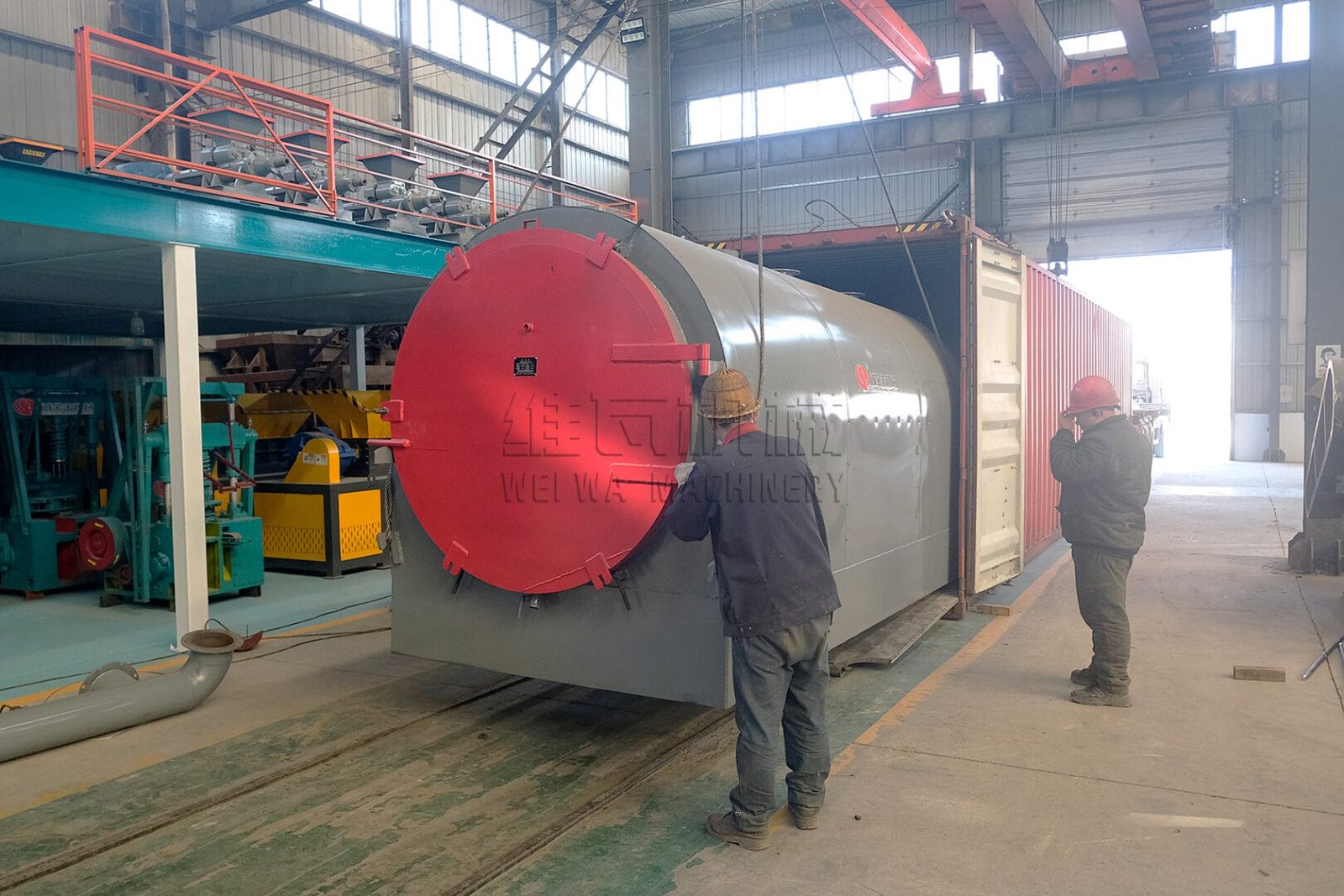
Today marks another milestone for Weiwa Machinery as we successfully dispatched a fully‑assembled horizontal carbonization furnace to a client in Guinea. This shipment is not just about delivering a machine; it represents our commitment to supporting Guinea’s growing charcoal‑production industry with advanced, eco‑friendly technology. The horizontal carbonization furnace, designed for efficiency and low environmental impact, is set to transform how local producers convert biomass into high‑quality charcoal. In this blog, we’ll walk you through the on‑site dispatch process, explore the relevance of horizontal carbonization furnaces in Guinea, and share insights from preliminary testing. By the end, you’ll understand why this equipment is a game‑changer for small‑ to medium‑scale charcoal makers in the region.
On‑Site Dispatch of the เตาเผาคาร์บอนแนวนอน
Preparing for Shipment
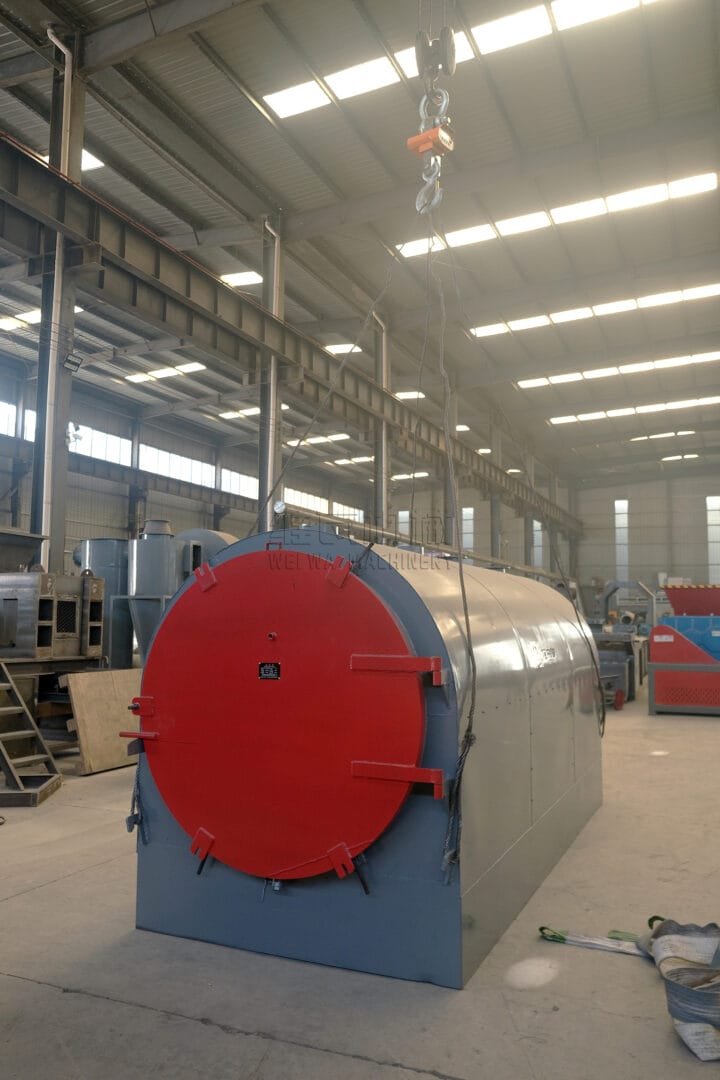
Every export order begins with meticulous preparation. Our horizontal carbonization furnace is a robust, barrel‑style chamber mounted on rails, which simplifies loading and unloading. For this Guinea‑bound unit, we ensured all components—the main chamber, rail cart, heating system, and gas‑purification modules—were securely crated and weather‑proofed. The compact footprint of the furnace allowed us to optimize container space, reducing shipping costs for our client.
Loading and Securing
On the day of dispatch, our team used heavy‑duty forklifts to position the furnace onto a flat‑bed truck. The rail‑mounted design proved invaluable here: the entire chamber could be rolled smoothly onto the transport vehicle with minimal manual handling. We then double‑checked all fastenings and added protective padding to prevent transit vibrations. Accompanying the furnace were spare parts, toolkits, and multilingual manuals (including French, widely spoken in Guinea).
Documentation and Logistics
Shipping to Guinea requires careful adherence to customs and import regulations. Our logistics team handled all paperwork, including commercial invoices, packing lists, and certificates of origin. We also arranged door‑to‑door delivery, ensuring the client would receive the furnace directly at their site in Guinea. Throughout the process, we maintained close communication with the client via WhatsApp (+8613838093177) and email (info@cjlmachineGroup.com), providing real‑time updates.
Why a Horizontal Carbonization Furnace Suits Guinea’s Market?
Biomass Availability in Guinea
Guinea is rich in biomass resources: abundant wood logs, ไม้ไผ่, หอยมะพร้าว, และสารตกค้างทางการเกษตร (เช่น, แกลบ, palm kernels) are widely available. อย่างไรก็ตาม, traditional charcoal‑making methods—such as earth pits or rudimentary kilns—are inefficient, produce excessive smoke, and yield low‑quality charcoal. The horizontal carbonization furnace addresses these issues by enabling controlled, high‑temperature carbonization with minimal waste.
Environmental and Economic Benefits
One of the furnace’s standout features is its advanced gas‑purification system. During operation, it captures tar and condensates, recycling them as clean combustible gas to feed the burners. This closed‑loop design sustains internal temperatures around 600 °C with very little external fuel, drastically cutting smoke emissions. For Guinea, where environmental regulations are tightening, this smokeless operation is a significant advantage. นอกจากนี้, the furnace’s high charcoal yield (typically 25–35% depending on feedstock) means producers can generate more sellable product from the same amount of biomass, boosting profitability.
Adaptability and Ease of Use
The horizontal carbonization furnace is designed for versatility. It can process diverse feedstocks—wood logs, ไม้ไผ่, หอยมะพร้าว, sawdust briquettes, and agricultural residues—making it ideal for Guinea’s varied biomass landscape. Its rail‑mounted chamber allows easy loading via carts, reducing labor intensity. Automation features, such as temperature regulators and safety valves, minimize the need for skilled operators, a plus in regions where technical expertise may be limited.
Preliminary Testing and Expected Performance in Guinea
Test‑Run Before Shipment
Prior to dispatch, every horizontal carbonization furnace undergoes a thorough test‑run at our factory. We loaded the chamber with a mix of wood logs and coconut shells (common feedstocks in Guinea) and monitored the carbonization cycle. The indirect‑heating system achieved a steady 600 °C within two hours, and the gas‑purification system successfully recycled tar and condensates, emitting only minimal, clean exhaust. The resulting charcoal was uniform, with a fixed‑carbon content exceeding 75%, meeting international quality standards.
Expected On‑Site Performance in Guinea
Once installed in Guinea, the furnace is projected to deliver similar results. The key to success will be proper feedstock preparation (เช่น, drying biomass to 15–20% moisture) and adherence to the operating manual. We anticipate the following outcomes:
- ปริมาณงาน: 1–2 tons of biomass per 8‑hour cycle, depending on feedstock density.
- Charcoal Yield: 25–35% by weight, translating to higher revenue for the operator.
- Fuel Efficiency: The recycled gas will supply over 70% of the heat required, slashing fuel costs.
- Environmental Impact: Near‑zero smoke emissions, aligning with Guinea’s sustainability goals.
Our client in Guinea will receive on‑call technical support from our engineers (via Mob/WhatsApp: +8613838093177) to ensure smooth commissioning and troubleshooting.
Horizontal Carbonization Furnace Core Advantages Recap
Superior Heat Distribution
The horizontal, barrel‑shaped chamber ensures even heat dispersion, preventing hot spots and yielding consistent charcoal quality. This is a marked improvement over traditional kilns, which often produce unevenly charred output.
Low Maintenance and High Durability
Built from heat‑resistant alloys, the furnace requires minimal upkeep. The rail‑mounted chamber simplifies access for cleaning and part replacement. This durability is crucial in Guinea, where maintenance services may be scarce.
Energy‑Saving Design
By recycling tar and condensates as fuel, the furnace drastically cuts external energy needs. Operators can expect at least 30% lower fuel consumption compared to conventional carbonizers.
Safety Features
Integrated pressure‑release valves and temperature controllers prevent overheating and potential hazards. The indirect‑heating system also keeps the outer shell cool, protecting workers from burns.
Why Choose เครื่องจักร Weiwa?
เกี่ยวกับเรา
เครื่องจักร Weiwa (also known as CJL Machine Group) is a leading manufacturer of biomass‑processing equipment, with over two decades of experience. We specialize in designing and building carbonization furnaces, briquetting presses, and auxiliary machinery. ผลิตภัณฑ์ของเรามีการส่งออกไปมากกว่า 50 ประเทศ, serving over 2 million customers worldwide.
Our Commitment
We prioritize innovation, คุณภาพ, and after‑sales support. Every machine is engineered for reliability and efficiency, and we provide comprehensive training and lifetime technical assistance. Our team is always reachable via phone, WhatsApp, or email for consultation or troubleshooting.
Contact Information
- Mob/WhatsApp: +8613838093177
- อีเมล: info@cjlmachinegroup.com
- Website:
If you’re in Guinea or any other region looking to upgrade your charcoal production, our horizontal carbonization furnace offers a sustainable, profitable solution. Reach out today to discuss your needs and request a quote.
Closing Remarks
The dispatch of this horizontal carbonization furnace to Guinea underscores our mission to bring advanced, eco‑friendly technology to biomass‑rich markets. We’re confident that this furnace will help local producers maximize their resources while minimizing environmental harm. Stay tuned for more updates as we continue to serve clients across the globe with cutting‑edge charcoal‑making solutions.


 Wechat

 +8615937143060
