


In the heart of East Africa, Uganda stands as a nation rich in agricultural heritage and natural resources. अभी तक, like many developing countries, it faces twin challenges: managing abundant biomass waste and meeting growing energy demands sustainably. वेइवा मशीनरी में, we believe technology can bridge this gap, and our hydraulic press briquetting machines are proving to be a game changer. With over three decades of expertise in designing and manufacturing industrial equipment, we recently had the privilege of conducting a trial run of our hydraulic briquette press for a client in Uganda—an experience that highlighted not just the machine’s capabilities, but its transformative potential for the country’s green economy.
The Context: Uganda’s Energy and Waste Landscape
Uganda’s economy is deeply rooted in agriculture, with crops like coffee, मक्का, sugarcane, and cotton generating significant amounts of residue annually. Farmers and small scale enterprises often burn this waste, contributing to air pollution and wasting a resource that could fuel homes, इंडस्ट्रीज, and even generate income. Simultaneously, ऊपर 70% of Uganda’s population relies on traditional biomass (firewood, लकड़ी का कोयला) खाना पकाने के लिए, straining forests and exposing households to health risks from indoor smoke.
This is where hydraulic briquette machines come into play. By compressing loose biomass into dense, uniform briquettes, these machines turn waste into a clean, efficient alternative to firewood and charcoal. For Uganda, this isn’t just about waste management—it’s about creating a circular economy that empowers rural communities, reduces deforestation, and drives local entrepreneurship.
Why Hydraulic Briquette Presses Are Ideal for Uganda?
When our Ugandan client first reached out, they were exploring solutions to convert their community’s agricultural waste into sellable fuel. After understanding their needs—processing mixed biomass (maize cobs, कॉफ़ी की भूसी, and sugarcane bagasse), ease of operation for local workers, and durability in varying climates—we recommended our hydraulic briquette press. Here’s why this model stood out:
Precision and Power in Compression
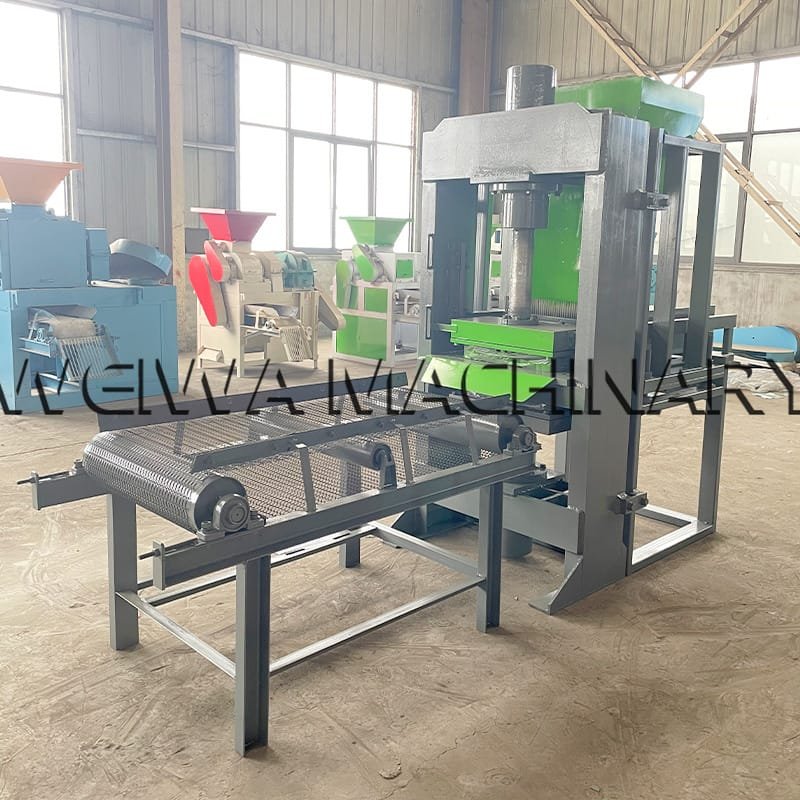
Hydraulic briquette presses use high pressure rather than mechanical force, ensuring consistent density and shape regardless of input material. Unlike screw or piston presses, they minimize wear and tear, making them ideal for Uganda’s settings where maintenance access might be limited. During the trial, we fed the machine a blend of maize cobs and coffee husks—materials readily available in Uganda’s rural areas. Within minutes, the press produced compact briquettes with a calorific value comparable to traditional charcoal, yet with lower ash content.
Adaptability to Local Resources
A key advantage of our hydraulic briquette machine for Uganda is its flexibility. It can process diverse biomass types without requiring pre treatment (like drying or grinding to fine particles), which is critical in regions where processing infrastructure is basic. The client noted that even slightly moist materials (common after rainy seasons) compressed effectively, reducing the need for costly drying equipment. This adaptability aligns with Uganda’s reality, where farmers often have varied waste streams and limited access to specialized tools.
Efficiency That Boosts Profitability
For small businesses or cooperatives, time and labor costs are decisive. Our hydraulic press operates with minimal manual intervention—load the material, activate the press, and collect the briquettes. During the trial, the client’s team (with basic training) produced 50 kg of briquettes per hour, a rate that could scale with additional shifts. Higher output per hour means more product to sell, directly improving margins for Ugandan entrepreneurs looking to enter the clean energy market.
The Trial Run: Bringing Technology to Life in Uganda
Preparing for the trial was a collaborative effort. We worked closely with the client to assess their site conditions, बिजली की आपूर्ति (the machine runs on standard 380V electricity, but we also offer diesel powered variants for off grid areas), and material availability. A week before the trial, our engineers provided virtual training on safety protocols and basic troubleshooting, ensuring the local team felt confident operating the equipment.
On the day of the trial, the atmosphere was charged with curiosity. Local farmers brought samples of their waste—maize stalks, cotton stems, and even dried banana peels. Our engineers adjusted the press’s pressure settings to accommodate the mix, emphasizing that customization is a cornerstone of our service. As the first batch of briquettes emerged, the room erupted in cheers. The client tested one by lighting it: it burned steadily, with minimal smoke, and left little ash. “This is exactly what we needed,” the client said. “We can now turn our ‘waste’ into something that heats homes and feeds families.”
Beyond the technical success, the trial underscored the social impact. Women, who often bear the burden of collecting firewood, saw an opportunity to produce and sell briquettes locally, cutting their daily drudgery. Small scale industries, like bakeries and brick kilns, expressed interest in replacing coal with cheaper, cleaner briquettes. In Uganda, where unemployment remains a concern, this technology isn’t just about machinery—it’s about creating livelihoods.
The Untapped Potential of Hydraulic Briquette Machines in Uganda
The trial in Uganda revealed that hydraulic briquette presses are more than a solution—they’re a catalyst for systemic change. Here’s how their potential could unfold across the country:
Scaling Waste to Wealth Across Regions
Uganda’s regions vary in crop production: the north has cotton and sorghum, the west grows tea and millet, and the east is a hub for coffee and livestock. Each area generates unique biomass waste, which our hydraulic press can convert into region specific briquette brands. Imagine a network of community based briquette producers, each leveraging local waste to serve nearby markets. This decentralization reduces transportation costs and ensures fresher, more relevant products.
Aligning with National Sustainability Goals
Uganda’s government has prioritized renewable energy and climate action in its Vision 2040 development plan. Hydraulic briquette machines align perfectly with these goals. By displacing firewood and charcoal, they reduce deforestation—a critical issue in Uganda, where forest cover has declined by 25% since 1990. Additionally, lower carbon emissions from briquettes support the country’s commitments under the Paris Agreement. For policymakers, promoting such technology could accelerate progress toward universal energy access while preserving ecosystems.
Building Resilience Against Climate Shocks
Climate change is already disrupting Uganda’s agriculture, with erratic rainfall affecting crop yields. Hydraulic briquette machines offer a buffer: even in lean seasons, farmers can process stored waste (like dried maize stalks) into briquettes, ensuring a steady income stream. This resilience is vital for smallholders, who form 70% of Uganda’s farming community. By turning waste into a reliable commodity, the machines help mitigate the economic impact of climate related crop failures.
Support Systems for Long Term Success
While the potential is vast, realizing it requires addressing barriers like initial investment, technical know how, and market access. वेइवा मशीनरी में, we don’t just sell machines—we build partnerships. For our Ugandan client, we offered flexible payment terms and a comprehensive warranty. Post trial, our engineers stayed onsite for two days, refining operational workflows and training additional staff. This hands on approach reflects our belief that equipment is only as effective as the support behind it.
We also recognize that every client’s journey is unique. That’s why we provide customized service and design drawings for site planning. Whether it’s a small workshop in Kampala or a rural cooperative in Gulu, our team works to ensure the hydraulic briquette machine integrates seamlessly into existing operations. And with our professional after sales team, clients can access spare parts and remote troubleshooting within 48 घंटे, minimizing downtime.
निष्कर्ष
The trial of our hydraulic press briquetting machine in Uganda was more than a demonstration—it was a testament to the power of technology to transform lives. For farmers tired of burning waste, for women seeking safer cooking options, and for entrepreneurs eyeing new markets, this machine represents hope. वेइवा मशीनरी में, we’re proud to be part of Uganda’s green transition, and we’re committed to supporting clients every step of the way.
If you’re in Uganda or elsewhere, looking to harness the potential of hydraulic briquette machines, we invite you to connect with us. इससे अधिक 30 उद्योग का वर्षों का अनुभव, a dedicated after sales team, and a focus on customized solutions and site planning, we’re ready to turn your vision into reality. Reach out today for inquiries, and let’s build a sustainable future together.
के बारे में वेइवा मशीनरी
इससे अधिक 30 years of experience in manufacturing industrial equipment, Weiwa Machinery specializes in hydraulic press briquetting machines, hydraulic briquette presses, and tailored solutions for global markets. Our professional after sales team ensures seamless support, from installation to maintenance, while our commitment to customization includes design drawings and site planning to meet unique client needs. Whether you’re a small enterprise or a large scale project, we’re here to deliver reliable, efficient machinery that drives growth. Contact us today for inquiries and let’s start a conversation about your next sustainable venture.


 WeChat

 +8615937143060
