


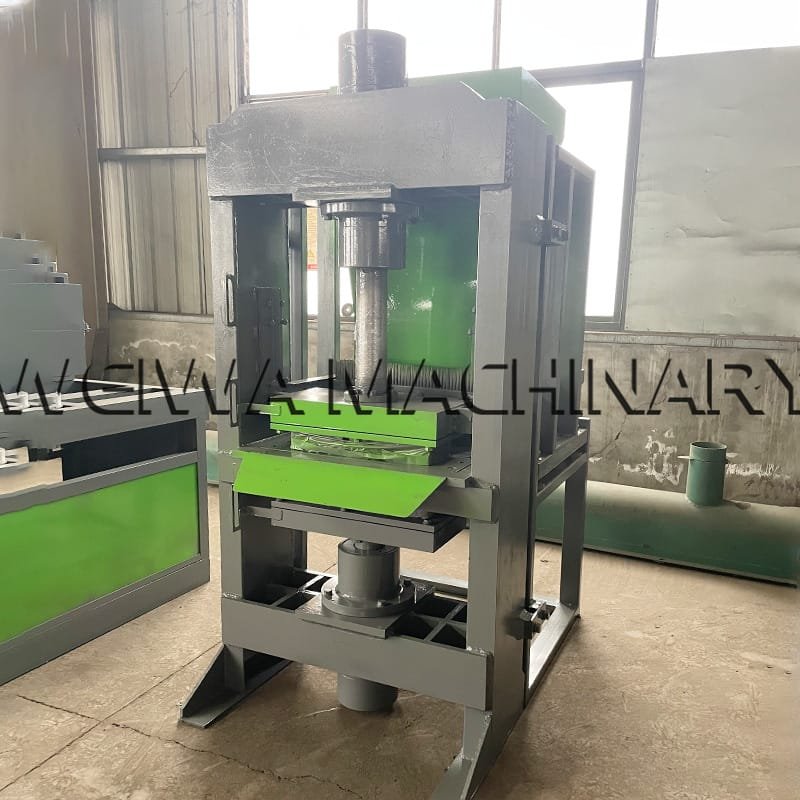
Jamaica Client Background and Raw Material Situation
The Jamaican buyer operates a small agro-processing and trading business near Kingston and had been importing low grade lump charcoal for resale while exploring local manufacturing of premium shisha charcoal cubes and round BBQ tablets. During our first technical call, the client explained that Jamaica generates a steady stream of coconut shell waste from beverage and food processing, along with sawdust from furniture workshops and bagasse residue from sugarcane milling. These materials are often discarded or burned openly. The client wanted to know whether a hydraulic briquette machine could press carbonized coconut shell powder into export style hookah charcoal without relying on imported finished goods from the Middle East or Southeast Asia.
We asked the client to send a 25 kilogram sample of carbonized coconut shell charcoal crushed below 3 millimetres, together with one sample of mixed hardwood charcoal dust collected from a local grill supplier. Our lab team in Zhengzhou measured moisture at 9 percent for the coconut shell sample and 13 percent for the mixed wood dust. Both values were within the workable range for a hydraulic press briquetting machine after light oven conditioning. The binder discussion focused on tapioca starch and cassava gum, both accessible in Jamaica, because the client preferred food contact safe additives for shisha use.
How the Hydraulic Briquette Press Was Prepared for Trial?
We selected our standard double cylinder hydraulic briquette press model with 120 ton main pressure and 60 ton pre pressure configuration. This hydraulic briquette press uses a slow compression cycle instead of high speed mechanical impact. The slow cycle removes air pockets from loose powder, increases internal density, and reduces edge cracking during demolding. For the Jamaica trial, we installed a 25 by 25 by 15 millimetre cubic mold and a 33 millimetre concave round mold, because both shapes are common in Caribbean shisha lounges and beachside barbecue vendors.
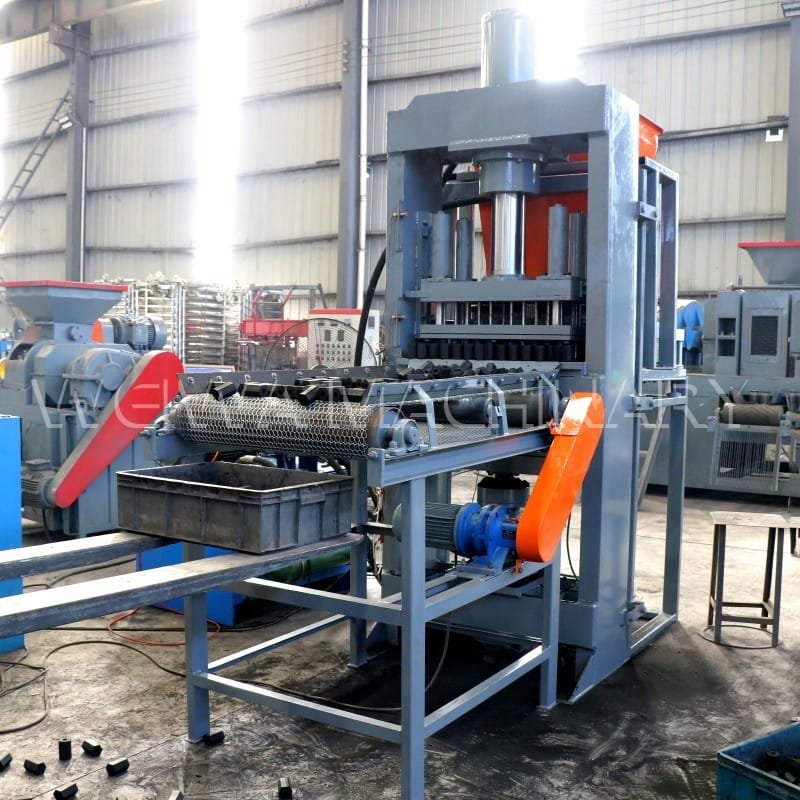
Hydraulic Pump Station and Pressure Setting
The hydraulic pump station was filled with anti wear hydraulic oil and tested for 30 minutes under no load. Our engineer set pre compression at 60 tons for 1.5 seconds to expel air, then raised pressure to 120 tons and held the dwell for 4 seconds. The relief valve was calibrated to avoid overshoot. A digital pressure gauge on the hydraulic station allowed the Jamaica client to watch real time bar readings through a video call. Cooling fan and heat exchanger kept oil temperature near 42 degrees Celsius after 200 continuous strokes, which proved the hydraulic press briquetting machine could handle tropical ambient conditions.
PLC Control and Mold Changeover
The PLC touch screen stored two recipes. Recipe one was named Jamaica Cube and locked pressure at 120 tons with 4 second dwell and single stroke per 6 seconds. Recipe two was named Jamaica Round and lowered pressure to 100 tons with 3 second dwell because round concave tablets release more easily. Mold change took 18 minutes including cleaning the lower ejection plate. The client observed that a hydraulic briquette machine with recipe memory reduces operator training time, which matters when Jamaican factories hire shift workers with limited mechanical background.
Trial Run Results with Coconut Shell Charcoal Powder
We ran 120 kilograms of coconut shell charcoal powder mixed with 6 percent tapioca starch and 14 percent water. The hydraulic press briquetting machine produced 118 kilograms of formed cubes after 2 percent material loss in feeding and scrap. Average green density reached 1.18 grams per cubic centimetre before drying. After 6 hours in a 60 degree heat pump dryer, moisture dropped to 4 percent and final density stabilized at 1.04 grams per cubic centimetre. Drop test from 1.2 metres showed zero breakage on 47 out of 50 cubes. The round tablets showed a slightly higher rejection rate at 5 percent due to sticky binder at mold edges, which we corrected by reducing water to 12.5 percent in the second batch.
Burn test in our ventilated chamber showed coconut shell cubes from the hydraulic briquette press ignited in 38 seconds using alcohol gel starter, burned for 92 minutes in a standard hookah bowl configuration, and left white ash below 4 प्रतिशत. These numbers matched the client’s target for supplying premium shisha lounges in Montego Bay and Kingston. The client confirmed by email that the hydraulic briquette machine for Jamaica market requirement was met because the same frame could later accept finger shape and hexagonal mold sets without changing the hydraulic power pack.
Why Hydraulic Briquette Machine Fits the Jamaica Market?
Jamaica is not a large country by land area, but its charcoal economy is disproportionately active. Roadside jerk chicken vendors, hotel buffets, family backyards, and an expanding hookah cafe culture in Kingston and Ocho Rios all consume shaped charcoal weekly. At the same time, the island imports a portion of finished shisha charcoal, which exposes buyers to freight volatility and foreign exchange pressure. A hydraulic briquette machine located inside Jamaica converts local waste shells and sawdust into branded local product, shortening the supply chain and improving margin.
Coconut Shell and Biomass Waste Supply in Jamaica
Coconut processing for water, oil, and confectionery creates shell volumes in parish level quantities. When carbonized in a batch furnace, one tonne of dry coconut shell yields roughly 280 को 320 kilograms of charcoal suitable for a hydraulic press briquetting machine. Sawmill offcuts from Spanish town furniture clusters and bagasse from sugar estates add secondary feedstock. Because the hydraulic briquette press accepts charcoal powder rather than whole logs, it decouples charcoal production from deforestation pressure and aligns with Caribbean green energy narratives that tourism boards already promote.
BBQ Culture and Shisha Charcoal Import Substitution
Jamaican barbecue is not seasonal. It is a daily food channel. Vendors currently use irregular lump charcoal that burns unevenly and creates flare ups. Switching to hydraulic briquette press output gives uniform burn curves, easier stacking, and private label packaging opportunities. For shisha, Caribbean lounges increasingly compete on session length and smoke cleanliness. A hydraulic briquette machine for Jamaica that produces 25 millimetre cubes with 90 plus minute burn time lets local distributors replace Dubai or Indonesia sourced boxes with a Made in Jamaica tag, which carries marketing value among younger consumers.
How to Use a Hydraulic Press Briquetting Machine in Production?
A hydraulic press briquetting machine is not a standalone magic box. It sits in the middle of a short process chain. Raw shells or wood waste are carbonized in a furnace, crushed below 3 millimetres, blended with binder in a double shaft mixer, conditioned to 10 को 14 प्रतिशत नमी, then fed into the hydraulic hopper manually or by belt. The rear pusher pushes powder into the mold cavity. The upper cylinder descends, holds pressure, retracts, and the lower ejector pushes the green briquette onto a discharge conveyor. An operator only adjusts PLC recipe, mold grease frequency, and feeder speed.
For a Jamaica startup running one 120 ton hydraulic briquette press at 8 hours per day, typical output ranges from 2.4 को 3.2 tonnes of green cubes depending on mold cavities and dwell time. With a 6 hour drying cycle and two shift operation, monthly output can exceed 120 tonnes, enough to supply 30 को 50 medium shisha cafes and 20 barbecue wholesalers. The hydraulic briquette machine does not require a deep foundation. It sits on a flat concrete floor with vibration pads, which suits rented warehouses in industrial zones near Spanish Town or Savanna la Mar.
Maintenance is straightforward. Hydraulic oil is sampled every 500 घंटे. Seals are replaced every 12 months under normal tropical use. Mold surfaces are cleaned with food safe solvent to avoid binder buildup. Because the hydraulic system opens relief automatically when hard debris enters, the roller and cylinder are protected better than on mechanical flywheel presses. This matters in Jamaica where raw charcoal powder may contain sand from beach side storage if the client skips screening.
वेइवा मशीनरी Factory Strength and After Sales Service
Weiwa Machinery has more than thirty years of cumulative workshop experience in briquette and carbonization equipment. Our team designs hydraulic briquette press frames, PLC panels, and mold drawings in house. We do not resell generic presses with a new sticker. For the Jamaica client, we supplied a 3D site layout showing machine position, dryer duct route, raw material bin footprint, and worker aisle width, because Caribbean containers often face tight warehouse doors and customs inspection space.
Our after sales team provides commissioning video calls, English and Spanish manual bundles, spare seal kits, and mold drawing revisions within 72 घंटे. We have shipped charcoal lines to Peru, थाईलैंड, इंडोनेशिया, Nigeria, and now Jamaica. Export packing uses stretch film, anti rust oil, fumigation free wooden cases for controllers, and steel bracing inside containers to survive Kingston port handling. Clients can visit our Henan factory for a live hydraulic briquette machine trial before paying balance, exactly as the Jamaica buyer did.
If you plan to enter the Caribbean charcoal market, a hydraulic press briquetting machine is a capital asset that turns shell waste into branded fuel. Weiwa Machinery supports you from raw material test, mold shape selection, voltage adaptation for 220 volt or 440 volt Jamaican sites, container loading, to remote commissioning. We welcome Jamaican entrepreneurs, diaspora investors, and regional distributors to contact us for a customized proposal.
वेवा मशीनरी से संपर्क करें
भीड़ / WhatsApp: +8613838093177
ईमेल: info@cjlmachinegroup.com
Weiwa Machinery is a Henan based manufacturer with over thirty years of experience in hydraulic briquette press production, जलकर कोयला भट्टियां, crushers, mixers, and dryers. Our professional after sales team, customized mold design, and factory layout drawing service help global clients launch stable charcoal briquette plants. More than two million customers across ninety countries have used Weiwa equipment. If you are evaluating a hydraulic briquette machine for Jamaica or the wider Caribbean, send your raw material photo and target shape, and we will return a trial plan and quotation.


 WeChat

 +8615937143060
