


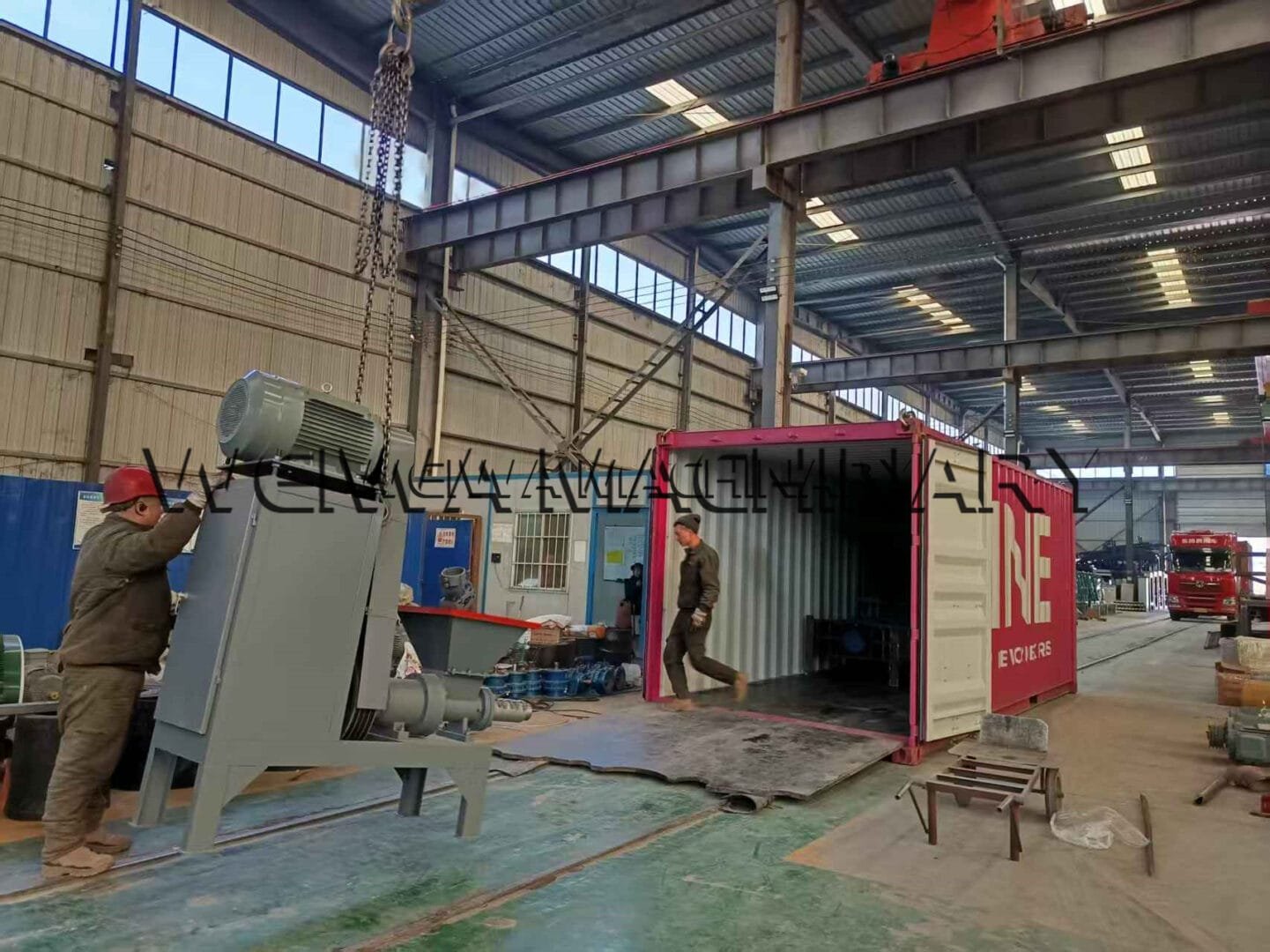
The morning sun cut across the loading bay of Weiwa Machinery’s Henan production base as workers secured a fully assembled sawdust extrude machine onto a flatbed truck bound for the Port of Qingdao. This unit is not just another piece of equipment leaving our facility. It represents a growing shift in how Kenya and its neighboring East African economies are approaching energy security, agricultural waste recycling, and small business development. For the buyer, a Nairobi based agri processor, this machine will soon be turning tonnes of sawdust, चावल की भूसी, and sugarcane bagasse into dense, combustible sawdust briquettes that can replace traditional firewood and low grade charcoal across rural and urban Kenya.
Weiwa Machinery has spent more than thirty years designing, परीक्षण, and refining biomass extrusion systems for global markets. Our sawdust extrude machine is built to handle inconsistent raw material quality, high humidity environments, and the operational realities of small and medium scale producers. This shipment to Kenya is part of a broader regional trend where making charcoal briquettes from sawdust is no longer an experimental side business but a mainstream response to fuel shortages, deforestation pressure, and rising energy costs.
The Loading Site at Weiwa Factory
Inside the assembly workshop, engineers completed final torque checks on the spiral shaft, heating ring, and pressure cylinder before wrapping the mainframe in anti corrosion PE film. Unlike many suppliers who ship partially assembled units, we dispatch complete working systems whenever container dimensions allow. This reduces installation errors and shortens the time between arrival and first production run.
Forklifts moved pallets of spare screws, shear pins, and heating coils into reinforced wooden crates. For export shipments to African markets, we use fumigated timber packaging compliant with ISPM 15 standards to avoid customs delays at Mombasa or Dar es Salaam ports. Each crate is clearly labeled with destination port, consignee details, and handling instructions in both English and Swahili, recognizing that ground handlers may not read Chinese characters.
Before sealing the containers, our quality control supervisor conducted a full dry run test using locally sourced pine sawdust. The extruder reached stable barrel temperature within twelve minutes, and the output formed consistent hollow hexagonal briquettes without cracking or bloating. These test runs are documented with video and shared with the client so they know exactly what performance to expect upon arrival.
Why Sawdust Briquettes Are Gaining Traction in Kenya?
Kenya’s energy landscape is defined by a heavy reliance on biomass. According to recent national surveys, ऊपर 70 percent of households still depend on wood fuel for cooking, while small scale industries such as bakeries, tea drying factories, and brick kilns consume large volumes of charcoal daily. Traditional charcoal production involves slow burning of whole logs in earth mounds, a process that destroys forests and emits significant carbon dioxide without capturing the full energy potential of the wood.
Sawdust briquettes offer a direct alternative. By compressing fine biomass particles under high pressure and temperature, the natural lignin inside the material acts as an internal binder. No chemical additives are required. The resulting briquettes have a density three to four times higher than loose sawdust, burn longer, emit less smoke, and generate approximately 20 percent more heat per kilogram compared to ordinary firewood.
In urban centers like Nairobi, Nakuru, and Kisumu, demand for clean burning, affordable fuel is rising among middle income households that want to reduce indoor air pollution but cannot yet afford full electric or LPG conversion. At the same time, rural agro processors generate massive quantities of crop residues and sawmill waste that often go unused or are openly burned, contributing to seasonal air quality issues. A single sawdust extrude machine can convert these waste streams into marketable fuel, creating both environmental and economic value.
Understanding the चूरा अतिरिक्त मशीन
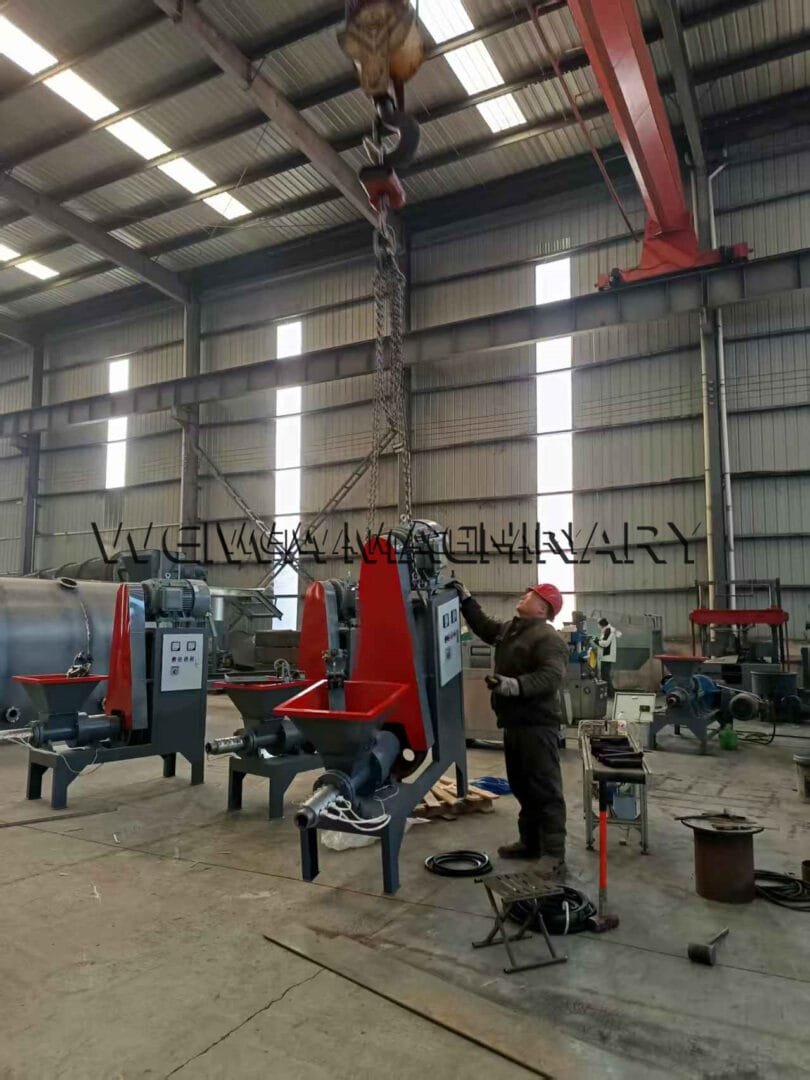
A sawdust extrude machine is fundamentally different from simple piston briquetters. Instead of compressing material in batches, it uses a continuously rotating large diameter screw to feed biomass through a heated barrel and into a shaping die. As the material moves forward, friction and external heating soften the lignin, allowing particles to fuse into a solid, uniform shape.
The core components include a feeding hopper, conditioning auger, compression screw, heating coil, and interchangeable die. Raw material must be below five millimeters in particle size and dried to around 12 percent moisture content before entering the machine. Oversized or wet material causes blockages, reduces throughput, and increases wear on the screw.
Our machines are engineered with adjustable temperature controllers, heavy duty bearings, and hardened alloy steel screws that maintain dimensional accuracy even after thousands of operating hours. Depending on configuration, operators can produce solid rods, hollow quadrangular blocks, or hexagonal briquettes with central holes that improve airflow during combustion. Diameter options range from 45 को 80 millimeters, allowing customization for household stoves, industrial furnaces, or export specifications.
Making Charcoal Briquettes from Sawdust in Practice
The production workflow begins with size reduction. Branches, बांस की धूल, मूंगफली के गोले, and sugarcane residue are crushed into fine particles using a hammer mill or rotary grinder. Next, the material passes through a rotary drum dryer or belt dryer until moisture reaches the target level. Only then is it fed into the sawdust extrude machine.
Once extruded, the raw briquettes are still carbon rich but not yet true charcoal. They undergo a separate carbonization step, either in sealed kilns or continuous carbonization furnaces. This process removes volatile compounds, stabilizes the structure, and further increases calorific value. The final charcoal briquettes are clean, odorless, and easy to package for retail sale.
Operators do not need advanced technical backgrounds to manage the system. With basic training, a three person team can run the entire line, including feeding, monitoring temperature, cutting finished briquettes, and preparing loads for carbonization. Weiwa provides multilingual operation manuals, video tutorials, and remote support via WhatsApp or WeChat to ensure smooth commissioning.
Market Potential for Sawdust Briquettes in Kenya and Africa
Kenya is uniquely positioned to scale sawdust briquette adoption. The country has a well developed transport network linking major cities to agricultural regions, a growing entrepreneurial culture supported by mobile money platforms, and increasing government emphasis on renewable energy and circular economy policies.
In addition to domestic consumption, there is emerging export interest from neighboring Uganda, Tanzania, Rwanda, and South Sudan, where similar fuel challenges exist. Cross border trade in compressed biomass is still limited by standardization gaps, but early movers who invest in consistent quality control and branding are already securing contracts with hotels, schools, and institutional buyers.
Price competitiveness remains a decisive factor. While LPG cylinder prices fluctuate with global oil markets, sawdust briquettes can be produced at relatively stable costs because the primary input is agricultural or forestry waste that often carries negative disposal value. In peri urban areas, briquette producers frequently source raw material for free or at minimal cost from sawmills and grain processors, paying only for collection and transport.
Environmental regulations are also beginning to favor briquette production. Several county governments in Kenya have introduced restrictions on charcoal trading from protected forests, indirectly pushing consumers toward alternative fuels. As awareness grows, sawdust briquettes in Kenya are shifting from niche products sold in small bags at roadside kiosks to standardized consumer goods stocked by supermarkets and hardware stores.
Logistics and After Sales Support for Kenyan Clients
Shipping machinery from China to Kenya typically takes 25 को 35 days depending on port congestion and inland transport arrangements. Weiwa Machinery assists clients with freight forwarding, insurance, and documentation to simplify the import process. For customers unfamiliar with Kenyan customs clearance procedures, we provide guidance on required permits and standards to minimize unexpected fees.
Our after sales team operates across multiple time zones, ensuring that technical questions raised in Nairobi during morning hours receive responses before the end of the working day. Spare parts are stocked in centralized warehouses and can be air shipped within 72 hours when urgent replacements are needed.
Beyond equipment supply, we offer customized production planning services. Every client receives a layout drawing tailored to their available space, बिजली की आपूर्ति, and raw material profile. For larger installations, we can design integrated lines combining crushing, सुखाने, extrusion, and carbonization in a single optimized workflow.
क्यों चुनें? वेइवा मशीनरी?
Weiwa Machinery brings together three decades of engineering experience, a professional global service team, and a commitment to practical, durable solutions for biomass processing. Our sawdust extrude machines are not generic imports but purpose built systems tested under real world conditions across Asia, अफ़्रीका, and Latin America.
Whether you are starting a small briquette business in Kisumu, expanding an existing charcoal operation near Eldoret, or exploring large scale fuel supply contracts in Mombasa, we can help you design a solution that matches your capacity, budget, and growth targets. From initial inquiry to final commissioning, our goal is to make turn sawdust into briquettes a straightforward, profitable, and environmentally responsible process.
If you are interested in making charcoal briquettes from sawdust or want to explore the potential of sawdust briquettes in Kenya and beyond, आज हमसे संपर्क करें. मिलने जाना for detailed specifications, or reach out directly via phone or messaging.
Mobile / WhatsApp +8613838093177
Email info@cjlmachinegroup.com
We welcome factory visits, sample testing, and custom project discussions. Let Weiwa Machinery help you build a sustainable fuel business powered by local resources and proven technology.


 WeChat

 +8615937143060
