


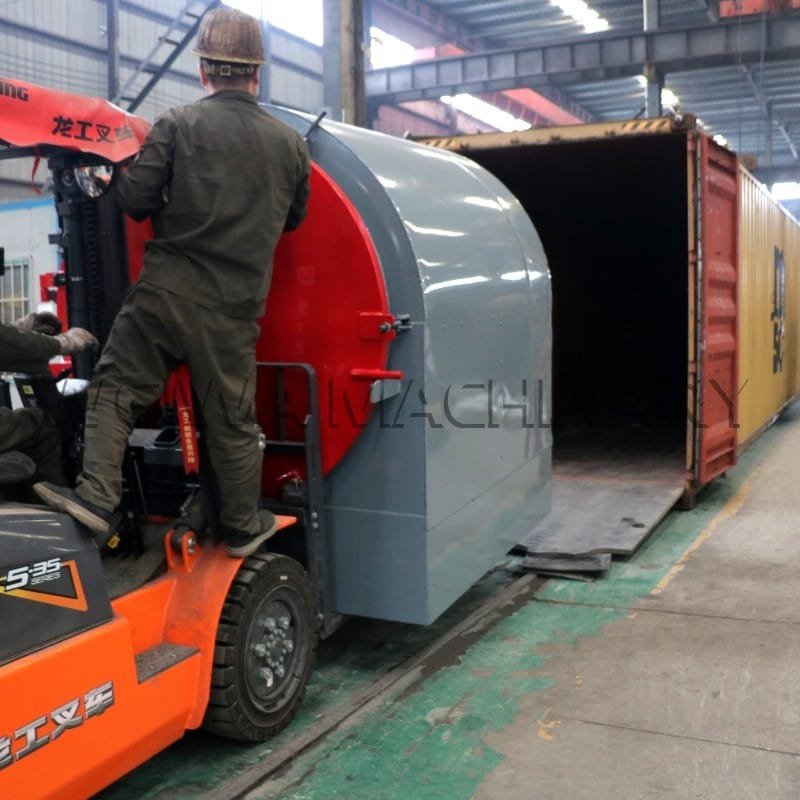
In the brisk early morning of late spring, the logistics yard of Weiwa Machinery shimmered with purposeful energy. Workers moved in coordinated rhythm, their faces lit by the sun and a shared sense of mission—today, we were sending a horizontal carbonization furnace to Poland, a machine that would soon become a cornerstone of sustainable charcoal making in the region. For Weiwa Machinery, this shipment was more than a delivery; it was a bridge connecting our expertise in charcoal making equipment to Poland’s growing demand for eco-friendly charcoal production, and an opportunity to share how horizontal carbonization furnaces are reshaping the local industry.
The Significance of This Shipment for Poland’s Charcoal Sector
Poland’s relationship with charcoal is as old as its forests, but modern demands have pushed the sector to evolve. With increasing focus on reducing deforestation linked to traditional kilns and meeting EU sustainability standards, Polish charcoal makers are seeking technologies that balance efficiency, environmental responsibility, and product quality. Horizontal carbonization furnaces, a flagship product of our charcoal making machine lineup, address these needs precisely.
Unlike conventional charcoal kilns that often rely on open burning or inefficient heat distribution, horizontal carbonization furnaces operate on a continuous or semi-continuous cycle, using controlled pyrolysis to convert biomass—such as hardwood, नारियल के गोले, or agricultural residues—into high-quality charcoal. For Poland, where small-scale farmers and eco-conscious entrepreneurs are exploring charcoal as a value-added product from forestry byproducts, this technology offers a scalable solution. Our decision to ship this horizontal carbonization furnace to Poland stems from recognizing the country’s potential to lead in green charcoal production, and we aim to empower local makers with tools that align with global sustainability trends.
Unveiling the क्षैतिज कार्बोज़ाइजेशन भट्टी A Science Behind Charcoal Making
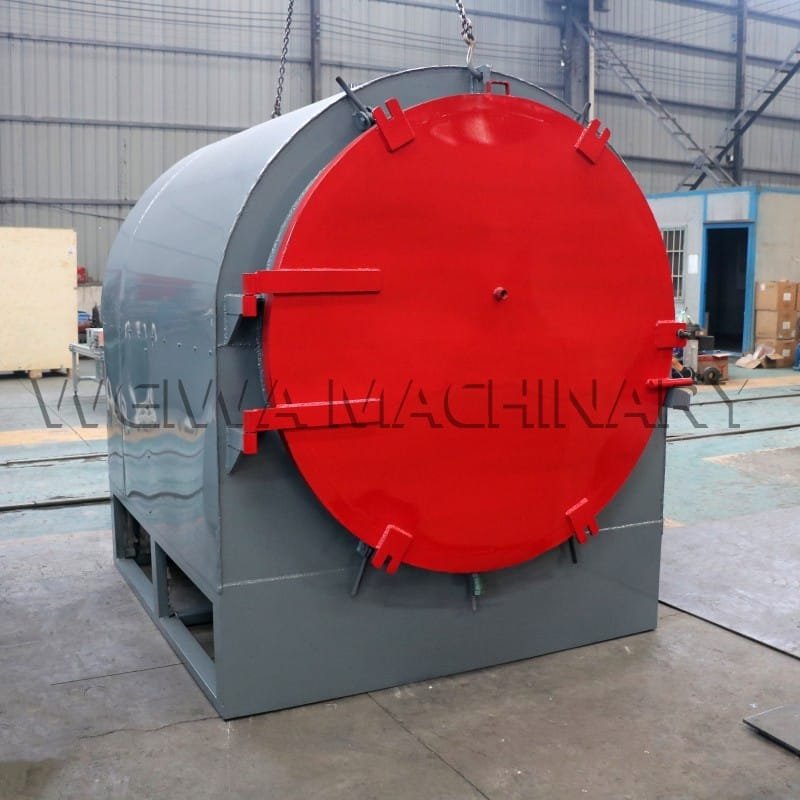
To understand why horizontal carbonization furnaces are transformative for Poland, it helps to demystify the science of charcoal making. इसके मूल में, charcoal production is a process of pyrolysis—heating organic material in the absence of oxygen to drive off volatile compounds, leaving behind carbon-rich charcoal. Traditional methods, like earthen kilns or brick pits, struggle to control temperature and airflow, leading to inconsistent quality, low yields, and harmful emissions.
Horizontal carbonization furnaces reimagine this process through engineering precision. Designed with a horizontal chamber, the furnace allows biomass to move slowly through zones of increasing temperature, ensuring uniform heating. Key features include insulated walls to retain heat, adjustable air inlets for oxygen control, and automated systems to monitor temperature and smoke extraction. As biomass enters the furnace, volatile gases released during pyrolysis are captured and can be burned to fuel the process, making the system energy-efficient. The result is charcoal with higher fixed carbon content, lower ash, and minimal pollutants—qualities that meet both industrial and consumer expectations.
For Poland, where winters demand reliable heating fuels and summers see growth in outdoor cooking culture, this consistency is invaluable. Local charcoal makers can now produce charcoal that burns longer, produces less smoke, and aligns with the EU’s push for renewable energy alternatives. The horizontal carbonization furnace thus acts not just as a machine, but as a catalyst for elevating Poland’s charcoal from a traditional commodity to a premium, sustainable product.
Why Poland Chose Horizontal Carbonization Furnace Over Conventional Charcoal Kilns?
When Polish clients approached us, they highlighted three critical pain points with traditional charcoal kilns: पर्यावरणीय प्रभाव, labor intensity, and inconsistent output. Horizontal carbonization furnaces directly tackle these challenges, making them a natural fit for Poland’s evolving charcoal landscape.
पहला, environmental compliance. Traditional kilns often release methane and particulate matter, वायु प्रदूषण में योगदान. In contrast, our horizontal carbonization furnace incorporates a flue gas purification system that captures and treats emissions, reducing harmful outputs by over 80%. This aligns with Poland’s commitment to the EU Green Deal and helps local makers avoid regulatory hurdles.
दूसरा, labor efficiency. Conventional kilns require constant manual monitoring—stoking fires, adjusting vents, and removing finished charcoal. Our furnace automates most processes, with sensors that trigger adjustments to temperature and airflow. This reduces the need for round-the-clock supervision, allowing small-scale operations in rural Poland to scale up without adding excessive labor costs.
तीसरा, yield and quality. Traditional methods waste up to 40% of biomass due to uneven carbonization. Horizontal carbonization furnaces maximize conversion rates, turning 100 kg of dry biomass into 25–30 kg of high-grade charcoal—significantly higher than the 15–20 kg typical of old kilns. For Polish makers relying on cost-effective raw materials like sawdust or fallen timber, this boost in yield directly improves profitability.
These advantages explain why horizontal carbonization furnaces are gaining traction in Poland. They represent a shift from “charcoal making as a chore” to “charcoal making as a sustainable business,” a shift we’re proud to support.
On-Site in Poland Preparing for the Horizontal Carbonization Furnace Installation
As our team in Poland prepared for the furnace installation, we witnessed firsthand the enthusiasm of local charcoal makers. The recipient, a cooperative of small-scale producers in the Mazovia region, had long relied on outdated kilns that limited their ability to supply larger markets. “We wanted to grow, but our old equipment couldn’t keep up with orders, and we felt guilty about the smoke,” said Anna Kowalska, a member of the cooperative. “This horizontal carbonization furnace feels like a new beginning.”
Installation began with site preparation, guided by our engineers who traveled to Poland to ensure seamless integration. The furnace requires a level concrete base and access to biomass storage, so the cooperative cleared space and built a simple shelter to protect the machine from Poland’s variable weather. Our team then walked them through assembly, emphasizing safety protocols and maintenance routines—key to maximizing the furnace’s 10+ year lifespan.
During training sessions, we demonstrated how to load biomass, interpret the control panel, and troubleshoot common issues like clogs in the feed chute. “The automation is a game-changer,” noted Piotr Nowak, another cooperative member. “We used to spend hours tending fires; now we can focus on sourcing better raw materials and building customer relationships.” By the end of the week, the furnace was operational, and the first batch of charcoal—rich, black, and nearly smokeless—was ready.
H2: The Future of Charcoal Making in Poland with Horizontal Carbonization Furnace
This shipment is just the start of our collaboration with Poland. We envision horizontal carbonization furnaces becoming a staple in Polish charcoal production, empowering makers to tap into export markets, supply eco-friendly fuels to urban areas, and even explore niche products like activated charcoal for cosmetics or water filtration.
For Weiwa Machinery, supporting Poland means more than selling equipment—it means fostering a community of sustainable innovators. We plan to offer ongoing technical support, host workshops on biomass sourcing, and collaborate with local universities to research ways to optimize furnace performance for Poland’s specific biomass types, such as birch or pine.
As the sun set over the Mazovia fields, the glow from the newly operational horizontal carbonization furnace seemed symbolic. It wasn’t just heat; it was the light of progress, proving that when advanced charcoal making machines meet local ambition, the result is a greener, more prosperous future.
के बारे में वेइवा मशीनरी
Weiwa Machinery has been a trusted name in charcoal making equipment since our founding, dedicated to designing machines that make sustainable charcoal production accessible worldwide. Our product range includes horizontal carbonization furnaces, charcoal makers, and complete charcoal production lines, all engineered for efficiency, durability, and environmental responsibility. With a focus on R&D and customer success, we work closely with clients across continents to tailor solutions that meet their unique needs. Learn more about our horizontal carbonization furnace and other products at HTTPS के://cjljx.com/products/tanhua/horizontal-कार्बोनाइजेशन-फर्नेस.
From our workshop to yours, Weiwa Machinery is committed to turning biomass into opportunity—one charcoal making machine at a time.


 WeChat

 +8615937143060
